
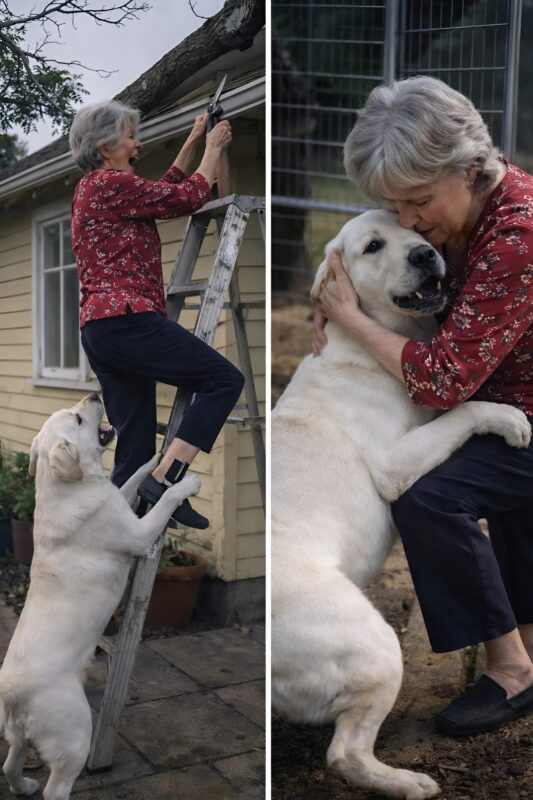
An Ordinary Household Task Takes an Unexpected Turn. What began as a simple home maintenance activity quickly developed into a moment of heightened awareness when a homeowner noticed their dog behaving unusually during routine tree pruning work.
The task involved trimming dry and overgrown branches from an old apple tree located in a residential garden. It was a regular seasonal chore aimed at maintaining tree health and preventing falling debris.
The homeowner prepared tools in advance, including pruning shears and a portable ladder, carefully reviewing basic safety precautions before beginning work. The intention was to complete the task efficiently and without incident.
The ladder was positioned against the sturdy trunk of the tree and tested for stability on the ground. The homeowner ensured it was placed on level soil before considering any ascent.
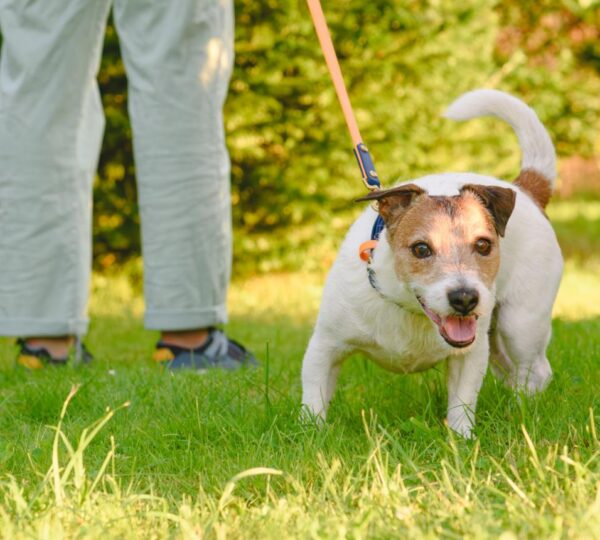
Weather conditions that morning were somewhat unsettled, with overcast skies and a heavy atmosphere suggesting possible changes later in the day. Despite this, outdoor tasks were still considered manageable.
The air felt still and slightly humid, creating a quiet but slightly uneasy environment in the garden. Such conditions often require additional caution when working outdoors on elevated surfaces.
After confirming that the ladder appeared secure, the homeowner began climbing slowly, focusing on reaching the lower branches that required trimming for maintenance purposes.
As the climb progressed, the situation took an unexpected turn when the family dog began acting unusually at the base of the ladder, drawing attention away from the task.
The dog moved repeatedly around the ladder area, displaying restless behavior that included circling, looking upward, and attempting to gain the homeowner’s attention through physical contact.
At one point, the animal attempted to place its front paws on the ladder rungs, an uncommon behavior that immediately drew concern due to the potential safety risks involved.
Initially, the behavior was interpreted as curiosity or playful interference, as pets often react energetically when their owners are engaged in outdoor tasks.
The homeowner briefly attempted to redirect the dog by speaking firmly and gesturing for it to move away from the work area, expecting the behavior to stop.
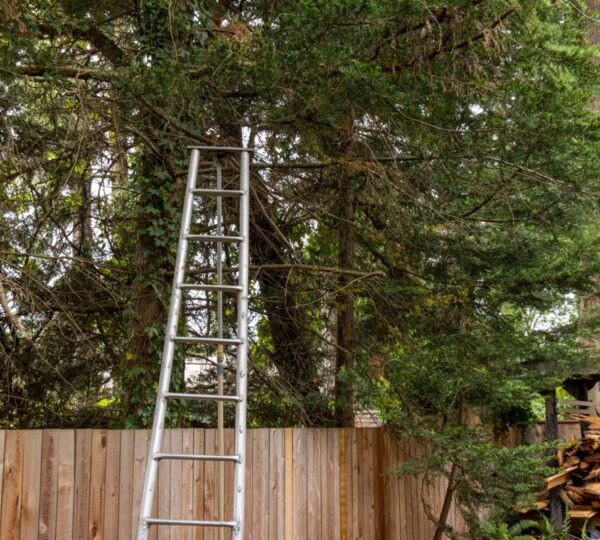
However, instead of retreating, the dog continued to remain close to the ladder, showing persistent attention toward the homeowner and maintaining an alert posture.
The repeated attempts by the animal to approach the ladder created a moment of distraction that temporarily interrupted the pruning activity and required the homeowner to pause.
After a brief moment of confusion, the situation was reassessed more carefully, taking into account the dog’s unusually focused and insistent behavior.
The animal’s actions included pacing, looking upward, and positioning itself near the base of the ladder in a way that suggested heightened alertness rather than simple play.
This change in behavior led the homeowner to reconsider the situation and descend partially to ensure both safety and control over the environment before continuing the task.
Shortly after stepping down, attention was given to re-evaluating the ladder’s stability and surrounding ground conditions to ensure no unnoticed hazards were present.
It was at this point that the importance of the interruption became clearer, as continued focus on the tree trimming could have increased the risk of imbalance.
Ladders used for outdoor maintenance require constant attention to positioning, and even minor distractions can lead to loss of balance or unsafe movement at height.
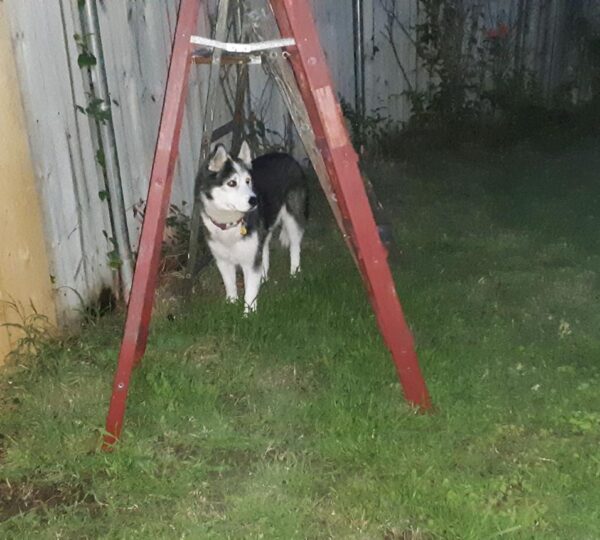
The dog remained close during this reassessment, continuing to exhibit alert behavior and staying near the base of the ladder without wandering away.
Although the exact motivation behind the animal’s behavior cannot be definitively determined, dogs are known to respond strongly to changes in human movement and environmental cues.
In this case, the persistent attention from the dog may have inadvertently encouraged the homeowner to slow down and reassess safety conditions more carefully.
After a short pause, the homeowner decided to adjust the positioning of the ladder and delay the pruning activity until conditions felt more stable and controlled.
The interruption, initially perceived as disruptive, ultimately contributed to a more cautious approach to the task, reducing potential risk during elevated work.
Once the immediate situation was stabilized, the dog gradually calmed and returned to a more relaxed posture, remaining near the garden area.
The remainder of the task was approached with increased awareness, ensuring that each step involving the ladder and pruning tools was carried out carefully.
This incident highlighted how unexpected animal behavior can sometimes draw attention to overlooked safety factors in everyday household activities.
It also emphasized the importance of maintaining focus and periodically reassessing equipment stability during any task involving height or tools.
Even routine chores such as tree pruning can present hidden risks when environmental conditions and attention levels are not fully aligned.
The presence of a pet in such environments adds an additional dynamic, as animals may react instinctively to changes that humans do not immediately notice.
In this situation, the dog’s persistent actions resulted in a temporary pause that allowed for reassessment and risk reduction before continuing work.
Over time, the experience served as a reminder that safety in household maintenance often depends on both preparation and responsiveness to unexpected interruptions.
While no accident occurred, the event reinforced the importance of caution, especially when using ladders near trees or uneven outdoor surfaces.
The interaction between the homeowner and the dog became an example of how attentiveness, even when unplanned, can influence the outcome of a routine task.
Ultimately, the situation concluded safely, with the pruning work either completed later or adjusted to a safer time and method depending on conditions.
The dog’s behavior, while initially misunderstood, played a role in prompting a pause that may have prevented a potential fall or injury during ladder use.
Such moments illustrate how everyday domestic environments can involve unpredictable elements that require flexibility and awareness.
In the end, the experience reinforced a simple but important lesson about safety, attention, and the unexpected ways animals can influence human decisions during routine activities.

