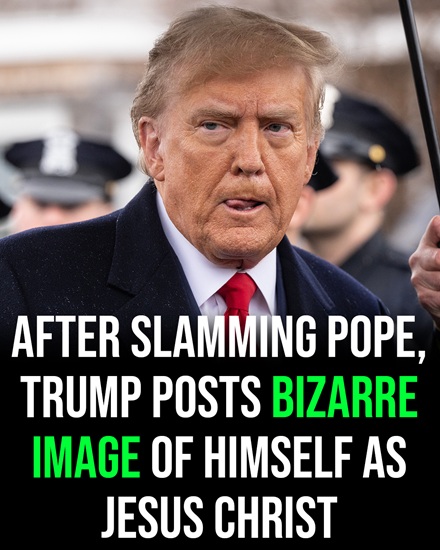
Recent online discussions have drawn significant attention to former U.S. President Donald Trump after claims circulated that he shared a highly symbolic image on his social media platform, Truth Social, sparking widespread debate across digital spaces.
The narrative began when users on social media platforms reported that Trump had posted an image described as AI-generated, featuring him in a religiously symbolic setting that quickly became the subject of online interpretation and controversy.
According to circulating descriptions, the image reportedly depicted Trump wearing flowing white and red robes, positioned in a dramatic scene where he appears to be performing a healing gesture over an individual lying in a hospital bed.
Many users compared the imagery to traditional religious artwork, particularly depictions associated with spiritual healing figures, which contributed to the strong emotional reactions seen across various online communities.
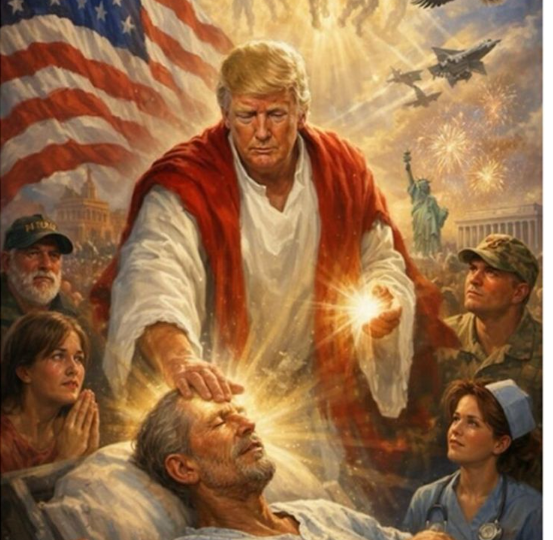
The composition of the alleged image is frequently described as highly symbolic, incorporating visual elements such as light effects, dramatic positioning, and a staged environment designed to emphasize influence and authority.
Reports circulating online suggest that additional figures were visible in the background, including individuals portrayed as medical staff, observers, and others reacting emotionally to the central scene.
Some descriptions also mention the presence of national and symbolic imagery, including references to American landmarks and patriotic visual elements, which intensified interpretations of political messaging.
However, it is important to note that the exact content and authenticity of the image remain based on social media claims and user-shared descriptions rather than independently verified media documentation.
The timing of the alleged post has also been widely discussed online, with claims that it appeared shortly after Trump made critical remarks directed toward Pope Leo XIV in a separate online message.
According to circulating posts, Trump’s comments reportedly included criticism of the Pope’s political stance and public statements related to international conflicts and foreign policy matters.
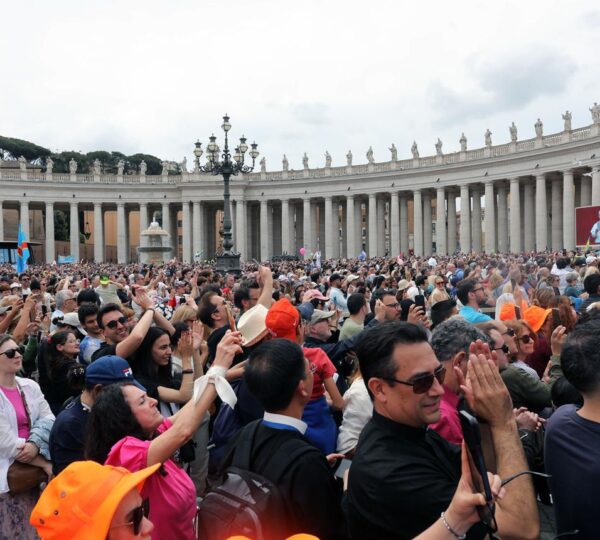
These claims further suggest that the exchange contributed to heightened online attention, as users connected the alleged image with ongoing debates about politics, religion, and public messaging.
At the same time, the figure referred to as Pope Leo XIV in these discussions has been described online as a religious leader who has spoken about global conflict, humanitarian concerns, and the importance of peace.
Some online summaries attribute statements to him that emphasize opposition to violence and support for diplomatic resolution in international disputes, although these statements have not been consistently verified across official sources.
In response to the broader narrative, social media users reportedly shared reactions ranging from criticism to support, reflecting the highly polarized nature of political content online.
Supporters in some discussions interpreted the alleged image as symbolic, artistic, or expressive, viewing it as part of a broader pattern of unconventional political communication.
Critics, however, argued that the use of religious symbolism in political imagery may raise ethical concerns, especially when interpreted as blending spiritual themes with political identity.
This divide in interpretation is common in digital environments, where visual content is rapidly shared and reinterpreted across different audiences with varying perspectives.
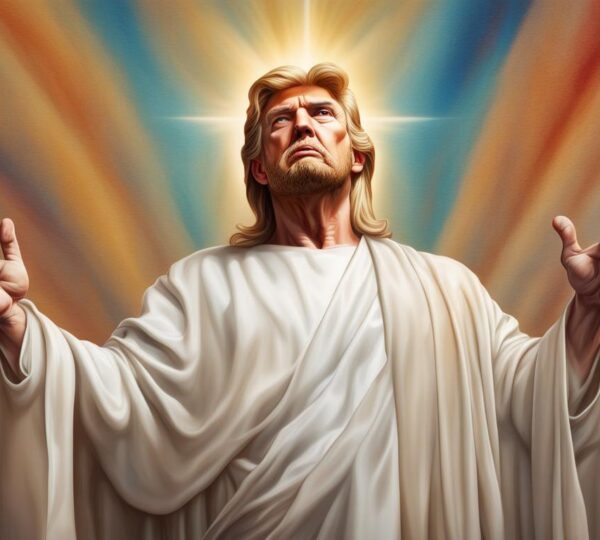
Online commentary also highlighted concerns about the increasing use of AI-generated imagery in political communication, which has become a growing topic of public discussion in recent years.
Experts in media literacy often emphasize that AI-generated visuals can easily influence perception, especially when shared without clear context or official confirmation of authenticity.
In this case, the lack of verified sourcing has contributed to uncertainty regarding the origin, intent, and accuracy of the circulating descriptions of the image.
The broader conversation also reflects ongoing debates about how public figures use digital platforms to communicate symbolic messages to large audiences.
Historically, Trump’s social media activity has often attracted attention for its direct tone, strong imagery, and engagement-driven communication style.
Observers have noted that his posts frequently generate rapid public reaction, particularly when they involve controversial or visually striking content.
In previous instances, Trump has been associated in online discussions with the sharing of edited or symbolic images that sparked debate about tone and messaging.
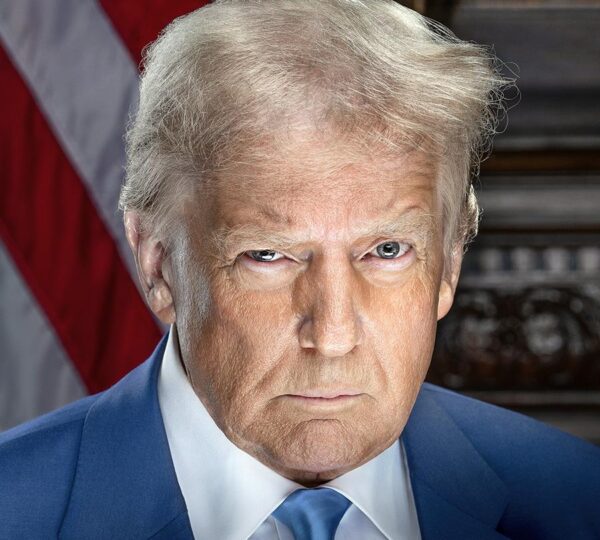
These discussions often focus not only on the content itself but also on the broader implications of political communication in the digital age.
As a result, each new viral claim involving imagery tends to become part of a larger pattern of interpretation, analysis, and public debate.
Social media platforms play a significant role in amplifying such narratives, as users share, comment, and reinterpret content in real time, often before official clarification is available.
This rapid spread of information contributes to situations where perception and interpretation may evolve faster than verified reporting can confirm details.
Media analysts frequently caution that emotionally charged or symbolic content should be evaluated carefully, especially when it involves political and religious themes.
They also note that AI-generated visuals add a new layer of complexity, as they can blur the line between artistic expression and perceived reality.
In the case of this circulating story, no universally confirmed version of the image or accompanying statements has been independently verified by major international news organizations.
Therefore, much of the discussion should be understood as part of ongoing online discourse rather than established factual reporting.
The reactions themselves, however, reflect real trends in how digital audiences respond to symbolic political imagery and controversial communication styles.
Across platforms, users expressed a wide range of opinions, from strong criticism of the alleged imagery to interpretations viewing it as political expression or symbolic messaging.
This diversity of response highlights the polarized nature of modern political communication, especially when it intersects with religious symbolism.
In addition, the conversation illustrates how quickly online narratives can form around a single image or claim, regardless of its verified authenticity.
It also demonstrates how public figures remain central to viral content cycles, where even unconfirmed posts can generate significant global attention.
Ultimately, the discussion surrounding this alleged image reflects broader questions about the role of artificial intelligence, symbolism, and political communication in today’s digital landscape.
It also raises ongoing debates about interpretation, responsibility, and the impact of viral content on public perception.
In conclusion, while the circulating narrative about Donald Trump and the alleged AI-generated image has gained attention online, it remains part of unverified social media discourse rather than confirmed reporting.
As with many viral topics, distinguishing between verified information and online interpretation is essential for maintaining accurate understanding in an increasingly fast-moving digital environment.
