
The United States and Iran recently managed to negotiate a temporary ceasefire after more than a month of escalating tensions and military confrontations.
This breakthrough, lasting two weeks, has brought cautious relief to international observers and global markets.
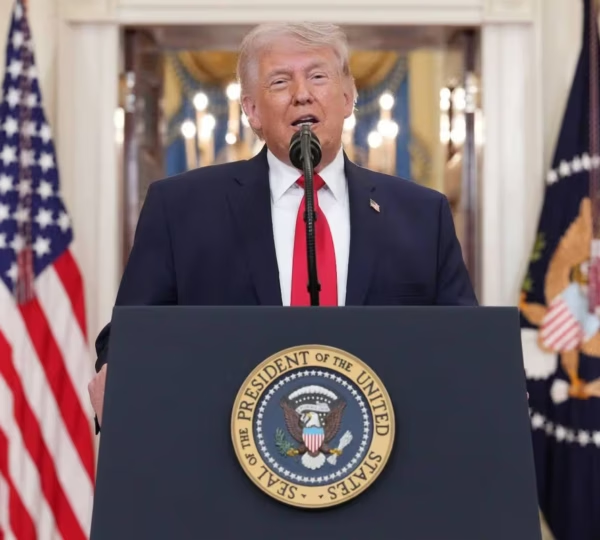
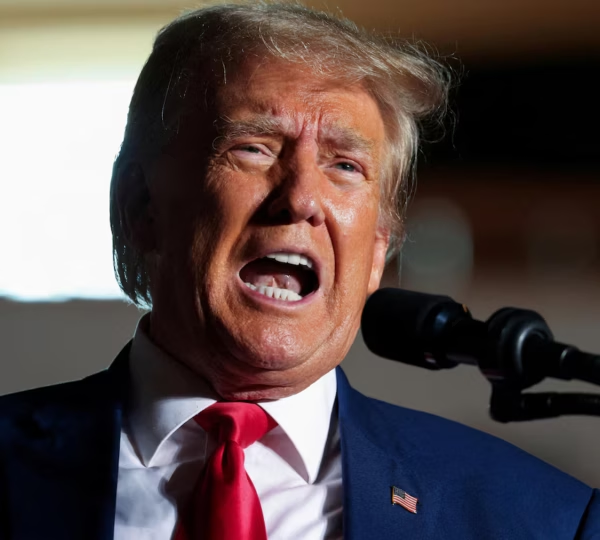
President Donald Trump played a central role in the negotiations, issuing a public statement on Truth Social explaining the conditions under which the United States would suspend its planned military strikes against Iran. The announcement quickly went viral.
According to Trump, the ceasefire is conditional on Iran’s agreement to fully reopen the Strait of Hormuz safely and immediately. The Strait is a strategic shipping route essential for global oil exports and regional stability.
Trump’s post emphasized that the United States had received a detailed 10-point proposal from Iran, describing it as a “workable basis on which to negotiate.” This proposal formed the foundation of the ceasefire agreement that followed.
The ceasefire, though brief, has been widely welcomed across the world. Markets reacted positively to the news, as the risk of military escalation in the Persian Gulf region had created significant economic uncertainty.
In his Truth Social statement, Trump described conversations with Pakistani leaders, Prime Minister Shehbaz Sharif and Field Marshal Asim Munir. They reportedly requested that he hold off on military action while negotiations continued.
Trump wrote, “Based on conversations with Prime Minister Shehbaz Sharif and Field Marshal Asim Munir, and subject to the Islamic Republic of Iran agreeing to the COMPLETE, IMMEDIATE, and SAFE OPENING of the Strait of Hormuz, I agree to suspend bombing for two weeks.”
The 10-point ceasefire proposal from Iran included several key demands. Firstly, both sides would stop attacks immediately, ensuring a halt in hostilities while the truce was observed and verified by international monitors.
Secondly, Iran demanded the lifting of all economic sanctions. The country has faced severe sanctions for years, which have affected its economy and population, creating pressure that the government sought to alleviate through this agreement.
A third point in the proposal was the withdrawal of U.S. forces from the region. Iran has consistently opposed American military presence in neighboring territories, viewing it as a threat to national sovereignty and regional stability.
Iran also insisted on retaining its nuclear program, asserting its right to enrich uranium for peaceful purposes. This demand reflects ongoing debates over Iran’s nuclear capabilities and international agreements governing nuclear technology.
Control over the Strait of Hormuz was another critical point. Iran emphasized that authority over the waterway must be respected, highlighting the strait’s importance for global oil shipments and maritime security in one of the world’s most strategic chokepoints.
Additionally, Iran requested a reopening of international shipping under agreed rules and safety guarantees. This measure was intended to ensure that commercial vessels could pass freely without the threat of attacks or incidents during the ceasefire period.
The proposal also included a legally binding promise of non-aggression, preventing future attacks on either side. Iran sought assurances that any military escalation would be avoided and that commitments would be enforceable under international law.
Iran called for access to frozen funds held overseas. By unfreezing financial assets, the country aimed to stabilize its economy and secure the resources necessary for reconstruction and recovery after months of heightened conflict.
Compensation for war-related damage was another component. Iran requested that the United States provide reparations for destruction caused by previous military operations, highlighting the long-term economic and social consequences of conflict.
Finally, Iran sought a United Nations-backed deal to ensure the agreement would be formal, enforceable, and recognized globally. Involving the UN would provide international oversight and credibility to the ceasefire terms.
Despite the announcement of the truce, Trump’s earlier threats to Iran had already sparked outrage. At one point, he warned that failure to reach an agreement could lead to “unleashing hell” on Iran and destroying “a whole civilization.”
These comments drew criticism from numerous individuals, including former supporters and media figures such as Alex Jones and Tucker Carlson. They questioned the morality and prudence of threatening large-scale violence against civilians.
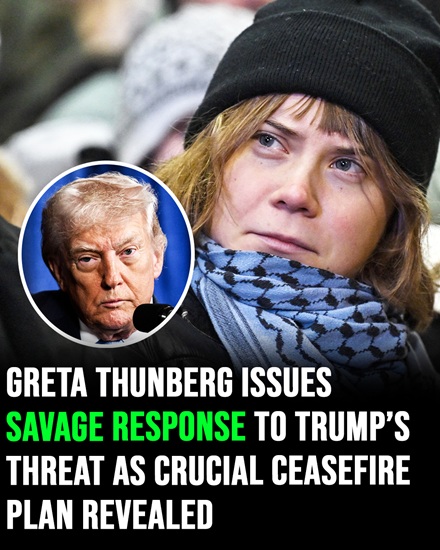
Among those reacting strongly to Trump’s remarks was 23-year-old Swedish activist Greta Thunberg. Known for her outspoken environmental advocacy, Thunberg publicly condemned the president’s statements on social media and other platforms.
In an Instagram video posted shortly before the ceasefire, Thunberg highlighted the broader implications of Trump’s threats, connecting them to issues of war crimes, human rights, and the destruction of entire populations during conflict.
“The president of the United States just said that a whole civilisation will die tonight, never to be brought back again,” Thunberg said, emphasizing the extreme nature of the statements and the lack of immediate global outrage.
She continued, questioning global passivity: “And no one is reacting. This speaks for itself. What the f*** is anyone even doing at this point? We have normalized genocide, total annihilation of entire people, and environmental destruction.”
Thunberg criticized the impunity with which corrupt, racist war criminals operate, drawing attention to both environmental and humanitarian crises. She linked these issues to the potential devastation threatened by military action in Iran.
The activist concluded by urging decisive action: “But even though we have allowed far too much so far, it is not too late to say stop.” Her message reinforced the need for accountability and global intervention against threats of mass violence.
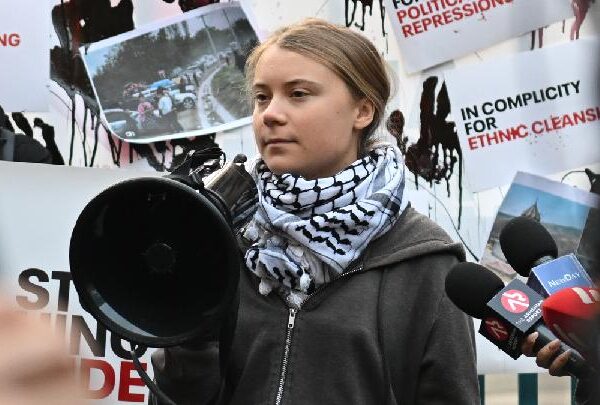
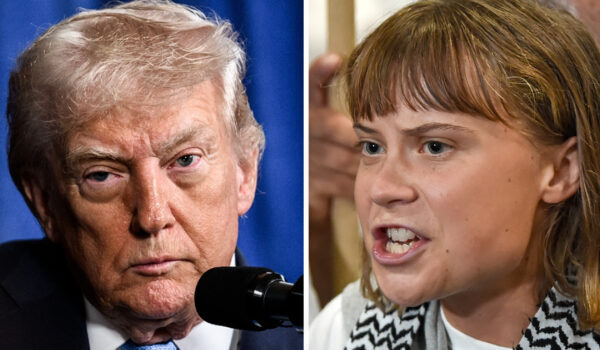
This is not the first instance of Thunberg criticizing Donald Trump. The two have publicly clashed in the past over issues ranging from climate change to political rhetoric, reflecting their contrasting approaches to global leadership.
Observers noted that the ceasefire agreement, while temporary, could open the door to longer-term negotiations. The two-week window allows diplomats to finalize the details and potentially convert the conditional truce into a more permanent resolution.
Trump described the ceasefire as a period to address previously contentious points. He emphasized that nearly all issues had been agreed upon, but the two-week period was necessary to formalize the agreement and ensure compliance from both sides.
The international community welcomed the announcement, with experts praising the potential reduction in military tension and the prevention of further civilian casualties. Analysts also noted that stabilizing the Strait of Hormuz could positively impact global trade.
Despite these positive developments, reactions to Trump’s earlier threats remain. Many continue to debate the ethical and strategic implications of aggressive rhetoric, highlighting the importance of careful diplomacy and measured communication in high-stakes negotiations.
Thunberg’s response drew attention to the broader ethical issues surrounding modern warfare. Her statements connected political decisions with environmental destruction, humanitarian crises, and long-term consequences for global security and sustainability.
The ceasefire also highlighted the role of digital platforms in modern diplomacy. Trump’s announcements on Truth Social and Thunberg’s video on Instagram demonstrate how social media can influence public perception and international response to critical events.
Economic analysts noted that even a short ceasefire can have immediate positive effects. Reduced risk of military escalation in the Persian Gulf often leads to lower oil prices, improved investor confidence, and greater stability in international financial markets.
Military experts observed that both sides could use the two-week period strategically. The ceasefire allows Iran and the United States to de-escalate while maintaining readiness, ensuring that forces are positioned for defensive purposes rather than offensive aggression.
The agreement also underscores the importance of regional diplomacy. Countries like Pakistan played a key role in urging restraint, demonstrating how intermediaries can influence negotiations and prevent further escalation in tense geopolitical situations.
For Iran, the ceasefire provided an opportunity to seek relief from sanctions and stabilize its economy. Access to frozen funds and assurances regarding the Strait of Hormuz could alleviate economic pressures that have long affected ordinary citizens.
Meanwhile, for the United States, the truce allowed a temporary pause to avoid large-scale military engagement. The president’s statement framed the ceasefire as a conditional success, contingent on Iran’s adherence to agreed terms and safe navigation of strategic waterways.
While the two-week duration may seem brief, it is significant in diplomatic terms. It provides a window for dialogue, trust-building, and verification measures that are essential for sustainable conflict resolution in volatile regions.
Analysts emphasized that public scrutiny plays a vital role in shaping government behavior. Global outrage or support can influence political decisions, as seen in responses to both Trump’s threats and Thunberg’s criticism, reflecting the power of civic engagement.
The ceasefire’s success depends on monitoring and compliance. International observers, likely including UN representatives, will be critical in verifying that both sides honor the agreement and avoid provocations that could reignite hostilities during this period.
In conclusion, the temporary U.S.-Iran ceasefire represents a cautious but meaningful step toward de-escalation. While Donald Trump’s aggressive rhetoric caused widespread concern, the negotiated truce offers a chance for diplomacy, economic stability, and a reduction in civilian risk.
Greta Thunberg’s response serves as a reminder of the ethical and environmental dimensions of conflict. Her intervention highlights that global citizens continue to demand accountability, urging leaders to consider human survival and planetary well-being in decisions of war and peace.
The unfolding situation will continue to attract international attention. Observers, activists, and citizens alike will be watching closely to ensure that promises made during the ceasefire are honored and that diplomacy prevails over threats of mass destruction.

