

When Jeni first met her husband Ray, she had one thing very clear — she didn’t want children. Ray, however, dreamed of a large family with at least four kids.
At the time, it seemed like an impossible idea to Jeni. Now, more than three decades later, the couple is the proud parents of sixteen children.
Their journey from a young couple with differing ideas about family size to managing an extraordinary household is both inspiring and remarkable.
Life for the Bonell family, living in Toowoomba, Queensland, is far from ordinary. Every day involves balancing the needs of children spanning ages ten to thirty-five, alongside school, jobs, activities, and countless household responsibilities.
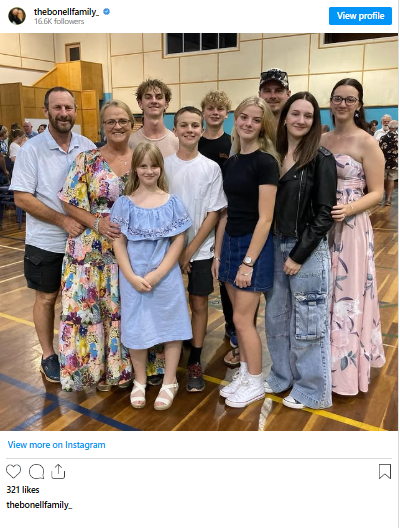
Feeding their family alone is a full-time task. Jeni spends about $600 every week on groceries, a figure that has increased due to inflation. Stocking a pantry for sixteen children requires careful planning and efficient shopping.
Their grocery list is astonishing. Each week they consume roughly 50 liters of milk, 45 tubs of yogurt, four dozen eggs, fourteen boxes of cereal, and one to two loaves of bread every single day. Every item must last the week.
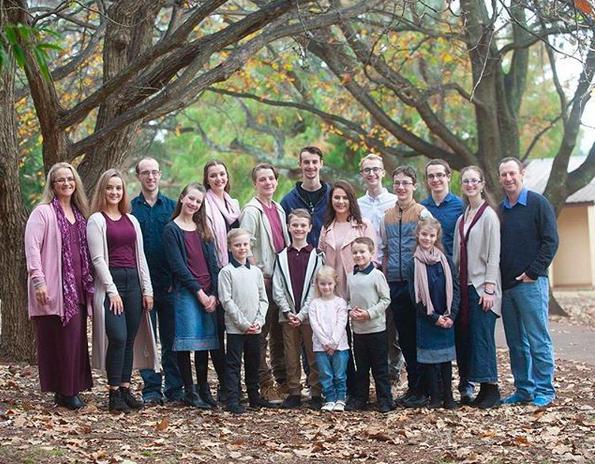
Getting a good family photo is a challenge. “You need an extra-wide lens,” Jeni laughs. With sixteen children, someone is always blinking, making a funny face, or looking away, but the family embraces these imperfections with humor.
The Bonells’ daily life is a finely tuned routine. Mornings are especially busy, with children preparing for three different schools, and the household bustling with activity. Every day requires coordination, patience, and teamwork to ensure nothing is missed.

Evening routines are equally chaotic. Dinner often involves feeding anywhere from eight to more than twenty people. Despite the unpredictability, mealtimes are an anchor, offering a sense of togetherness and stability amidst their busy lives.
Budgeting is essential for the family. Jeni is an expert in stretching every dollar, often creating meals that cost between $2 and $10 per person. She shares tips on her YouTube channel, helping viewers manage their own food costs efficiently.
Chores are an important part of the family system. Children aged eight and older are included in a roster, rotating responsibilities like cooking, mopping, and packing the table. This teaches responsibility and teamwork from a young age.
Cooking skills are nurtured early. Jeni proudly notes that her twelve-year-old can prepare a roast dinner for twenty people with minimal supervision. Skills like this allow the household to run smoothly despite its size and complexity.
Laundry is another monumental task. Jeni completes three full loads each day, equivalent to about six average-sized households. Keeping uniforms, sports gear, and everyday clothing clean requires careful planning and continuous effort.
Financial pressures are real, despite both parents working full-time and paying off their mortgage. The Bonells emphasize living within their means while teaching their children the value of hard work and sacrifice, without relying on government support.
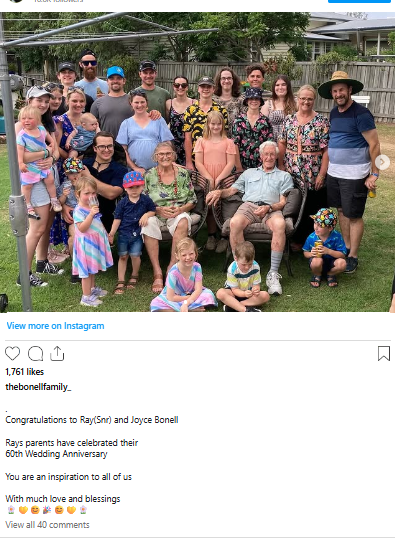
Criticism is something the family faces regularly for having so many children. Jeni insists that their large family is a personal choice, not solely influenced by their faith. “God has a funny sense of humour,” she jokes, acknowledging life’s unpredictability.
Ray, an electrician, expresses that having sixteen children is not for everyone but works perfectly for their family. Together, he and Jeni navigate the chaos with love, humor, and dedication, creating a strong and joyful household environment.
Despite their hectic lifestyle, Jeni and Ray ensure they spend time together. Small moments, like sharing a coffee or talking after the children are asleep, help maintain their relationship and reinforce the partnership that supports their large family.
Their older children have now left home, with two married and adding grandchildren to the family dynamic. This new phase brings joy, and the Bonells continue to embrace the growth of their extended family with enthusiasm.
Organization is key to keeping the household running. From prepping school uniforms and lunches the night before to detailed chore rosters, every member contributes. Structure allows the Bonells to maintain order despite the inherent chaos of a sixteen-child family.
Snacks are a staple in their busy household. Jeni favors simple, budget-friendly options like air fryer egg cups and pizza bites. These meals are easy to prepare, freeze well, and ensure her children have nutritious snacks for school and activities.
Humor and love are central to family life. Despite the daily challenges, the Bonells maintain a positive atmosphere. Laughter is a constant presence, and even small mishaps become memorable moments that strengthen bonds among the children and parents.
For the Bonells, family life is a continuous adventure. From grocery shopping and cooking to laundry and school runs, each day requires energy and patience. Yet, the rewards — love, unity, and shared memories — make every effort worthwhile.
The Bonells’ story shows that with creativity, structure, and teamwork, a large family can thrive. Jeni and Ray demonstrate how planning, love, and humor can turn daily chaos into meaningful experiences for every family member.
Their journey reminds us that family size is personal, and success comes from commitment and cooperation. While sixteen children is extraordinary, the Bonells prove that dedication, organization, and affection can make it all possible.

Through their YouTube presence and interviews, the Bonells inspire others to find joy in family life, regardless of size. They offer practical advice while highlighting the emotional fulfillment that comes from raising children in a supportive, loving environment.
At the heart of their home is a philosophy of participation. Every child, from age eight upward, contributes, learning essential life skills. This approach fosters independence, responsibility, and mutual respect among the sixteen siblings, preparing them for adulthood.
In conclusion, the Bonell family exemplifies how determination, humor, and teamwork can create a thriving, happy household. Jeni and Ray’s experience proves that even with sixteen children, life can be full of laughter, love, and unforgettable memories.

