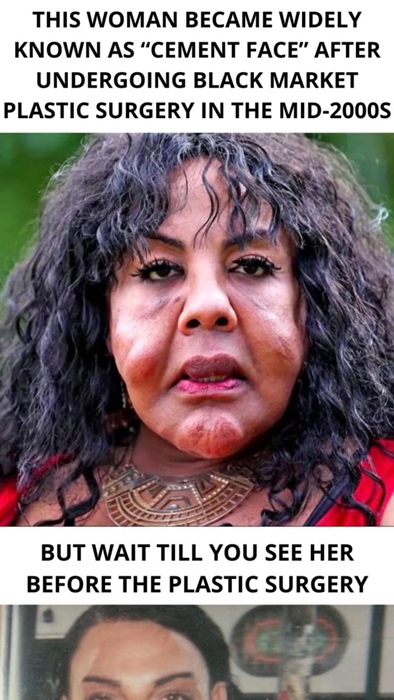
“She Was Injected With Cement — See Her Shocking Transformation 14 Years Later!”
Rajee Narinesingh’s life story is one of survival, resilience, and transformation shaped by both personal struggle and systemic failure.
For many years, she was widely and unfairly known by the dehumanizing nickname “Cement Face.”
A label that stripped her of dignity and reduced her suffering to a spectacle. Behind that headline was a human being whose experience reveals the very real dangers of illegal cosmetic procedures, unlicensed medical practices, and the lack of safe, affordable healthcare options—especially for transgender individuals and other marginalized communities.
Born in New York City, Rajee Narinesingh grew up during a time when discussions about gender identity were far less visible or understood than they are today.
From an early age, she experienced a profound disconnect between her inner sense of self and the body she was born into.
Like many transgender women, she faced years of emotional conflict, social pressure, and limited support.
During her youth and early adulthood, transgender healthcare was rarely discussed in mainstream medicine, and gender-affirming procedures were often inaccessible due to high costs, social stigma, and widespread discrimination.
For individuals like Rajee, the path to self-acceptance was complicated not only by personal struggles but also by structural barriers.
Medically supervised cosmetic and gender-affirming procedures were often financially unattainable.
Insurance coverage was virtually nonexistent, and many qualified medical professionals refused care outright.
This reality created a dangerous gap—one that underground providers and unlicensed practitioners were quick to exploit.
By the early 2000s, cosmetic procedures were becoming increasingly popular worldwide
. Non-surgical fillers, body contouring, and cosmetic enhancements were widely advertised as fast, affordable, and minimally invasive solutions.
Word-of-mouth recommendations circulated heavily, particularly within vulnerable communities seeking affordable alternatives to licensed plastic surgery.
Promises of dramatic results at low prices were often paired with false claims of medical expertise.
It was within this environment that Rajee Narinesingh encountered Oneal Ron Morris, an individual who falsely presented herself as a medical professional.
Morris later became infamously known in the media as the “toxic tush doctor,” though at the time, many of her clients believed she was offering legitimate cosmetic services.
Rajee, like numerous others, was seeking physical feminization to feel more aligned with her identity and more confident in her appearance.
In 2005, Rajee underwent a series of illegal injections administered by Morris. She was told that the substances being injected were safe cosmetic fillers.
In reality, they were not approved for human use and included industrial materials such as cement, superglue, and tire sealant.
These substances hardened inside her body, causing immediate and long-term damage.
The effects were severe and irreversible in many areas. Her face, breasts, hips, and buttocks became disfigured as the materials hardened and migrated beneath the skin.
She experienced chronic pain, inflammation, and serious health risks, including the potential for life-threatening complications.
Over time, the disfigurement became increasingly visible, profoundly affecting her mental health and quality of life.
The physical damage was only one part of the trauma. Rajee also endured intense emotional and psychological suffering.
She became socially isolated, withdrawing from public spaces due to fear, shame, and ridicule.
Media coverage at the time often lacked empathy, focusing on shock value rather than the broader issues of medical fraud, patient exploitation, and systemic healthcare inequality.
Instead of being treated as a victim, she was frequently portrayed as a curiosity.
For years, Rajee lived with the consequences of those illegal procedures, unsure if meaningful medical help was even possible.
Removing hardened foreign substances from soft tissue is far more complex than reversing standard cosmetic surgery. Many surgeons were hesitant to intervene due to the extreme risks involved.
A turning point came when Rajee appeared on the reality medical television series Botched. The show, which features board-certified plastic surgeons correcting severe cosmetic surgery complications, provided her with access to legitimate, experienced medical professionals.
More importantly, it offered her something she had been denied for years: compassion, respect, and patient-centered care.
The surgeons on Botched carefully evaluated her condition and developed a plan focused on safety rather than perfection.
The corrective process involved multiple surgeries spread over time, each carrying significant risk.
The goal was not cosmetic enhancement, but harm reduction—removing as much foreign material as possible while preserving function and minimizing further damage.
The procedures were long, technically challenging, and emotionally demanding. Recovery was slow and painful, requiring patience and resilience.
While not all of the damage could be reversed, the improvements were substantial.
Rajee’s facial structure softened, inflammation was reduced, and her appearance became more aligned with how she felt internally. Just as importantly, her confidence began to return.
Her appearance on Botched shifted public perception. Audiences were introduced not to a headline, but to a survivor.
Her story helped raise awareness about the dangers of unregulated cosmetic injections and the importance of choosing licensed, board-certified medical professionals.
Meanwhile, legal consequences were unfolding for Oneal Ron Morris. After years of investigations and testimony from multiple victims, Morris was convicted on several charges related to practicing medicine without a license.
In 2017, following the death of a patient linked to her illegal procedures, she was sentenced to ten years in prison.
The case became a widely cited example in discussions about medical fraud, patient safety, and the urgent need for stricter enforcement of cosmetic surgery regulations.
In February 2021, Morris contacted Rajee directly, claiming to have been released early from prison and asking for forgiveness.
Rajee publicly addressed the message with remarkable emotional maturity. While she expressed uncertainty about the accuracy of Morris’s claims, she chose to forgive her.
Rajee emphasized that holding onto anger would not bring healing and that personal growth can emerge even from profound suffering.
Today, Rajee Narinesingh is no longer defined by the harm inflicted upon her. She has rebuilt her life as an activist, author, public speaker, and advocate.
She openly identifies as an American transgender woman and has used her platform to educate others about medical ethics, body autonomy, and the importance of informed consent.
She has appeared on more than 30 television programs internationally, sharing her story with honesty and clarity.
Rather than focusing on shock, her message centers on prevention, awareness, and empowerment.
She speaks candidly about the pressures that drive people toward unsafe cosmetic procedures and the need for accessible, affordable, and competent healthcare.
Rajee is also an accomplished writer and author of multiple books that document her life journey.
Her work blends memoir, spiritual reflection, and social commentary, offering readers insight into identity, survival, and personal transformation.
Through her writing, she encourages self-acceptance and resilience, while also addressing broader systemic issues affecting transgender communities.
Her story is frequently referenced by healthcare professionals, legal experts, and advocacy organizations working to improve patient safety and expand access to gender-affirming care.
It is used as a cautionary example in discussions about non-FDA-approved fillers, underground cosmetic markets, and the real-world consequences of medical exploitation.
Most importantly, Rajee has reclaimed her narrative. What was once used to ridicule or sensationalize her has become a powerful tool for education and change.
She stands today not as a victim, but as a survivor whose voice continues to protect others from similar harm.
Rajee Narinesingh’s transformation extends far beyond the physical. It is emotional, psychological, and deeply human.
Her life serves as a reminder that ethical medicine, informed consent, and compassion are not optional—they are essential.
In industries shaped by profit, beauty standards, and vulnerability, her story underscores why accountability and humanity must always come first.
Rajee Narinesingh’s life story is one of survival, resilience, and transformation shaped by both personal struggle and systemic failure.
For many years, she was widely and unfairly known by the dehumanizing nickname “Cement Face.”
A label that stripped her of dignity and reduced her suffering to a spectacle. Behind that headline was a human being whose experience reveals the very real dangers of illegal cosmetic procedures, unlicensed medical practices, and the lack of safe, affordable healthcare options—especially for transgender individuals and other marginalized communities.
Born in New York City, Rajee Narinesingh grew up during a time when discussions about gender identity were far less visible or understood than they are today.
From an early age, she experienced a profound disconnect between her inner sense of self and the body she was born into.
Like many transgender women, she faced years of emotional conflict, social pressure, and limited support.
During her youth and early adulthood, transgender healthcare was rarely discussed in mainstream medicine, and gender-affirming procedures were often inaccessible due to high costs, social stigma, and widespread discrimination.
For individuals like Rajee, the path to self-acceptance was complicated not only by personal struggles but also by structural barriers.
Medically supervised cosmetic and gender-affirming procedures were often financially unattainable.
Insurance coverage was virtually nonexistent, and many qualified medical professionals refused care outright.
This reality created a dangerous gap—one that underground providers and unlicensed practitioners were quick to exploit.
By the early 2000s, cosmetic procedures were becoming increasingly popular worldwide
. Non-surgical fillers, body contouring, and cosmetic enhancements were widely advertised as fast, affordable, and minimally invasive solutions.
Word-of-mouth recommendations circulated heavily, particularly within vulnerable communities seeking affordable alternatives to licensed plastic surgery.
Promises of dramatic results at low prices were often paired with false claims of medical expertise.
It was within this environment that Rajee Narinesingh encountered Oneal Ron Morris, an individual who falsely presented herself as a medical professional.
Morris later became infamously known in the media as the “toxic tush doctor,” though at the time, many of her clients believed she was offering legitimate cosmetic services.
Rajee, like numerous others, was seeking physical feminization to feel more aligned with her identity and more confident in her appearance.
In 2005, Rajee underwent a series of illegal injections administered by Morris. She was told that the substances being injected were safe cosmetic fillers.
In reality, they were not approved for human use and included industrial materials such as cement, superglue, and tire sealant.
These substances hardened inside her body, causing immediate and long-term damage.
The effects were severe and irreversible in many areas. Her face, breasts, hips, and buttocks became disfigured as the materials hardened and migrated beneath the skin.
She experienced chronic pain, inflammation, and serious health risks, including the potential for life-threatening complications.
Over time, the disfigurement became increasingly visible, profoundly affecting her mental health and quality of life.
The physical damage was only one part of the trauma. Rajee also endured intense emotional and psychological suffering.
She became socially isolated, withdrawing from public spaces due to fear, shame, and ridicule.
Media coverage at the time often lacked empathy, focusing on shock value rather than the broader issues of medical fraud, patient exploitation, and systemic healthcare inequality.
Instead of being treated as a victim, she was frequently portrayed as a curiosity.
For years, Rajee lived with the consequences of those illegal procedures, unsure if meaningful medical help was even possible.
Removing hardened foreign substances from soft tissue is far more complex than reversing standard cosmetic surgery. Many surgeons were hesitant to intervene due to the extreme risks involved.
A turning point came when Rajee appeared on the reality medical television series Botched. The show, which features board-certified plastic surgeons correcting severe cosmetic surgery complications, provided her with access to legitimate, experienced medical professionals.
More importantly, it offered her something she had been denied for years: compassion, respect, and patient-centered care.
The surgeons on Botched carefully evaluated her condition and developed a plan focused on safety rather than perfection.
The corrective process involved multiple surgeries spread over time, each carrying significant risk.
The goal was not cosmetic enhancement, but harm reduction—removing as much foreign material as possible while preserving function and minimizing further damage.
The procedures were long, technically challenging, and emotionally demanding. Recovery was slow and painful, requiring patience and resilience.
While not all of the damage could be reversed, the improvements were substantial.
Rajee’s facial structure softened, inflammation was reduced, and her appearance became more aligned with how she felt internally. Just as importantly, her confidence began to return.
Her appearance on Botched shifted public perception. Audiences were introduced not to a headline, but to a survivor.
Her story helped raise awareness about the dangers of unregulated cosmetic injections and the importance of choosing licensed, board-certified medical professionals.
Meanwhile, legal consequences were unfolding for Oneal Ron Morris. After years of investigations and testimony from multiple victims, Morris was convicted on several charges related to practicing medicine without a license.
In 2017, following the death of a patient linked to her illegal procedures, she was sentenced to ten years in prison.
The case became a widely cited example in discussions about medical fraud, patient safety, and the urgent need for stricter enforcement of cosmetic surgery regulations.
In February 2021, Morris contacted Rajee directly, claiming to have been released early from prison and asking for forgiveness.
Rajee publicly addressed the message with remarkable emotional maturity. While she expressed uncertainty about the accuracy of Morris’s claims, she chose to forgive her.
Rajee emphasized that holding onto anger would not bring healing and that personal growth can emerge even from profound suffering.
Today, Rajee Narinesingh is no longer defined by the harm inflicted upon her. She has rebuilt her life as an activist, author, public speaker, and advocate.
She openly identifies as an American transgender woman and has used her platform to educate others about medical ethics, body autonomy, and the importance of informed consent.
She has appeared on more than 30 television programs internationally, sharing her story with honesty and clarity.
Rather than focusing on shock, her message centers on prevention, awareness, and empowerment.
She speaks candidly about the pressures that drive people toward unsafe cosmetic procedures and the need for accessible, affordable, and competent healthcare.
Rajee is also an accomplished writer and author of multiple books that document her life journey.
Her work blends memoir, spiritual reflection, and social commentary, offering readers insight into identity, survival, and personal transformation.
Through her writing, she encourages self-acceptance and resilience, while also addressing broader systemic issues affecting transgender communities.
Her story is frequently referenced by healthcare professionals, legal experts, and advocacy organizations working to improve patient safety and expand access to gender-affirming care.
It is used as a cautionary example in discussions about non-FDA-approved fillers, underground cosmetic markets, and the real-world consequences of medical exploitation.
Most importantly, Rajee has reclaimed her narrative. What was once used to ridicule or sensationalize her has become a powerful tool for education and change.
She stands today not as a victim, but as a survivor whose voice continues to protect others from similar harm.
Rajee Narinesingh’s transformation extends far beyond the physical. It is emotional, psychological, and deeply human.
Her life serves as a reminder that ethical medicine, informed consent, and compassion are not optional—they are essential.
In industries shaped by profit, beauty standards, and vulnerability, her story underscores why accountability and humanity must always come first.