
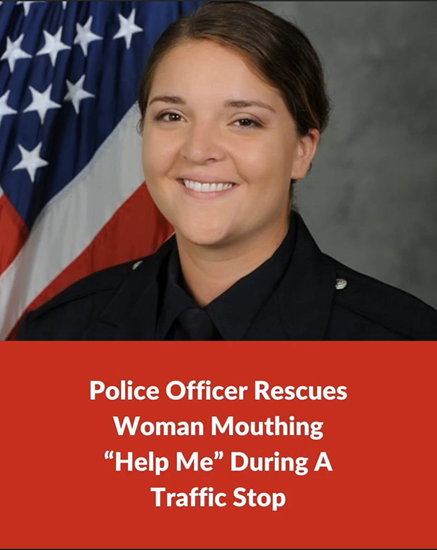
What began as an ordinary traffic stop in North Myrtle Beach, South Carolina, turned into a pivotal moment in a violent crime investigation, thanks to the vigilance and instincts of Officer Kayla Wallace of the North Myrtle Beach Police Department.
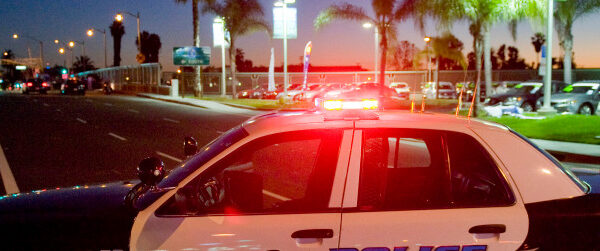
In the early morning hours of May 28, 2023, Officer Wallace was patrolling Highway 17 just 30 minutes before her shift was scheduled to end when she spotted a white Jeep run a red traffic signal.
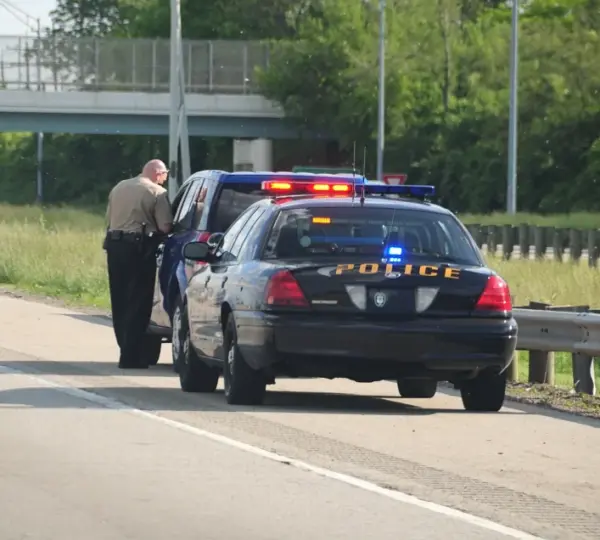
Wallace immediately turned on her patrol lights and pulled the Jeep over. Inside the vehicle were two people: a female driver who appeared visibly shaken and a male passenger whose presence soon became suspicious.
The female driver’s body language and demeanor caught Officer Wallace’s attention. She looked distressed and uneasy, barely able to make eye contact, suggesting that something was amiss beyond a routine traffic violation.
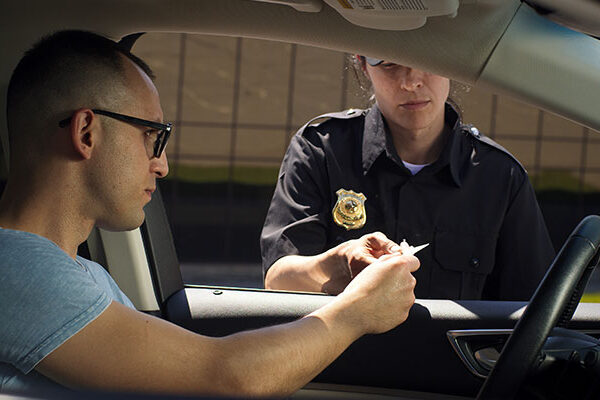
When Wallace first approached the Jeep, the driver opened her door, appearing unsteady. Concerned about officer safety, Wallace instructed her to close the door and continue speaking through the window.
The male passenger chimed in, explaining the windows did not work, but Wallace noticed subtle signs of distress. The driver told Wallace she felt nauseous, adding to the uneasiness of the encounter.
The situation reached a critical moment when the driver, while the male passenger wasn’t watching, silently mouthed the words “Help me” — a desperate plea that Officer Wallace immediately noticed.
Understanding that something was seriously wrong, Wallace acted quickly. She asked the male passenger to step out of the Jeep and placed him in the back of her patrol car to separate him from the driver.
Once the passenger was secured, Wallace returned to the Jeep to speak alone with the female driver. At that point, the woman revealed she had been forced at gunpoint to drive the vehicle, making the encounter no longer just a traffic stop.
According to the police report, the distressed woman told Officer Wallace that the passenger, later identified as Collins Bates, had just shot someone minutes earlier before forcing her into the Jeep and making her flee the scene.
Moments after this revelation, the police dispatcher issued a “Be On the Lookout” (BOLO) alert for a white Jeep involved in a nearby shooting incident, confirming that Wallace had, in fact, stopped a vehicle connected to violent crime.
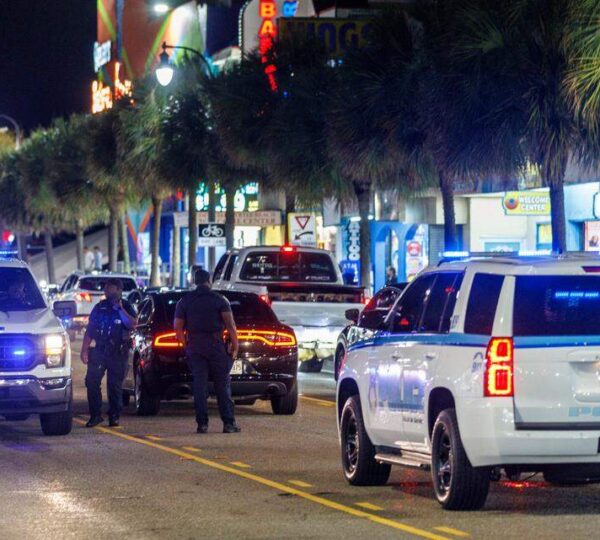
At that point, other county law enforcement units were called in to assist. They arrived at the traffic stop and took the male passenger into custody without further incident.
The arrested man was identified as 29‑year‑old Collins Xavier Manning Bates, a resident of Columbia, South Carolina, who was wanted in connection with a recent shooting in the county.
According to subsequent police records and arrest warrants, Bates had allegedly shot a person outside a local restaurant called The Waterway House, located in the greater Myrtle Beach area.
After the shooting, Bates is accused of threatening another individual and forcing the female driver to transport him away from the scene at gunpoint, igniting a rapid law enforcement response.
Thanks to Officer Wallace’s proactive approach and quick thinking, Bates was located within minutes of the shooting, ending what could have been a far more dangerous situation for the public.
During a search of the Jeep, officers also found a pistol hidden under the seat Bates had occupied, which reportedly matched the firearm used in the earlier shooting incident.
Bates was taken to the J. Reuben Long Detention Center, where he was held without bond as law enforcement prepared formal charges and evidence for the case.
He faces a range of serious felony offenses, including attempted murder, kidnapping, unlawful possession of a firearm, possession of ammunition without a permit, and possession of a weapon during a violent crime.
The arrest highlighted just how important everyday police work can be in preventing further violence. What appeared to be a simple traffic violation revealed a violent offender and potentially saved lives.
The North Myrtle Beach Police Department publicly praised Officer Wallace for her vigilance, noting that she had no prior knowledge of the shooting before the stop but acted decisively when confronted with the victim’s plea.
Officer Pat Wilkinson told media outlets that Wallace’s action exemplified proactive patrol work, emphasizing that officers often make critical decisions based on instincts and careful observation.
Wallace pulled over the Jeep roughly 30 minutes before her shift was to end, underscoring her dedication and commitment to public safety even during the final moments of her duty.
Local residents and community leaders echoed praise for Wallace’s response, saying her attentiveness prevented what could have escalated into additional violence against other civilians in the area.
The incident also sparked conversation about the importance of training officers to recognize subtle signs of distress, including non‑verbal cues like a silent plea for help, which can be life‑saving in dangerous situations.
In press statements, the North Myrtle Beach Police Department reiterated that public safety depends on officers being observant, focused, and prepared to act decisively even when a situation appears routine at first glance.
Law enforcement officials noted that traffic violations often provide opportunities to identify persons of interest, stolen vehicles, and active suspects, illustrating the hidden value of seemingly mundane stops.
Community members commended Officer Wallace on social media and in local interviews, describing her actions as heroic and expressing gratitude that a violent convict was taken off the streets.
Advocates for victims of violent crime also highlighted the case as an example of how law enforcement can build trust within the community by responding with sensitivity and professionalism.
Police records show that the pistol found in the Jeep was significant in linking Bates to the shooting. Ballistics reportedly matched the weapon to shell casings found at the original scene.
Investigators believe Bates’s alleged crime was not random but stemmed from an altercation or dispute earlier in the evening, prompting a rapid escalation into gun violence.
The female driver’s courage in signaling for help, combined with Officer Wallace’s attentiveness, created a rare convergence of victim initiative and police responsiveness that led to a swift resolution.
After Bates’s arrest, the victim was offered support services and counseling, with police ensuring she received care and protection throughout the legal process.
The case remains an example of how ordinary duties like enforcing traffic laws can intersect with serious criminal investigations, highlighting the unpredictable nature of police work in communities across America.
Critics of law enforcement often point to routine stops as inconveniences, yet this incident underscores how those stops can uncover violent offenses and protect vulnerable individuals.
Officer Wallace’s actions have since been studied by department trainers as part of ongoing professional development, showing how attention to detail and awareness of victim cues can change outcomes.
The North Myrtle Beach Police Department now uses this case in officer training scenarios to help other officers learn how to spot non‑verbal distress signals and act safely under pressure.
For the residents of North Myrtle Beach, the arrest became a reminder that even small traffic violations can be linked to larger, more dangerous situations that require vigilance, patience, and professionalism.
The consequences of the traffic stop continue to influence community policing strategies, encouraging officers to view each stop not just as enforcement but as an opportunity to protect and serve.
In the end, what began as a simple red‑light violation led to the arrest of a suspect wanted in connection with a violent shooting, demonstrating how everyday police work can save lives.
