Wildlife Icon Iain Douglas-Hamilton Dies at 83 — The World Remembers a Legend
A detailed tribute to the pioneering conservationist who changed humanity’s relationship with Earth’s largest land mammals
When famous musicians, actors, or cultural icons pass away, the world often pauses in collective mourning.
Their legacy is easy to see — it lives in recordings, in films, in performances replayed endlessly across generations.
But there are other figures, equally monumental in their influence, whose work unfolds quietly in the wilderness, far from the spotlight.
Their contributions shape the world not through celebrity, but through passion, urgency, and a tireless commitment to protecting life itself.
Iain Douglas-Hamilton, the pioneering elephant conservationist and zoologist, was unquestionably one of those rare individuals.
A figure of global importance whose name may not appear on billboards, but whose life’s work has altered the fate of an entire species.
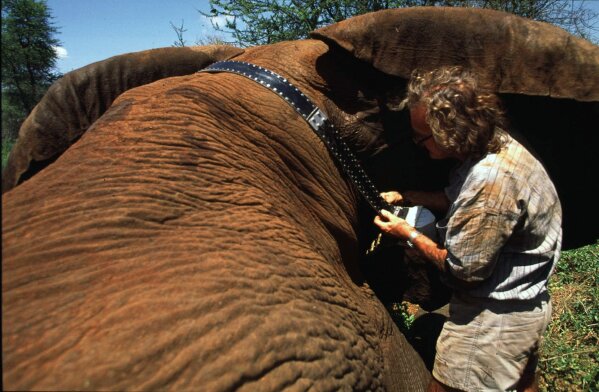
The world learned this week that Douglas-Hamilton passed away at the age of 83, at his home in Nairobi, leaving behind a legacy as gigantic and enduring as the elephants he devoted his life to understanding and protecting.
His death marks not simply the loss of a scientist, but of a visionary who transformed human understanding of elephant behavior, exposed the brutal realities of the ivory trade, and built some of the most influential conservation systems in existence today.
And the tributes pouring in from conservationists, world leaders, and those who knew him best make one thing clear: the world has lost a true guardian of nature.
Global Tributes to a Conservation Legend
One of the most notable tributes came from Prince William, a longtime conservation advocate who had worked directly with Douglas-Hamilton and considered him both mentor and friend. In his moving statement, the Prince honored him as:
“A man who dedicated his life to conservation and whose life’s work leaves lasting impact on our appreciation for, and understanding of, elephants.
The memories of spending time in Africa with him will remain with me forever.”
Similarly, Charles Mayhew, founder of Tusk — one of the leading conservation charities in Africa — summed up the sentiment shared by thousands across the globe:
“The world has lost a true conservation legend today, but his extraordinary legacy will continue.”
These tributes do not feel like ceremonial statements. They carry the tone of genuine loss — for a mentor, a pioneer, and a man who reshaped the world’s ecological conscience.
From Dorset to the Heart of the Savannah: A Life Shaped by Curiosity
Born in 1942 into an aristocratic family in Dorset, England, Iain Douglas-Hamilton’s upbringing was far removed from the savannah landscapes that would later define his life.
The young Iain grew up surrounded by countryside, wildlife, and a family that encouraged intellectual independence.
From an early age he showed a deep curiosity about the natural world — the kind of child who inspected insects, sketched birds, and asked endless questions about how animals behaved.
His academic path eventually led him to study biology and zoology in Scotland and later at Oxford University, where he refined his scientific interests and developed a fascination with animal behavior.
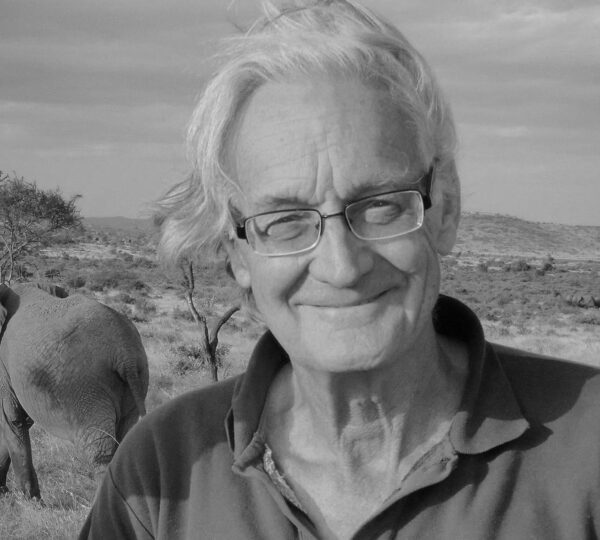
But it was his decision at just 23 years old that changed the direction of his life — and ultimately, the future of elephant conservation.
The Turning Point: Tanzania’s Lake Manyara National Park
In the mid-1960s, Douglas-Hamilton moved to Tanzania’s Lake Manyara National Park, a place that would become both laboratory and home.
It was here that he conducted some of the most intensive, long-term elephant research ever attempted at the time.
Unlike previous naturalists, who viewed animal groups in broad, statistical terms, Douglas-Hamilton did something revolutionary:
He studied elephants as individuals.
He recognized them by their:
ear shapes
wrinkle patterns
tusk differences
family groupings
personalities
social roles
This level of detail and empathy was unprecedented.
It allowed the world to see elephants not as faceless symbols of African wildlife, but as intelligent, emotional, decision-making beings with memories, hierarchies, and deep family bonds.
Douglas-Hamilton later reflected: “Nobody had lived with wildlife in Africa and looked at them as individuals yet.”
This approach laid the scientific foundation for nearly everything we understand today about:
elephant communication
migration
mating behavior
parental care
social grief
intelligence
His work became the model for modern wildlife behavioral studies across countless species. But as he conducted this groundbreaking research, something far more troubling began to reveal itself.
Exposing the Ivory Crisis: A Scientist in a War Zone
Douglas-Hamilton did not set out to become an anti-poaching crusader. He began as a researcher.
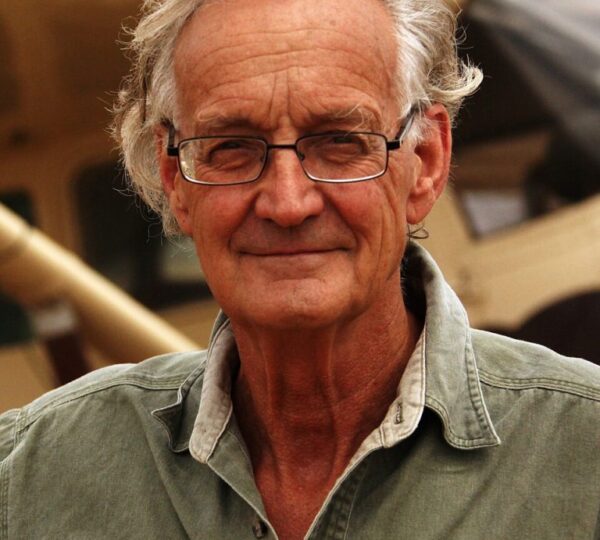
But as he followed elephant herds across Tanzania and later East Africa, he discovered something catastrophic:
Elephants were disappearing — fast.
The ivory market had exploded across Africa, driven by international demand, and elephant populations were plummeting.
As one of the few people documenting individual elephants, Douglas-Hamilton saw firsthand which animals vanished, which families broke apart, and which herds were being destroyed.
His work took him into danger again and again. He experienced:
elephant charges
attacks from bees
direct threats from poachers, including gunfire
long, perilous tracking expeditions
But it was his aerial surveys that truly exposed the horror. Flying over vast stretches of African wilderness, he counted carcasses and observed decimated populations. His findings shocked governments, conservation groups, and the public:
entire elephant populations were being wiped out.
Douglas-Hamilton famously called it: “An elephant holocaust.”
His research and advocacy were instrumental in building international pressure for the 1989 global ban on the international ivory trade, a landmark moment in conservation history.
Jane Goodall’s Tribute
Among the many voices honoring Douglas-Hamilton, Jane Goodall, the world-renowned primatologist, offered one of the most personal and profound reflections.
She appeared with him in the 2024 documentary A Life Among Elephants and said he showed the world that elephants: “are capable of feeling just like humans.”
Her words underscore the emotional depth and ethical dimension of his research — it wasn’t just science. It was revelation.
Building a Future for Elephants: The Founding of Save the Elephants
In 1993, Douglas-Hamilton founded what would become one of the most influential conservation organizations in the world:
Save the Elephants (STE).
What made STE different was its combination of:
cutting-edge scientific research
community outreach
technological innovation
political engagement
on-the-ground protection
Douglas-Hamilton was decades ahead of his time. Long before GPS tracking became widespread, he pioneered methods to track elephants’ movements, creating detailed migration maps that transformed our understanding of their:
memory
navigation systems
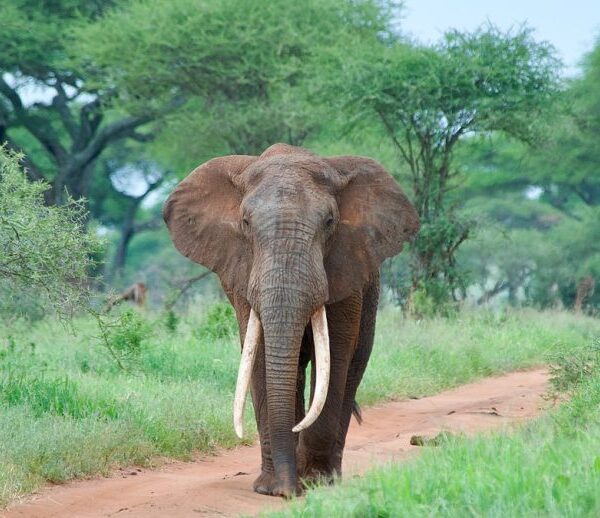
resource decision-making
movement patterns across seasons and political boundaries
This data became essential for governments and conservationists alike, guiding everything from protected area management to anti-poaching patrols.
A Family Mission: Frank Pope’s Tribute
Frank Pope — CEO of Save the Elephants and Douglas-Hamilton’s son-in-law — summarized his impact in a way that only someone who lived beside him could: “Iain changed the future not just for elephants, but for huge numbers of people across the globe.
His courage, determination and rigour inspired everyone he met.”
Douglas-Hamilton was not only a scientist; he was a mentor, a leader, and a father figure to generations of conservationists.
Influencing World Leaders and Shaping Global Policy
Douglas-Hamilton’s influence reached the highest levels of global power. He collaborated with prominent world leaders, including:
Barack Obama
Xi Jinping
senior African presidents
international coalitions and NGOs
His research and advocacy contributed to the 2015 agreements between the United States and China to dramatically restrict the ivory trade — one of the most significant policy shifts for elephant protection in modern history.
By providing scientific evidence, diplomatic pressure, and moral authority, Douglas-Hamilton helped turn the tide at a moment when elephants were again at risk of large-scale slaughter.
Awards and Global Recognition
Over six decades, Douglas-Hamilton received numerous international honors. Among the most notable were:
The Indianapolis Prize — often called the “Nobel Prize for conservation”
The Order of the British Empire (OBE)
The Commander of the British Empire (CBE)
Yet despite these prestigious awards, he carried himself with humility. He never sought fame; he sought protection for the animals he considered his life’s teachers.
He repeatedly said that his greatest mission was simple: “I think my greatest hope for the future is that there will be an ethic developed of human-elephant coexistence.”
A Vision of Coexistence
Douglas-Hamilton believed that the future of elephants could not be ensured through law enforcement alone. Real, enduring survival depended on:
local communities
sustainable economies
cultural change
human compassion
scientific understanding
His work emphasized coexistence — not separation — between humans and elephants.
He envisioned landscapes where farmers, herders, and elephants shared space, guided by mutual respect, innovative land-use methods, and strong conservation policy.

He insisted that humanity must adopt: “an ethic of living in balance with our environment.”
This philosophy, grounded in both science and moral clarity, helped define modern conservation.
A Family Man Behind the Scientist
Behind the global recognition and scientific achievements, Douglas-Hamilton was also a devoted husband, father, and grandfather. He is survived by:
his wife Oria
daughters Saba and Dudu
six grandchildren
Those close to him describe a warm, patient, endlessly curious man who viewed the natural world not as a subject of study but as a living community of beings deserving of dignity.
His family played a significant role in his work, supporting conservation, filmmaking, advocacy, and research efforts.
Many of the world’s most iconic elephant documentaries were filmed by or alongside the Douglas-Hamilton family.
The Legacy That Still Walks Across Africa
Perhaps the most powerful testament to Douglas-Hamilton’s life cannot be found in awards or tributes.
It walks on four legs across the African continent.
Thousands of elephants alive today survive directly because of:
the anti-poaching policies his data informed
the protected areas his advocacy secured
the global bans he helped influence
the organizations he built
the public awareness he generated
Elephants that would have been slaughtered for ivory now raise calves, migrate across savannahs, and live free lives because Douglas-Hamilton fought for them.
His dream — as he described it — was: “for human beings to come into balance with their environment, to stop destroying nature.”
Because of him, that balance feels a little closer.
Conclusion: A Life That Shifted the World
Iain Douglas-Hamilton’s legacy is not measured by fame, but by impact. Not by applause, but by the survival of a species. Not by wealth, but by knowledge, compassion, and courage.
He taught the world that elephants are not just animals of grandeur, but individuals with thoughts, emotions, memories, and relationships.
He exposed the horrors of the ivory trade when few were willing to confront it. He pioneered science that generations of conservationists now depend on.
He inspired world leaders to act. He founded institutions that will continue protecting elephants long after his passing.
His life was proof that one person can change the fate of a species — and, in doing so, change humanity itself.
As Africa’s elephants continue roaming their ancient paths, as communities work toward coexistence, and as new conservationists rise to take his place, Iain Douglas-Hamilton’s legacy will live on.
Not only in memory, not only in policy, but in every elephant that survives because he dared to intervene.
A detailed tribute to the pioneering conservationist who changed humanity’s relationship with Earth’s largest land mammals
When famous musicians, actors, or cultural icons pass away, the world often pauses in collective mourning.
Their legacy is easy to see — it lives in recordings, in films, in performances replayed endlessly across generations.
But there are other figures, equally monumental in their influence, whose work unfolds quietly in the wilderness, far from the spotlight.
Their contributions shape the world not through celebrity, but through passion, urgency, and a tireless commitment to protecting life itself.
Iain Douglas-Hamilton, the pioneering elephant conservationist and zoologist, was unquestionably one of those rare individuals.
A figure of global importance whose name may not appear on billboards, but whose life’s work has altered the fate of an entire species.
The world learned this week that Douglas-Hamilton passed away at the age of 83, at his home in Nairobi, leaving behind a legacy as gigantic and enduring as the elephants he devoted his life to understanding and protecting.
His death marks not simply the loss of a scientist, but of a visionary who transformed human understanding of elephant behavior, exposed the brutal realities of the ivory trade, and built some of the most influential conservation systems in existence today.
And the tributes pouring in from conservationists, world leaders, and those who knew him best make one thing clear: the world has lost a true guardian of nature.
Global Tributes to a Conservation Legend
One of the most notable tributes came from Prince William, a longtime conservation advocate who had worked directly with Douglas-Hamilton and considered him both mentor and friend. In his moving statement, the Prince honored him as:
“A man who dedicated his life to conservation and whose life’s work leaves lasting impact on our appreciation for, and understanding of, elephants.
The memories of spending time in Africa with him will remain with me forever.”
Similarly, Charles Mayhew, founder of Tusk — one of the leading conservation charities in Africa — summed up the sentiment shared by thousands across the globe:
“The world has lost a true conservation legend today, but his extraordinary legacy will continue.”
These tributes do not feel like ceremonial statements. They carry the tone of genuine loss — for a mentor, a pioneer, and a man who reshaped the world’s ecological conscience.
From Dorset to the Heart of the Savannah: A Life Shaped by Curiosity
Born in 1942 into an aristocratic family in Dorset, England, Iain Douglas-Hamilton’s upbringing was far removed from the savannah landscapes that would later define his life.
The young Iain grew up surrounded by countryside, wildlife, and a family that encouraged intellectual independence.
From an early age he showed a deep curiosity about the natural world — the kind of child who inspected insects, sketched birds, and asked endless questions about how animals behaved.
His academic path eventually led him to study biology and zoology in Scotland and later at Oxford University, where he refined his scientific interests and developed a fascination with animal behavior.
But it was his decision at just 23 years old that changed the direction of his life — and ultimately, the future of elephant conservation.
The Turning Point: Tanzania’s Lake Manyara National Park
In the mid-1960s, Douglas-Hamilton moved to Tanzania’s Lake Manyara National Park, a place that would become both laboratory and home.
It was here that he conducted some of the most intensive, long-term elephant research ever attempted at the time.
Unlike previous naturalists, who viewed animal groups in broad, statistical terms, Douglas-Hamilton did something revolutionary:
He studied elephants as individuals.
He recognized them by their:
ear shapes
wrinkle patterns
tusk differences
family groupings
personalities
social roles
This level of detail and empathy was unprecedented.
It allowed the world to see elephants not as faceless symbols of African wildlife, but as intelligent, emotional, decision-making beings with memories, hierarchies, and deep family bonds.
Douglas-Hamilton later reflected: “Nobody had lived with wildlife in Africa and looked at them as individuals yet.”
This approach laid the scientific foundation for nearly everything we understand today about:
elephant communication
migration
mating behavior
parental care
social grief
intelligence
His work became the model for modern wildlife behavioral studies across countless species. But as he conducted this groundbreaking research, something far more troubling began to reveal itself.
Exposing the Ivory Crisis: A Scientist in a War Zone
Douglas-Hamilton did not set out to become an anti-poaching crusader. He began as a researcher.
But as he followed elephant herds across Tanzania and later East Africa, he discovered something catastrophic:
Elephants were disappearing — fast.
The ivory market had exploded across Africa, driven by international demand, and elephant populations were plummeting.
As one of the few people documenting individual elephants, Douglas-Hamilton saw firsthand which animals vanished, which families broke apart, and which herds were being destroyed.
His work took him into danger again and again. He experienced:
elephant charges
attacks from bees
direct threats from poachers, including gunfire
long, perilous tracking expeditions
But it was his aerial surveys that truly exposed the horror. Flying over vast stretches of African wilderness, he counted carcasses and observed decimated populations. His findings shocked governments, conservation groups, and the public:
entire elephant populations were being wiped out.
Douglas-Hamilton famously called it: “An elephant holocaust.”
His research and advocacy were instrumental in building international pressure for the 1989 global ban on the international ivory trade, a landmark moment in conservation history.
Jane Goodall’s Tribute
Among the many voices honoring Douglas-Hamilton, Jane Goodall, the world-renowned primatologist, offered one of the most personal and profound reflections.
She appeared with him in the 2024 documentary A Life Among Elephants and said he showed the world that elephants: “are capable of feeling just like humans.”
Her words underscore the emotional depth and ethical dimension of his research — it wasn’t just science. It was revelation.
Building a Future for Elephants: The Founding of Save the Elephants
In 1993, Douglas-Hamilton founded what would become one of the most influential conservation organizations in the world:
Save the Elephants (STE).
What made STE different was its combination of:
cutting-edge scientific research
community outreach
technological innovation
political engagement
on-the-ground protection
Douglas-Hamilton was decades ahead of his time. Long before GPS tracking became widespread, he pioneered methods to track elephants’ movements, creating detailed migration maps that transformed our understanding of their:
memory
navigation systems
resource decision-making
movement patterns across seasons and political boundaries
This data became essential for governments and conservationists alike, guiding everything from protected area management to anti-poaching patrols.
A Family Mission: Frank Pope’s Tribute
Frank Pope — CEO of Save the Elephants and Douglas-Hamilton’s son-in-law — summarized his impact in a way that only someone who lived beside him could: “Iain changed the future not just for elephants, but for huge numbers of people across the globe.
His courage, determination and rigour inspired everyone he met.”
Douglas-Hamilton was not only a scientist; he was a mentor, a leader, and a father figure to generations of conservationists.
Influencing World Leaders and Shaping Global Policy
Douglas-Hamilton’s influence reached the highest levels of global power. He collaborated with prominent world leaders, including:
Barack Obama
Xi Jinping
senior African presidents
international coalitions and NGOs
His research and advocacy contributed to the 2015 agreements between the United States and China to dramatically restrict the ivory trade — one of the most significant policy shifts for elephant protection in modern history.
By providing scientific evidence, diplomatic pressure, and moral authority, Douglas-Hamilton helped turn the tide at a moment when elephants were again at risk of large-scale slaughter.
Awards and Global Recognition
Over six decades, Douglas-Hamilton received numerous international honors. Among the most notable were:
The Indianapolis Prize — often called the “Nobel Prize for conservation”
The Order of the British Empire (OBE)
The Commander of the British Empire (CBE)
Yet despite these prestigious awards, he carried himself with humility. He never sought fame; he sought protection for the animals he considered his life’s teachers.
He repeatedly said that his greatest mission was simple: “I think my greatest hope for the future is that there will be an ethic developed of human-elephant coexistence.”
A Vision of Coexistence
Douglas-Hamilton believed that the future of elephants could not be ensured through law enforcement alone. Real, enduring survival depended on:
local communities
sustainable economies
cultural change
human compassion
scientific understanding
His work emphasized coexistence — not separation — between humans and elephants.
He envisioned landscapes where farmers, herders, and elephants shared space, guided by mutual respect, innovative land-use methods, and strong conservation policy.
He insisted that humanity must adopt: “an ethic of living in balance with our environment.”
This philosophy, grounded in both science and moral clarity, helped define modern conservation.
A Family Man Behind the Scientist
Behind the global recognition and scientific achievements, Douglas-Hamilton was also a devoted husband, father, and grandfather. He is survived by:
his wife Oria
daughters Saba and Dudu
six grandchildren
Those close to him describe a warm, patient, endlessly curious man who viewed the natural world not as a subject of study but as a living community of beings deserving of dignity.
His family played a significant role in his work, supporting conservation, filmmaking, advocacy, and research efforts.
Many of the world’s most iconic elephant documentaries were filmed by or alongside the Douglas-Hamilton family.
The Legacy That Still Walks Across Africa
Perhaps the most powerful testament to Douglas-Hamilton’s life cannot be found in awards or tributes.
It walks on four legs across the African continent.
Thousands of elephants alive today survive directly because of:
the anti-poaching policies his data informed
the protected areas his advocacy secured
the global bans he helped influence
the organizations he built
the public awareness he generated
Elephants that would have been slaughtered for ivory now raise calves, migrate across savannahs, and live free lives because Douglas-Hamilton fought for them.
His dream — as he described it — was: “for human beings to come into balance with their environment, to stop destroying nature.”
Because of him, that balance feels a little closer.
Conclusion: A Life That Shifted the World
Iain Douglas-Hamilton’s legacy is not measured by fame, but by impact. Not by applause, but by the survival of a species. Not by wealth, but by knowledge, compassion, and courage.
He taught the world that elephants are not just animals of grandeur, but individuals with thoughts, emotions, memories, and relationships.
He exposed the horrors of the ivory trade when few were willing to confront it. He pioneered science that generations of conservationists now depend on.
He inspired world leaders to act. He founded institutions that will continue protecting elephants long after his passing.
His life was proof that one person can change the fate of a species — and, in doing so, change humanity itself.
As Africa’s elephants continue roaming their ancient paths, as communities work toward coexistence, and as new conservationists rise to take his place, Iain Douglas-Hamilton’s legacy will live on.
Not only in memory, not only in policy, but in every elephant that survives because he dared to intervene.


