

If you are a cat owner, you’ve likely experienced the familiar scenario: after a long, exhausting day, you crawl into bed ready for a restful night, only to find your cat already sprawled across your pillow or curled up exactly where you intended to lie.
No matter how much you shift, they don’t flinch. They don’t budge. And somehow, you end up negotiating for a few inches of space, or surrendering your spot entirely.
At first glance, this behavior might seem bossy or territorial. However, cats’ decision to sleep with or near you is often rich with meaning.
It’s not just a matter of comfort or convenience—your feline friend is communicating trust, affection, and security in ways that are subtle yet profound. Let’s explore the many reasons why cats insist on taking over your bed, pillow, or even your chest.
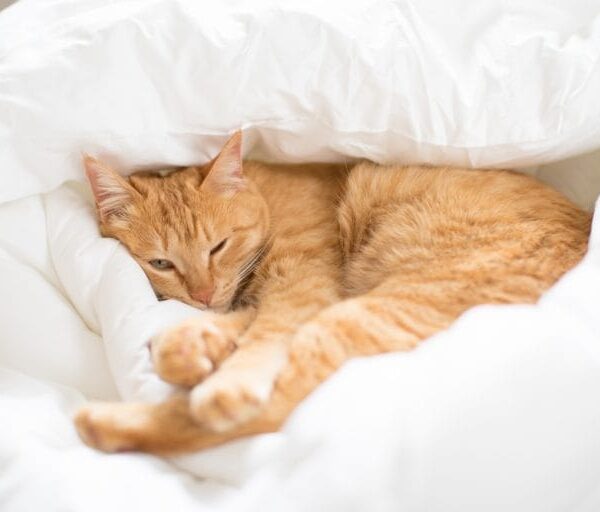
1. Feeling Safe Is Paramount
Cats are instinctively cautious animals. In the wild, they are both predators and prey, which means they are highly attuned to threats in their environment. Unlike dogs, who may seek constant social interaction, cats are naturally selective about where they rest.
When a cat chooses to sleep on or next to you, it is a clear indicator that they feel completely safe. Your presence provides a sense of security, akin to being a safe haven in a world where danger might otherwise be lurking.
This behavior is rooted in evolutionary biology: cats instinctively select resting places where they can feel secure and minimize vulnerability. Your bed, along with the warmth and scent you provide, becomes one of these ideal spots.
Cats that are relaxed enough to expose their belly—a particularly vulnerable area—while sleeping on you are demonstrating the ultimate sign of trust.
Only when they feel completely secure will they adopt such positions, which often seem awkward or indulgent from a human perspective.
2. You Are Part of Their Territory
Territory matters deeply to cats. Even in a domestic setting, they perceive their home environment as a space they need to mark and claim.
When your cat sleeps in your bed or sprawls across your pillow, it is a subtle way of including you in their territory. By choosing your bed, they are saying, in essence, “This is part of my world, and you are included in it.”

Cats have scent glands on their paws, cheeks, and flanks. When they knead your blankets, rub their face against your pillow, or curl up beside you, they are depositing pheromones that reinforce their territorial claim.
This is a natural behavior, rooted in both communication and comfort. Your cat isn’t just being possessive; they are affirming their bond with you while marking a familiar, safe zone.
3. Warmth Is Irresistible
Cats are heat-seekers by nature. Their normal body temperature is slightly higher than humans, ranging around 101–102°F, which makes them naturally drawn to warm surfaces. Your body generates heat, whether it’s your chest, arms, or lap, creating a cozy and appealing sleeping spot.
It’s no coincidence that cats love sunlit patches or cozy blankets; warmth aids in energy conservation. By sleeping on you, they are tapping into a natural heat source while feeling snug and relaxed.
Some cats even choose spots on top of the human torso, where they can absorb warmth directly from the body core. This behavior is also beneficial for your cat’s circulation and metabolism, allowing them to rest without expending unnecessary energy to stay warm.
4. Comfort Is Key
Beyond safety and warmth, comfort is a primary factor. Cats are incredibly discerning when it comes to resting spots. Soft pillows, plush blankets, and a supportive mattress provide the perfect combination for a deep, undisturbed sleep.
Domestic cats often spend up to 16 hours per day sleeping, and they naturally seek the most comfortable areas. Your bed is not only a source of warmth and scent but also an ideal surface for relaxation.
Unlike a hard floor or cold windowsill, your bed offers cushioning that supports their joints and muscles, making it a highly desirable place to nap.
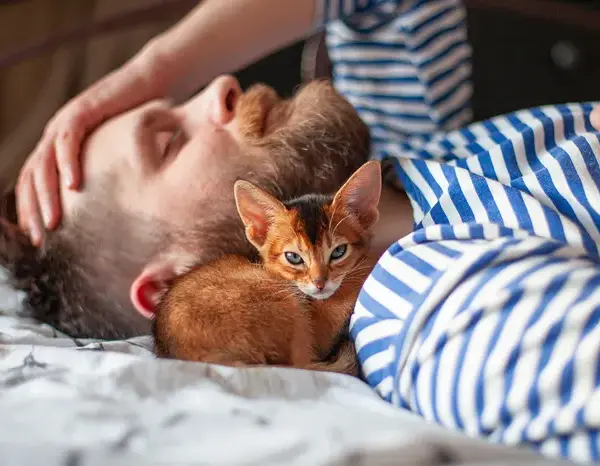
Interestingly, cats can sense differences in texture and softness that humans may not notice. They often knead blankets or pillows before settling, a behavior linked to kittenhood when they kneaded their mother’s belly to stimulate milk flow. This instinct continues into adulthood, providing both comfort and a sense of familiarity.
5. Familiar Scents Provide Reassurance
Cats have an incredibly developed sense of smell—roughly 14 times more acute than humans. Your bed and your belongings carry your unique scent, which serves as a grounding presence for your cat.
When your cat sleeps among your sheets or rests on your pillow, they are literally immersing themselves in the comforting smell of someone they trust.
Familiar scents help reduce stress and anxiety. In fact, cats often rub their cheeks or bodies against objects, depositing pheromones that signal safety and ownership.
By sleeping with you, they surround themselves with the reassuring odor of someone they love, which is calming and promotes deeper, more restorative sleep.
6. Seeking Closeness and Affection
Sleeping next to you is one of the most intimate ways a cat demonstrates affection. Cats are not outwardly verbal, so their physical behavior often communicates what words cannot. When your cat curls up beside or atop you, it’s their way of saying, “I trust you. I feel safe with you. I want to be near you.”
Cats often prefer proximity to their favorite humans, even if they are independent creatures in other contexts. A cat that sleeps at the foot of your bed may be staking out territory while remaining in close contact.
One that sleeps on your chest or arms is demonstrating a higher level of attachment. This behavior is commonly observed in cats that have strong, positive bonds with their owners and often correlates with their willingness to play, groom, or sit on your lap during waking hours.
7. Instinctual Behavior Shapes Their Choices
Even domesticated cats retain strong instincts inherited from their wild ancestors. One of these is the need to choose sleeping spots that provide both security and the ability to monitor surroundings.

By choosing to sleep on you, your cat satisfies these instinctual needs. You act as both a barrier and a watchful presence, providing protection while allowing the cat to remain alert to any potential danger.
This instinct is particularly strong in multi-cat households or in environments where outdoor stimuli are present. Even when fully domesticated, cats maintain vigilance as a survival strategy, and sleeping with you satisfies their instinctual desire for safety and observation simultaneously.
8. Companionship Matters
While cats are often stereotyped as solitary, they do value companionship. In the wild, domestic cats’ ancestors formed small family groups. In a human household, the bond they develop with their owner can replace this natural social structure.
By sleeping beside you, cats experience a sense of belonging. Your presence provides companionship, security, and social comfort that they might otherwise seek from other animals in a multi-cat environment.
For single-cat households, you effectively become their social anchor. This bond is why some cats prefer to sleep on you rather than simply in a warm bed nearby.
9. Cats Can Sense Human Emotions
A remarkable aspect of feline behavior is their sensitivity to human emotions. Some cats appear to have an intuitive sense when their owners are stressed, anxious, or ill. In these cases, sleeping on or near you can be a form of feline therapy.
Research indicates that cats may pick up subtle cues, such as changes in your breathing, heart rate, or even body language. By lying next to you, they can provide calming presence and comfort, sometimes lowering your heart rate or easing anxiety.
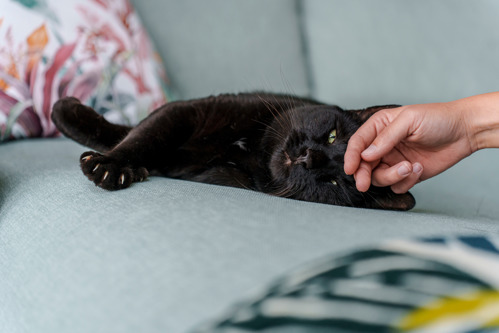
Many cat owners report that their pets are especially affectionate during stressful periods, choosing to snuggle or sit on them more than usual.
10. Sometimes, They Just Like You
Of course, not every behavior requires a scientific explanation. Sometimes, cats sleep on you simply because they enjoy it. Your presence, warmth, and scent create an appealing and familiar environment.
Some cats seem to have favorites within the household, and sleeping with you can be as much about preference and habit as about instinct or emotional connection.
For many cat owners, this is the most rewarding aspect of the bond. The very act of allowing a cat to rest on you is an acknowledgment of trust and affection.
Unlike dogs, who may show affection in overt ways like wagging tails or licking, cats often express their love quietly, through touch, presence, and companionship.
Practical Tips for Cat Owners Sharing Their Bed
While having a cat sleep on you can be comforting, it can also present challenges for comfort and sleep quality. Here are some tips for managing your feline co-sleeper:
-
Set Boundaries When Needed: If your cat’s position makes sleeping difficult, gently redirect them to another comfortable spot near your bed.
-
Provide Alternatives: Heated cat beds, window perches, and soft blankets nearby can offer attractive alternatives to your pillow.
-
Maintain a Routine: Cats respond well to routines. Feeding or playtime before bed can reduce nighttime disruptions.
-
Health and Hygiene: Regular grooming and litter maintenance help reduce allergens and keep the bed area clean.
-
Respect Their Choice: If your cat insists on sleeping on you, consider it a gesture of trust rather than an annoyance. This bond is invaluable and strengthens your relationship.
Conclusion: Your Cat’s Sleep Is a Sign of Love
Next time your cat claims your pillow, chest, or even your legs, remember: they aren’t being bossy. They are choosing to be near someone they trust, in a place they find safe, warm, and comforting. Each purr, nuzzle, and curled-up body is a message of affection, protection, and companionship.
From instinctual needs for safety to emotional bonds and warmth, your cat’s decision to sleep with you is layered with meaning.
Whether they are showing empathy for your stress, enjoying your scent, or simply claiming the most comfortable spot, they are communicating something profound: they trust you, they feel safe, and they love being near you.
So the next time your cat sprawls across your pillow, nudges you awake, or curls atop your chest, embrace it. What might feel like an intrusion is, in reality, a heartfelt expression of feline trust, security, and love—something few animals give so generously.
