
Sleep is one of the most essential physiological processes for human health, affecting nearly every system in the body. Yet, for millions of people worldwide, falling asleep and staying asleep remains a daily challenge.
Across cultures, people develop unique pre-sleep routines. Some individuals rely on warm baths or herbal teas, others meticulously arrange pillows, while many spend minutes adjusting blankets to find an ideal level of comfort before sleep.
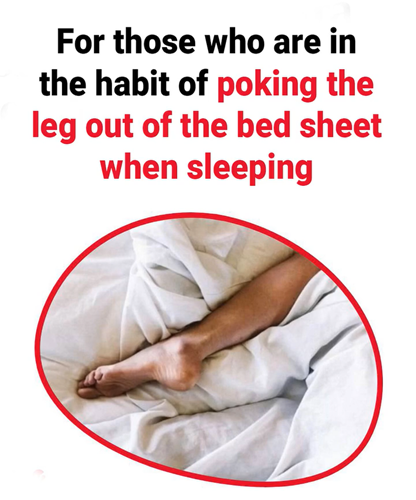
Among these common habits, a peculiar yet surprisingly widespread behavior has emerged: sleeping with one foot or leg sticking out from under the blanket. At first glance, this may seem trivial or unconscious.
However, scientific research indicates that this small adjustment has a clear biological function. It interacts with our body’s internal thermoregulation mechanisms, which are crucial for initiating and maintaining restorative sleep cycles throughout the night.
To understand this, it helps to examine the body’s natural preparation for sleep. Chronobiologists, scientists who study biological rhythms, explain that physiological changes begin hours before a person actually closes their eyes.
María José Martínez, coordinator of the Chronobiology Group at the Spanish Sleep Society, notes that as bedtime approaches, the body undergoes vasodilation, a process in which blood vessels in extremities like hands and feet widen.
This widening allows heat to escape from the body efficiently, reducing core temperature slightly. A modest drop in core temperature signals the brain to transition from wakefulness to sleep, initiating natural circadian rhythms.
This cooling effect is critical for both sleep onset and quality. Studies show that lower core body temperature correlates with faster sleep latency and deeper, more restorative sleep throughout the night.
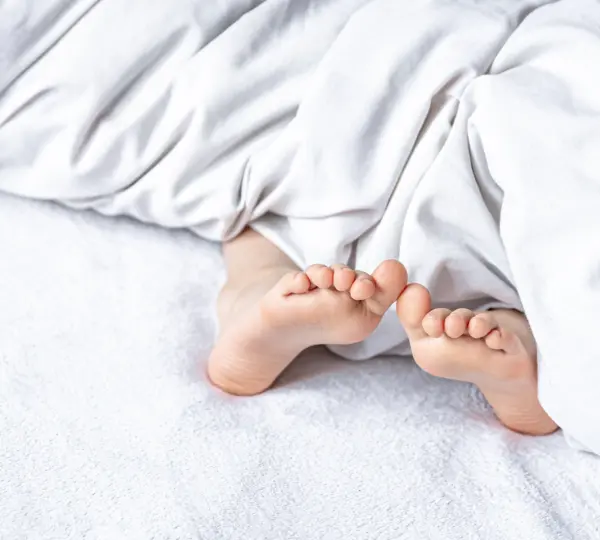
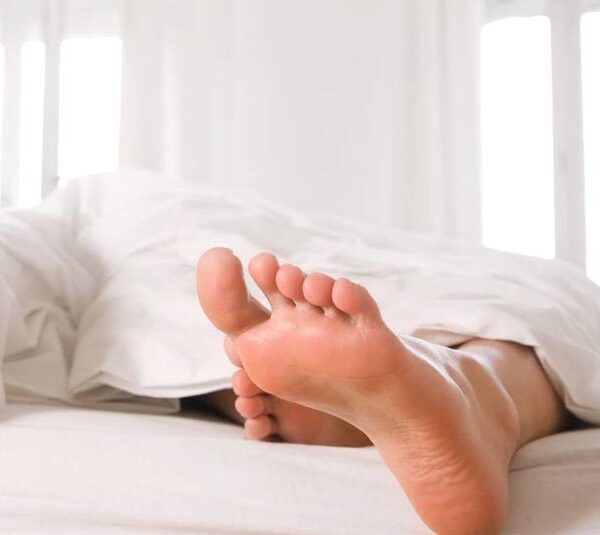
By exposing a foot or leg to cooler air outside the blanket, individuals provide a small but meaningful enhancement to this natural temperature regulation, supporting their transition into sleep more efficiently.
The feet are particularly well-suited for this role. They contain specialized blood vessels known as arteriovenous anastomoses, which allow for rapid heat dissipation, acting as built-in thermal regulators for the body.
Unlike other areas of the body, the soles of the feet have minimal fat and hair, which facilitates heat transfer. When a foot contacts cooler air, heat leaves the body more efficiently, accelerating the cooling process.
This process is largely instinctive rather than learned. Infants often display similar behaviors, with their ears, hands, or feet appearing warmer just before falling asleep, reflecting an early manifestation of thermoregulatory cooling.
Adults unconsciously mimic this behavior, sometimes kicking a leg out from under covers in the middle of the night. It is a subtle adaptation that enhances comfort while aligning with the body’s natural circadian cues.
A conducive sleep environment amplifies the benefits of this behavior. Sleep specialists emphasize that surroundings, including light, temperature, and noise, play significant roles in determining sleep quality and duration.
For temperature, the optimal bedroom range is typically 60–67°F (15–19°C). Cooler temperatures support heat dissipation, while warmer environments can interfere with natural cooling, making it more difficult to achieve deep sleep.
Light exposure also affects sleep physiology. Blue light from smartphones, televisions, or LEDs can suppress melatonin production, delaying the sleep onset process. Darkening the room or using blackout curtains improves natural circadian alignment.
Noise reduction is equally important. Even low-level ambient noise can fragment sleep cycles, reducing time spent in deep, restorative stages. White noise machines, earplugs, or soft ambient music can improve sleep quality by masking disruptive sounds.
Consistent sleep schedules are another critical factor. Going to bed and waking at the same time daily, including weekends, helps synchronize the body’s internal clock, making it easier to both fall asleep and wake naturally.
Dietary choices also influence sleep. Consuming heavy meals, caffeine, or alcohol too close to bedtime can disrupt circadian rhythms and interfere with thermoregulation, whereas light, balanced meals support optimal nighttime physiology.
Regular exercise promotes healthy sleep patterns, though timing is crucial. Physical activity earlier in the day enhances sleep drive, while intense workouts close to bedtime may elevate body temperature and delay sleep onset.
These environmental and behavioral strategies work synergistically with physiological cues. Sticking one foot outside the blanket is not an isolated trick—it is a simple, natural extension of a body-wide preparation for restorative rest.
Modern sleep research continues to highlight the role of core body temperature in sleep. Even minor deviations, such as excessive warmth or insufficient cooling, can reduce time spent in deep sleep stages and compromise overall restfulness.
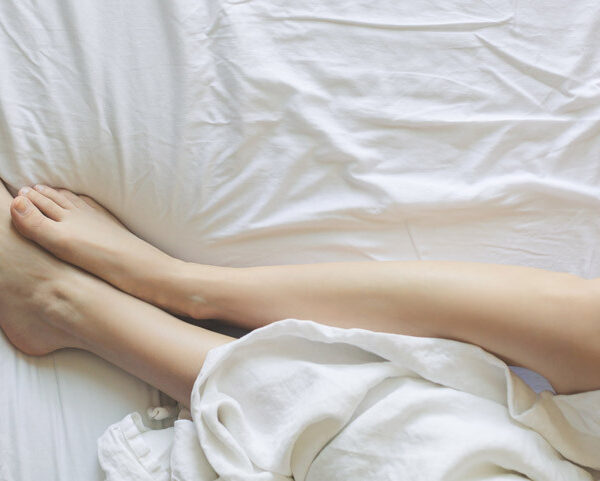
Small habits, like exposing a foot, have outsized impacts when paired with supportive routines. Such gestures facilitate the transition from wakefulness to sleep while minimizing disruptions that might fragment sleep cycles.
Beyond temperature regulation, sleep quality affects virtually every aspect of health. Adequate sleep supports immune function, cognitive performance, mood stability, memory consolidation, cardiovascular health, and metabolic efficiency.
Conversely, chronic sleep deprivation is linked to increased risks of anxiety, depression, obesity, diabetes, hypertension, and impaired executive function. Thus, improving sleep—even through small behaviors—can have profound effects on long-term health.
Sleeping with one foot out can be seen as a natural, non-pharmacological method to optimize sleep physiology. It is cost-free, requires no equipment, and complements broader behavioral sleep interventions effectively.
Researchers note that thermoregulation is one of the most robust, evolutionarily conserved mechanisms for sleep initiation. Humans and other mammals have relied on extremity-based heat loss to signal readiness for rest for millennia.
In addition to aiding in sleep onset, the foot-out method may reduce the likelihood of overheating during REM sleep, a stage when the brain and body are particularly sensitive to temperature fluctuations.
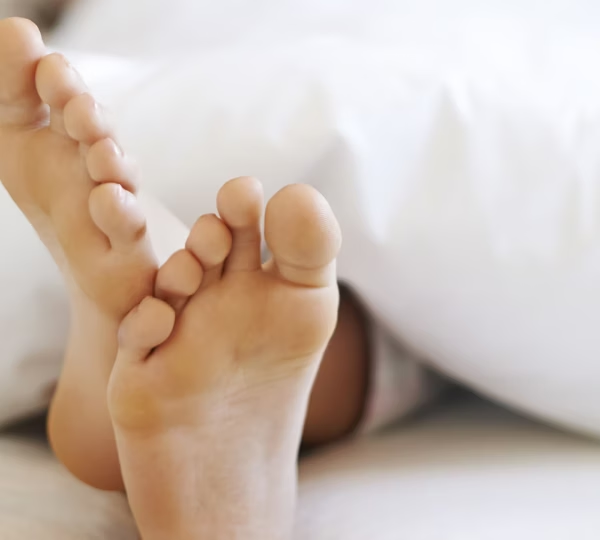
By improving heat dissipation, individuals may experience fewer nighttime awakenings and more consistent progression through sleep cycles, contributing to a greater sense of refreshment upon waking.
Psychological comfort also plays a role. Allowing one foot to remain uncovered can create a subtle sense of freedom and relaxation, signaling safety and comfort to the nervous system, which promotes deeper relaxation.
Behavioral studies suggest that small, ritualistic actions—like exposing a foot—can function as conditioned cues for the brain, reinforcing habitual pre-sleep routines that enhance both mental and physiological readiness.
In practical terms, pairing this habit with breathable bedding materials, such as cotton or linen, enhances airflow and moisture regulation, further supporting the body’s natural cooling mechanisms.
Foot temperature can be monitored and adjusted through environmental controls, like fan placement or bedding arrangement, to optimize heat transfer without causing discomfort or excessive exposure to cold.
Importantly, these strategies are inclusive. They can benefit a wide range of individuals, including those with insomnia, delayed sleep phase syndrome, or age-related thermoregulatory changes that can impair sleep quality.
Sleep education programs often highlight simple strategies such as extremity exposure because they are low-risk, effective, and accessible across diverse populations without requiring medical intervention.
Parents can also use these principles with children. Encouraging comfortable sleep postures that allow for slight extremity exposure may facilitate faster sleep onset, particularly in toddlers and adolescents with active metabolisms.
Interestingly, humans share this extremity-based cooling mechanism with many other mammals. Dogs, cats, and primates often extend paws or limbs outside bedding when preparing to rest, reflecting an evolutionarily conserved thermoregulatory strategy.
Even in professional sleep medicine, extremity exposure is recognized as a practical tip for individuals struggling with difficulty falling asleep, alongside light reduction, noise management, and temperature control.
While the act of sticking a foot out may appear minor, it demonstrates the interplay between behavioral habits, environmental conditions, and innate physiological processes in optimizing rest.
It is also cost-effective. Unlike sleep aids, which can carry side effects or dependency risks, or specialized gadgets, this simple adjustment is free, natural, and entirely within an individual’s control.
By combining foot exposure with holistic sleep hygiene—consistent schedules, dark and quiet rooms, temperature control, light management, and exercise—people can experience meaningful improvements in both sleep latency and overall quality.
Research continues to examine the nuances of extremity-based cooling. Studies suggest that even minor temperature differences of 1–2 degrees Fahrenheit in feet or hands can significantly influence sleep onset speed.
These findings reinforce the idea that micro-adjustments in behavior, posture, and bedding can collectively have a measurable impact on sleep efficiency, making the foot-out strategy both practical and scientifically supported.
Sleep is, therefore, not only a physiological requirement but also a practice of self-care. Small actions, when combined, contribute to resilience, cognitive function, and emotional regulation over time.
The body communicates its readiness for sleep through subtle cues, such as increased heat in extremities, yawning, and drowsiness. By aligning behavior with these cues, sleep onset becomes faster and more natural.
In this context, sticking a foot outside the covers becomes part of an integrated system, enhancing biological signals while promoting mental relaxation, signaling to the brain that the environment is safe and ready for rest.
Even habitual sleepers who appear to rest well can benefit. Anecdotal reports and sleep studies indicate that extremity exposure can reduce instances of tossing and turning, nighttime awakenings, and perceived restlessness.
Moreover, sleep quality is cumulative. Repeatedly achieving restful sleep supports memory consolidation, emotional resilience, metabolic regulation, and hormonal balance, emphasizing that small habits have long-term systemic benefits.
For individuals struggling with insomnia or delayed sleep phases, combining foot exposure with other behavioral strategies is particularly effective. These include avoiding late caffeine, limiting screen exposure, and adhering to consistent bedtime routines.
Environmental adjustments, such as cooling the room, using breathable fabrics, and reducing light and noise, interact synergistically with natural thermoregulatory behaviors like foot exposure to enhance sleep efficiency.
Psychologically, the simplicity of sticking a foot out can reinforce mindfulness and presence, reminding individuals to attend to their own bodily comfort, which contributes to a calming pre-sleep routine.
By adopting multiple synergistic sleep-supportive habits, including temperature regulation via extremities, people can consistently reduce sleep latency, improve REM cycle quality, and achieve restorative deep sleep.
In conclusion, sleeping with one foot outside the blanket is not merely a quirky habit. It is a biologically informed, instinctive, and scientifically supported technique that enhances thermoregulation and sleep quality naturally.
Combined with other proven sleep hygiene strategies, this small adjustment can significantly impact how quickly individuals fall asleep, how deeply they rest, and how refreshed they feel upon waking.
Recognizing the body’s signals, optimizing the environment, and incorporating subtle behaviors like foot exposure demonstrate that effective sleep interventions often lie in small, practical actions rather than complex devices or medications.
Ultimately, the practice highlights a universal truth: human physiology and behavior are deeply interconnected, and simple, low-cost adjustments can profoundly improve health, well-being, and daily performance.
By embracing this intuitive yet scientifically validated approach, anyone can maximize sleep quality, support metabolic and cognitive function, and nurture overall health without relying on pharmacological interventions.
The next time you kick one foot out from under the blankets, remember that it is not just habit—it is your body’s natural, instinctive way of signaling readiness for restorative sleep.
Sometimes, the smallest gestures, like allowing one foot to breathe in cool air, make the largest difference in the quality of rest, recovery, and overall health, proving that simple strategies can yield profound physiological benefits.
