...

While I was healing from my C-section, my husband chose to go on a trip with his friends — and the way he acted when he returned said it all.

When my husband, Jason, came back from his weeklong beach vacation, he walked up the driveway with a tan, a smile, and the kind of relaxed energy only someone without a single care in the world could have. He was expecting to step back into our home as if nothing had changed—maybe to be greeted with a kiss, a warm meal, and our baby girl waiting in her crib. But instead of me waiting by the door, he found his mother standing there, arms crossed, a packed suitcase at her side, and a look on her face that spoke louder than words ever could.

Inside, I sat on the couch, holding our newborn daughter against my chest. My body still ached from the emergency C-section, and I was running on only fragments of sleep. Every movement felt heavy, every breath reminded me of the incision that hadn’t yet fully healed. The house was quiet except for the soft sound of my daughter’s breathing and the ticking of the clock on the wall. When Jason saw his mother instead of the welcoming home he had imagined, I watched his carefree expression melt into confusion—and then into something that looked a lot like guilt. That moment is burned into my memory.

Our marriage had always been a mixture of my hope and his promises—promises that often dissolved the moment life required something real from him. When I got pregnant, I told myself things would be different. He seemed excited at first, talking about being a “fun dad,” painting the nursery, and making plans for our future as a family. I truly believed he was finally ready to grow up and take responsibility.

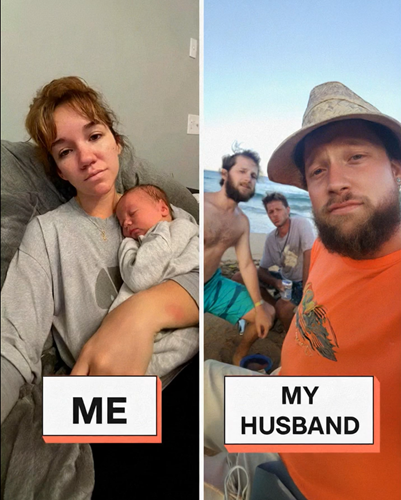
But after our daughter was born, reality set in. The sleepless nights, the crying, the pain of recovery—all of it hit me hard. I needed him more than ever, but instead of being present, Jason became distant. Four weeks after our daughter’s birth—while I was still sore, fragile, and emotionally drained—he told me his friends were planning a trip to celebrate one of their birthdays. I thought he was joking at first. How could he even consider leaving at a time like that? But he brushed off my concern, saying he “needed a break” and that “a week away wouldn’t hurt.”

That week turned out to be one of the longest and hardest of my life. I barely slept. I cried in silence while trying to feed our baby at 3 a.m. I struggled to lift her without reopening my stitches. And when she developed a slight fever one night, I panicked. I called Jason over and over, but he didn’t answer—not once. I later saw pictures of him smiling on the beach with a drink in his hand, surrounded by his friends, while I was sitting in the emergency room holding our baby.

When he finally came home, expecting everything to go back to normal, reality greeted him in the form of his own mother. She had come after hearing what had happened and made it clear she wasn’t going to let him walk through that door like nothing was wrong. She looked him straight in the eye and told him exactly what he needed to hear: that a father doesn’t get to take a vacation from his family, especially when his wife is still recovering from major surgery and his newborn daughter needs him. Her voice was calm but firm—the kind of voice that left no room for excuses.

For the first time since giving birth, I felt truly seen. Someone had finally stood up for me and for our baby. Jason didn’t argue. He didn’t even try to defend himself. He just stood there, silent, realizing that the person he thought would always forgive him had finally found her voice—and that his own mother wasn’t on his side this time.

He ended up leaving that night to stay with a friend. His mother walked inside, sat beside me, and gently took the baby from my arms. “You’re not alone anymore,” she whispered. “We’ll take care of her together.” I felt tears fall down my face—not from pain, not from exhaustion, but from an overwhelming sense of relief.

In that quiet moment, as I watched my mother-in-law rock my daughter to sleep, I realized something profound: even though my husband had stepped away from his responsibilities, I still had people who cared about me and my child. And more importantly, I had finally found the strength to stop waiting for someone who was never truly there. I understood that love isn’t proven by promises—it’s shown in presence, effort, and compassion. Jason had lost his chance to prove that, but I had gained something far more powerful: self-worth, support, and the courage to start rebuilding my life on my own terms.

When my husband, Jason, came back from his weeklong beach vacation, he walked up the driveway with a tan, a smile, and the kind of relaxed energy only someone without a single care in the world could have. He was expecting to step back into our home as if nothing had changed—maybe to be greeted with a kiss, a warm meal, and our baby girl waiting in her crib. But instead of me waiting by the door, he found his mother standing there, arms crossed, a packed suitcase at her side, and a look on her face that spoke louder than words ever could.

Inside, I sat on the couch, holding our newborn daughter against my chest. My body still ached from the emergency C-section, and I was running on only fragments of sleep. Every movement felt heavy, every breath reminded me of the incision that hadn’t yet fully healed. The house was quiet except for the soft sound of my daughter’s breathing and the ticking of the clock on the wall. When Jason saw his mother instead of the welcoming home he had imagined, I watched his carefree expression melt into confusion—and then into something that looked a lot like guilt. That moment is burned into my memory.

Our marriage had always been a mixture of my hope and his promises—promises that often dissolved the moment life required something real from him. When I got pregnant, I told myself things would be different. He seemed excited at first, talking about being a “fun dad,” painting the nursery, and making plans for our future as a family. I truly believed he was finally ready to grow up and take responsibility.

But after our daughter was born, reality set in. The sleepless nights, the crying, the pain of recovery—all of it hit me hard. I needed him more than ever, but instead of being present, Jason became distant. Four weeks after our daughter’s birth—while I was still sore, fragile, and emotionally drained—he told me his friends were planning a trip to celebrate one of their birthdays. I thought he was joking at first. How could he even consider leaving at a time like that? But he brushed off my concern, saying he “needed a break” and that “a week away wouldn’t hurt.”

That week turned out to be one of the longest and hardest of my life. I barely slept. I cried in silence while trying to feed our baby at 3 a.m. I struggled to lift her without reopening my stitches. And when she developed a slight fever one night, I panicked. I called Jason over and over, but he didn’t answer—not once. I later saw pictures of him smiling on the beach with a drink in his hand, surrounded by his friends, while I was sitting in the emergency room holding our baby.

When he finally came home, expecting everything to go back to normal, reality greeted him in the form of his own mother. She had come after hearing what had happened and made it clear she wasn’t going to let him walk through that door like nothing was wrong. She looked him straight in the eye and told him exactly what he needed to hear: that a father doesn’t get to take a vacation from his family, especially when his wife is still recovering from major surgery and his newborn daughter needs him. Her voice was calm but firm—the kind of voice that left no room for excuses.

For the first time since giving birth, I felt truly seen. Someone had finally stood up for me and for our baby. Jason didn’t argue. He didn’t even try to defend himself. He just stood there, silent, realizing that the person he thought would always forgive him had finally found her voice—and that his own mother wasn’t on his side this time.

He ended up leaving that night to stay with a friend. His mother walked inside, sat beside me, and gently took the baby from my arms. “You’re not alone anymore,” she whispered. “We’ll take care of her together.” I felt tears fall down my face—not from pain, not from exhaustion, but from an overwhelming sense of relief.

In that quiet moment, as I watched my mother-in-law rock my daughter to sleep, I realized something profound: even though my husband had stepped away from his responsibilities, I still had people who cared about me and my child. And more importantly, I had finally found the strength to stop waiting for someone who was never truly there. I understood that love isn’t proven by promises—it’s shown in presence, effort, and compassion. Jason had lost his chance to prove that, but I had gained something far more powerful: self-worth, support, and the courage to start rebuilding my life on my own terms.