
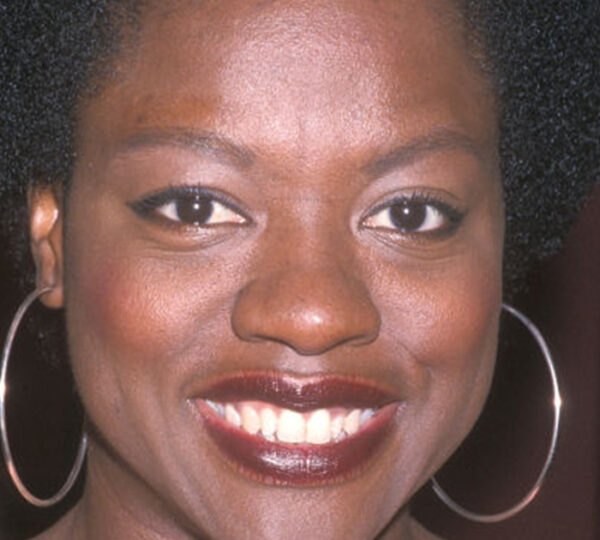
Viola Davis’ story is a powerful testament to resilience, perseverance, and the transformative power of determination. Widely recognized as one of the most talented and respected actresses of her generation.
Davis has captivated audiences with her performances on stage and screen, earning accolades that include an Academy Award, an Emmy, and multiple Tony Awards.
Yet behind the glamour and success lies a childhood marked by hardship and struggle, a past that shaped the woman she would become.
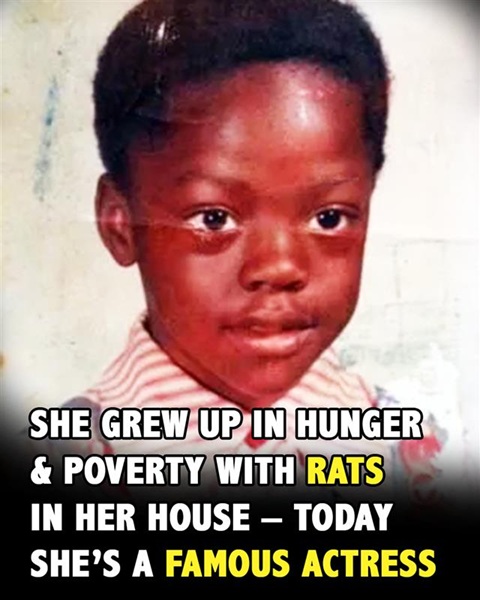
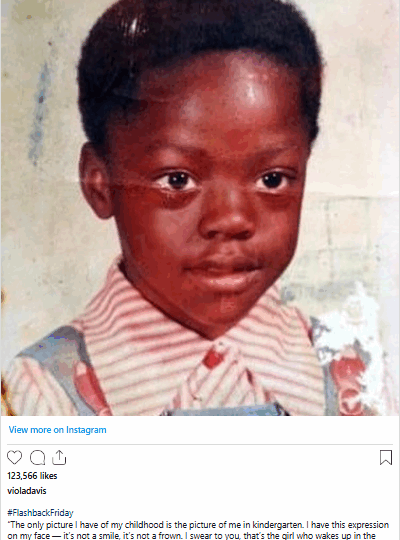
The only surviving image of Viola Davis’ childhood is a single kindergarten photo — a haunting reminder of the young girl who learned early what it meant to go without, who experienced hunger, fear, and invisibility, yet would grow to embody strength, courage, and grace.
A Childhood Shaped by Hardship
Viola Davis was born on August 11, 1965, in St. Matthews, South Carolina. Her birth took place in a small, one-room shack on her grandmother’s farm — a piece of land that had once been part of a plantation.
From the very beginning, Davis’ life was intertwined with the realities of systemic poverty and racial discrimination.
Her mother worked as a maid, providing for her children while also becoming deeply involved in activism during the Civil Rights Movement. Davis’ early exposure to injustice was profound: at just two years old, she accompanied her mother to jail after her mother was arrested during a protest for civil rights.
These early experiences instilled in her a sense of resilience and awareness of inequality, lessons that would echo throughout her life.
Eventually, her family relocated to Central Falls, Rhode Island, hoping for better opportunities. But the struggles of poverty and racial discrimination followed them north.
Central Falls, a town spanning only 1.29 square miles, offered little relief from systemic racism and economic hardship. Despite the Civil Rights Act of 1964 and the formal end of Jim Crow laws, Davis experienced the continued sting of prejudice firsthand. “People wouldn’t drink out of the same water faucet after us,” Davis recalled in interviews. “There was a lot of name-calling and expletives.”
Viola was the second youngest of six children. The two eldest siblings remained in South Carolina, raised by their grandparents for several years, while the rest of the family attempted to navigate life in a challenging new environment.
Their home in Central Falls was a condemned building with no working plumbing, no heat, and frequent encounters with rats.
The family relied on food stamps that rarely lasted the full month, leaving hunger as a constant companion. Viola has spoken candidly about this experience: ”Let me tell you something about poverty: You’re invisible. Nobody sees the poor. You have access to nothing. You’re no one’s demographic.”
Early Encounters with Hunger and Desperation
For Viola and her siblings, school lunches were often the only consistent meals they could rely on. This necessity sometimes led to desperate actions. At just nine years old, Davis was caught stealing food from a store, a moment that left a lasting imprint. ”The store owner screamed at me to get out, looking at me like I was nothing,” she later recalled.
Such experiences were compounded by a turbulent home life. At the same age, Davis remembers a night where parental conflict escalated, leaving her in emotional turmoil. She recounts a moment of pure despair: ”I started screaming at the top of my lungs, and I couldn’t stop.
My older sister, Dianne, urged me to get inside to avoid drawing attention, but the anguish inside me continued. I ran into the house, into the bathroom, and collapsed to the floor, still screaming. With all my young heart, I cried out, ‘God! If you exist, if you love me, you’ll take me away from this life! Now I’m going to count to 10, and when I open my eyes, I want to be gone! You hear me?!’”
Counting slowly, “One, two, three…” she reached ten, but when she opened her eyes, nothing had changed. “God didn’t take me away. Instead, He allowed me to stay. He left me there so that when I gained vision, strength, and forgiveness, I could remember,” Davis reflects.
She uses this memory to underscore the depth of her early experiences, which included not just material deprivation, but the trauma and emotional burden of a childhood overshadowed by poverty, hunger, and instability.
A Childhood Shadowed by Low Expectations
Growing up in poverty, Davis often felt that her path had already been predetermined. She and her siblings attended school in clothes that were worn, faded, or unwashed.
”I knew I was going to be a maid because my mother was a maid and my grandmother had been a house slave,” Davis said. “It’s true of every black woman and grandmother of that time. That’s what we did. That was the occupation open to us.”
Yet school would become the vehicle through which she began to envision a different life. Davis excelled academically, but she found her true escape in extracurricular activities, including sports, drama, and music — avenues that allowed her to temporarily leave behind the weight of poverty and instability.
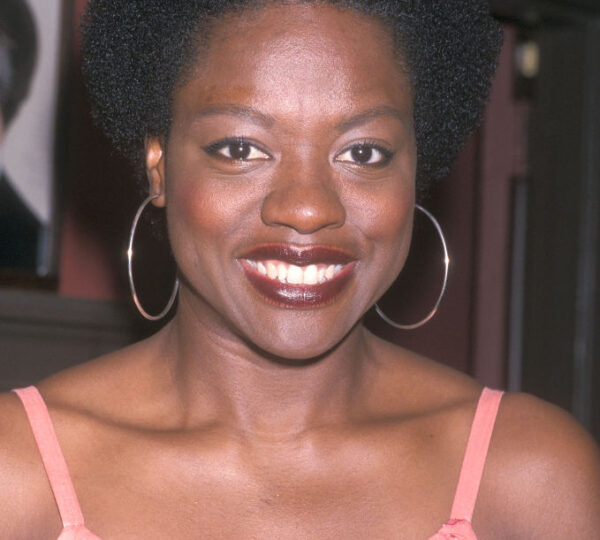
Her love for performing emerged at an early age. At seven, she and her sisters entered a local talent show, writing their own skits, crafting costumes, and embracing the joy of storytelling and performance.
She later joined Upward Bound, a program designed to prepare students from low-income families for college, which provided her with both guidance and opportunity. Eventually, she earned a scholarship to Rhode Island College, where she majored in theater and began seriously cultivating her craft.
From College to Juilliard: Discovering True Potential
Davis’ extraordinary talent did not go unnoticed. A professor at Rhode Island College remarked that she was “a talent that doesn’t come down the pike very often.” Recognizing her potential, Davis auditioned for Juilliard, one of the most prestigious performing arts schools in the world, competing for one of only 14 spots out of 2,500 applicants.
Juilliard has produced luminaries such as Robin Williams, Christopher Reeve, Aretha Franklin, Val Kilmer, Miles Davis, and Kelsey Grammer.
Securing a place in such a competitive environment marked a pivotal turning point in Davis’ life. At Juilliard, she honed her craft, learning to combine raw emotion with precision and depth, preparing herself for a career in professional theater and eventually film and television.
Early Career and Theatrical Recognition
After Juilliard, Davis began performing professionally on stage. At 29, she earned her first Tony Award nomination for her role in August Wilson’s Seven Guitars. Reflecting on opening night, Davis described it as a moment of validation and triumph: ”My mom and dad were in the audience, and my dad cried. I thought, ‘I’ve arrived. This is it.’”

Her work on stage showcased not only her immense talent but also her ability to channel personal pain into compelling performances, turning adversity into artistic expression.
Hollywood Breakthrough and Critical Acclaim
Davis transitioned into film and television, where her performances quickly earned widespread acclaim. Her first Academy Award nomination came in 2008 for her role in Doubt, followed by another nomination in 2011 for The Help.
In 2015, she made history as the first Black woman to win the Emmy for Outstanding Lead Actress in a Drama Series for How to Get Away with Murder. Two years later, she won an Oscar for her performance in Fences (2016), cementing her status as one of the most respected actors of her generation.
Davis is one of only three African-American actresses — alongside Whoopi Goldberg and Angela Bassett — to be nominated for an Academy Award in both the Best Actress and Best Supporting Actress categories.
Advocacy and Giving Back
Drawing on her own experiences with poverty and hunger, Davis has used her platform to advocate for social change. She has been a vocal supporter of initiatives addressing childhood hunger, partnering with campaigns like Hunger Is to help provide meals for children in need.
Through her efforts, more than $4.5 million was raised, directly benefiting families across the United States. ”This is the richest country in the world,” she remarked. “There’s no reason kids should be going to school hungry.”
Her advocacy work reflects the compassion and awareness that grew from her own early hardships, transforming personal pain into action that benefits others.
Personal Life and Healing
Viola Davis has also cultivated a fulfilling personal life. She is married to actor and producer Julius Tennon, and together they adopted a daughter, Genesis, in 2011.
In 2020, Davis made a symbolic and emotional full-circle move by purchasing the South Carolina house where she was born, sharing the milestone with fans on Instagram. ”The above is the house where I was born… Today, on my 55th year of life… I own it… all of it,” she shared.
Davis has often reflected on the process of healing the little girl she once was, acknowledging that her past continues to influence her: ”That’s the little girl who follows me all the time,” she told People. “I always feel like I have to go back and heal her.”
Her life now is one of stability, love, and gratitude — a stark contrast to the poverty, instability, and trauma she endured as a child.
Legacy of Strength and Inspiration
Viola Davis’ journey — from a girl growing up in poverty and experiencing discrimination to a celebrated actress and advocate — is a testament to the power of resilience.
Her story illustrates how personal adversity can be transformed into strength, and how dedication, talent, and courage can defy expectations.
Through her acting, advocacy, and personal story, Davis has become a beacon of hope, showing that no matter how challenging one’s circumstances, it is possible to rise above, create meaningful impact, and inspire generations.
Her narrative is not just about fame or accolades; it is about overcoming systemic barriers, embracing one’s own worth, and using personal experience to lift others.
Viola Davis is, in every sense, a figure of triumph — a woman whose journey reminds the world that resilience, hard work, and compassion can reshape one’s life in extraordinary ways.
