
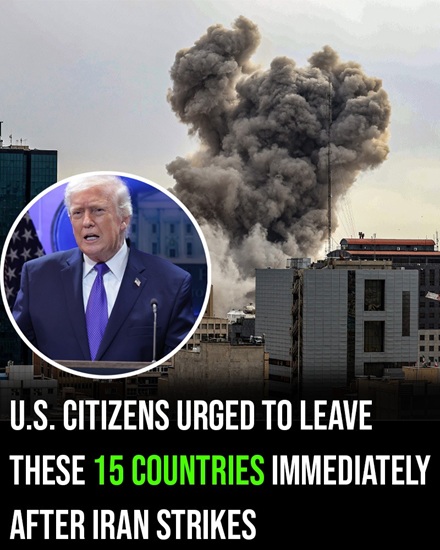
As military tensions in the Middle East grow amid ongoing conflict between the United States, Israel, and Iran, the United States Department of State has issued an urgent travel warning to American citizens across the region.
The advisory, one of the most serious such warnings in recent history, urges U.S. nationals in multiple Middle Eastern countries to leave while commercial travel options are still available due to evolving security risks and the potential for further instability.
The advisory comes in the context of an unprecedented escalation of violence, including major U.S. and Israeli military strikes inside Iran, followed by Iranian retaliatory missile and drone attacks on regional targets.
The rapid deterioration in security has prompted widespread concern within the U.S. government that conditions could worsen quickly, posing significant risks to civilians.
Why the Warning Was Issued
The U.S. Department of State regularly issues travel advisories that provide safety guidance to American citizens abroad.
These advisories are based on evolving geopolitical, security, and humanitarian conditions and are designed to help U.S. citizens make informed decisions about travel and residence outside the United States.
In early March 2026, following the onset of hostilities in the Middle East, the State Department updated its guidance, highlighting heightened threats of missile and drone attacks, airspace closures, and disruptions to commercial travel infrastructure.
U.S. officials have emphasized that the security situation is volatile and could deteriorate without warning.
In response, the State Department urged American citizens to depart from certain countries immediately using available commercial transportation options before airspace closures or other disruptions make leaving the region more difficult.
What the Advisory Says
The most recent warning instructs U.S. citizens to leave as soon as it is safe to do so from a broad list of Middle Eastern countries and territories.
In many cases, authorities have not yet officially categorized the situation as an evacuation, but the urgency of the message — including the phrase “Depart Now” — signals serious concern about civilian safety.

Affected countries covered by the advisory include:
-
Bahrain
-
Egypt
-
Iran
-
Iraq
-
Israel
-
West Bank and Gaza
-
Jordan
-
Kuwait
-
Lebanon
-
Oman
-
Qatar
-
Saudi Arabia
-
Syria
-
United Arab Emirates
-
Yemen
Americans are advised to take advantage of available commercial flights or other transportation routes while they remain operational, as international airlines have canceled many flights and airspace closures have disrupted travel in and out of various countries.
In some places, charter flights are being facilitated by the U.S. government to help citizens depart, particularly where commercial options are limited.
The State Department has said it is working to secure additional capacity and contact U.S. citizens to offer assistance where possible.

Evacuation of Government Personnel Signifies Increased Risk
The warning was strengthened after the U.S. government ordered certain non‑emergency personnel and family members of U.S. government employees to leave their posts in several Middle Eastern countries due to security concerns. Such evacuation orders are considered a serious indicator of potential danger.
For example:
-
The State Department ordered non‑emergency U.S. government employees and family members to depart the United Arab Emirates in early March 2026 due to the threat of armed conflict.
Similar departure orders were issued or extended for other countries including Qatar, Kuwait, Bahrain, Iraq, and Jordan, highlighting a broader pattern of concern for personnel safety across the region.
The closure of major U.S. diplomatic facilities in the region — including the U.S. Embassy in Abu Dhabi and the Consulate General in Dubai — further underscores how contingency planning has been activated amid the escalating conflict.
Secretary of State Emphasizes Citizen Safety
U.S. Secretary of State Marco Rubio stressed that the advisory reflects a commitment to safeguarding American citizens abroad. In public statements, he reiterated that the “number one priority” of the U.S. government is the safety and security of U.S. nationals living or traveling overseas.
Officials have consistently urged Americans to monitor updates from the Department of State and to enroll in the Smart Traveler Enrollment Program (STEP) to receive the latest consular messages.
The warnings also instruct Americans to:
-
Follow local guidance and emergency protocols
-
Stay informed through U.S. embassy or consulate channels
-
Take precautions to avoid demonstrations, military installations, and areas of heightened risk
-
Plan departure logistics before commercial options diminish further
Regional Transport and Aviation Challenges
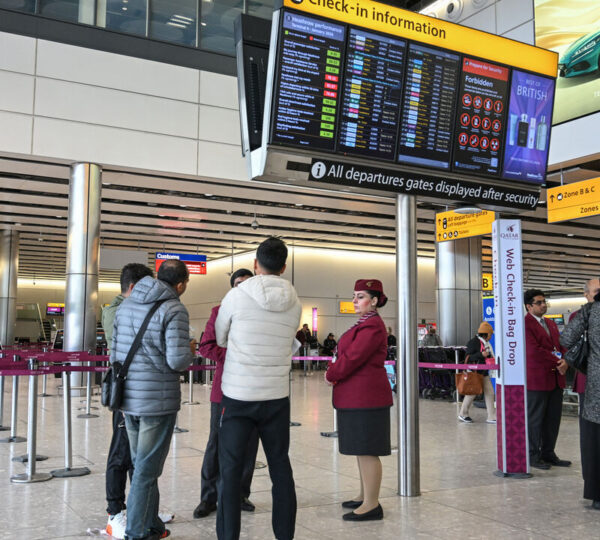
The urgency of the advisory has been compounded by significant travel disruptions across the Middle East. Several major national and international airlines suspended or rerouted flights due to airspace closures and military activity.

For example, airports in the United Arab Emirates — once major international hubs — have closed or limited operations as a precautionary safety measure amid ongoing missile and drone strikes that have struck or threatened infrastructure.
Flight tracking data has shown thousands of cancellations across the region’s major airports, with disruptions affecting routes to and from destinations worldwide.
Even travelers not bound for the Middle East have experienced canceled or diverted flights due to airspace restrictions and safety concerns tied to the conflict.
These disruptions have made departing the region by air more difficult, leading some to seek overland routes, charter options, or departures from third‑country airports where flights are still operating.
Impact on Americans in the Region
Estimates from various media and government sources suggest hundreds of thousands of U.S. citizens live and work in the Middle East as residents, expatriates, students, or business travelers.
Many are now grappling with limited flights, high ticket prices, and uncertainty about their safety.
Some travelers and expatriates stranded in the region have shared firsthand accounts of difficulty securing flights home, while others have remained sheltered in place, awaiting updates from their embassy or consulate.
The large scale of the advisory — covering over a dozen countries — reflects not only localized security risks but also the interconnected nature of regional travel and commercial hubs that make departure more complicated as tensions worsen.

President Trump’s Remarks on Conflict Duration
Compounding the concern, President Donald Trump indicated in public remarks that the broader conflict with Iran could extend beyond initial expectations.
Speaking at a Medal of Honor ceremony for U.S. service members killed in an Iranian retaliatory attack, Trump suggested that military operations could continue for weeks or longer — indicating a prolonged period of heightened regional tension and potential risk.
Although his remarks did not change the official travel advisory, they reflected the uncertainty surrounding the conflict’s duration. (Note: Trump’s comments did not directly appear in the official travel advisory, but they have been widely reported alongside the evolving conflict narrative.)
Understanding the Levels of Advisory
The U.S. Department of State uses a tiered travel advisory system that helps citizens assess risk:
-
Level 4: Do Not Travel — The highest advisory level, issued for countries where the Department believes travelers face severe threats to their safety, including active conflict zones like Iran and Iraq.
-
Level 3: Reconsider Travel — A strong warning that the country presents potential dangers, including nations with elevated risk due to conflict or civil unrest.
-
Level 2 and 1 — Lower tiers generally related to crime or natural disaster risk rather than major armed conflict.
Currently, several countries in the Middle East are either at Level 4 or Level 3 due to the intensifying regional war, with Iran and Iraq under the highest “Do Not Travel” advisory and others like Israel and the UAE under strong caution to reconsider travel.
How to Stay Informed and What to Do
U.S. officials advise that American citizens abroad:
-
Register with STEP — The Smart Traveler Enrollment Program allows the Department of State to send real‑time alerts and assist more effectively in emergencies.
-
Monitor Local and Embassy Communications — Consular offices and U.S. embassies issue country‑specific alerts with actionable guidance.
-
Plan Departures Proactively — Because airspace and commercial options can change rapidly, departing while flights are still available is recommended.
-
Follow Local Security Instructions — Wherever you are, heed all local governmental statements and safety protocols.
For assistance, Americans in the region can also contact the Department of State’s emergency number: +1‑202‑501‑4444 (24/7), or +1‑888‑407‑4747 from within the U.S. or Canada.
Conclusion: A Pivotal Moment for Travelers
The recent travel advisory from the United States underscores how rapidly security environments can change when military conflict expands.
By urging citizens to leave multiple Middle Eastern nations while commercial travel is still operating, the State Department aims to reduce risk and prioritize civilian safety.
As the situation develops, U.S. officials emphasize that conditions could change without notice, meaning Americans in or near the region should pay close attention to updates and take proactive steps to secure safe departure if they are able.
Whether through commercial flights, chartered assistance, or overland travel, the overarching message from U.S. authorities remains clear: leave now while it remains viable to do so.
