
In the aftermath of a thrilling Olympic hockey tournament that captured the attention of fans across the United States and beyond, President Donald Trump publicly celebrated the achievements of the U.S. men’s national team after they secured a gold medal victory against Canada.
The championship game, decided in dramatic fashion, marked a significant moment for American hockey and reignited national pride in the sport.
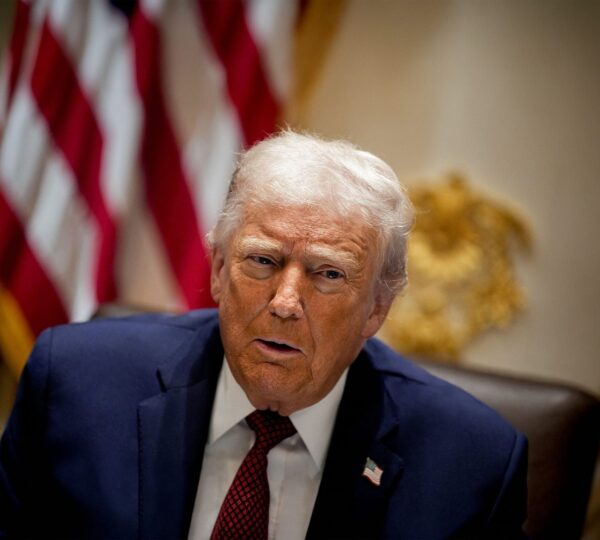
Shortly after the men’s team clinched the title, President Trump spoke with the players by phone, offering congratulations and praise for what he described as an extraordinary performance on the ice.
During the call, the president commended the athletes for their discipline, teamwork, and resilience. “Unbelievable. You were all unbelievable!
That team is pretty good you played,” he said, acknowledging the strength of their Canadian opponents and the intensity of the matchup.
The conversation was intended as a celebratory gesture, reflecting a longstanding tradition in American politics in which presidents recognize championship teams for their accomplishments.
Over the years, White House invitations have been extended to professional and collegiate sports teams, as well as Olympic athletes, as a way of honoring excellence and national representation.
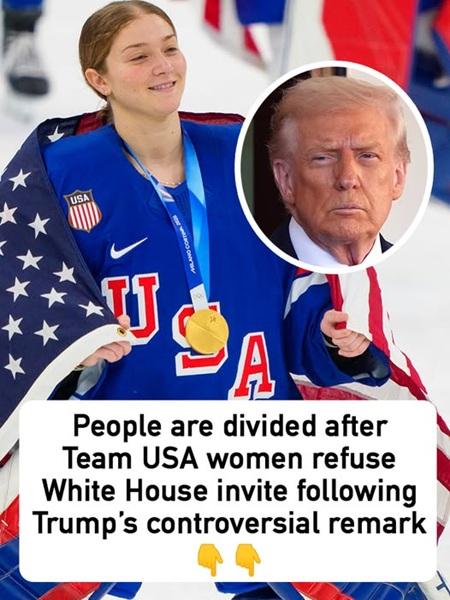
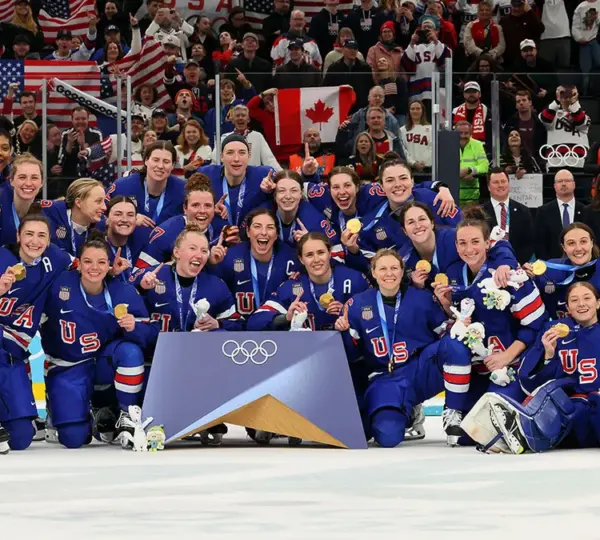
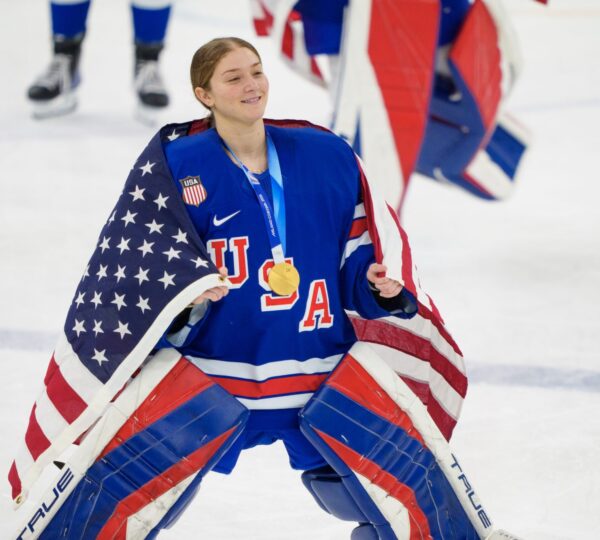
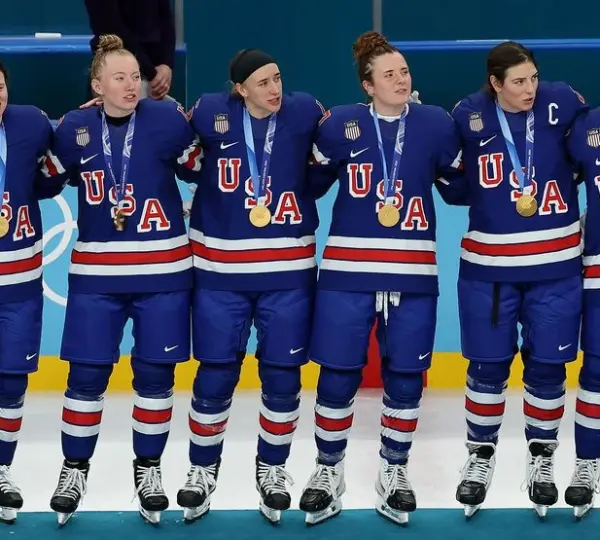
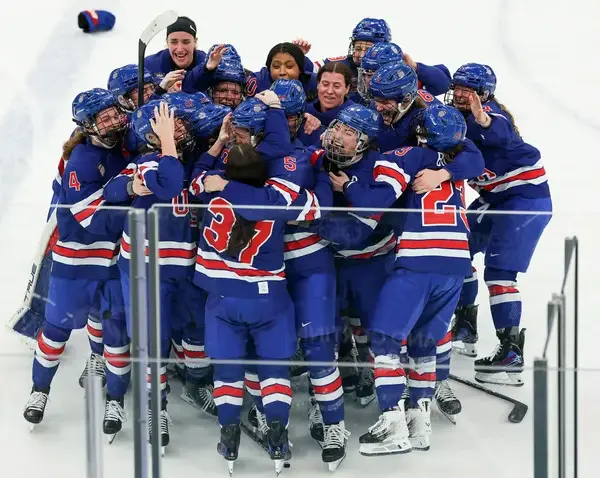
However, during that same call, President Trump also made a remark about the U.S. women’s Olympic hockey team, which had won its own gold medal after defeating Canada in an overtime thriller.
The women’s championship game, like the men’s, was fiercely competitive and widely praised for its high level of play. Both American teams had demonstrated exceptional skill and determination, reinforcing the United States’ strong standing in international hockey competition.
Referring to the women’s team, President Trump joked that he would have to invite them as well, adding that he believed he might be “impeached” if they were not included.
The comment was delivered in a humorous tone, according to reports, but it quickly became the focus of online discussion.
While some listeners interpreted the remark as lighthearted and consistent with the president’s conversational style, others felt it was unnecessary or potentially dismissive of the women’s accomplishments.
The broader context of the moment is important. Invitations to the White House, including attendance at major political events such as the State of the Union address, are typically extended as ceremonial honors.
In this case, the invitation was reportedly tied to attending the State of the Union in Washington, D.C., as a way of recognizing the athletes’ achievements on a national stage.
Such invitations are often seen as prestigious opportunities, offering athletes the chance to be publicly acknowledged by the nation’s highest office.
Shortly after the president’s remarks, the U.S. women’s Olympic hockey team issued a formal public statement addressing the invitation.
The statement expressed gratitude and appreciation for the recognition, while explaining that the athletes would be unable to attend due to previously scheduled academic and professional commitments following the conclusion of the Games.
Many Olympic athletes balance rigorous training schedules with university studies, careers, sponsorship obligations, and community engagements, making post-Games scheduling particularly complex.
The statement read: “We are sincerely grateful for the invitation extended to our gold medal–winning U.S. Women’s Hockey Team and deeply appreciate the recognition of their extraordinary achievement.
Due to the timing and previously scheduled academic and professional commitments following the Games, the athletes are unable to participate.
They were honored to be included and are grateful for the acknowledgment.” The team’s response was measured and diplomatic. It did not criticize the president, nor did it reference the earlier remark.
Instead, it focused on logistical realities and conveyed appreciation for the honor of being invited. Nonetheless, once the statement circulated online, it quickly became the subject of widespread debate across social media platforms.
Supporters of the women’s team praised the athletes for what they perceived as standing by their principles or exercising their independence.
Some users interpreted the decision not to attend as a subtle statement, even though the team’s official explanation cited scheduling conflicts.
Comments circulated online applauding the athletes’ strength of character and commitment to their own priorities. One user described them as “real patriots,” while another expressed pride in what they viewed as the team’s integrity.
Other commentators, however, viewed the situation differently. They argued that a presidential invitation—particularly one connected to a high-profile national event such as the State of the Union—is a rare and significant honor.
From this perspective, declining the invitation, regardless of scheduling conflicts, was seen by some as disappointing or unnecessary.
A number of social media users emphasized that such invitations transcend political differences and represent recognition of athletic excellence rather than endorsement of any particular administration.
Still others took a more moderate stance, suggesting that the president’s remark was clearly intended as humor and that the team’s decision, whatever the reason, was ultimately their own to make.
These observers emphasized that both perspectives could coexist: the president’s comment could be understood as a joke, and the athletes could legitimately have prior commitments preventing attendance.
The episode illustrates how sports, politics, and public perception often intersect in complex ways. Olympic athletes, by virtue of representing their country on the global stage, occupy a unique position in American culture.
Their victories are frequently framed as national achievements, and their public appearances can carry symbolic weight. At the same time, they are individuals with personal schedules, professional obligations, and diverse viewpoints.
Historically, visits to the White House by championship teams have sometimes been accompanied by controversy, particularly in politically polarized eras.
In recent years, several professional and collegiate teams across various sports have either declined invitations or experienced internal debate over attendance.
These situations tend to spark broader discussions about civic tradition, political neutrality in sports, and the rights of athletes to make personal decisions.
In this case, there is no verified evidence that the U.S. women’s hockey team declined the invitation as a political protest. Their official statement cited scheduling conflicts as the reason for their absence.
It is important to rely on confirmed information rather than speculation, especially when online commentary can amplify assumptions that are not supported by direct evidence.
The men’s and women’s Olympic hockey victories themselves remain the central achievements of the story. Both teams demonstrated extraordinary talent and resilience in their respective tournaments.
Overtime championship games are among the most intense experiences in competitive sports, requiring composure under pressure and unwavering teamwork.
The fact that both American teams secured gold medals against a traditional rival like Canada underscores the depth and strength of U.S. hockey development programs.
For many fans, the focus remains on celebrating these accomplishments rather than on the surrounding debate. Olympic gold medals represent years—often decades—of dedication, sacrifice, and relentless training.
Athletes balance personal lives, academic pursuits, and professional aspirations while striving for excellence on the international stage. Recognition from national leaders can be meaningful, but it does not define the value of their achievements.
Public reactions to the situation reflect the broader diversity of opinion within American society. Some citizens believe strongly in maintaining traditional ceremonial ties between sports champions and the presidency.
Others prioritize individual autonomy and see no issue with athletes declining invitations for any reason. Social media platforms, with their rapid dissemination of commentary, tend to magnify these differences of opinion.
Ultimately, the decision of whether to attend a White House event rests with the individuals invited. A presidential invitation is an honor, but it is not an obligation.
Athletes, like all citizens, have the right to manage their schedules and make choices consistent with their personal and professional responsibilities.
What remains indisputable is that both the U.S. men’s and women’s Olympic hockey teams achieved remarkable success.
Their performances brought pride to millions of fans and added to the rich history of American participation in the Winter Games.
Regardless of differing views about post-victory ceremonies, the athletes’ accomplishments on the ice stand as a testament to their hard work and commitment.
As conversations continue online, it is worth remembering that sports often serve as a unifying force, even amid political differences.
Moments of victory can inspire collective celebration that transcends debate. Whether or not athletes choose to attend ceremonial events in Washington, their achievements remain a source of national pride and admiration.
