
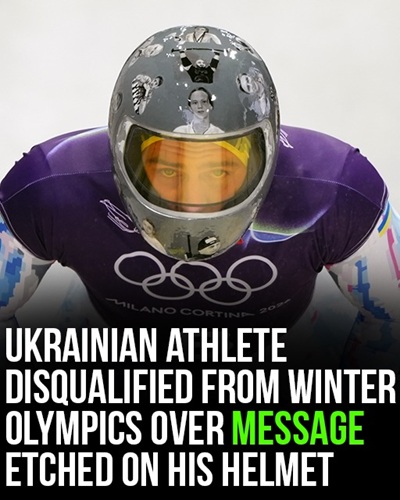
In a dramatic and widely discussed turn of events at the Milano Cortina 2026 Winter Olympics, Ukrainian skeleton athlete Vladyslav Heraskevych.
Was disqualified from competing after refusing to remove a custom helmet designed to honor fellow Ukrainians killed amid Russia’s ongoing war with Ukraine.
The decision by the International Olympic Committee (IOC) came just minutes before the men’s skeleton competition was scheduled to begin on Thursday, February 12, 2026 — ending the 27‑year‑old’s Olympic dream in Cortina d’Ampezzo.
The incident sparked a heated and emotional debate about the role of political expression and memorial gestures at the Olympics, the boundaries of Rule 50 of the Olympic Charter, and how sports institutions balance neutrality with human remembrance during times of international conflict.
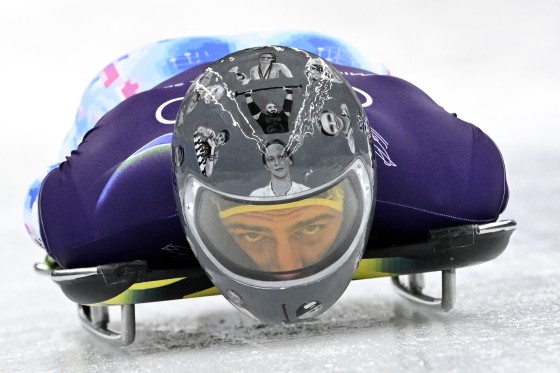
A Memorial Helmet, Not Just a Piece of Equipment
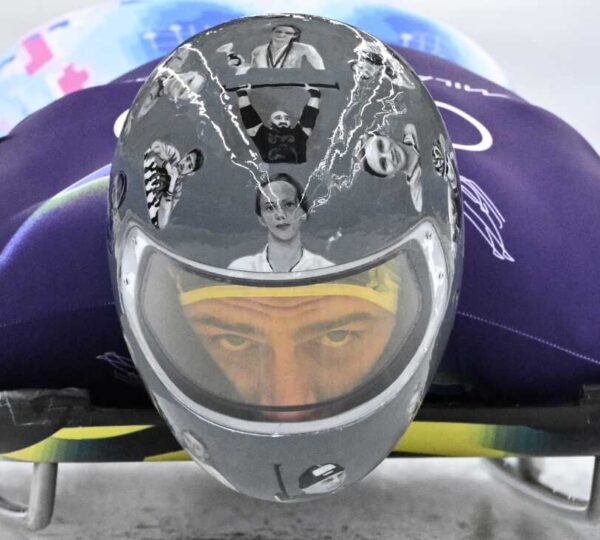
Heraskevych’s helmet — which he labeled his “helmet of remembrance” — was decorated with more than 20 portraits of Ukrainian athletes, coaches, and children who have died since Russia’s full‑scale invasion of Ukraine in 2022.
These images were intended to pay tribute to the sacrifices of Ukrainians in the sport community and to ensure that their memories remained visible even amid the global spectacle of the Olympic Games.
For Heraskevych, the helmet was deeply personal. It was not meant as a political protest or a public denunciation of any state; instead, he explained to reporters that it was a tribute — a way to elevate the memory of those no longer alive to represent Ukraine and the Olympic ideal.
On social media, he had said that “this is the price of our dignity,” adding that honoring the fallen was more important than chasing a medal.
Despite this intention, officials at the Games determined that the helmet’s images violated the IOC’s Guidelines on Athlete Expression — specifically Rule 50 of the Olympic Charter, which restricts political, religious, or racial demonstrations or propaganda at Olympic venues, particularly during competition.
Last‑Minute Negotiations and a Failed Compromise
The controversy reached a peak on the morning of the skeleton competition. According to the IOC, multiple meetings were held between the organization’s leadership — including IOC President Kirsty Coventry — and Heraskevych in an effort to find a way forward that would allow him to compete without wearing the banned helmet.
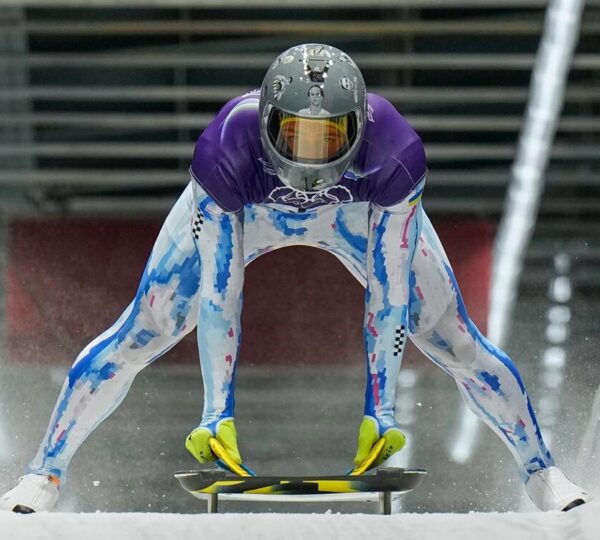
Coventry acknowledged the helmet’s purpose publicly, calling its message “powerful,” and emotionally noting that it represented “remembrance” and “memory.” However, she explained that compliance with Olympic regulations is required in competitive contexts.
Officials urged Heraskevych to consider alternative ways of expressing his tribute.
Among options offered was the opportunity to wear a black armband during competition that would serve as a symbolic acknowledgment of his message, without breaching the neutrality rules that govern uniforms, helmets, and technical equipment on the field of play.
They even proposed that the helmet be displayed before or after the race, outside competition.
Even so, Heraskevych refused to abandon his custom helmet. His position was firm: he believed that the tribute was appropriate, respectful, and consistent with the spirit of honoring his fallen compatriots — not a contravention of the Olympic Charter.
By refusing to accept any compromise that required removing it, he knowingly put his ability to compete at risk.
Disqualification and Revocation of Accreditation
With the competition only minutes away, the IOC and the International Bobsleigh and Skeleton Federation (IBSF) formally ruled that Heraskevych’s helmet was non‑compliant with the current rules on athlete expression.
The IOC then made the exceptional decision to withdraw his Olympic accreditation entirely. That action rendered him ineligible to compete further in the Games and also stripped him of access to Olympic areas, including the athletes’ village and media zones.
In a subsequent statement, Heraskevych acknowledged the outcome with visible emotion, saying that he understood the IOC’s position but still felt the memorial was essential.
He expressed profound disappointment that he would not be able to take part in the competition he had prepared for years to reach.
Reaction From IOC Leadership
IOC President Kirsty Coventry addressed the situation in the days leading up to and following the disqualification. She emphasized that her intention in meeting with Heraskevych was to seek a solution that would allow him to compete while respecting Olympic rules.
Her remarks highlighted the emotional difficulty surrounding the decision, balancing respect for individual expression with the organization’s commitment to neutrality in sporting competition.
“No one — especially me — is disagreeing with the messaging,” Coventry said when asked about the tribute. “It’s a powerful message, it’s a message of remembrance, of memory.”
However, she reiterated that the challenge was finding a way for that message to be presented outside the competition format itself, where special restrictions apply.
Official Statements and International Response
The Ukrainian National Olympic Committee publicly supported Heraskevych’s position, arguing that the helmet did not break any Olympic rules because it did not carry political slogans, inflammatory language, or discriminatory content — it simply displayed the faces of fallen athletes from Ukraine, honoring their legacy.
They also noted that the helmet was crafted in collaboration with Ukrainian artists and was deeply meaningful to the athlete and his community.
Many outside observers interpreted the situation as part of a broader and complex debate about how sport intersects with global events and geopolitical conflict.
Some critics suggested the enforcement of Rule 50 in this case appeared inconsistent, pointing to past moments when athletes have made symbolic gestures without facing comparable sanctions.
Regardless of perspective, the incident drew intense attention and sparked discussions in media and on social platforms worldwide.
Appeals and Legal Challenges
In the wake of his disqualification, Heraskevych and his team announced plans to appeal the decision to the Court of Arbitration for Sport (CAS).
The appeal sought either immediate reinstatement so he could compete or authorization for a supervised run while the case was being reviewed. CAS acknowledged the urgency, given that skeleton racing events were still scheduled in the days following the decision.
The outcome of the appeal process — including whether any exceptions might be considered for memorial tributes such as this — remained uncertain at the time of reporting.
But the mere act of initiating the appeal underscored Heraskevych’s resolve to have his voice heard and to challenge what he and many supporters viewed as an overly rigid interpretation of the Olympic rules.
Broader Implications and Public Debate
The controversy surrounding Heraskevych’s disqualification also highlighted wider tensions about how international sporting institutions address expressions of grief, patriotism, and solidarity during times of war.
While the Olympics seek to maintain political neutrality in competition, global audiences and athletes themselves often feel that honoring human loss and sacrifice transcends politics.
The debate brought forth comparisons to historical moments when athletes used their platforms to draw attention to causes and human rights.
Past controversies, such as the famous raised‑fist salute by U.S. sprinters at the 1968 Olympics in Mexico City, reflect long‑standing discussions about the appropriate boundaries of expression in sports.
In Heraskevych’s case, many commentators and supporters argued that honoring fallen compatriots — especially fellow athletes whose Olympic dreams were cut short by war — should be recognized as a deeply human act rather than a political one.
They said that the imagery on his helmet represented remembrance and respect, not propaganda or advocacy.
International and Ukrainian Reaction
Within Ukraine and among global supporters, there was a significant response to Heraskevych’s situation. Some political leaders — including Ukrainian President Volodymyr Zelenskyy — publicly voiced support for the athlete’s stance, calling the decision morally problematic and emphasizing that no rule had been broken by honoring those killed.
Social media also saw widespread discussion and solidarity efforts, with many users highlighting the inherent challenge of reconciling neutral sporting regulations with the lived reality of nations at war.
Hashtags and statements reinforcing remembrance circulated internationally as news of the disqualification spread.
Legacy of the Incident
Vladyslav Heraskevych entered Milano Cortina 2026 viewed by many as a strong medal contender — a competitor who had built his career with consistent performances and strong finishes on the international skeleton circuit.
His exclusion from competition, so close to race time, was therefore not only a personal loss but also a dramatic moment in the wider narrative of these Winter Games.
As international audiences continue to process this incident, it has served as a reminder of how sporting events do not exist in isolation from global events, human suffering, and the emotional realities that athletes carry with them.
Whether or not CAS ultimately overturns or modifies the IOC’s ruling, Heraskevych’s stand — and the global reaction it inspired — is likely to remain a defining moment of Milano Cortina 2026.
