
On February 27, 2026, United Airlines officially updated its Contract of Carriage to include a formal requirement that passengers use headphones when listening to audio or video on personal devices during flights.
The Contract of Carriage is the legally binding agreement between United and its passengers, outlining the conditions under which the airline provides transportation services.
United’s updated policy now lists failing to use headphones under Rule 21 — the “Refusal of Transport” section — alongside other behaviors that could lead to removal from a flight.
Under this rule, United can now deny boarding, remove passengers mid‑flight, or refuse to transport them in the future if they continue playing audio without headphones.
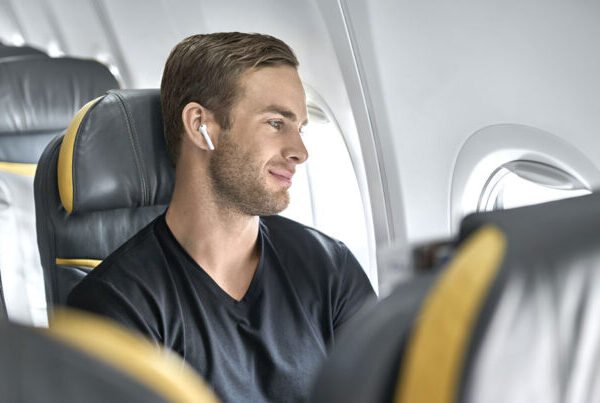
Before this change, United — like many other airlines — encouraged passengers to use headphones but had not made headphone use a strictly enforceable contractual condition.
A United Airlines spokesperson said the rule change was prompted in part by the expansion of Starlink high‑speed Wi‑Fi across its fleet, which makes streaming content more common on flights.
Starlink’s improved connectivity means more passengers watch videos or listen to music in‑flight, increasing the likelihood that loud device audio would disturb others.
The airline clarified that it “has always encouraged customers to use headphones when listening to audio content” and that the wired headphone recommendation was already included in Wi‑Fi usage guidelines.
With the formal update, United now explicitly empowers its flight attendants to enforce headphone use as part of passenger conduct expectations.
Passengers who forget their own headphones will not necessarily be stranded; United says travelers may request free earbuds from a flight attendant if available.
This headphone policy change places United among the first major U.S. airlines to make listening with headphones a formal part of its contract, not just a courtesy request.
Other carriers also advise passengers to use headphones, but generally do not embed the requirement in legally binding rules like the Contract of Carriage.
For example, Delta Air Lines asks passengers to “please use earbuds or headphones” for the comfort of others, but this guidance is not part of its refusal‑to‑transport provisions.
Southwest Airlines likewise states headphones are required when listening to audio, yet doesn’t attach penalties or bans in the same way United has.
United’s new rule places headphone use in the same category as other behaviors that can lead to removal, including violating crew instructions or engaging in disruptive conduct.
In addition to loud audio, other listed offenses in Rule 21 include failing to follow safety requirements or behaving in ways that endanger the safety of others.
The airline’s updated refusal section also covers actions that “‘cause a malodorous condition’ or are unlawful, indecent, offensive, abusive, or disruptive.”
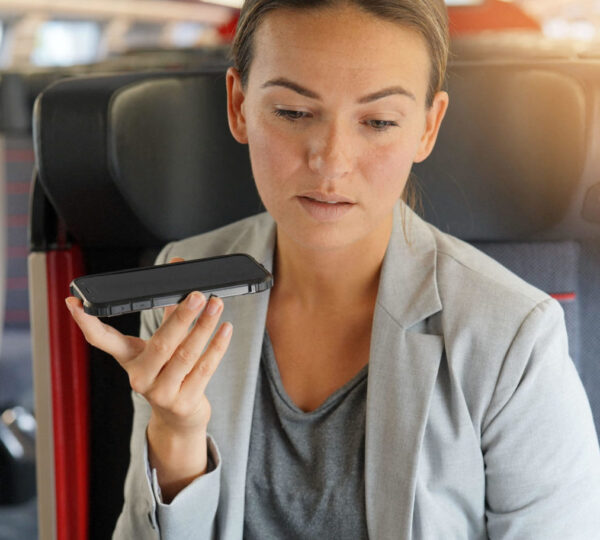
United’s move reflects growing frustration among passengers and flight crews with individuals who play video sound or music without headphones, disturbing neighbors in close cabin environments.
Recent surveys and passenger surveys indicate that many travelers consider in‑flight loud audio to be a top annoyance during flights.
Travel experts say that because modern devices and streaming services make on‑demand media consumption ubiquitous, enforcing headphone use has become more relevant.
United spokespersons and cabin crew have noted that flight attendants have often had to repeatedly remind passengers to wear headphones, distracting them from safety and service duties.
By embedding headphone use into the Contract of Carriage, United hopes to provide clearer authority for staff to address noise complaints swiftly and consistently.
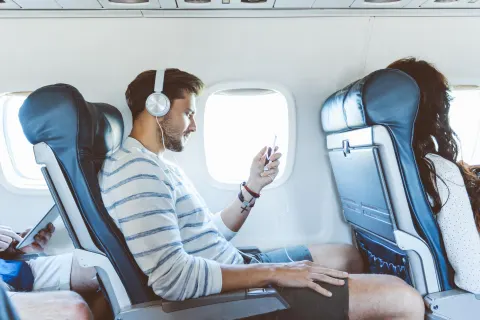
The airline’s new policy also allows it to pursue temporary or permanent travel bans for repeat offenders who violate the headphone rule.
If a passenger’s behavior results in a loss, damage, or expense for United, the airline may also seek reimbursement under the updated contract language.
Some industry observers have described the headphone enforcement rule as a common‑sense step that formally acknowledges etiquette already expected on board.
Nevertheless, making headphone use enforceable in law‑like contract language is notable; it represents a shift from best‑practices to contractual obligation.
On social media and travel forums, many frequent flyers have praised United’s move, saying it will improve comfort for passengers who value quiet cabins.
One commenter called it “a long‑overdue formalization of what polite travelers already do,” noting they often hear audio from others without headphones on flights.
Others argue that managing social norms through contract language helps relieve pressure from flight attendants trying to mediate tensions between passengers.
Some crew members said having a written rule helps when they need to intervene — passengers are more likely to comply when it’s an official policy rather than a courtesy request.
Flight attendants have historically had to balance enforcing etiquette and maintaining service, so a clear rule strengthens their position.
Despite general approval from many travelers, a few critics question whether banning passengers over headphones could be seen as heavy‑handed enforcement.
Critics also point out that passengers with hearing difficulties or children may have legitimate reasons for playing audio that complicates enforcement.
In response, United’s policies typically allow for exceptions or alternative accommodations when required for disability needs, and free headphones help ease compliance.
Experts in air travel etiquette say that while technology has improved in‑flight entertainment, so too must passengers’ awareness of shared public spaces.
Historically, airlines advised headphone use as part of general advice, but rarely elevated it to a formal contractual requirement like United now has.
Some consumer advocates welcome the rule, saying it may reduce the number of complaints flight attendants receive about loud audio in cabins.
United’s decision also highlights how airlines adapt policies in response to both customer feedback and evolving technology on board.
As United continues rolling out high‑speed internet across more aircraft, the number of passengers streaming media on flights will likely increase.
The headphone requirement will ensure that passengers can enjoy personal entertainment without imposing audio on neighbors in tight seating configurations.
United has not yet publicly detailed how often it will enforce headphone‑related removals, but the rule’s existence provides the airline the option.
Safety remains paramount in aviation, and policies that help maintain calm cabin environments align with broader passenger experience goals.
Other airlines may watch United’s experiment closely to see whether formal headphone enforcement spreads across the industry.

In the meantime, travelers booking United flights are advised to bring reliable headphones or earbuds to avoid unwanted enforcement issues.
Regular flyers may find that keeping headphones in carry‑on luggage becomes a more important part of pre‑flight routine.
Overall, United’s headphone rule represents a blend of evolving technology, passenger behavior management, and contractual clarity.
Whether the policy significantly reduces in‑flight disturbances remains to be seen, but its introduction clearly reflects current passenger expectations.
As airlines continue to refine travel experiences, cabin noise and etiquette are likely to remain topics of policy innovation and debate.
