

You may have come across small glass tubes containing tiny metal balls, often seen in antique tool collections or vintage workshop kits. At first glance, they appear decorative, yet they served a precise and practical engineering function in history.
These glass tubes are actually components of specialized leveling instruments known as bullseye levels or machinist’s spirit levels. Unlike straight spirit levels with a single floating bubble, bullseye levels measure horizontal balance in multiple directions simultaneously.
The circular, compact design allowed craftsmen and machinists to verify that surfaces were perfectly level from every angle. This capability was particularly critical in precision mechanical work, where even minor deviations could impact the final outcome.
In older European and industrial tool designs, small steel balls often replaced the traditional liquid bubbles. These balls naturally rolled toward the lowest point, providing a clear visual cue to indicate exact horizontal alignment.
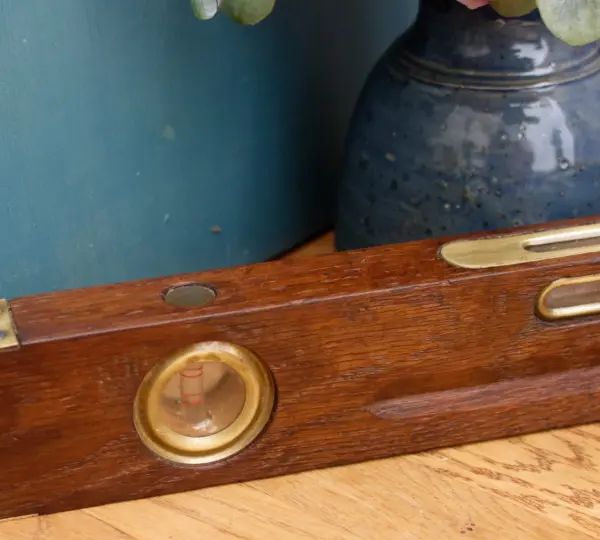
Ball-bearing designs proved advantageous in workshops or factories prone to vibration or movement. Unlike traditional liquid bubbles, which could be disturbed, the steel balls offered a more stable and readable indicator under such conditions.
Certain models included multiple balls inside the sealed tube to enhance accuracy. By comparing the positions of several balls, users could more precisely determine whether a surface was level, improving overall alignment confidence.
These ingenious tools highlight an era of engineering dominated by hands-on precision and physical principles rather than digital measurement devices. Their reliability depended on gravity, materials, and careful craftsmanship rather than electronics.
Glass tubes were often mounted in durable materials such as brass, wood, or cast iron. Housings were carefully designed to protect the tube while keeping it visible and accessible for frequent measurements in workshop settings.
Today, these small instruments are primarily found in antique shops, estate sales, or vintage tool collections. Enthusiasts prize them for both their historical significance and their demonstration of practical engineering ingenuity.
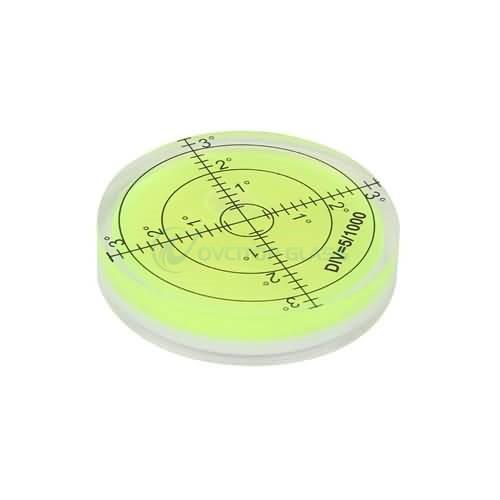
Handling them requires care because the liquid inside may include substances like alcohol or oil. While generally safe when intact, broken tubes can release these fluids, which may be irritating or harmful if contacted or ingested.
Collectors often leave the tubes undamaged, appreciating their original condition. Some choose to display them as decorative objects or integrate them into larger projects, celebrating the artistry and engineering behind these tools.
Beyond functionality, bullseye levels represent a historical approach to precision. They embody a period when accuracy depended entirely on careful design, physics, and materials, rather than reliance on electronic or digital measurement devices.
The circular design allowed craftsmen to instantly see imbalance from any direction. A single glance could reveal whether a workbench, machine bed, or optical instrument was perfectly horizontal, saving time and reducing measurement errors.
Many antique European designs are particularly notable for their use of high-quality materials and precise manufacturing. Brass fittings, hand-blown glass, and finely machined housings reflect the value placed on accuracy and longevity.
Ball-bearing levels could be adapted to different environments, including rugged industrial workshops or delicate laboratory setups. Their robust design allowed repeated use without significant wear or loss of reliability over decades.

Some models featured dual liquids, colored oils, or transparent alcohol to improve visibility under varied lighting. These visual enhancements made alignment easier to read, even in low-light factory conditions or shadowed mechanical assemblies.
Machinists relied on these instruments for tasks like leveling lathes, planers, optical tables, and other equipment where slight deviations could produce significant errors in measurement or machining operations.
Beyond the workshop, ball-bearing levels also appeared in scientific instruments, optical devices, and surveying tools. Their ability to quickly and accurately indicate horizontal alignment made them versatile across multiple disciplines.
The compact circular design offered portability, allowing craftsmen to carry them directly to the workpiece instead of relying on fixed setups. This flexibility increased their utility and made them indispensable tools.
Collectors today value the craftsmanship as much as functionality. The hand-blown glass, finely polished metal, and careful assembly of these tiny instruments are considered an art form, highlighting the precision of earlier toolmaking.
Some enthusiasts incorporate these tubes into decorative displays, preserving their original structure while celebrating engineering history. This approach allows people to appreciate both form and function in a visually compelling way.
The use of steel balls demonstrates a clever adaptation of physical principles. Gravity naturally guides the balls to the lowest point, creating a self-correcting indicator that functions without calibration or external power.
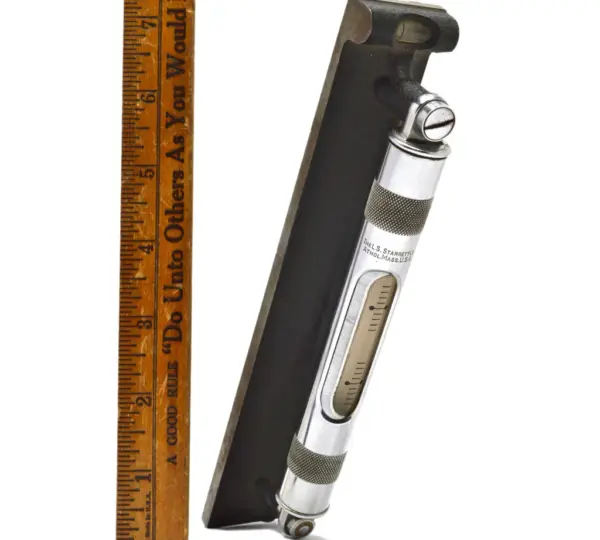
Ball-bearing levels also illustrate the ingenuity of pre-digital engineering. Simple, durable materials and thoughtful design achieved accuracy and reliability, reflecting a deep understanding of mechanics and physics in toolmaking traditions.
Modern users who handle these tubes should always avoid excessive pressure or dropping them, as the glass is delicate. Cracks can compromise accuracy and pose safety risks due to potential exposure to the contained liquid.
Historical context further emphasizes their importance. In a time before laser levels or electronic inclinometers, such instruments were essential for achieving high precision in workshops, laboratories, and industrial settings.
Today, these artifacts provide insight into the evolution of measurement technology. They remind us that precision engineering once relied entirely on observation, material science, and careful handcraft rather than digital electronics.
In essence, each tube tells a story about practical problem-solving, mechanical ingenuity, and craftsmanship. Holding one is like holding a link to a period when accuracy depended on physical principles and meticulous design.
Many collectors and museums display them as examples of functional art. They highlight both industrial history and the aesthetic appeal of early scientific instruments, showing the overlap of engineering and design.
Understanding how they work deepens appreciation. The simple interaction between a metal ball and gravity inside a sealed tube showcases a brilliant yet minimalistic solution to a universal engineering challenge: determining level surfaces.
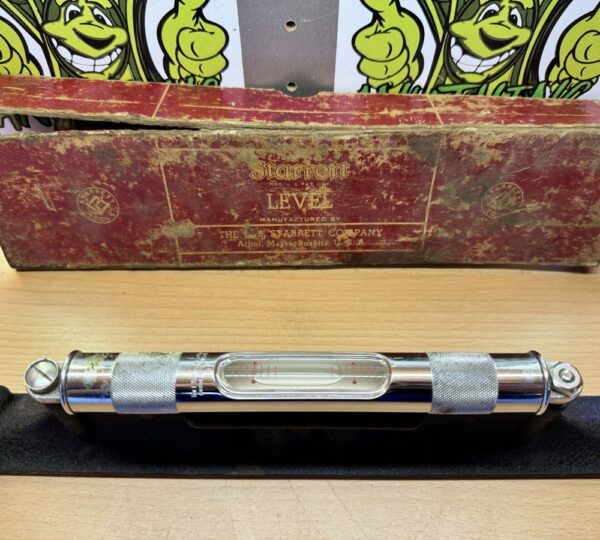
Ball-bearing tubes remain a testament to human ingenuity, showing that effective engineering often arises from simple, well-executed solutions rather than complex or electronic systems. Their design is timeless in its elegance and practicality.
Whether preserved in their original housing or displayed as standalone objects, these glass tubes reflect careful thought and precision. They are physical reminders of a time when measurement and craftsmanship were inseparable.
For enthusiasts, handling or observing them fosters an appreciation for early mechanical thinking. They represent a tangible connection to the past, where tools were not only functional but also designed with care and elegance.
While primarily historical, the principles behind these instruments are still relevant today. Understanding gravity-based measurement, precision alignment, and material interaction provides foundational knowledge useful even in modern engineering contexts.
Finally, ball-bearing bullseye levels remind us of a human-centered approach to problem-solving. They show that even small, simple tools can have profound impact, merging functionality, elegance, and practical physics in one compact design.
