...

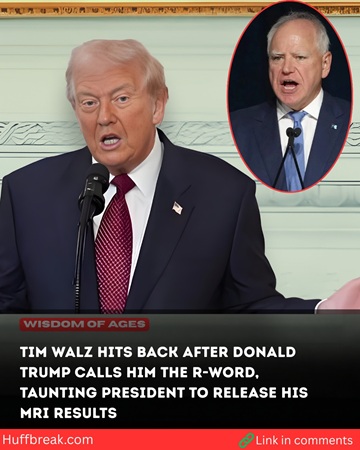
Tim Walz Fires Back After Trump Uses the R-Word, Challenging Him to Make His MRI Public

Donald J. Trump — former U.S. president — recently sparked an intense public conflict with Tim Walz, the governor of Minnesota, following a social‑media post on the holiday of Thanksgiving that triggered widespread backlash.

 What Trump said — and why it caused uproar.

In his post (on his platform, and shared elsewhere), Trump launched a sweeping attack on immigration — and particularly on the Somali‑American community in Minnesota — describing them as a burden and threatening sweeping changes to immigration and asylum policies.

He also targeted Tim Walz personally, calling him “seriously r—‑ed,” a derogatory slur widely regarded as ableist and offensive toward people with intellectual disabilities.
Beyond the slur, Trump accused the Somali community of fostering crime, labeling Minnesota as “taken over,” and claimed that some Somali immigrants were responsible for widespread fraud — content many saw as xenophobic and hateful.

He further disparaged elected officials such as Ilhan Omar, using harsh and racially charged language.

The tone and content of the post drew immediate condemnation from multiple quarters — media, civil‑rights advocates, disability‑rights activists, Minnesota officials, and many ordinary citizens.

Walz’s response — a pivot that shifted the narrative

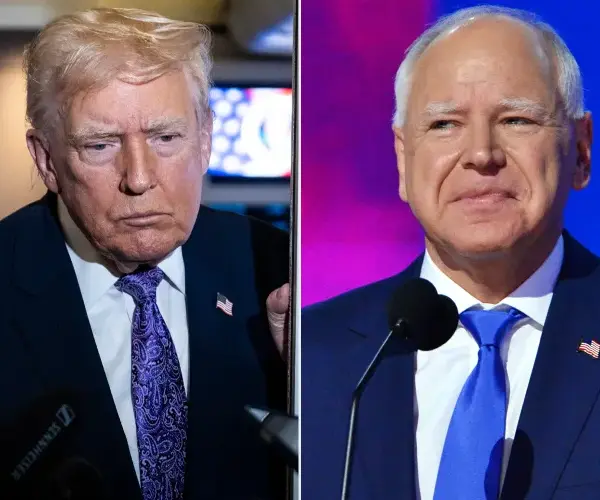
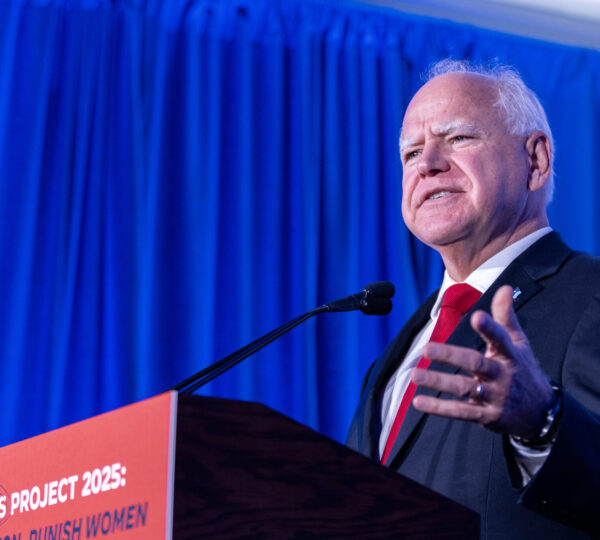
Rather than respond with insults or defensiveness, Governor Walz countered with just four words on X: “Release the MRI results.”

That brief call reframed the debate entirely. The focus shifted away from inflammatory rhetoric (and the harmful stereotypes underlying it) — and onto questions about Trump’s own health, transparency, and fitness for public leadership.

Many saw Walz’s response as a sharp political move that highlighted hypocrisy and deflected the energy of the attack back onto Trump.
What is known — and what remains unclear about the MRI

  • According to public statements, Trump underwent an MRI in October 2025 — during a medical exam at Walter Reed National Military Medical Center. The White House described the results as “perfect.”

  • Trump has said he does not know what part of his body was scanned; he claimed it “wasn’t the brain” because he has since taken a cognitive test and “aced it.”

  • No detailed medical record, scan images, or doctor’s reports have been made public, and no outside verification of the MRI’s purpose or results has been released. This lack of transparency is what Walz and others are calling into question.

⚖️ Broader context — why this matters beyond insults and social media

The conflict touches on a number of deeper societal and political issues:

  • Racial, ethnic, and religious tensions: The comments about Somali immigrants and a prominent Somali‑American Congresswoman sparked fear amongst immigrant communities, particularly in Minnesota, where there is a sizable Somali diaspora.

  • Many local leaders have pushed back, defending the community and warning against collective punishment or demonization.

  • Disability rights and ableism: Use of slurs targeting persons with intellectual or developmental disabilities triggered condemnation from disability‑rights groups, illustrating how political discourse can perpetuate harmful stigmas and social exclusion.
  • Public trust, transparency, and leadership fitness: Walz’s demand turned the spotlight to the responsibility of public figures — especially power holders — to be transparent about their health when they hold or might hold significant influence.

  • For many, it is not just about past slurs or inflammatory language, but about long‑term capacity and accountability.

  • Political strategy and narrative framing: The episode demonstrated how a simple, well‑timed response can shift a narrative. Instead of getting mired in a back‑and‑forth about insults, the argument became about transparency, health, and leadership — topics that can influence broader public opinion beyond the immediate conflict.

What we still don’t know — and what’s likely to stay uncertain (for now)

  • We don’t know which part of Trump’s body was scanned in the October MRI (brain? heart? spine? something else), because that information hasn’t been released.

  • We don’t have independent verification of the MRI results — no medical records, no second opinions, no peer‑review or external medical report to confirm what the White House physician concluded.

  • We don’t know whether public pressure (from Walz, media, civil‑rights groups) will push for full disclosure of medical data — or whether legal/ privacy / national security concerns will block such transparency.

  • We don’t know if this controversy will have a lasting political impact (on elections, public opinion, policy, immigration enforcement) — or if the conversation will move on, as similar controversies have before.

️ Significance — why “Release the MRI results” resonated

Walz’s brief demand worked for several reasons:

  • It turned an emotional, inflammatory moment (slurs, xenophobic talk) into a rational question about health and transparency.

  • It forced a national conversation not just about immigration, or slurs — but about who is fit to lead, and what citizens deserve to know from their leaders.

  • It exposed a wider juxtaposition: rhetoric targeting vulnerable communities vs. lack of transparency about the personal condition of someone with substantial influence.

  • It demonstrated how in modern political conflict — especially in the age of social media — concise, symbolic acts (or statements) can shift the narrative more than lengthy arguments or detailed rebuttals.

What’s next — what observers, media, and citizens will likely watch

  • Whether Trump (or his administration) will release full MRI results, or allow independent medical review — and how transparent that release will be (what scans, what dates, what findings).

  • Whether Minnesota’s Somali community (and others who feel targeted) will face increased scrutiny, deportation actions, or policy shifts — and how local/federal officials respond.

  • How the slur and racist/xenophobic rhetoric will shape political discourse about immigration, civil rights, and social cohesion — especially in states with significant immigrant populations.

  • How this exchange will influence media narratives, public trust in leaders, and possibly future campaigns or elections.

Donald J. Trump — former U.S. president — recently sparked an intense public conflict with Tim Walz, the governor of Minnesota, following a social‑media post on the holiday of Thanksgiving that triggered widespread backlash.

 What Trump said — and why it caused uproar.

In his post (on his platform, and shared elsewhere), Trump launched a sweeping attack on immigration — and particularly on the Somali‑American community in Minnesota — describing them as a burden and threatening sweeping changes to immigration and asylum policies.

He also targeted Tim Walz personally, calling him “seriously r—‑ed,” a derogatory slur widely regarded as ableist and offensive toward people with intellectual disabilities.

Beyond the slur, Trump accused the Somali community of fostering crime, labeling Minnesota as “taken over,” and claimed that some Somali immigrants were responsible for widespread fraud — content many saw as xenophobic and hateful.

He further disparaged elected officials such as Ilhan Omar, using harsh and racially charged language.

The tone and content of the post drew immediate condemnation from multiple quarters — media, civil‑rights advocates, disability‑rights activists, Minnesota officials, and many ordinary citizens.

Walz’s response — a pivot that shifted the narrative

Rather than respond with insults or defensiveness, Governor Walz countered with just four words on X: “Release the MRI results.”

That brief call reframed the debate entirely. The focus shifted away from inflammatory rhetoric (and the harmful stereotypes underlying it) — and onto questions about Trump’s own health, transparency, and fitness for public leadership.

Many saw Walz’s response as a sharp political move that highlighted hypocrisy and deflected the energy of the attack back onto Trump.

What is known — and what remains unclear about the MRI

  • According to public statements, Trump underwent an MRI in October 2025 — during a medical exam at Walter Reed National Military Medical Center. The White House described the results as “perfect.”

  • Trump has said he does not know what part of his body was scanned; he claimed it “wasn’t the brain” because he has since taken a cognitive test and “aced it.”

  • No detailed medical record, scan images, or doctor’s reports have been made public, and no outside verification of the MRI’s purpose or results has been released. This lack of transparency is what Walz and others are calling into question.

⚖️ Broader context — why this matters beyond insults and social media

The conflict touches on a number of deeper societal and political issues:

  • Racial, ethnic, and religious tensions: The comments about Somali immigrants and a prominent Somali‑American Congresswoman sparked fear amongst immigrant communities, particularly in Minnesota, where there is a sizable Somali diaspora.

  • Many local leaders have pushed back, defending the community and warning against collective punishment or demonization.

  • Disability rights and ableism: Use of slurs targeting persons with intellectual or developmental disabilities triggered condemnation from disability‑rights groups, illustrating how political discourse can perpetuate harmful stigmas and social exclusion.

  • Public trust, transparency, and leadership fitness: Walz’s demand turned the spotlight to the responsibility of public figures — especially power holders — to be transparent about their health when they hold or might hold significant influence.

  • For many, it is not just about past slurs or inflammatory language, but about long‑term capacity and accountability.

  • Political strategy and narrative framing: The episode demonstrated how a simple, well‑timed response can shift a narrative. Instead of getting mired in a back‑and‑forth about insults, the argument became about transparency, health, and leadership — topics that can influence broader public opinion beyond the immediate conflict.

What we still don’t know — and what’s likely to stay uncertain (for now)

  • We don’t know which part of Trump’s body was scanned in the October MRI (brain? heart? spine? something else), because that information hasn’t been released.

  • We don’t have independent verification of the MRI results — no medical records, no second opinions, no peer‑review or external medical report to confirm what the White House physician concluded.

  • We don’t know whether public pressure (from Walz, media, civil‑rights groups) will push for full disclosure of medical data — or whether legal/ privacy / national security concerns will block such transparency.

  • We don’t know if this controversy will have a lasting political impact (on elections, public opinion, policy, immigration enforcement) — or if the conversation will move on, as similar controversies have before.

️ Significance — why “Release the MRI results” resonated

Walz’s brief demand worked for several reasons:

  • It turned an emotional, inflammatory moment (slurs, xenophobic talk) into a rational question about health and transparency.

  • It forced a national conversation not just about immigration, or slurs — but about who is fit to lead, and what citizens deserve to know from their leaders.

  • It exposed a wider juxtaposition: rhetoric targeting vulnerable communities vs. lack of transparency about the personal condition of someone with substantial influence.

  • It demonstrated how in modern political conflict — especially in the age of social media — concise, symbolic acts (or statements) can shift the narrative more than lengthy arguments or detailed rebuttals.

What’s next — what observers, media, and citizens will likely watch

  • Whether Trump (or his administration) will release full MRI results, or allow independent medical review — and how transparent that release will be (what scans, what dates, what findings).

  • Whether Minnesota’s Somali community (and others who feel targeted) will face increased scrutiny, deportation actions, or policy shifts — and how local/federal officials respond.

  • How the slur and racist/xenophobic rhetoric will shape political discourse about immigration, civil rights, and social cohesion — especially in states with significant immigrant populations.

  • How this exchange will influence media narratives, public trust in leaders, and possibly future campaigns or elections.