
In the history of personal grooming, few devices capture the mid-20th-century fascination with progress, invention, and efficiency like the Rally Dry Shaver.
Emerging in the postwar period, it was more than a simple grooming tool—it was a symbol of an era that celebrated innovation and optimism.
Household appliances were no longer just functional; they reflected ambition, modernity, and a belief that technology could enhance even the most mundane daily tasks.
The Rally Dry Shaver arrived at a time when society was enamored with speed, efficiency, and reinvention. From the 1940s through the 1960s, household technology was rapidly transforming life.
Televisions, refrigerators, washing machines, and small appliances promised to save time and simplify domestic routines. Shaving—a daily ritual for millions of men—was seen as ripe for modernization.
Traditional methods required time, precision, and patience. Could engineering offer a faster, more convenient alternative without sacrificing results? The Rally Dry Shaver attempted to answer that question.
When Shaving Was a Ritual
Before innovations like the Rally, wet shaving dominated male grooming. For generations, men relied on double-edged safety razors or straight razors, soap, water, and brushes.
The process was deliberate. Lathering with soap created a protective barrier for the skin, while the brush helped lift hair for a closer cut.
Shaving demanded patience, careful angles, and steady hands. It was a ritual as much as a necessity—a moment to prepare for the day and engage in a tactile, mindful experience.
For many men, wet shaving carried an artistry. The ritual offered a combination of routine, precision, and craftsmanship. The comfort of warm water and shaving cream mattered almost as much as the final result: smooth, closely shaven skin.
These traditions were deeply ingrained, making any attempt to disrupt them a cultural challenge as well as a technological one.
The Postwar Push for Speed and Convenience
The end of World War II brought profound social and economic change. Prosperity expanded, suburbs grew, and the pace of daily life quickened.
Convenience became a cultural priority, and consumers increasingly expected products that could save time without sacrificing performance. Shaving, once a careful ritual, was increasingly seen as slow, outdated, and in need of reinvention.
Manufacturers responded by exploring innovations that would make grooming simpler, faster, and more portable. Electric shavers were already emerging, but early models required power cords and often produced inconsistent results.
The Rally Dry Shaver entered the market with a bold promise: a fully manual, cordless, dry shaver that could work anywhere, anytime.
The Concept Behind the Rally Dry Shaver
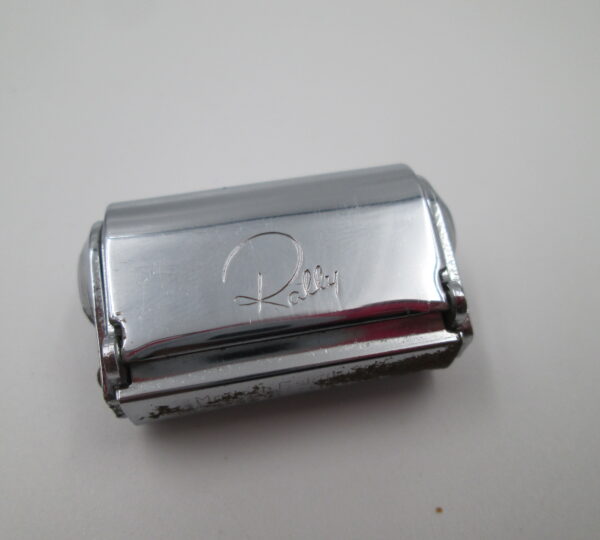
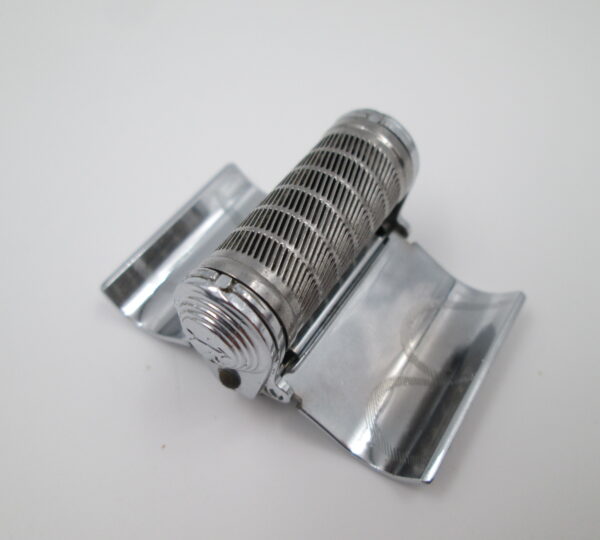
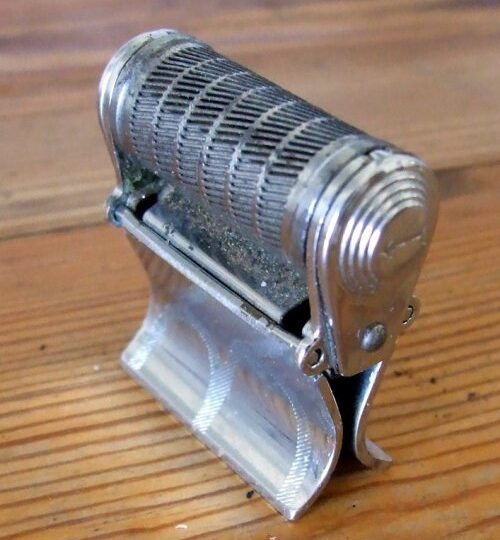
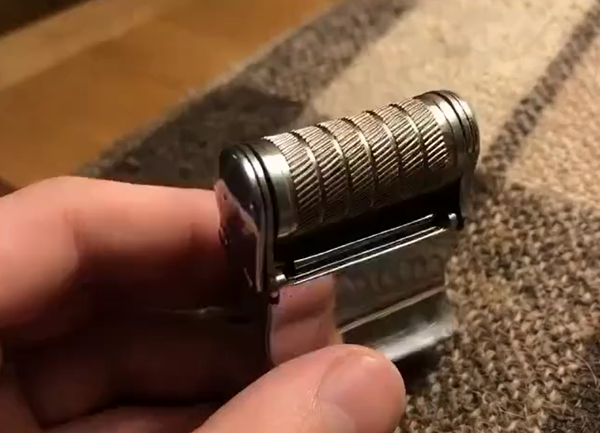
The Rally Dry Shaver rejected the traditional requirements of wet shaving: no water, no soap, no mirror, no preparation. Its primary mechanism was deceptively simple—a rolling, toothed cylinder that acted in a scissor-like fashion.
As the user rolled the device over the skin, the cylinder’s teeth sheared hairs efficiently, theoretically producing a smooth shave without lather or moisture.
At a glance, it promised a revolutionary idea: the freedom to shave on the go. Whether in a hotel room, office, or outdoor setting, the Rally offered mobility and speed.
Its manual design meant there were no batteries to replace and no cords to untangle, distinguishing it from contemporary electric shavers.
Bridging Tradition and Modernity
The Rally Dry Shaver attempted to occupy a unique space between two worlds. On one side was wet shaving, celebrated for comfort, precision, and ritual.
On the other was the emerging electric shaver, lauded for speed and convenience. The Rally aimed to combine the best of both: a tactile, manual experience that still delivered rapid results.
This balance reflected a broader cultural ideal of the postwar era: the pursuit of progressive convenience. Designers and marketers believed that modern tools should reduce effort while preserving engagement.
Life was speeding up, but consumers still wanted to feel in control, connected, and competent while using new technologies. The Rally was designed to make grooming faster, yet still hands-on, appealing to men who valued both efficiency and experience.
Compact Design, Complex Execution
Though its exterior appeared simple, the Rally Dry Shaver was a technical marvel of mid-century engineering. Its cylindrical head contained interlocking, precisely machined teeth.
Any minor flaw in construction could result in pinched skin, uneven cutting, or missed hairs. The mechanism demanded exact tolerances—a testament to the era’s attention to mechanical craftsmanship.
Operation required skill. Users rolled the device in small, controlled motions. Too little pressure left hairs uncut; too much caused discomfort.
This nuanced interaction between user and device made it a novel tactile experience, unlike any razor or electric shaver. The lack of a power source enhanced portability but increased the importance of technique. Success depended on a delicate balance of control, pressure, and motion.
A Unique Tactile Experience
Using the Rally was not passive. Unlike disposable razors or electric shavers that largely did the work themselves, the Rally required the user to actively manipulate the mechanism.
This mechanical engagement created a sensory interaction that combined engineering precision with human touch. Some users found this engaging and satisfying; others found it awkward or uncomfortable.
The novelty of the experience was both its strength and weakness. For men who valued experimentation, it offered a sense of empowerment and innovation.
For casual users seeking simplicity, it introduced unpredictability and the potential for discomfort. Comfort varied widely, making the Rally a device that demanded both attention and adaptability.
Marketing the Rally Dry Shaver
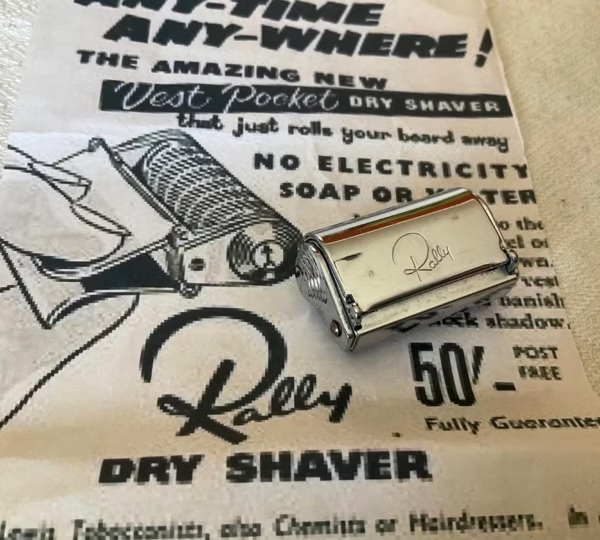
The marketing campaigns for the Rally Dry Shaver leaned heavily into the culture of postwar modernity. Advertisements emphasized speed, simplicity, and mobility.
The shaver was positioned for the busy professional, the frequent traveler, and the man on the move. Owning a Rally conveyed more than grooming capability—it suggested a commitment to progress and efficiency.
Visually, ads presented the Rally as sleek and futuristic, aligning with contemporary design trends. The mid-20th century celebrated gadgets that promised to simplify life, and the Rally fit that narrative perfectly.
Its novelty and mechanical ingenuity were selling points in an era increasingly fascinated with the possibilities of industrial design and technological innovation.
The Rally in Cultural Context
The Rally Dry Shaver emerged during a period of rapid technological adoption. Televisions became common household items, refrigerators were ubiquitous, and small appliances promised to transform domestic labor.
In this environment, the Rally symbolized forward-thinking. It suggested that even the most mundane personal tasks could be improved through thoughtful design and engineering.
More than a grooming tool, it was a cultural artifact. Owning a Rally implied participation in a broader societal experiment—one that celebrated progress, efficiency, and innovation. Its place on a bathroom counter or in a travel kit was a subtle statement of optimism and modern sensibility.
Where the Rally Fell Short
Despite its ambition, the Rally Dry Shaver faced practical challenges. Many users reported discomfort during use.
The shearing action sometimes irritated the skin, and results were uneven compared to traditional wet shaving or advanced electric models. Sensitive skin was particularly vulnerable to minor abrasions or pinching.
Additionally, the learning curve limited widespread adoption. Users accustomed to wet shaving found the tactile requirements unfamiliar, while electric shaver enthusiasts preferred the automated, predictable results of their devices. The Rally sat awkwardly between convenience and ritual—it was novel but not essential.
Competition and Market Dynamics
By the late 1950s and 1960s, electric shavers had improved dramatically. They offered smoother results, less effort, and growing reliability. Wet shaving retained its appeal for those seeking precision, comfort, and ritualized grooming.
The Rally, despite its clever design, struggled to gain a significant foothold. Its novelty could not outweigh practical limitations, and it ultimately became a niche product.
The era’s market dynamics—rapid technological improvement combined with entrenched consumer habits—made it difficult for a partially manual, unconventional tool to achieve mainstream success.
From Product to Collectible
Today, the Rally Dry Shaver survives primarily as a collectible curiosity. Vintage enthusiasts prize it for its unusual design, mechanical creativity, and historical significance.
Surviving units offer a tangible connection to mid-century ambition, showcasing the intersection of engineering, aesthetics, and cultural optimism.
Collectors value the Rally not only for its function but also for the story it tells. Each piece embodies the bold experimentation of a time when inventors believed no daily task was too ordinary to improve. The shaver serves as a reminder that innovation often requires both risk-taking and a willingness to accept imperfection.
Lessons in Mid-Century Innovation
The Rally Dry Shaver reflects the broader mindset of the postwar era. Designers and inventors pursued bold ideas, prioritizing novelty, efficiency, and forward-looking thinking.
Some innovations became widely adopted; others, like the Rally, found their place in history as experiments—proofs of concept, rather than enduring products.
The willingness to innovate—even when outcomes were imperfect—defined the period. Products like the Rally offered lessons about balancing ambition with usability, creativity with practicality. Modern designers continue to study such devices to understand how to merge technology, ergonomics, and consumer expectations.
Echoes in Modern Grooming
Contemporary grooming tools carry forward the Rally’s vision. Battery-operated dry shavers, cordless electric razors, and portable grooming kits echo the desire for speed, portability, and convenience.
While technology has vastly improved, the fundamental goals remain the same: efficiency, comfort, and adaptability.
In this sense, the Rally was ahead of its time. Though it never dominated the market, it validated the concept of portable, manual dry shaving, paving the way for future innovations that eventually achieved widespread adoption.
Why Collectors Still Value the Rally
Among collectors, the Rally Dry Shaver stands out for its mechanical ingenuity and historical significance. Its cylindrical cutting mechanism sparks conversation and admiration, while its imperfections offer lessons in user experience and product design.
Collectors study such objects to understand the balance between innovation and comfort, as well as the cultural and technological context that inspired them.
Owning a Rally today is less about grooming and more about connection—to history, design, and the spirit of experimentation. It represents the excitement and optimism of a moment when inventors believed no everyday task was too small for reinvention.
A Symbol of an Optimistic Era
The Rally Dry Shaver never achieved mass-market success, yet its legacy endures. It captures the confidence, ambition, and curiosity of an era unafraid to experiment.
Even a simple daily ritual like shaving became a canvas for invention, reflecting broader social values: efficiency, modernity, and technological optimism.
In hindsight, the Rally is more than a forgotten product—it is a cultural artifact. It reminds us that innovation often begins with bold ideas and a willingness to take risks.
Its story encourages designers, historians, and enthusiasts to appreciate the intersection of creativity, technology, and daily life.
Final Thoughts
The Rally Dry Shaver is not merely a relic of mid-century grooming—it is a window into the optimism of a postwar society. It shows how ambition, imagination, and engineering converged to reshape even ordinary tasks. While practical shortcomings prevented widespread adoption, the device remains a testament to fearless creativity.
For collectors and historians, it represents a moment when inventors saw opportunity everywhere, when household objects could be transformed into statements of progress, and when the pursuit of convenience could inspire both innovation and delight.
In that sense, the Rally still matters. It teaches us that invention is as much about courage and vision as it is about practicality—and that even the morning shave can become a laboratory for human ingenuity.
