...

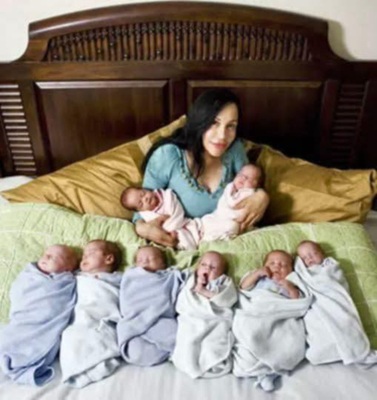
The octuplets of Octomom turn 16 – here’s what their lives are like now.

Natalie Denise Suleman — better known to the world as “Octomom” — first captured international attention in January 2009 when she achieved a medical milestone:

she became the first woman on record to give birth to surviving octuplets, a set of eight children born at once.

At the time, Suleman was already a mother to six children, with her family growing to a historic 14 kids in total after the octuplets’ birth.

While that singular event — the birth of eight babies in one delivery — would have been remarkable under any circumstances, the way it unfolded and the media storm that followed transformed Suleman’s life in unexpected and often painful ways.

Her story has been one of controversy, resilience, struggle, and — most importantly — family.

Early Life and Path to Motherhood

Natalie Suleman was born July 11, 1975, in Fullerton, California, and grew up as the only child of Angela Victoria Stanaitis, a schoolteacher, and Edward Doud Suleman, a restaurant owner of Palestinian descent.

From a young age, Suleman displayed a passionate interest in children and child development, a drive that would later influence her life choices.

Suleman attended Nogales High School in La Puente, California, and later studied at Mt. San Antonio College before earning a bachelor’s degree in child development.

She even worked as a psychiatric technician in a state mental hospital, where she gained hands‑on experience caring for patients with special needs — a background that would become relevant as her own family expanded.

Growing a Family Through IVF

Suleman’s journey toward motherhood began with in vitro fertilization (IVF) treatments under the care of fertility specialist Dr. Michael Kamrava. Over several years, she underwent IVF cycles that resulted in the births of six children: Elijah, Amerah, Joshua, Aidan, Calyssa, and Caleb.

Then, in 2008, Suleman made an unprecedented choice. She wanted to use her remaining frozen embryos so they would not be destroyed, and she asked for all of them to be transferred to her uterus in one cycle.

Although standard medical guidelines typically recommend transferring only a few embryos to reduce the risk of high‑order multiple pregnancy, Suleman’s doctor transferred 12 embryos, which was later confirmed by a California Medical Board investigation. Of those 12, eight developed into viable fetuses, resulting in the octuplets.

The transfer of such a large number of embryos ignited an international debate about fertility ethics and medical responsibility.
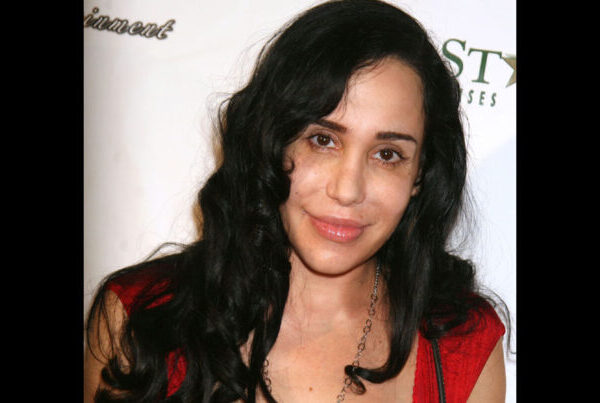
Critics argued that the number of embryos implanted was excessive and dangerous, both for the mother and the children.

Supporters defended reproductive choice and women’s autonomy in making decisions about their own bodies.

In 2011, after a detailed review of Suleman’s case and others handled by Kamrava, the California Medical Board revoked Dr. Kamrava’s medical license, citing “gross negligence” for transferring far more embryos than recommended.

Kamrava argued he acted on Suleman’s requests, but the license revocation underscored how controversial the case had become.

Worldwide Sensation… and Scrutiny

On January 26, 2009, Suleman gave birth to the octuplets — Noah, Isaiah, Jeremiah, Jonah, Josiah, Makai, Maliyah, and Nariyah — at the University of California, Irvine Medical Center.

All eight survived, an astonishing medical outcome that immediately made Suleman the subject of intense global media attention.

To the public, she quickly became known as “Octomom,” a nickname that would stick for years.

News outlets around the world covered her story hundreds of times over, interested not just in the medical milestone, but in the woman at its center.

Some people celebrated the family’s size and uniqueness.

Others criticized Suleman for making what they viewed as irresponsible choices — especially because she was unmarried, unemployed, and without a stable financial foundation at the time.

Amid this spotlight, Suleman faced death threats, intense public judgment, and some of the harshest scrutiny a mother could imagine.
In media narratives that often felt intrusive and dehumanizing, she was reduced to a caricature instead of being seen as a parent trying to navigate extraordinary circumstances.

Supporting a Family of 14: Financial Realities

Unlike what some critics assumed, Suleman did not become wealthy from the birth of the octuplets.

She received no large financial windfall from the media coverage and did not profit significantly from the attention.

In fact, she was unemployed at the time of the octuplets’ birth and had no steady income, and public support was one of the only financial avenues available to help sustain her large family.

In the attempt to support her children and generate income, Suleman turned to several unconventional — and sometimes controversial — jobs. Over the years, she took part in:

Nude photo shoots

Participating in adult films

Celebrity boxing matches

Media appearances and interviews

Efforts to trademark the “Octomom” name

These moves were often framed as acts of desperation rather than exploitation — attempts by a single mother to provide for her 14 kids when other options were limited.

Despite her efforts, financial pressures mounted. In 2012, Suleman filed for bankruptcy, reporting around $1 million in debt — a stark reminder that fame did not equate to financial security.

Legal Troubles and Welfare Fraud Case

In 2014, Suleman’s financial difficulties intersected with legal trouble. She was charged with welfare fraud for failing to report a portion of her income while receiving public assistance.

Prosecutors alleged she did not disclose some earnings from appearances and work she had done; the unreported income amounted to roughly $26,000.

Suleman ultimately pleaded no contest to a misdemeanor. Her sentence included probation, community service, and repayment of the unreported funds, but she avoided jail time.

This case became yet another public chapter that shaped perceptions of her life, sometimes overshadowing the most important aspect — her children and their well‑being.

Stepping Away From the Spotlight

By 2013, worn down by persistent media scrutiny, public opinion, and pressure, Suleman made a decisive choice: she stepped away from being a public figure.

Rather than constantly defend her decisions and fight negative narratives, she chose a quieter life focused on her children’s privacy and stability.

For more than a decade after leaving the spotlight, updates about Suleman and her family were rare, consisting mostly of occasional social media posts and brief news stories.

She raised her children out of the glare of tabloid headlines and redirected her energy toward building a life that prioritized stability and privacy.

Life Today: Family, Values, and New Opportunities

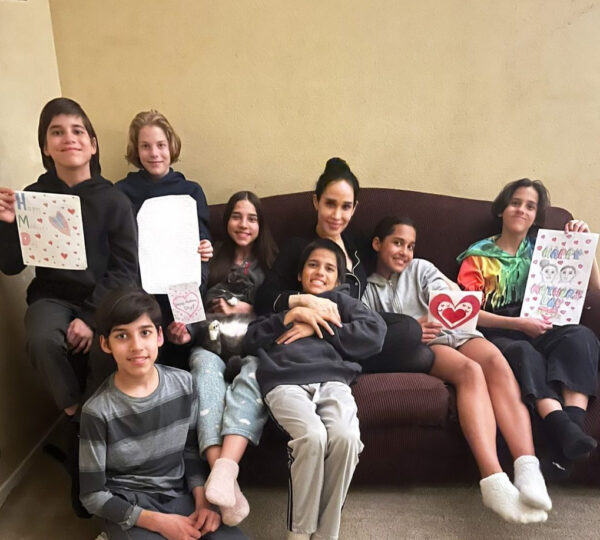
As of 2025, the octuplets are 16 years old, a milestone that Suleman celebrated publicly.

On January 26, 2025, she posted a heartfelt message on Instagram honoring each of them by name: “Happy Sweet 16th birthday to Noah, Isaiah, Nariyah, Maliyah, Jeremiah, Josiah, Jonah, and Makai!” She went on to express deep love and gratitude, saying her children were “loved, valued, and appreciated more than words can express” and emphasizing her belief that God has “great plans for each and every one of you.”

Suleman has since returned to the public eye on her own terms, sharing reflections on her life and raising her family through new projects.

She has discussed her experience raising a profoundly autistic son (Aidan), whom she knew was different from infancy and cared for with special dedication.

She also has spoken candidly about her past decisions.

In recent interviews, Suleman admitted she wishes she had taken legal action against her fertility doctor for the embryo transfer decision, expressing regret that she didn’t pursue compensation when she had the chance.

Suleman’s older children — now adults and teens — are also sharing their perspectives.

In the Lifetime documentary Confessions of Octomom, her son Joshua described what it was like adapting to life when his mother announced she was expecting eight more siblings — memories that were chaotic, emotional, and sometimes overwhelming.

Parenting in the Modern World

Even as her children have grown, Suleman’s approach to parenting continues to evolve.

Reports indicate that she has embraced a structured and old‑school style of discipline with her teens, emphasizing strict rules about smartphones, social media, and dating, believing that minimizing digital distractions will help her children develop focus, humility, and empathy.

She has stated that her goal is to raise her children not to be self‑absorbed or overly dependent on external validation, but instead to value service, internal joy, and genuine connection — principles rooted in her own life experience and the challenges her family has faced.

Legacy and Perspective

Natalie Suleman’s life is one of contradictions and complexity — a journey marked by astonishing medical achievement, fierce criticism, financial strain, personal sacrifice, and, ultimately, a deep commitment to her children.

For many years, the public narrative was dominated by controversy rather than humanity.

But as Suleman and her children grow older, the story is shifting toward something more nuanced: resilience in the face of judgment, the power of a mother’s love, and the enduring strength of family.

Her tale continues to prompt questions about ethics, public support, reproductive autonomy, and media responsibility — but at its core, it is the story of a woman who defied expectations and navigated her own path, for better and worse, while raising a remarkable family in a world that was watching every step of the way.

Natalie Denise Suleman — better known to the world as “Octomom” — first captured international attention in January 2009 when she achieved a medical milestone:

she became the first woman on record to give birth to surviving octuplets, a set of eight children born at once.

At the time, Suleman was already a mother to six children, with her family growing to a historic 14 kids in total after the octuplets’ birth.

While that singular event — the birth of eight babies in one delivery — would have been remarkable under any circumstances, the way it unfolded and the media storm that followed transformed Suleman’s life in unexpected and often painful ways.

Her story has been one of controversy, resilience, struggle, and — most importantly — family.

Early Life and Path to Motherhood

Natalie Suleman was born July 11, 1975, in Fullerton, California, and grew up as the only child of Angela Victoria Stanaitis, a schoolteacher, and Edward Doud Suleman, a restaurant owner of Palestinian descent.

From a young age, Suleman displayed a passionate interest in children and child development, a drive that would later influence her life choices.

Suleman attended Nogales High School in La Puente, California, and later studied at Mt. San Antonio College before earning a bachelor’s degree in child development.

She even worked as a psychiatric technician in a state mental hospital, where she gained hands‑on experience caring for patients with special needs — a background that would become relevant as her own family expanded.

Growing a Family Through IVF

Suleman’s journey toward motherhood began with in vitro fertilization (IVF) treatments under the care of fertility specialist Dr. Michael Kamrava. Over several years, she underwent IVF cycles that resulted in the births of six children: Elijah, Amerah, Joshua, Aidan, Calyssa, and Caleb.

Then, in 2008, Suleman made an unprecedented choice. She wanted to use her remaining frozen embryos so they would not be destroyed, and she asked for all of them to be transferred to her uterus in one cycle.

Although standard medical guidelines typically recommend transferring only a few embryos to reduce the risk of high‑order multiple pregnancy, Suleman’s doctor transferred 12 embryos, which was later confirmed by a California Medical Board investigation. Of those 12, eight developed into viable fetuses, resulting in the octuplets.

The transfer of such a large number of embryos ignited an international debate about fertility ethics and medical responsibility.

Critics argued that the number of embryos implanted was excessive and dangerous, both for the mother and the children.

Supporters defended reproductive choice and women’s autonomy in making decisions about their own bodies.

In 2011, after a detailed review of Suleman’s case and others handled by Kamrava, the California Medical Board revoked Dr. Kamrava’s medical license, citing “gross negligence” for transferring far more embryos than recommended.

Kamrava argued he acted on Suleman’s requests, but the license revocation underscored how controversial the case had become.

Worldwide Sensation… and Scrutiny

On January 26, 2009, Suleman gave birth to the octuplets — Noah, Isaiah, Jeremiah, Jonah, Josiah, Makai, Maliyah, and Nariyah — at the University of California, Irvine Medical Center.

All eight survived, an astonishing medical outcome that immediately made Suleman the subject of intense global media attention.

To the public, she quickly became known as “Octomom,” a nickname that would stick for years.

News outlets around the world covered her story hundreds of times over, interested not just in the medical milestone, but in the woman at its center.

Some people celebrated the family’s size and uniqueness.

Others criticized Suleman for making what they viewed as irresponsible choices — especially because she was unmarried, unemployed, and without a stable financial foundation at the time.

Amid this spotlight, Suleman faced death threats, intense public judgment, and some of the harshest scrutiny a mother could imagine.

In media narratives that often felt intrusive and dehumanizing, she was reduced to a caricature instead of being seen as a parent trying to navigate extraordinary circumstances.

Supporting a Family of 14: Financial Realities

Unlike what some critics assumed, Suleman did not become wealthy from the birth of the octuplets.

She received no large financial windfall from the media coverage and did not profit significantly from the attention.

In fact, she was unemployed at the time of the octuplets’ birth and had no steady income, and public support was one of the only financial avenues available to help sustain her large family.

In the attempt to support her children and generate income, Suleman turned to several unconventional — and sometimes controversial — jobs. Over the years, she took part in:

Nude photo shoots

Participating in adult films

Celebrity boxing matches

Media appearances and interviews

Efforts to trademark the “Octomom” name

These moves were often framed as acts of desperation rather than exploitation — attempts by a single mother to provide for her 14 kids when other options were limited.

Despite her efforts, financial pressures mounted. In 2012, Suleman filed for bankruptcy, reporting around $1 million in debt — a stark reminder that fame did not equate to financial security.

Legal Troubles and Welfare Fraud Case

In 2014, Suleman’s financial difficulties intersected with legal trouble. She was charged with welfare fraud for failing to report a portion of her income while receiving public assistance.

Prosecutors alleged she did not disclose some earnings from appearances and work she had done; the unreported income amounted to roughly $26,000.

Suleman ultimately pleaded no contest to a misdemeanor. Her sentence included probation, community service, and repayment of the unreported funds, but she avoided jail time.

This case became yet another public chapter that shaped perceptions of her life, sometimes overshadowing the most important aspect — her children and their well‑being.

Stepping Away From the Spotlight

By 2013, worn down by persistent media scrutiny, public opinion, and pressure, Suleman made a decisive choice: she stepped away from being a public figure.

Rather than constantly defend her decisions and fight negative narratives, she chose a quieter life focused on her children’s privacy and stability.

For more than a decade after leaving the spotlight, updates about Suleman and her family were rare, consisting mostly of occasional social media posts and brief news stories.

She raised her children out of the glare of tabloid headlines and redirected her energy toward building a life that prioritized stability and privacy.

Life Today: Family, Values, and New Opportunities

As of 2025, the octuplets are 16 years old, a milestone that Suleman celebrated publicly.

On January 26, 2025, she posted a heartfelt message on Instagram honoring each of them by name: “Happy Sweet 16th birthday to Noah, Isaiah, Nariyah, Maliyah, Jeremiah, Josiah, Jonah, and Makai!” She went on to express deep love and gratitude, saying her children were “loved, valued, and appreciated more than words can express” and emphasizing her belief that God has “great plans for each and every one of you.”

Suleman has since returned to the public eye on her own terms, sharing reflections on her life and raising her family through new projects.

She has discussed her experience raising a profoundly autistic son (Aidan), whom she knew was different from infancy and cared for with special dedication.

She also has spoken candidly about her past decisions.

In recent interviews, Suleman admitted she wishes she had taken legal action against her fertility doctor for the embryo transfer decision, expressing regret that she didn’t pursue compensation when she had the chance.

Suleman’s older children — now adults and teens — are also sharing their perspectives.

In the Lifetime documentary Confessions of Octomom, her son Joshua described what it was like adapting to life when his mother announced she was expecting eight more siblings — memories that were chaotic, emotional, and sometimes overwhelming.

Parenting in the Modern World

Even as her children have grown, Suleman’s approach to parenting continues to evolve.

Reports indicate that she has embraced a structured and old‑school style of discipline with her teens, emphasizing strict rules about smartphones, social media, and dating, believing that minimizing digital distractions will help her children develop focus, humility, and empathy.

She has stated that her goal is to raise her children not to be self‑absorbed or overly dependent on external validation, but instead to value service, internal joy, and genuine connection — principles rooted in her own life experience and the challenges her family has faced.

Legacy and Perspective

Natalie Suleman’s life is one of contradictions and complexity — a journey marked by astonishing medical achievement, fierce criticism, financial strain, personal sacrifice, and, ultimately, a deep commitment to her children.

For many years, the public narrative was dominated by controversy rather than humanity.

But as Suleman and her children grow older, the story is shifting toward something more nuanced: resilience in the face of judgment, the power of a mother’s love, and the enduring strength of family.

Her tale continues to prompt questions about ethics, public support, reproductive autonomy, and media responsibility — but at its core, it is the story of a woman who defied expectations and navigated her own path, for better and worse, while raising a remarkable family in a world that was watching every step of the way.