
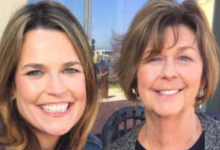
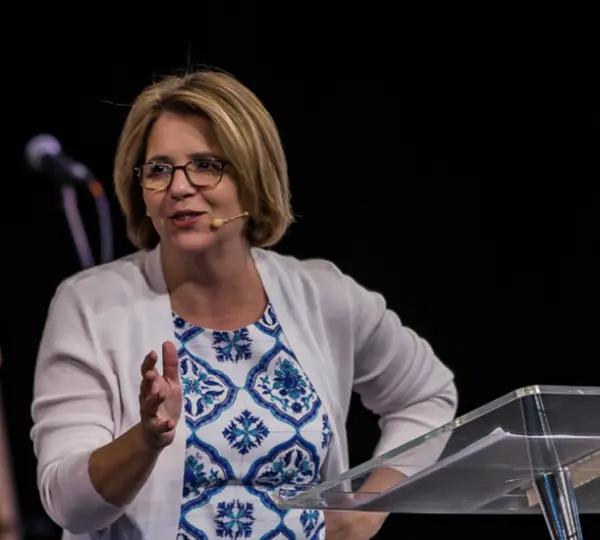
For many people, Nancy Guthrie is known as a Bible teacher, author, and conference speaker whose calm, steady voice carries unusual weight in conversations about suffering and faith.
She stands on stages, leads workshops, writes books, and speaks into microphones with clarity and conviction.
But long before the invitations, the published works, and the national platform, there was a hospital room. There was a diagnosis. And there was a young family stepping into a reality that would permanently alter the direction of their lives.
Her story is not one of scandal, disappearance, or hidden controversy. It is something far more difficult and far more enduring.
It is the story of a mother who buried two children, a wife who wrestled with God in the quiet hours of the night, and a believer whose faith was not protected from pain but refined within it.

It is a story of loss lived publicly, doubt processed privately, and a ministry that grew not from comfort but from sorrow.
A Diagnosis No Parent Expects
Nancy and her husband, David Guthrie, were young parents when their first child, a daughter they named Hope, was born. Like many new parents, they were filled with anticipation and plans for the future. But not long after Hope’s birth, medical concerns began to surface.
Tests were run. Specialists were consulted. And eventually, they heard words that most people never encounter unless tragedy makes them personal: their daughter had Zellweger syndrome.
Zellweger syndrome is a rare genetic disorder that affects the body’s peroxisomes—structures within cells that are responsible for essential metabolic functions.
The condition impacts multiple organ systems, including the brain, liver, and kidneys. It is part of a spectrum of peroxisomal biogenesis disorders and, in its most severe form, carries a very limited life expectancy. There is no cure. Treatment focuses on comfort and supportive care.
For Nancy and David, the diagnosis did not come with a plan for recovery. It came with an understanding that their daughter’s life would likely be brief.
Hope lived for 199 days.
Those days were not defined solely by sorrow. They were filled with feedings, hospital visits, prayers, small milestones, and the fierce love that parents pour into a child regardless of how long they are given. But the knowledge that her time was short cast a long shadow.
Nancy has since spoken about how disorienting it was to hold a baby and know, at the same time, that she would have to say goodbye.
When Hope died, Nancy entered a season of grief that reshaped her understanding of faith. The loss of a child is often described as unnatural, as if it reverses the expected order of life. For Nancy, the pain was not abstract or distant. It was immediate and all-consuming.
It forced questions she had never needed to ask before. It brought Scripture into collision with lived experience.
And yet, the story did not end there.
Years later, Nancy and David would face the same diagnosis again—this time with their son, Gabriel. Like his sister, Gabriel was born with Zellweger syndrome. Like his sister, his life would be brief.
Gabriel lived for 183 days.
Two children. The same rare genetic condition. The same devastating outcome.
There are moments in life that divide everything into “before” and “after.” For Nancy, those months were that dividing line.
There was life before the diagnoses—a life shaped by ordinary expectations and theological clarity. And there was life after—a life marked by funerals, empty nurseries, and a faith that had to survive contact with unimaginable loss.
Grief in Public, Faith in Private
Many people, when faced with such profound tragedy, withdraw from public life. Some retreat into privacy. Others step away from faith altogether. Nancy’s path was different, though it was neither immediate nor effortless.
In the years following the deaths of Hope and Gabriel, Nancy began to speak more openly about suffering. Not because she had neatly resolved her questions, but because she understood that many others were asking the same ones.
She discovered that in churches across the country, there were parents who had lost children, spouses who had buried partners, and believers who felt isolated in their pain.
Her honesty became one of her defining characteristics. She did not offer simplistic explanations or spiritual clichés. She did not suggest that faith erases grief.
Instead, she described wrestling with God. She spoke about anger, confusion, and the ache of unanswered prayer. She acknowledged that trusting God does not mean pretending that loss is small.
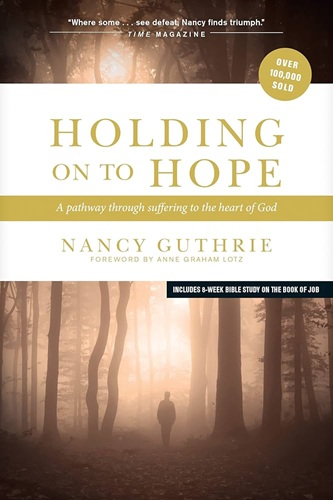
Her memoir, Holding on to Hope, detailed her journey through her daughter’s illness and death. It was not written years later from emotional distance.
It was written from inside the storm, shaped by fresh grief and ongoing reflection. Readers responded not because the story was dramatic, but because it was real. It mirrored their own hidden struggles.
Churches began inviting her to share her story. Conferences expanded her reach. Over time, Nancy became known not just as a grieving mother but as a teacher of Scripture—particularly on the theme of suffering.
She did not focus on triumphalism or prosperity. She focused on endurance. On lament. On the long arc of redemption. Her authority on the subject was not theoretical. It was earned.
Teaching the Bible Through the Lens of Suffering
What distinguishes Nancy’s ministry is not emotional intensity but theological depth. She is widely recognized for teaching biblical theology—the study of the Bible as one unified story, tracing themes from Genesis to Revelation.

Her emphasis is often on how the Old and New Testaments connect, and how the promises of redemption unfold across centuries.
This long-form approach to Scripture mirrors her own experience of grief. She does not treat suffering as a standalone event.
Instead, she places it within a larger narrative. Just as individual Bible passages are understood within the context of the whole story, personal pain is understood within the broader account of God’s redemptive work.
Nancy has led Bible studies for women, written multiple books exploring theological themes, and spoken at conferences across the United States and internationally.
Her workshops often encourage participants to see how every part of Scripture points toward Christ and the hope of restoration. But she does so without minimizing the reality of sorrow.
In a culture that often avoids conversations about death, chronic illness, and long-term grief, Nancy’s willingness to address these subjects directly has resonated deeply.
She does not present herself as someone who “got through it” and moved on. She speaks as someone who carries loss forward.
That authenticity has shaped her teaching style. It is steady rather than flashy. Direct rather than sentimental. Grounded rather than sensational.
Listeners frequently describe her as thoughtful and clear, someone who respects the intelligence of her audience and the seriousness of their pain.
Faith Under Scrutiny
It would be easy to assume that someone who teaches about trusting God must have an uncomplicated spiritual life. Nancy has consistently said otherwise.
She has spoken openly about nights of doubt. About praying without feeling immediate answers. About the tension between affirming that God is good and experiencing circumstances that feel anything but good.
She has acknowledged that certain questions do not disappear simply because one stands behind a podium.
For Nancy, faith is not strengthened by avoiding hard questions. It is strengthened by bringing them into the light. She has emphasized that Scripture does not ignore suffering—it addresses it directly.
The Bible contains lament, protest, confusion, and cries for justice. It does not demand emotional denial; it invites honest engagement.
This perspective has made her ministry particularly meaningful to parents who have lost children, individuals facing terminal diagnoses, and those navigating prolonged seasons of uncertainty. She does not promise quick resolution. She points to long-term hope.
Importantly, Nancy does not claim that grief ends. Instead, she describes how it changes. The sharp edges may soften over time, but the absence remains. Memory remains.
Love remains. And faith, for her, remains—not as a fragile sentiment but as a framework sturdy enough to hold sorrow.
Beyond the Early Chapters
Although the early chapters of Nancy’s public story center on the loss of Hope and Gabriel, her work today extends far beyond those events.
She continues to write and teach on topics related to biblical theology, discipleship, and understanding the overarching narrative of Scripture.
She has been involved in leading workshops that train teachers to interpret and communicate the Bible responsibly.
She encourages Christians to move beyond isolated verses and to understand the sweeping story of creation, fall, redemption, and restoration. Her aim is not simply emotional comfort but theological depth.
This emphasis reflects her belief that a robust understanding of Scripture provides a foundation that can sustain believers when life fractures. For her, the Bible is not a shield from grief. It is a lens through which grief can be understood.
She has also been involved in ministries designed to support those who are grieving, offering spaces where lament is not silenced and where hope is not forced prematurely.
In these settings, her personal history allows her to speak with empathy rather than abstraction.
The Ongoing Impact
What makes Nancy Guthrie’s story compelling is not mystery or hidden revelation. There is no dramatic twist, no secret uncovered years later. The details of her life are known because she has chosen to share them.
The impact of her story lies in endurance.
Two children lost to a rare genetic disorder would have been enough to silence many people. Instead, those losses became the foundation of a ministry that has influenced thousands.
Not because suffering is glamorous—it is not—but because suffering, when spoken of honestly, creates connection.
Her audience often includes people who are not looking for motivational slogans. They are looking for something solid when life collapses—when a diagnosis arrives, when a phone call changes everything, when the future they imagined disappears overnight.
Nancy’s life does not offer a formula for avoiding pain. It offers a testimony that faith can coexist with grief. That doubt can be voiced without destroying belief. That loss can shape a person without defining them entirely.
Behind every conference stage and book signing is a woman who once sat in a hospital room counting heartbeats, aware that they were numbered.
Behind every Bible study is a mother who has stood at two small graves. There was no dramatic disappearance. No unresolved mystery. No hidden truth waiting to surface.
Just a mother who buried two children—and chose not to bury her faith with them.
That is the part of her story that continues to resonate. Not because it is shocking. Not because it is sensational. But because it is real.
