
“The Inspiring Story of Jennifer Grey: Stardom, Struggles, and Resilience”
When Jennifer Grey stepped into the spotlight as Frances “Baby” Houseman in the 1987 classic Dirty Dancing, she immediately captured a rare and unforgettable charm that resonated with audiences around the globe.
At only 27 years old, Grey delivered a performance that felt entirely authentic, effortlessly blending vulnerability, innocence, and determination.
Her portrayal of Baby—a young woman discovering love, self-confidence, and independence during a transformative summer—struck a chord with viewers and critics alike.
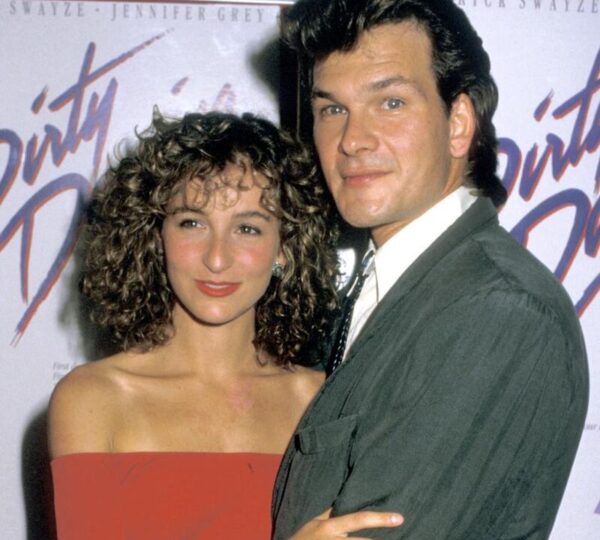
What made her performance especially compelling was the palpable chemistry she shared with co-star Patrick Swayze.

Together, they created a cinematic partnership that transformed what could have been a simple romantic dance story into a culturally iconic film, filled with emotion, tension, and timeless energy.
The success of Dirty Dancing was immediate and extraordinary.
Almost overnight, Jennifer Grey became a household name. Her striking talent, combined with her relatable warmth and emotional depth, set her apart in Hollywood, where emerging actors often struggle to maintain authenticity under the glare of sudden fame.
Critics praised her nuanced performance, highlighting her ability to convey both youthful naivety and emotional complexity with a natural grace.
Audiences adored her, celebrating not only the character of Baby but also the real-life actress behind her, and the film quickly became an international phenomenon.
For many, Jennifer Grey seemed poised for an uninterrupted rise to stardom, with a bright future full of challenging roles and critical acclaim.
However, behind this meteoric rise, Jennifer’s personal life was marked by unexpected turmoil. Just months before the release of Dirty Dancing, she was involved in a devastating car accident in Ireland while traveling with actor Matthew Broderick.
Although Grey was not responsible for the accident, it tragically claimed the lives of two people, an event that would leave an indelible mark on her emotionally and psychologically.
The timing of the accident meant that she had to reconcile the joy of professional success with the weight of profound personal grief.
While audiences worldwide were celebrating her breakthrough, Jennifer privately navigated a landscape of guilt, shock, and sorrow—a stark reminder that fame and personal happiness do not always coexist.
In the wake of Dirty Dancing, Grey faced the challenge of balancing public adulation with private recovery.
Hollywood, notorious for its relentless pace and unyielding scrutiny, presented both opportunities and pressures.
Rather than immediately diving into high-profile projects, Jennifer made the conscious decision to step back and reflect on her personal priorities and artistic ambitions.
She sought roles that were meaningful rather than simply commercially driven, gradually building a career that aligned with her own sense of purpose rather than the expectations of the industry.
This period of introspection allowed her to develop a deeper understanding of herself and her relationship with fame. She learned that recognition and awards, while gratifying, do not always equate to fulfillment or lasting satisfaction.
During this time, Jennifer also embarked on a process of personal reinvention.
Hollywood’s focus on appearance posed another challenge: Grey underwent rhinoplasty surgeries that temporarily changed her appearance, leading to periods of professional uncertainty.
These transformations, compounded with the ongoing emotional weight of her early experiences, tested her resilience.

Nevertheless, she remained committed to her craft, refusing to let external pressures compromise her authenticity as a performer.
Over time, she began speaking openly about her experiences, sharing insights into vulnerability, self-acceptance, and the courage it takes to embrace change.
Through interviews, public appearances, and later projects, she inspired countless fans by demonstrating that personal growth often requires perseverance and honesty, even in the face of adversity.
By the end of the 1980s and into the 1990s, Jennifer Grey had firmly established herself as an actress willing to prioritize her own artistic journey over the relentless pursuit of celebrity.
While Dirty Dancing remained a defining moment in her career, she was determined not to be defined by a single role.
Her story became one not only of cinematic achievement but also of resilience, personal insight, and transformation—an ongoing journey that combined the trials of public life with the quiet victories of personal evolution.
As the 1990s progressed, Jennifer Grey continued to navigate a career that balanced professional ambition with personal reflection.
She took on a variety of roles in both film and television, demonstrating her versatility as an actress. Though none of these projects reached the cultural heights of Dirty Dancing, Grey’s performances consistently showcased her range and commitment to her craft.
She appeared in films such as Red Dawn (1984), Ferris Bueller’s Day Off (1986), and later Bloodhounds of Broadway (1989), steadily building a body of work that reflected her artistic sensibilities rather than simply aiming for mainstream commercial success.

Her selective approach to acting allowed her to maintain a sense of personal integrity while navigating an industry that often demands compromise.
During this period, Grey also confronted the professional and personal challenges associated with her physical appearance.
Her rhinoplasty surgeries, performed earlier in her career, had temporarily altered her look in ways that complicated casting opportunities.
Hollywood’s emphasis on appearance over talent created obstacles, but Grey remained steadfast, eventually embracing her distinctive features once again.
In interviews, she has spoken candidly about the pressure to conform to industry beauty standards and the importance of self-acceptance—a message that resonates strongly with audiences and aspiring actors alike.
Her experience highlighted an often-overlooked aspect of Hollywood life: the intersection of personal identity, public perception, and professional opportunity.
In the 2000s, Jennifer Grey began to experience a resurgence in public attention, thanks in part to her appearance on Dancing with the Stars in 2010.
Partnered with professional dancer Derek Hough, she wowed audiences with her elegance, skill, and enduring stage presence, ultimately winning the competition.
This victory not only reaffirmed her talent but also introduced her to a new generation of fans. It was a moment of personal triumph, symbolizing her resilience, adaptability, and continued passion for performance.
Grey’s success on the show further cemented her reputation as a figure of perseverance—someone who could embrace change, confront challenges, and shine in the public eye despite decades of ups and downs in her career.
Beyond her on-screen and on-stage work, Jennifer Grey has become increasingly vocal about her personal journey.

Through interviews, public appearances, and autobiographical reflections, she has shared the emotional challenges she faced in balancing fame with personal fulfillment.
She has spoken about grief, self-doubt, and the pressures of Hollywood, offering a candid perspective on the realities behind the glamour.
Her openness about vulnerability and growth has inspired countless fans, demonstrating that true strength often comes from embracing one’s imperfections and learning to navigate life’s unpredictable path.
Jennifer Grey’s story today is not solely defined by her early breakout role but by the resilience, self-discovery, and courage she has displayed throughout her life.
From the whirlwind success of Dirty Dancing to her quiet periods of reflection, professional reinvention, and eventual resurgence, Grey’s journey illustrates that personal evolution often happens away from the public eye, in the moments of introspection and perseverance.
She has become an enduring symbol of authenticity and strength, showing that fame and talent are only part of the equation—and that fulfillment comes from the ability to grow, adapt, and embrace one’s true self.
Her legacy extends beyond the screen: she represents a model of resilience for anyone navigating personal or professional challenges.
Jennifer Grey has shown that even in the face of tragedy, criticism, or industry pressures, it is possible to carve out a meaningful, authentic life.
Today, she is celebrated not only as the unforgettable Baby in Dirty Dancing but as a woman who redefined success on her own terms, offering inspiration and hope to generations of fans who see in her story the power of perseverance, self-acceptance, and personal courage.
When Jennifer Grey stepped into the spotlight as Frances “Baby” Houseman in the 1987 classic Dirty Dancing, she immediately captured a rare and unforgettable charm that resonated with audiences around the globe.
At only 27 years old, Grey delivered a performance that felt entirely authentic, effortlessly blending vulnerability, innocence, and determination.
Her portrayal of Baby—a young woman discovering love, self-confidence, and independence during a transformative summer—struck a chord with viewers and critics alike.
What made her performance especially compelling was the palpable chemistry she shared with co-star Patrick Swayze.
Together, they created a cinematic partnership that transformed what could have been a simple romantic dance story into a culturally iconic film, filled with emotion, tension, and timeless energy.
The success of Dirty Dancing was immediate and extraordinary.
Almost overnight, Jennifer Grey became a household name. Her striking talent, combined with her relatable warmth and emotional depth, set her apart in Hollywood, where emerging actors often struggle to maintain authenticity under the glare of sudden fame.
Critics praised her nuanced performance, highlighting her ability to convey both youthful naivety and emotional complexity with a natural grace.
Audiences adored her, celebrating not only the character of Baby but also the real-life actress behind her, and the film quickly became an international phenomenon.
For many, Jennifer Grey seemed poised for an uninterrupted rise to stardom, with a bright future full of challenging roles and critical acclaim.
However, behind this meteoric rise, Jennifer’s personal life was marked by unexpected turmoil. Just months before the release of Dirty Dancing, she was involved in a devastating car accident in Ireland while traveling with actor Matthew Broderick.
Although Grey was not responsible for the accident, it tragically claimed the lives of two people, an event that would leave an indelible mark on her emotionally and psychologically.
The timing of the accident meant that she had to reconcile the joy of professional success with the weight of profound personal grief.
While audiences worldwide were celebrating her breakthrough, Jennifer privately navigated a landscape of guilt, shock, and sorrow—a stark reminder that fame and personal happiness do not always coexist.
In the wake of Dirty Dancing, Grey faced the challenge of balancing public adulation with private recovery.
Hollywood, notorious for its relentless pace and unyielding scrutiny, presented both opportunities and pressures.
Rather than immediately diving into high-profile projects, Jennifer made the conscious decision to step back and reflect on her personal priorities and artistic ambitions.
She sought roles that were meaningful rather than simply commercially driven, gradually building a career that aligned with her own sense of purpose rather than the expectations of the industry.
This period of introspection allowed her to develop a deeper understanding of herself and her relationship with fame. She learned that recognition and awards, while gratifying, do not always equate to fulfillment or lasting satisfaction.
During this time, Jennifer also embarked on a process of personal reinvention.
Hollywood’s focus on appearance posed another challenge: Grey underwent rhinoplasty surgeries that temporarily changed her appearance, leading to periods of professional uncertainty.
These transformations, compounded with the ongoing emotional weight of her early experiences, tested her resilience.
Nevertheless, she remained committed to her craft, refusing to let external pressures compromise her authenticity as a performer.
Over time, she began speaking openly about her experiences, sharing insights into vulnerability, self-acceptance, and the courage it takes to embrace change.
Through interviews, public appearances, and later projects, she inspired countless fans by demonstrating that personal growth often requires perseverance and honesty, even in the face of adversity.
By the end of the 1980s and into the 1990s, Jennifer Grey had firmly established herself as an actress willing to prioritize her own artistic journey over the relentless pursuit of celebrity.
While Dirty Dancing remained a defining moment in her career, she was determined not to be defined by a single role.
Her story became one not only of cinematic achievement but also of resilience, personal insight, and transformation—an ongoing journey that combined the trials of public life with the quiet victories of personal evolution.
As the 1990s progressed, Jennifer Grey continued to navigate a career that balanced professional ambition with personal reflection.
She took on a variety of roles in both film and television, demonstrating her versatility as an actress. Though none of these projects reached the cultural heights of Dirty Dancing, Grey’s performances consistently showcased her range and commitment to her craft.
She appeared in films such as Red Dawn (1984), Ferris Bueller’s Day Off (1986), and later Bloodhounds of Broadway (1989), steadily building a body of work that reflected her artistic sensibilities rather than simply aiming for mainstream commercial success.
Her selective approach to acting allowed her to maintain a sense of personal integrity while navigating an industry that often demands compromise.
During this period, Grey also confronted the professional and personal challenges associated with her physical appearance.
Her rhinoplasty surgeries, performed earlier in her career, had temporarily altered her look in ways that complicated casting opportunities.
Hollywood’s emphasis on appearance over talent created obstacles, but Grey remained steadfast, eventually embracing her distinctive features once again.
In interviews, she has spoken candidly about the pressure to conform to industry beauty standards and the importance of self-acceptance—a message that resonates strongly with audiences and aspiring actors alike.
Her experience highlighted an often-overlooked aspect of Hollywood life: the intersection of personal identity, public perception, and professional opportunity.
In the 2000s, Jennifer Grey began to experience a resurgence in public attention, thanks in part to her appearance on Dancing with the Stars in 2010.
Partnered with professional dancer Derek Hough, she wowed audiences with her elegance, skill, and enduring stage presence, ultimately winning the competition.
This victory not only reaffirmed her talent but also introduced her to a new generation of fans. It was a moment of personal triumph, symbolizing her resilience, adaptability, and continued passion for performance.
Grey’s success on the show further cemented her reputation as a figure of perseverance—someone who could embrace change, confront challenges, and shine in the public eye despite decades of ups and downs in her career.
Beyond her on-screen and on-stage work, Jennifer Grey has become increasingly vocal about her personal journey.
Through interviews, public appearances, and autobiographical reflections, she has shared the emotional challenges she faced in balancing fame with personal fulfillment.
She has spoken about grief, self-doubt, and the pressures of Hollywood, offering a candid perspective on the realities behind the glamour.
Her openness about vulnerability and growth has inspired countless fans, demonstrating that true strength often comes from embracing one’s imperfections and learning to navigate life’s unpredictable path.
Jennifer Grey’s story today is not solely defined by her early breakout role but by the resilience, self-discovery, and courage she has displayed throughout her life.
From the whirlwind success of Dirty Dancing to her quiet periods of reflection, professional reinvention, and eventual resurgence, Grey’s journey illustrates that personal evolution often happens away from the public eye, in the moments of introspection and perseverance.
She has become an enduring symbol of authenticity and strength, showing that fame and talent are only part of the equation—and that fulfillment comes from the ability to grow, adapt, and embrace one’s true self.
Her legacy extends beyond the screen: she represents a model of resilience for anyone navigating personal or professional challenges.
Jennifer Grey has shown that even in the face of tragedy, criticism, or industry pressures, it is possible to carve out a meaningful, authentic life.
Today, she is celebrated not only as the unforgettable Baby in Dirty Dancing but as a woman who redefined success on her own terms, offering inspiration and hope to generations of fans who see in her story the power of perseverance, self-acceptance, and personal courage.


