

SPAM, the canned pork product produced by Hormel Foods, has become one of the most recognizable and enduring food items in the world.
For many, SPAM conjures images of nostalgic family meals, military rations, or quirky culinary creations. Introduced in 1937, SPAM emerged during a period of economic difficulty in the United States.
Just after the Great Depression, and its prominence grew significantly during World War II. Over nearly a century, SPAM has evolved from a practical source of protein into a cultural phenomenon with global significance, reflecting broader social, economic, and culinary trends.
Origins and Early History
Hormel Foods, founded in 1891 in Austin, Minnesota, was already well-established in meat processing when SPAM was conceived.
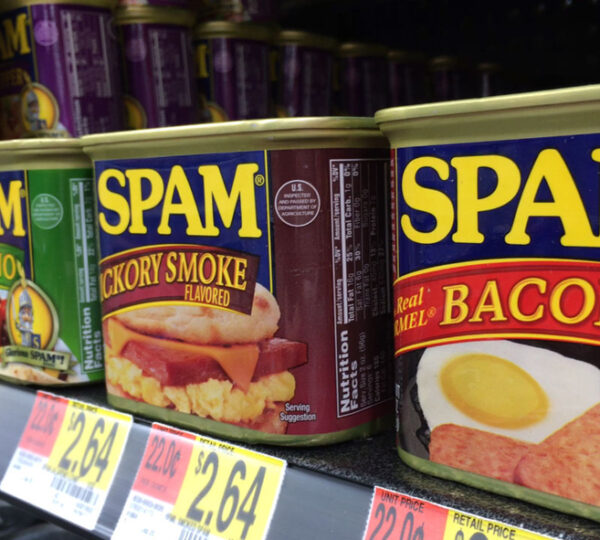
The 1930s presented unique challenges for food manufacturers: economic constraints, fluctuating meat prices, and evolving consumer demands. Hormel recognized the need for an affordable, versatile, and shelf-stable product that could meet these demands.
SPAM was officially introduced in 1937. The product was designed to be a convenient source of protein that could be easily stored and prepared without refrigeration.
Its timing was fortuitous: the world was still recovering from the Great Depression, and international tensions were mounting, ultimately leading to World War II.
The naming of SPAM is the subject of considerable speculation and folklore. While some believe the name is an acronym for “Specially Processed American Meat” or “Shoulder of Pork and Ham,” the most widely accepted origin is that it is a combination of “spiced” and “ham.”
This clever portmanteau was reportedly devised by Ken Daigneau, a Hormel Foods employee who won a company-wide contest to name the new product.
The name’s simplicity, catchiness, and memorability helped cement its identity and contributed to its enduring legacy.
Ingredients and Manufacturing Process
SPAM’s ingredients are straightforward: pork, water, salt, potato starch, sugar, and sodium nitrate. The inclusion of sodium nitrate serves as a preservative, ensuring safety and longevity, while potato starch helps to bind the meat and maintain texture.
The production process begins with grinding the pork and combining it with the other ingredients in precise proportions. The mixture is then vacuum-sealed into cans, which are cooked and cooled to develop SPAM’s distinctive flavor and firm, yet tender texture.

The canning process allows the product to remain edible for years without refrigeration, making it ideal for households, emergency supplies, and military rations.
During World War II, SPAM’s durability and portability made it particularly valuable for the U.S. military. Traditional sources of fresh meat were scarce due to rationing and logistical challenges, and SPAM provided soldiers with a reliable protein source that could withstand long journeys and harsh conditions.
By the end of the war, millions of cans had been shipped overseas, cementing SPAM’s place as a wartime necessity.
SPAM in World War II
The role of SPAM in World War II cannot be overstated. It became an essential component of soldiers’ diets, alongside other ration items like powdered eggs, canned vegetables, and hardtack.
Its long shelf life and ease of preparation made it ideal for combat conditions, where refrigeration was often unavailable and cooking facilities were limited.
American troops stationed in Europe, the Pacific, and other regions were introduced to SPAM as a regular part of their meals. Its affordability and caloric density provided much-needed sustenance in times of scarcity.
At home, civilians also relied on SPAM as an economical alternative to fresh meat, which was often rationed or in short supply.
The presence of SPAM in the diet of both soldiers and civilians during this period created a sense of familiarity and comfort. It became associated with resilience, practicality, and survival — qualities that helped cement its place in American households for decades to come.

Culinary Adaptations and Global Influence
Over time, SPAM evolved beyond its wartime function. In the post-war years, it transitioned into a household staple, particularly in regions where convenience and long shelf life were valued.
While its flavor and texture initially divided opinions, many people came to appreciate SPAM for its versatility in cooking.
SPAM’s global influence is especially notable in Hawaii, South Korea, and the Philippines, where it has been fully integrated into local culinary traditions.
In Hawaii, SPAM musubi — a combination of SPAM, rice, and seaweed — is a beloved snack found in convenience stores, cafeterias, and homes alike.
In South Korea, SPAM is often included in gift sets and used in traditional dishes like budae jjigae, or “army stew,” which combines SPAM with kimchi, noodles, and vegetables.
In the Philippines, SPAM is a popular breakfast ingredient, often fried and served with eggs and rice.
These adaptations reflect SPAM’s cultural flexibility. It is both an ingredient and a symbol, connecting the American experience with international culinary traditions and highlighting how a product initially designed for practicality can evolve into an icon of local culture.
SPAM in Popular Culture
SPAM’s cultural impact extends beyond the kitchen. The product has inspired festivals, cookbooks, and even art exhibitions celebrating its status as a food that transcends simple sustenance.
The annual SPAM Jam Festival in Waikiki, Hawaii, draws thousands of visitors each year, showcasing creative SPAM dishes ranging from burgers to sushi rolls.
Specialty cookbooks offer recipes for SPAM fried rice, SPAM sliders, SPAM tacos, and more, reflecting the product’s versatility and the creativity it inspires among home cooks and professional chefs alike.
The name “SPAM” has also entered the broader lexicon in unexpected ways. In computing, “spam” has come to refer to unsolicited electronic messages, a term inspired by a comedic Monty Python sketch in which SPAM was repeated ad nauseam.

This linguistic crossover highlights the product’s permeation into cultural consciousness, making it recognizable even to those who have never tasted it.
Nutritional Considerations and Modern Perceptions
SPAM is often scrutinized for its nutritional profile. Each serving contains protein, but also sodium, fat, and preservatives. While some nutritionists advise moderation, others note that SPAM can fit into a balanced diet when consumed occasionally.
Despite mixed opinions, SPAM continues to maintain a devoted following. Its nostalgic value — particularly among older generations who grew up during or just after World War II — contributes to its enduring popularity. For many, SPAM evokes memories of family meals, picnics, and simple home-cooked comfort food.
SPAM’s reputation as a quirky or even controversial food choice has not hindered its success. On the contrary, it has fueled its mystique, encouraging experimentation and creative culinary uses.
From SPAM omelets and sandwiches to gourmet dishes in high-end restaurants, SPAM has become a canvas for innovation.
Marketing and Branding
Hormel Foods has played a key role in maintaining SPAM’s cultural relevance. Through clever marketing campaigns, limited-edition flavors, and international collaborations, SPAM has remained visible and appealing to both longtime fans and new generations.
Advertising has emphasized SPAM’s convenience, affordability, and adaptability, while also celebrating its historical significance.
Campaigns often feature nostalgic imagery, family gatherings, and global recipes, positioning SPAM as both a practical product and a cultural icon.
The company’s efforts to maintain SPAM’s legacy have also included charitable initiatives, sponsorship of culinary events, and engagement with food enthusiasts on social media.
This strategy has helped SPAM remain relevant in an era dominated by fresh and organic foods, demonstrating the enduring appeal of a product with deep historical roots.
SPAM as a Symbol of Innovation
SPAM’s story is not merely about canned meat; it is about food innovation, preservation, and adaptation. Its introduction addressed immediate economic and logistical challenges, providing a solution to protein scarcity during periods of hardship.
Over time, SPAM became a symbol of American ingenuity, reflecting broader trends in mass production, packaging, and global food distribution.
The product’s longevity underscores the importance of durability, convenience, and cultural resonance in consumer products.
SPAM is more than sustenance; it represents the ability of food to adapt to changing social, economic, and culinary contexts while retaining its identity.
Conclusion
Nearly a century after its introduction, SPAM continues to occupy a unique place in both American and global food culture.
Its journey from a practical wartime necessity to a versatile culinary ingredient, cultural icon, and symbol of innovation demonstrates its remarkable adaptability.
Whether fried for breakfast, diced into stir-fries, or incorporated into international fusion dishes, SPAM’s presence in kitchens worldwide is undeniable.
It serves as a reminder of economic hardship, wartime ingenuity, and the creativity of cooks who find inspiration in unexpected places.
SPAM’s enduring legacy illustrates how a humble product, designed to solve practical problems, can transcend its original purpose and become an enduring symbol of culture, nostalgia, and culinary innovation.
From World War II soldiers to modern-day food enthusiasts, SPAM has left a permanent mark on global cuisine, popular culture, and the history of American innovation.
Whether loved, mocked, or approached with curiosity, SPAM’s story reflects broader themes of survival, adaptation, and creativity — showing that even the simplest products can achieve iconic status when they meet both practical needs and the human desire for connection, taste, and tradition.
