

For decades, one of the most talked‑about — if little‑understood — rituals surrounding the American death penalty was the “last meal.”
In many jurisdictions, condemned inmates were allowed to request a final meal of their choosing before facing execution, sometimes resulting in orders that ranged from the simple to the extravagant.
But in the state of Texas, this longstanding tradition no longer exists — and the reason why comes down to one extraordinarily controversial execution in 2011 that ignited public outrage and led to a swift policy change.
What Was the Last Meal Tradition?
The idea of offering a last meal to an inmate facing execution dates back centuries. In ancient societies such as Rome and China, those condemned were often permitted a final meal as a gesture meant to appease the spirit or provide solace before death.

In the modern United States, particularly in states with the death penalty, a custom developed in which an inmate on death row could request a meal of their choice from available prison kitchen supplies or local ingredients.
Nationally, policies varied: some states placed monetary limits on the cost of a last meal (for example, Florida caps it at approximately $40), while others required meals to be composed only of food items already on hand in prison kitchens.
But until 2011, Texas was one of the states that allowed inmates facing execution to make special requests without a formal cost limit, provided the items were available through institutional food services.
The Crime That Sparked National Outrage
The catalyst for ending special last‑meal privileges in Texas was the notorious hate‐crime killing of James Byrd Jr. in 1998. Byron, a 49‑year‑old African American man, was brutally murdered in Jasper, Texas, in a racially motivated attack.
Byrd was chained to the back of a pickup truck by three white supremacists — Lawrence Russell Brewer, John King, and Shawn Berry — and dragged for miles along a rural road, an assault that left him dismembered and dead.
The brutality of the crime shocked the nation and became emblematic of racially motivated violence in late‑20th‑century America.
Brewer and King were both convicted and sentenced to death, while Berry received a life sentence and was not executed.
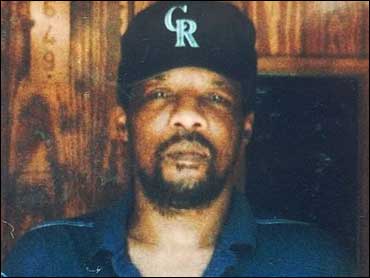
Brewer’s execution was scheduled for September 21, 2011, at the Walls Unit in Huntsville, Texas, where the state carries out its death row executions by lethal injection.
The killing of James Byrd Jr. also became a key moment in federal hate‑crime legislation, contributing to the passage of the Matthew Shepard and James Byrd Jr. Hate Crimes Prevention Act in 2009, which expanded federal authority to prosecute violent crimes motivated by bias against race, religion, gender, sexual orientation, and other protected classes.
Brewer’s Final Meal Request
In the hours before his execution, Brewer was asked whether he wanted a last meal. What he requested stunned both prison officials and the public.
According to reporting by TIME and other outlets, Brewer asked for an extraordinarily large and varied meal that included:
-
Two chicken fried steaks smothered in gravy with sliced onions
-
A triple‑meat bacon cheeseburger with fixings
-
A cheese omelet with ground beef, tomatoes, onions, peppers, and jalapeños
-
A large bowl of fried okra with ketchup
-
One pound of barbecued meat with half a loaf of white bread
-
Three fajitas with fixings
-
A Meat Lovers pizza
-
Three root beers
-
One pint of Blue Bell “Homemade Vanilla” ice cream
-
A slab of peanut butter fudge with crushed peanuts
Despite the lavish order, when the food was brought to Brewer’s cell on the afternoon of execution day, he declined to eat any of it, telling officers he was not hungry. The meal was subsequently discarded.

This combination of an excessive meal request and Brewer’s refusal to eat it drew immediate criticism from Texas lawmakers and stirred intense debate about whether such privileges were appropriate for someone about to be executed for such a horrific crime.
Lawmakers React: The End of an Era
Among the most outspoken critics of the situation was Texas State Senator John Whitmire, a Democrat from Houston who chaired the Senate Criminal Justice Committee at the time.
In a letter to Brad Livingston, then‑executive director of the Texas Department of Criminal Justice, Whitmire called the tradition of granting special last meals to condemned prisoners “extremely inappropriate” and a privilege that the person being executed had not afforded his victim.
Whitmire wrote that the system had gone “far beyond what was reasonable” and urged the prison system to end the custom immediately. He threatened to pursue legislation if corrective action was not taken.
Within hours of Whitmire’s letter, Livingston announced that Texas would discontinue the practice of allowing condemned inmates to request special final meals.
From that point on, inmates scheduled for execution would receive only the standard meal served to other prisoners in the unit on the day of their execution.
This policy change took effect immediately and remains in place today. It effectively ended more than eighty years of special last meal custom in Texas, a practice that some death row advocates and civil rights groups had viewed as a symbolic — if modest — act of compassion.
What the New Policy Means
Under the current rules, condemned prisoners in Texas no longer have the option to choose an individualized meal for their final day.
Instead, they are served the same meal that other inmates in the Huntsville Unit eat on that day. This typically consists of standard prison fare prepared by institutional kitchen staff, with no additional cost or special treatment for the condemned inmate.
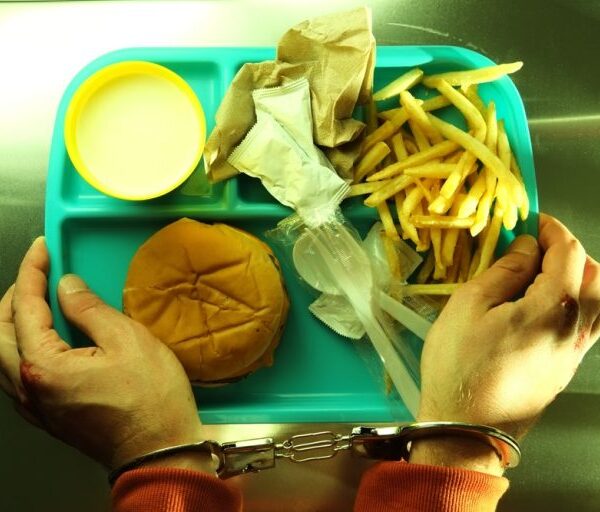
This change did not eliminate the death penalty — it only removed a longstanding ritual associated with it. Many states continue to allow last‑meal requests, though with various restrictions such as cost limits or menus drawn from available institutional foods.
For example, Florida imposes a $40 cost ceiling on last meal requests, and other states restrict ingredients or require meals to be sourced locally.
Debate and Reactions from Advocates
The decision to end special last meals was met with mixed reactions.
Supporters of the change argued that granting extravagant meals to people who were about to be executed — especially for heinous crimes — sent the wrong message and appeared to offer a privilege that wasn’t available to the victims or their families.
Senator Whitmire and others described the tradition as illogical and inappropriate, emphasizing the symbolic inconsistency of providing luxury food to someone being put to death by the state.
On the other hand, prison reform advocates criticized the move, saying that eliminating last meals was a symbolic act of cruelty that did little to address the deeper issues surrounding capital punishment and the justice system.
Some pointed out that the last meal tradition, while perhaps trivial on its surface, offered a small moment of humanity — or at least ritual — for a person facing execution.
Former prison chef Brian Price, who prepared the final meals for condemned inmates at the Huntsville facility for years and later wrote a cookbook entitled Meals to Die For, also weighed in.
Price argued that the decision to end the tradition was excessive and that the last meal had never been as lavish in practice as some headlines suggested.
He noted that the meal had to be prepared from ingredients available in the prison kitchen, and requests for items like lobster or caviar were effectively limited by those constraints.
The Broader Culture of Last Meals
While Texas eliminated special last meals entirely, many other U.S. states maintain some form of the practice, albeit with differing rules.
Death row last meals can sometimes become the subject of public fascination, with media outlets publishing lists of unusual or mundane requests made by inmates in various jurisdictions.
Some inmates historically requested extremely simple meals such as hamburgers, fried chicken, or comfort foods.
Others have asked for things like lobster tails or strawberry shortcake when available, within cost and availability limits. Of course, the practice varies considerably by state.
Interestingly, in some states, inmates who declined a last meal have chosen not to eat simply because of nerves or lack of appetite in the face of imminent execution, not as a statement.
However, Brewer’s case remains the most politically consequential, simply because his order was so large and because he did not eat it after it was prepared — a combination that drew the ire of state lawmakers and ultimately ended the tradition in Texas.
Legacy of the Change
The end of special last meal requests in Texas does not affect how executions are carried out or whether capital punishment remains legal — it is purely a change in ancillary practice.
But the story of how that tradition ended illustrates how even minor prison rituals can gain outsized public attention when they intersect with broader debates over justice, punishment, and morality.
For some, the removal of last‑meal privileges was a symbolic step toward what they saw as a more consistent approach to carrying out death sentences without unnecessary privileges.
For others, it was a missed opportunity for compassion or humanity in a system often criticized for its harshness.
Regardless of one’s position on the death penalty itself, the change highlights the complexities of public perception and policy in the realm of criminal justice.
Conclusion
The tradition of allowing condemned prisoners in Texas to choose a special last meal ended in September 2011 after the extravagant final meal order by Lawrence Russell Brewer, who was executed for his role in the brutal racially motivated murder of James Byrd Jr.
Brewer’s extensive request — followed by his refusal to eat any of it — prompted state Senator John Whitmire to call for an end to the practice, which was swiftly implemented by correctional authorities.
Today, inmates on death row in Texas receive the same meal as the general prison population on the day they are executed.
The story of the last meal change remains a notable chapter in the history of the state’s capital punishment practices — one that continues to spark discussion about tradition, symbolism, and justice in the American criminal‑justice system.
