

Tommy Reed’s fourteenth birthday didn’t begin like most kids’ birthdays. There were no balloons, no cakes with flickering candles, no friends waiting outside the house with gifts in hand.
Instead, it ended with him standing alone in a driveway, a worn backpack slung over his shoulders and twelve dollars in his pocket.
His stepfather had told him to leave — the words sharp, final, and uncompromising — and his mother, though present, said nothing. The door closed behind him, not just the physical door to the house, but the closing of the last sense of shelter and protection he had ever known.
For Tommy, that day marked the sudden intersection of childhood and survival. He walked through the streets of his town, moving past familiar neighborhoods where the sounds of children playing and the smells of home-cooked dinners contrasted sharply with the reality he now faced.
As he ventured farther, the streets grew quieter. Buildings became industrial, worn down, and largely forgotten.
It was here, amid the rubble of abandoned lots and graffiti-stained walls, that he noticed a small, condemned house marked for transfer. The sign outside read that ownership could be assumed for five dollars.
To most people, the house was a ruin. Broken windows stared like empty eyes. The roof sagged under the weight of neglect, and rot spread through the walls like a slow-moving disease.
The front door barely hung on its hinges. Even the weeds around the foundation seemed determined to claim the land. It was an eyesore, a property that no one wanted.

To Tommy, it was an opportunity.
The next morning, he walked into City Hall with the five crumpled bills still in his pocket. The clerks behind the counter raised eyebrows as they looked at the young boy standing there.
Questions followed: “Are you old enough to do this?” “Do your parents know?” “This seems unusual.” Tommy didn’t hesitate. There was no law against it, and the boy knew it.
By afternoon, he had a deed in his hand, officially making him the owner of the house. He walked out of City Hall with seven dollars remaining and a quiet pride he would carry with him for years.
The Early Months: Survival and Learning
Owning a house did not make it a home, not immediately. The first months were harsh. Rain leaked through the roof, pooling in corners and soaking the few blankets he had claimed as bedding.
Cold nights were long and uncomfortable, and Tommy had to improvise warmth wherever he could. The floorboards were uneven, some creaking dangerously under the weight of movement. Dust settled everywhere, and the smell of mold lingered in the air.
Tommy slept in the driest corner of the house, wrapped in old blankets that had once been someone else’s, listening to the wind whistle through the gaps in the walls.
Each day was spent clearing debris, boarding windows, and learning by trial and error. He hammered his first nails crookedly, spilled paint on the floor, and misaligned shelves, but he persisted.
It wasn’t pride that drove him; it was necessity. A roof over his head was a form of security he had never truly known, and he clung to it with every ounce of determination he had.
Support Arrives
Despite his determination, Tommy’s isolation could not go unnoticed forever. His school counselor, Mrs. Patterson, eventually discovered where he was living.
Most adults might have turned him away, deemed the situation hopeless, or reported him to social services in a way that would remove his autonomy. Mrs. Patterson did not.
She saw potential and grit in Tommy, and she helped him enroll in vocational training programs — courses that taught plumbing, carpentry, and electrical basics.
An elderly neighbor, Mr. Jenkins, began visiting after work. At first, he would watch Tommy from a distance, offering only quiet guidance.
Gradually, he introduced tools and techniques, showing Tommy how to measure correctly, saw straight cuts, and secure nails properly.
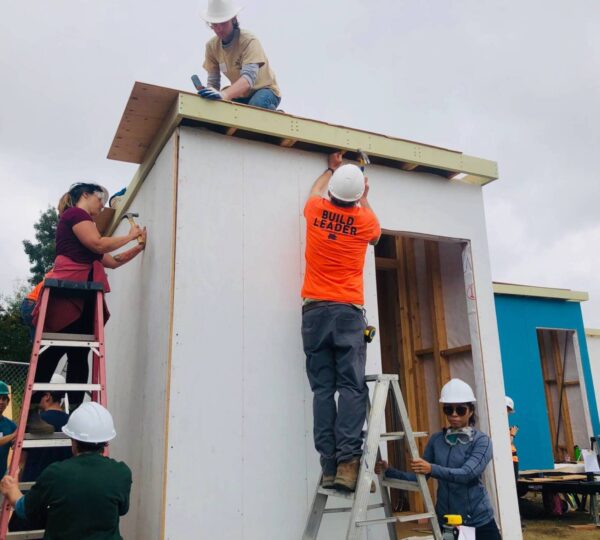
Tommy listened, observed, and practiced diligently. Every lesson, every small correction, became part of the foundation he was building — literally and figuratively.
From Ruin to Stability
Year by year, the house began to change. The leaks stopped. The roof was repaired and eventually replaced. Electricity ran consistently, water flowed without issue, and the floors held steady.
What had once been nearly unlivable slowly became a home. Tommy’s efforts were meticulous. He learned not only the technical skills of repair but the discipline and patience required to sustain a project over time. Every nail hammered straight, every coat of paint applied carefully, was a mark of resilience and self-reliance.
In school, Tommy excelled academically, graduating at the top of his class. People often asked him how he had achieved such success despite the hardships of his youth. He would answer simply: “Some people have to build their happiness instead of inheriting it.”
For Tommy, education and skill-building were extensions of the work he had already begun at fourteen — shaping a space for himself where he could survive and thrive.
Giving Back: Becoming a Foster Parent
Having experienced the fragility of shelter and the absence of support firsthand, Tommy knew that the security he built could be shared. At twenty, he became one of the youngest licensed foster parents in Ohio.
He opened his home to teenage boys who were often overlooked — those labeled difficult, angry, or broken. Tommy did not promise easy solutions or quick fixes.

Instead, he offered what he had learned: stability, skills, and the knowledge that one’s circumstances did not define their potential.
Within the walls of that once-condemned house, he taught more than carpentry, plumbing, or electrical work. He taught patience, perseverance, and self-worth. He guided boys through homework, emotional outbursts, and life decisions.
Slowly, the home filled with laughter, arguments, second chances, and framed photos capturing milestones: graduations, military enlistments, first jobs, and birthdays celebrated under a roof that had been built from nothing.
The Value of Five Dollars
Over time, the house appreciated, eventually worth over two hundred thousand dollars. When a reporter once asked Tommy what five dollars had meant to him, he smiled, reflecting on the beginning of his journey.
It was not about the monetary value, but about possibility — about taking the initiative when no one else believed in him. That small amount of money had unlocked a path that led to independence, skill acquisition, and ultimately the ability to give back to others.
One afternoon, he met a boy named Caleb, who reminded him of himself at fourteen: lost, abandoned, unsure of his worth. Tommy pressed five dollars into Caleb’s hand and said, “Everything strong starts small.
What matters is what you build after.” The lesson was clear — it is not the resources you begin with, but the dedication, consistency, and heart you bring to the work that determines the outcome.
Building People, Not Just Walls
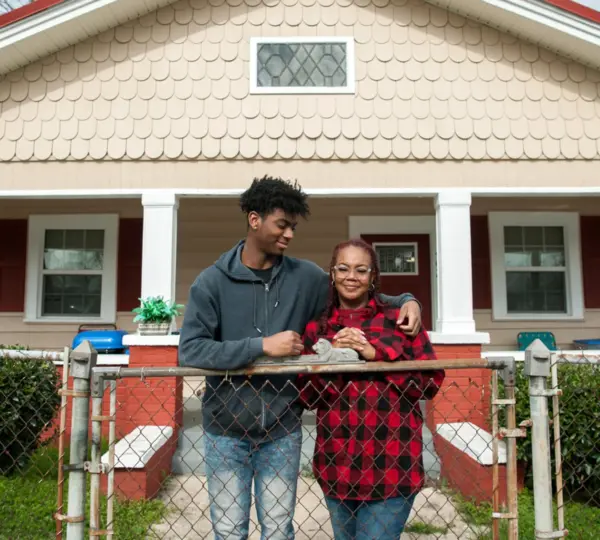
The real worth of the house was never in the walls, floors, or roof. It was in the people who learned they were not disposable.
Each foster child that passed through Tommy’s doors carried away lessons in resilience, patience, and self-respect. The house became a symbol of hope: proof that circumstances, no matter how dire, do not dictate the trajectory of life.
It also proved that quiet, persistent effort can turn what is broken into something that supports, nurtures, and elevates others.
Not all strength is loud. Not all courage demands applause or recognition. Some of it resides in the small, consistent actions — showing up every day, putting in the work, refusing to give up when the world tells you that you are too young, too inexperienced, or too powerless. Tommy Reed’s life exemplifies this kind of strength.
Lessons from Tommy’s Journey
Tommy’s story is a reminder that adversity can be a teacher. The house he purchased for five dollars was not valuable because of its physical structure, but because it offered a canvas upon which he could create a life defined by skill, care, and integrity.
Through meticulous work and the guidance of mentors, Tommy transformed an abandoned structure into a thriving, living home. In doing so, he also transformed himself and the lives of countless others.
His journey also highlights the importance of support, mentorship, and community. Mrs. Patterson’s intervention, Mr. Jenkins’ quiet guidance, and the vocational programs he joined were not just practical tools but lifelines.
They provided knowledge, stability, and confidence at critical moments. For anyone facing adversity, this combination of self-reliance and supportive mentorship is often the key to overcoming obstacles.
Finally, Tommy’s story shows the power of legacy — not a legacy of wealth or fame, but of values, lessons, and actions.
By opening his home to children who had no place to belong, he multiplied the impact of his efforts, proving that what begins as a personal struggle can evolve into a force for collective good.
Conclusion: The Measure of True Strength
In the end, Tommy Reed’s journey is proof that being cast out does not determine the outcome of a life. The quiet perseverance of a boy armed with five dollars, a dream, and unshakable determination became the foundation for a life of purpose, impact, and hope.
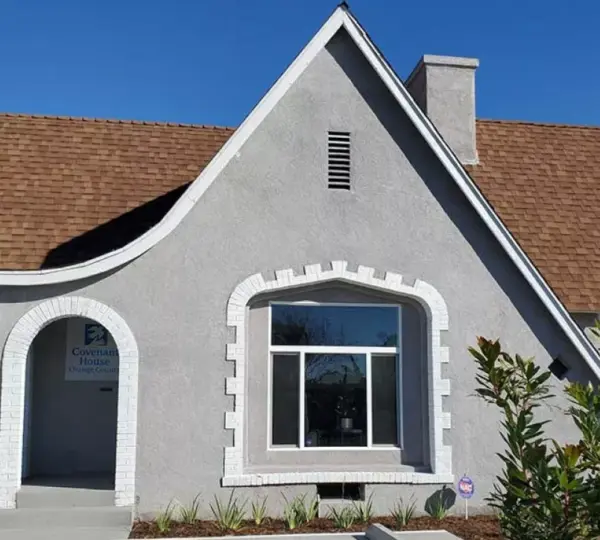
That small beginning — a lone house, neglected and abandoned — became the site of transformation, learning, and human connection.
Tommy’s story teaches us that strength is not always visible, that courage does not need recognition, and that the most meaningful work often begins quietly, with small, deliberate steps.
It is a story of resilience, creativity, mentorship, and generosity. Most of all, it is a story of how even the smallest resources, when applied with dedication and care, can create a future that benefits not only oneself but everyone fortunate enough to cross its threshold.
Not all strength is loud. Some of it just keeps showing up and doing the work. Some of it quietly builds homes, stability, and hope.
Tommy Reed’s life is living proof that even the smallest beginning — five dollars and a broken house — can change everything.
