
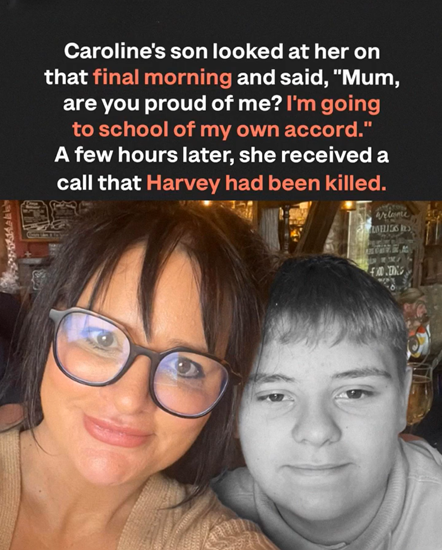
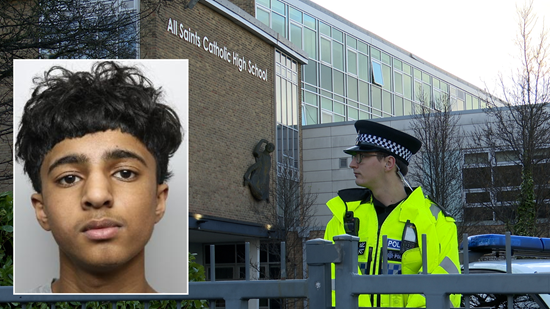
On February 3, 2025, 15‑year‑old Harvey Willgoose, a pupil at All Saints Catholic High School in Sheffield, was fatally stabbed during the school lunch break in an attack that shocked the community and wider UK.
The tragedy unfolded outside the school cafeteria, where Harvey was confronted by a fellow 15‑year‑old student armed with a 13cm hunting knife, according to court records and CCTV footage.
CCTV showed earlier interactions between the two boys that day, with Harvey remaining calm even as tensions appeared to escalate prior to the fatal incident.
Emergency services were called to the scene shortly after the attack, but despite efforts by medical responders, Harvey was pronounced dead later that afternoon.
In the aftermath, classmates described scenes of panic and fear as other pupils ran or sought shelter while staff and first responders worked to secure the area.

The accused, Mohammed Umar Khan, also 15 at the time of the incident, was arrested and later charged with murder following the stabbing outside the school grounds.
Pretrial reporting restrictions initially prevented public naming due to his age, but these were lifted later in the legal process after media applications.
At Sheffield Crown Court, prosecutors argued that Khan had brought the hunting knife to school and used it deliberately to attack Harvey during lunchtime.
The court heard that Khan had a history of a “long‑standing interest in weapons,” supported by images found on his phone showing him with knives and other implements.
The disagreements between the boys had reportedly emerged earlier on social media and in school, with staff and classmates describing a buildup of tension in the weeks preceding the stabbing.
During the trial, Khan admitted causing Harvey’s death but denied murder, claiming his actions were linked to longstanding fear and bullying, though jurors found otherwise.
After deliberating for more than 14 hours, the jury returned a majority verdict, finding Khan guilty of murder, a decision that reflected the evidence presented about intent and actions.
On October 22, 2025, he was sentenced at Sheffield Crown Court to life imprisonment with a minimum term of 16 years, meaning he must serve at least that before parole consideration.
In handing down the sentence, the judge highlighted the “senseless acts” and the devastating impact Khan’s actions had on Harvey’s family and school community.
The attack drew attention to the broader issue of knife crime in UK schools, prompting debate around safety, mental health, and community support for young people.
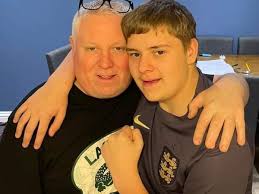
Harvey’s parents, Caroline and Mark Willgoose, have channelled their grief into advocacy, pushing for stronger safety measures in schools and more open discussions about weapons and youth wellbeing.
Caroline publicly urged government and school leaders to consider installing metal detectors and other security measures across UK secondary schools to prevent similar tragedies.
She also stressed the importance of open conversations with young people about the consequences of carrying knives and how to resolve conflicts peacefully.
Friends and classmates described Harvey as “warm, funny, and sociable,” a boy who brought people together and had a positive impact on those around him.

Harvey’s sister, Sophie, spoke movingly about his character in a victim impact statement, saying the family’s world was “shattered forever” after his loss.
Caroline recalled Harvey leaving for school that morning with pride, telling her mother, “Mum, are you proud of me?” moments before his life was tragically taken.
In the months since, the family has remained active in calling for proactive approaches to youth violence, feeling that too many “red flags” around Khan’s behaviour were missed prior to the stabbing.
An independent report commissioned by the trust overseeing All Saints Catholic High School later suggested that earlier concerns about the killer’s behaviour might have been overlooked.
The Willgoose family’s campaign focuses on preventing future tragedies by raising awareness of early signs of distress, weapon fascination, and emotional warning signals in young people.
As part of their efforts, they are also developing “Harvey’s Hub,” a youth club designed to offer a safe, supportive space where teens can form connections and rebuild confidence.
The hub aims to address the emotional fallout of the pandemic on young people, encouraging positive peer relationships and community engagement outside of school pressures.
Caroline hopes the initiative will help prevent isolation and foster healthier ways for young people to navigate conflict and stress in their lives.
Mark, Harvey’s father, emphasised that their focus is on ensuring no other family has to endure the same heartbreak they have experienced, turning loss into purposeful action.
Teachers, classmates, and community leaders have supported the family’s advocacy, recognising the urgent need for enhanced strategies to tackle knife crime and youth violence in schools.
In the wake of Harvey’s death, talks between educators, police, and youth support organisations have intensified, aiming to provide better early intervention for vulnerable pupils.
National discussions on policy responses to knife crime have also featured Harvey’s case, with politicians citing the tragedy in debates on youth safety and crime prevention strategies.
Public support for the family’s campaign has grown, with many calling for comprehensive education on conflict resolution and violence prevention in schools nationwide.
Charities and youth organisations have echoed these calls, emphasising that security measures alone are not enough without emotional and social support systems in place.
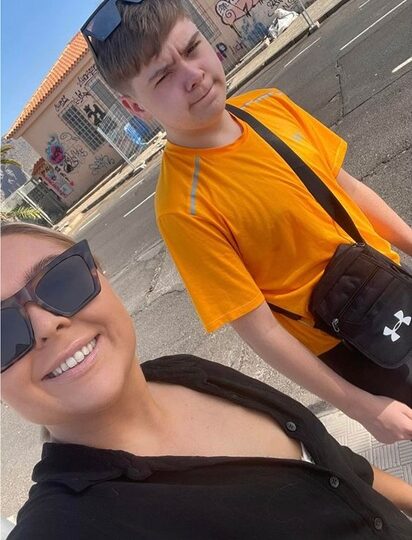
Harvey’s legacy continues to inspire community action in Yorkshire and beyond, prompting renewed focus on how schools, families, and services can better protect young people.
Although the loss remains deeply felt, the family’s resilience and determination to create change have made Harvey’s story part of a broader movement against youth violence.
The case of Harvey Willgoose has also been cited in national research and school safety reports as an example of why trauma‑informed educational approaches are vital for preventing violence.
“This was a senseless and avoidable loss,” his mother said, reflecting the pain felt by families affected by knife crime and the urgent need for preventative efforts.
Communities across Sheffield have held memorial events and tributes in Harvey’s name, emphasizing unity and a collective commitment to safer schools.
In local conversations, educators, parents, and youth advocates have called for long‑term investment in community services that support mental health and resilience for young people.
Harvey’s parents continue to work with police and community groups, sharing their experience to educate others on the devastating impact of knife violence among teenagers.
As the campaign grows, “Harvey’s Hub” stands as a beacon of hope, representing the possibility of healing, connection, and stronger support networks for future generations.
