
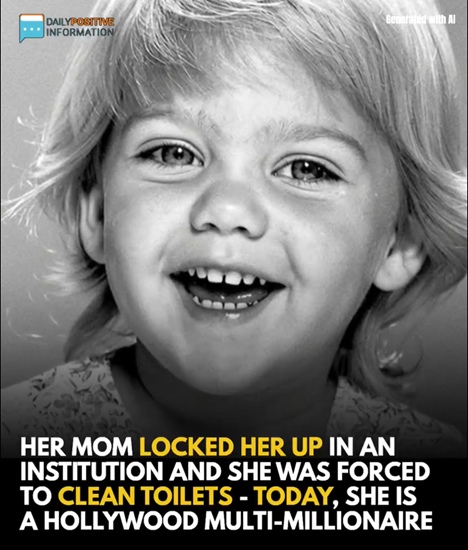
She was eight years old when alcohol first touched her lips. At thirteen, she was sent to rehab. Yet decades later, Drew Barrymore stands as one of the most recognizable, beloved.
And resilient figures in American entertainment—a living testament that a fractured beginning does not dictate the final chapter. Her life is a remarkable story of survival, reinvention, and self-determination.
Long before Drew learned to ride a bike or navigate childhood friendships, she was learning how to hit marks on a film set. Her earliest memory, or at least the earliest recorded public memory, begins at just eleven months old, when she appeared in a dog food commercial. A brief, blink-and-you’ll-miss-it role—but it marked the beginning of a childhood unlike almost any other.
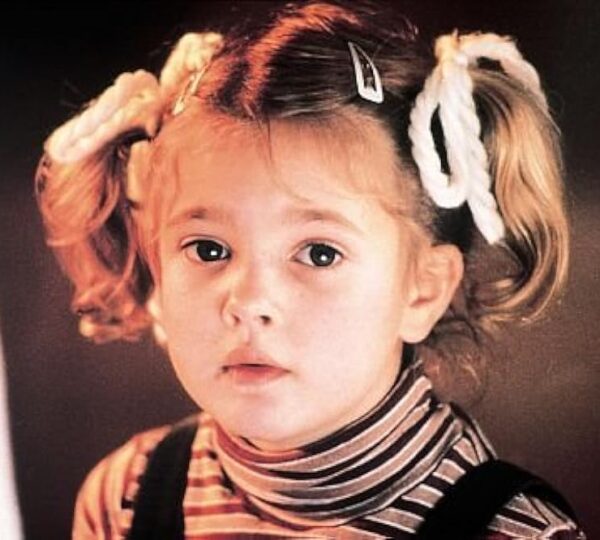
By the age of seven, Drew Barrymore had become a household name. Her portrayal of Gertie in Steven Spielberg’s E.T. the Extra-Terrestrial enchanted audiences across America and the world.
The wide-eyed, freckled little girl became an instant symbol of innocence, her smile unforgettable, her charm irresistible. Overnight, she was no longer just a child—she was a global icon of childhood itself.
But fame came with a hidden price. While other children worried about homework, birthday parties, and playground conflicts, Drew was navigating red carpets, interviews, and adult expectations.
In one now-infamous television appearance, she poured Baileys over ice cream with a playful grin—charming viewers while exposing a glimpse of the dangerous intersections of early fame and adult indulgence.
Years later, she reflected on these early experiences with clarity and sorrow: “I don’t think I understood what was good, or pleasurable, or bad. I was probably chasing joy, but I don’t think it was the real joy. I was just too young to know.”
Fame Came Early, Stability Never
The Barrymore name carried legacy, but not security. Drew’s father, John Drew Barrymore, battled alcoholism and instability, drifting in and out of her life. His sporadic presence left her with fragments and unanswered questions.
Her mother, Jaid Barrymore, also struggled with personal trauma and managed Drew’s career. A free spirit by nature, Jaid often introduced Drew to adult environments far too early.
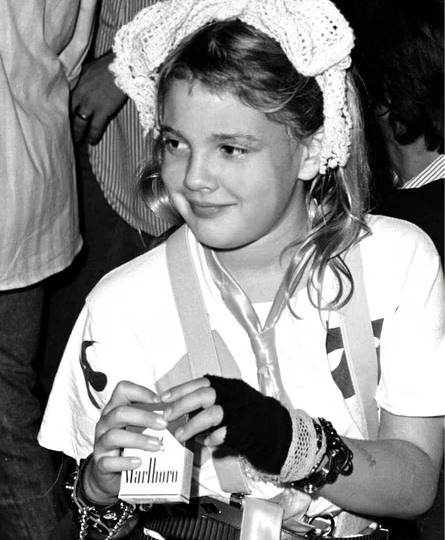
Her parents’ divorce, finalized when Drew was only nine, further compounded the turbulence of her childhood. With the absence of stable parental guidance, Drew spent time in Hollywood’s nightlife and party scenes, including legendary spaces like Studio 54.
While other children were learning about playgrounds, Drew was learning about clubs, drinks, and adult behaviors—normalizing experiences that would be harmful for someone her age.
Reflecting on her childhood, Drew acknowledged the role reversal forced upon her: “I really parented myself, so I am not mad at my mom or dad. I was more disappointed in my own parenting.”
Drinking Before Double Digits and Growing Up Too Fast
By age eight, Drew was already calling herself a party girl. She accompanied adults night after night, sometimes five nights a week, learning to drink and socialize in environments far beyond her years. What might have looked like playful rebellion to an outsider was the early stages of dependency.
By eleven, her drinking was no longer occasional; by twelve, addiction had taken hold. The path led to rehab—a first attempt at recovery that didn’t last, as the pressures, loneliness, and unresolved trauma followed her out of treatment.
At thirteen, she hit what she later described as her lowest point: a suicide attempt. “When I was 13, that was probably the lowest. Just knowing that I really was alone. And it felt… terrible.”
Locked Away, Disciplined, and Finally Given Boundaries
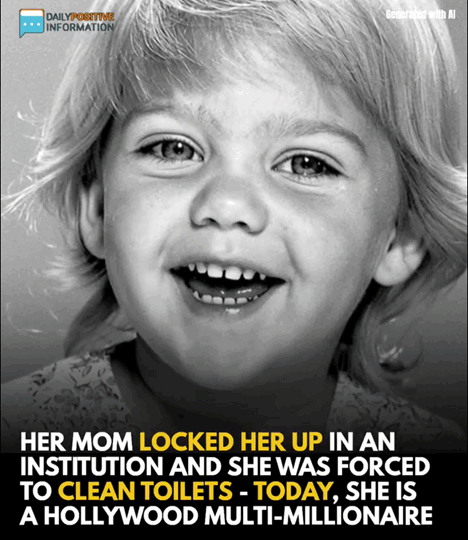
Following the suicide attempt, Drew was placed in a mental health institution for eighteen months. The rules were strict, freedom was non-existent, and the glamorous distractions of Hollywood disappeared entirely.
Surprisingly, she later credited this period with saving her life: “My mom locked me up in an institution. But it did give an amazing discipline. I needed that whole insane discipline.”
For the first time, Drew experienced boundaries, structure, and consequences—concepts alien to her chaotic early life. She described the experience as the best thing that could have happened to her: “It taught me boundaries. Until that point, I had none.”
After her release, she stayed with musician David Crosby and his wife, who modeled sobriety and stability. Even then, healing was not immediate; she ran away, rebelled, and carried unprocessed anger—but the seeds of transformation had been planted.
A Legal Divorce from Her Parents Before Adulthood
By fourteen, Drew Barrymore had taken the extraordinary step of legally divorcing her parents—a move almost unheard of for someone her age. At fifteen, she moved into her own apartment, gaining independence but also facing profound loneliness.
Even so, she refused to harden her heart or allow bitterness to dictate her life. She believed in the existence of goodness, even if she had never fully experienced it herself.
Hollywood’s Cold Shoulder: From Box Office Darling to Cleaning Toilets
Child stardom does not guarantee lifelong success. By fifteen, Drew found herself unemployable. Studios didn’t know what to do with a troubled teenager whose past overshadowed her talent.
By sixteen, she was cleaning toilets, waiting tables, and doing odd jobs. While the child star world had abandoned her, Drew persevered, embracing the lessons she had learned about self-reliance. She carried forward one phrase from her father that shaped her perspective: “Expectations are the mother of deformity.”
She internalized it, understanding that her path to reinvention would require resilience and patience.
Reinvention, Rebellion, and Reclaiming Her Voice
Her twenties were messy, loud, and authentically human. Marriages, divorces, wild interviews, and legendary public antics—like dancing on David Letterman’s desk—made headlines.
But beneath the chaos was rediscovery. Drew wasn’t trying to be a perfect former child star; she was trying to be real.
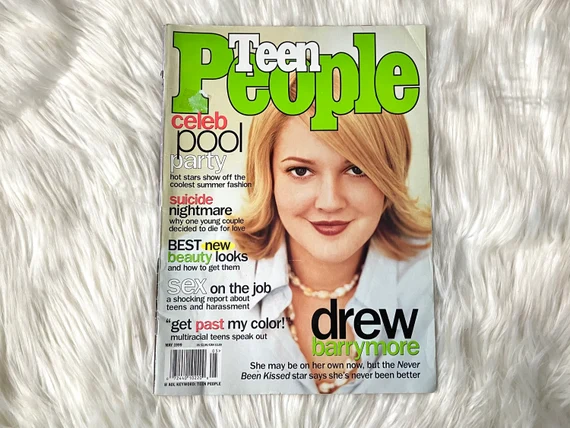
Gradually, she returned to acting in roles that suited her as an adult. She became a beloved figure in romantic comedies, starring in The Wedding Singer, Never Been Kissed, and 50 First Dates. Her performances combined humor, warmth, and vulnerability—qualities audiences trusted because they mirrored her real-life journey.
She didn’t pretend to be perfect. Her relatability stemmed from imperfection.
Motherhood: A Life Rewritten
In 2012, Drew became a mother, and everything changed. With then-husband Will Kopelman, she prioritized presence over premieres, focusing on raising daughters Olive and Frankie in a way dramatically different from her own childhood.
When she explained her choice to stay home over full-time movie work, she faced backlash, particularly from other women. “For saying, you can’t have it all. But that’s not what I meant. I absolutely believe you can do anything you want; I just realized I can’t do everything at once. Trying would mean a poor result, and that really pissed people off.”
Her parenting reflected the lessons of her childhood: creating safety, warmth, and structure where none existed before. She built a home where meals were shared, rules existed, and affection was constant. “I didn’t have parents, I was the parent to them. It was all totally upside-down.”
Her father’s addiction and violence, her mother’s recklessness, and her absence of stability became motivation rather than condemnation.
Success on Her Own Terms
By 2023, Drew moved to Manhattan to stay close to her children and maintain stability. Beyond acting, she became a businesswoman, producer, talk show host, and real estate owner. Her net worth, estimated at $85 million, reflects her multi-faceted career and smart business ventures.
As the host of The Drew Barrymore Show, she has cultivated a space defined by empathy and authenticity, emphasizing connection over celebrity ego.
Reflecting on her youth, Drew admitted: “If I had tried to give advice to my younger self, I wouldn’t have listened! When you’re young, you think you know everything. I was very stubborn and rebellious, so I didn’t just ignore advice — I basically did the exact opposite of whatever anyone told me.”
Turning Fifty: Finally Feeling at Peace
At fifty, Drew Barrymore says she feels what she never had as a child: readiness, freedom, and peace.
In a personal essay, she reflected: “You know how sometimes you just feel ready? Like, deep in your bones, something shifts, and you realize – you’re stepping into a whole new season of life, and it actually feels right? That’s me. Right now. Fifty years old. And I have to say…I think I love it here.”
Her story transcends fame—it is about survival, resilience, and choosing joy after years of pain.
A Life That Inspires
Drew Barrymore’s journey is a reminder that a fractured childhood or early struggles do not define the totality of a person’s life. From early fame, addiction, and trauma to reinvention, motherhood, and professional success, she has continually rewritten the narrative of her life on her own terms.
Her story resonates not just with fans but with anyone who has faced hardship, illustrating that even the most challenging beginnings can be transformed into a life of purpose, joy, and fulfillment.
