
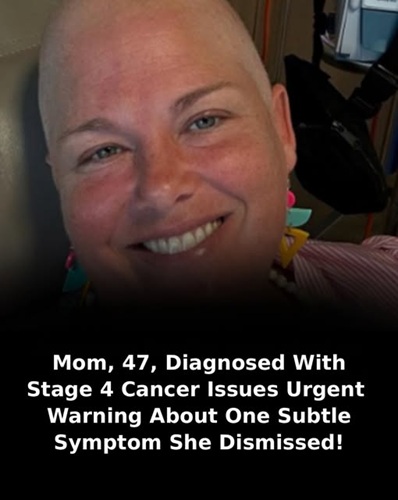
Susan Schmidt, a 47-year-old mother of two from Brisbane, Australia, never imagined that routine fatigue or minor digestive issues could be signs of a life-threatening illness.
Yet, in 2023, she received life-changing news: she had stage 4 bowel cancer. For Susan, the diagnosis came after months of subtle symptoms that she initially dismissed.
A scenario all too familiar for many adults, highlighting the silent and often overlooked dangers of colorectal cancer. Now, Susan is using her experience to raise awareness, emphasizing the critical importance of early detection, advocacy, and trusting your own instincts when it comes to your health.
She has become a voice for those navigating the complexities and taboos surrounding bowel health, showing courage, resilience, and a commitment to helping others.

The Diagnosis That Changed Everything
Susan’s journey began with symptoms so subtle that she initially thought little of them. Speaking to the Daily Mail, she recounted how she ignored signs that now, in hindsight, were clear indicators of serious illness.
“The goal now is to stay well for as long as I can,” she said. “I’ll probably resume chemotherapy after my next overseas trip.”
While the disease is currently considered incurable, her focus has shifted to maintaining quality of life, spending meaningful time with her family, and using her platform to support other cancer patients.
Breaking the Taboo Around Bowel Health
One of the major barriers to early detection, Susan explains, is the social discomfort surrounding discussions about bowel health. Many people feel embarrassed or hesitant to raise concerns about digestive issues, even with a doctor.
“I didn’t talk about my bowel habits — who does?” she explained. “That’s part of the problem. People don’t raise the alarm early enough.”
This silence can have deadly consequences. Bowel cancer, also known as colorectal cancer, often begins quietly, with symptoms that are easy to dismiss or attribute to lifestyle factors.
Early recognition and medical consultation are critical, yet social stigma prevents many from speaking up until it is too late.
Early Symptoms She Overlooked
Several months before her official diagnosis in September 2023, Susan began experiencing extreme fatigue.

“I’d drive my daughter to rowing and then have to stop and nap for 40 minutes on the way home,” she said. “That’s not normal, but I brushed it off.”
As a physiotherapist, she was accustomed to staying active and pushing through tiredness, so she initially attributed her fatigue to stress or early menopause.
Her digestive symptoms began subtly as well. While attending a wedding in France, she experienced constipation for the first time in her life.
“I blamed the food — too much cheese, too much indulgence,” Susan said. “I didn’t think much of it.”
After returning home, her symptoms worsened dramatically. “I ended up on the bathroom floor in absolute agony — vomiting, diarrhoea, unbearable pain.
It lasted eight hours,” she recalled. At first, she suspected food poisoning or a severe infection. “It was worse than childbirth,” she added. “I was crawling into the shower trying to ease the pain.”
A Devastating Diagnosis
Initial medical tests provided little clarity. Blood and stool samples appeared normal, and cancer was not immediately suspected. It wasn’t until she underwent a colonoscopy that doctors discovered a tumor.
“When I woke up, I knew something was wrong,” Susan said. “They didn’t offer food or drink. The gastroenterologist came in and told me he had found a tumor.”
Further imaging revealed that the cancer had already spread — to her uterus, pelvic lymph nodes, and right lung. The final diagnosis: advanced, metastatic bowel cancer.
For many patients, receiving news of stage 4 colorectal cancer is overwhelming. It means the disease has spread beyond the colon or rectum to distant organs, making curative treatment highly unlikely.
In Susan’s case, treatment focuses on extending life, controlling symptoms, and maintaining quality of life through chemotherapy, palliative care, and supportive measures.
Understanding Stage 4 Bowel Cancer
Stage 4 colorectal cancer is considered advanced and metastatic. According to the American Cancer Society, it accounts for approximately 20% of all new colorectal cancer cases.
While survival rates are lower at this stage — with a five-year relative survival rate of roughly 14% — individualized treatment and modern therapies can help manage the disease and improve quality of life.
Treatment usually involves a combination of:
-
Chemotherapy: To slow the progression of cancer and target cells throughout the body.
-
Targeted Therapy: Drugs that specifically attack cancer cells or pathways, minimizing harm to healthy tissue.
-
Surgery (if feasible): In certain cases, surgeons may remove tumors to relieve symptoms or improve outcomes.
-
Palliative Care: To manage pain, fatigue, and other symptoms, allowing patients to focus on daily life and well-being.
Susan’s focus is not just on treatment but on living fully despite her diagnosis. She continues to travel, spend time with her children, and advocate for others navigating similar challenges.
A Message to Others: Trust Your Instincts
Susan now speaks openly about her experience to encourage people not to ignore persistent symptoms, no matter how minor they may seem.
“I want people to push for answers if something feels off,” she said. “Even if blood tests are normal. Even if they say it’s stress, hormones, or diet — listen to your instincts.”
Her early symptoms — fatigue, constipation, and intermittent abdominal pain — did not include more obvious red flags such as blood in the stool, demonstrating that bowel cancer can present subtly.
Medical experts agree that vague symptoms should never be dismissed, particularly when they persist for weeks or months.
Common early warning signs of colorectal cancer include:
-
Ongoing fatigue
-
Changes in bowel habits
-
Abdominal pain or cramping
-
Unexplained weight loss
-
Persistent constipation or diarrhea
-
A feeling that the bowel hasn’t fully emptied
These symptoms are often attributed to less serious conditions such as stress, diet, or digestive upset, which is why proactive investigation is essential.
Turning Pain Into Purpose
Despite the challenges of ongoing chemotherapy and a serious prognosis, Susan has channeled her experience into advocacy and support for others.
She founded The Floozie Foundation, an organization dedicated to supporting cancer patients and their families in adult hospital wards across Australia.
The foundation provides emotional support, comfort care, and resources for navigating the complexities of serious illness. It also raises awareness about early detection and encourages patients to advocate for themselves.
Susan remains actively involved, sharing updates on social media about her treatment and the foundation’s work. Her posts aim to inspire hope, reduce fear, and empower others facing similar health challenges.
The Importance of Early Detection
Medical research consistently shows that colorectal cancer outcomes improve dramatically when the disease is detected early. Early-stage cancers are more likely to be curable and require less aggressive treatment.
Unfortunately, social stigma, embarrassment, and the subtle nature of early symptoms often delay diagnosis. Susan’s story illustrates how easily warning signs can be overlooked — and how crucial it is to seek medical attention if something feels abnormal.
Screening methods for colorectal cancer include:
-
Colonoscopy: Examines the entire colon and rectum; can detect and remove polyps before they become cancerous.
-
Fecal Immunochemical Test (FIT): Detects hidden blood in stool; simple and non-invasive.
-
Flexible Sigmoidoscopy: Examines the lower part of the colon.
-
CT Colonography (Virtual Colonoscopy): Uses imaging to visualize the colon.
Experts recommend beginning routine screening at age 45, or earlier for those with family history or other risk factors.
The Emotional Journey
Facing stage 4 cancer is not just a physical challenge; it is an emotional one. Susan emphasizes the importance of mental health, community support, and honest communication with loved ones.
“You’re not alone,” she says. “Your health is worth it. Speak up, push for answers, and advocate for yourself.”
Her openness about her own fears, frustrations, and triumphs has resonated with thousands. By sharing her journey, she breaks the silence around bowel health and empowers others to take action.
Living With Purpose and Advocacy
Susan’s message goes beyond personal health — it is a call to cultural change. By normalizing conversations about bowel habits and encouraging proactive healthcare, she hopes to prevent others from experiencing late-stage diagnoses.
Her foundation, combined with her public presence, focuses on:
-
Raising Awareness: Educating the public about early signs and risk factors of colorectal cancer.
-
Support Networks: Connecting patients with peer support and professional counseling.
-
Practical Guidance: Offering advice on navigating hospital systems and understanding treatment options.
-
Community Engagement: Hosting events and workshops to foster understanding and resilience.
Through these efforts, Susan transforms her personal hardship into a mission to save lives.
Conclusion: A Lifesaving Reminder
Susan Schmidt’s journey is a poignant reminder that listening to your body, speaking up, and seeking medical guidance can be lifesaving.
Early detection of colorectal cancer dramatically improves outcomes, yet societal taboos and vague symptoms often lead to delays.
Her story emphasizes:
-
Never ignore persistent fatigue, bowel changes, or abdominal discomfort.
-
Advocate for thorough testing if something feels wrong, even if initial results appear normal.
-
Understand that bowel cancer can affect anyone, regardless of age or lifestyle.
-
Support organizations that provide resources and comfort for patients navigating serious illnesses.
Susan continues her fight with courage, hope, and purpose, turning her personal journey into a lifeline for others.
She reminds the public that self-advocacy, awareness, and early action are the most powerful tools in the battle against colorectal cancer. “I want people to know they’re allowed to speak up,” she says. “Your health is worth it.”
Her experience demonstrates that even in the face of a serious diagnosis, one can lead with resilience, compassion, and a commitment to making a difference.
By sharing her story, Susan Schmidt ensures that others may act sooner, detect cancer earlier, and potentially save their own lives.
