
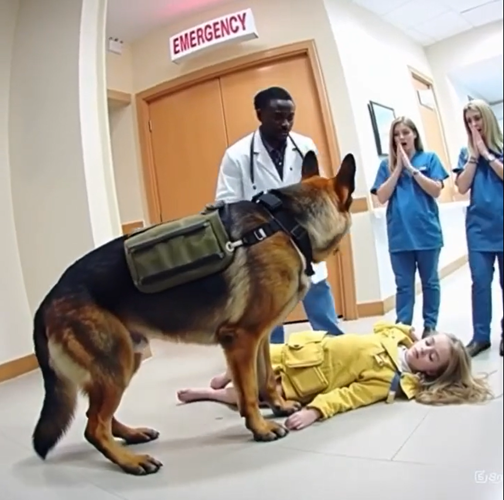
The fluorescent lights of the emergency room cast a sterile, almost unforgiving glow over everything, yet amidst the clinical chill, a palpable tension hummed in the air.
The rhythmic beeping of monitors, the soft hiss of oxygen tanks, and the muffled shouts from the nurses’ station all fused into a symphony of controlled chaos.
Yet despite the orchestrated disorder, time seemed to stretch, elastic and heavy, as if holding its breath along with all of us who surrounded the small, fragile form at the center of the room.
The girl lay motionless, her chest rising and falling in uneven waves, a fragile rhythm that seemed to echo the uncertainty of her situation. Each of us had instinctively gravitated to her side, hands ready to stabilize, to comfort, to revive.
Every movement was precise, honed through years of experience, but even so, none of us could shake the gnawing fear that the odds were not in her favor.
Her bruises, dark and mottled, told stories that words could scarcely capture; her restraints, chewed and mangled, were evidence of a captivity far beyond ordinary comprehension.
Then, as if sensing the desperation of those surrounding her, she twitched. A flicker of movement, subtle yet infinitely significant, passed across her small frame. I leaned closer, monitoring the heart rate with a renewed focus.
“More hands,” I whispered, almost to myself, “we need more hands.” My colleagues responded without hesitation. Each of us placed our palms on her, synchronized in a silent chant of willpower, a collective hope that somehow, through sheer determination, life could be coaxed back into her fragile body.
Seconds stretched into what felt like hours. The room’s energy became almost tangible, a taut cord of tension and determination binding all of us together.
Nurses, doctors, even the orderlies moved with deliberate precision, our training driving us while our hearts raced in tandem with hers. Each procedure, each compression, each delicate adjustment of equipment was infused with urgency.
Yet in the back of my mind, a quiet realization began to settle: this wasn’t just a medical emergency. It was a testament to survival, courage, and something deeper—something almost elemental.
Finally, a blip. Then another. The dissonant alarm of the heart monitor, a scream of chaos moments before, softened into a fragile, rhythmic beep.

The sound was almost delicate, like a candle flickering stubbornly against the wind, defiant yet vulnerable. Relief coursed through the room, but it was a tempered exhale, knowing that the fight was far from over.
The girl’s body had responded, for now, but the shadows of the abuse and trauma that had brought her here loomed large, refusing to dissipate entirely.
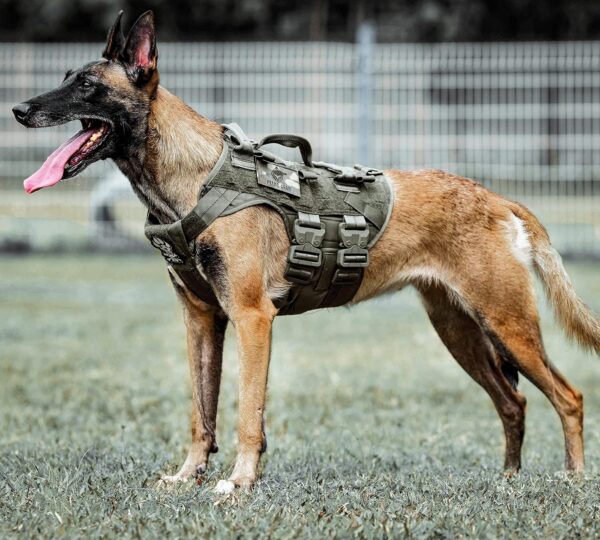
And then my gaze fell on him. The military dog, lying beside her like a sentinel of instinct and courage, bloodied yet vigilant.
His fur, matted in places, bore the marks of a battle waged silently but fiercely. He had been there, outside the walls of our ER, navigating dangers unseen to lead this child to safety.
He wasn’t merely a pet or a companion; he was trained, disciplined, loyal, and unwavering—a guardian whose mission had been singular and absolute.
“Look at the ID tag,” Allison whispered from across the room, her voice breaking the near-silence with the weight of revelation.
I stepped closer, careful not to startle him. The tag glinted under the fluorescent lights, engraved with a name and a service number I didn’t immediately recognize: Sergeant Max.
“He’s military,” I breathed, the truth dawning with a clarity that sent a shiver through me. “This dog… he’s trained to protect.”
And protect he had. The torn restraints on the girl’s wrist weren’t just remnants of captivity; they were evidence of Max’s determination and courage.
He had gnawed, tugged, and maneuvered until freedom was achieved, leading her through an ordeal no child should ever endure. Every instinct he possessed had been honed to ensure her survival, and despite his own injuries, he had succeeded.
The door creaked, and a uniformed police officer stepped in, his expression grave, but not devoid of resolve. “We’ve got an Amber Alert out,” he said.
“Her parents reported her missing three days ago. Sergeant Max belonged to her father, who is deployed overseas.”
The weight of the situation settled over me, a tangible heaviness that pressed against my chest. Max had completed the mission his human family could not.
He had carried the child through fear, danger, and uncertainty, and he had done so without hesitation. His injuries, the blood matted along his flank and the scratches along his muzzle, spoke volumes about the trials he had faced. Yet in his eyes, there was no regret, only the fierce determination of a protector who had fulfilled his duty.
As the officer relayed updates over the radio, detailing the initial reports and coordinating with local authorities, I knelt beside Max, meeting his eyes. Intelligence, bravery, and loyalty shimmered in their depths.
I placed a hand on his uninjured side, murmuring softly, “We owe you, buddy. More than you could ever know.” He pressed his head slightly into my palm, a quiet acknowledgment, an unspoken bond forged in crisis.
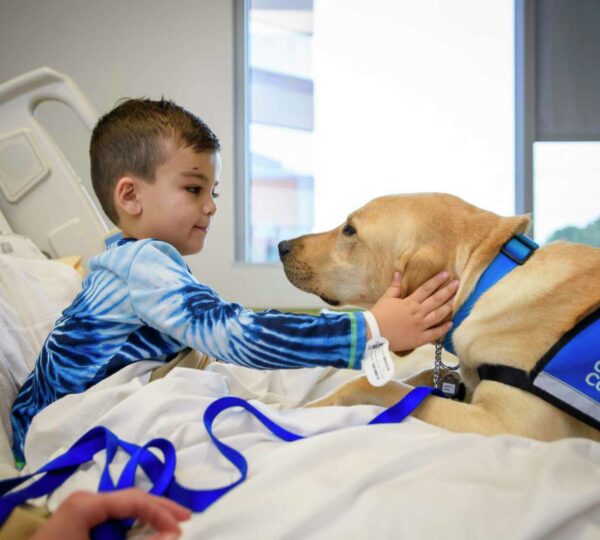
The girl, now stabilized, was carefully transferred to pediatrics. Her fate, while still uncertain, had shifted from despair to hope.
Her breathing had evened, her color gradually returned, and the tight line of fear in her expression softened ever so slightly. Max, meanwhile, was led to the on-site veterinary care unit, where his wounds would receive meticulous attention.
Nurses and veterinarians worked in tandem, cleaning his fur, stitching minor lacerations, and providing pain relief, mirroring the same urgency we had devoted to the child.
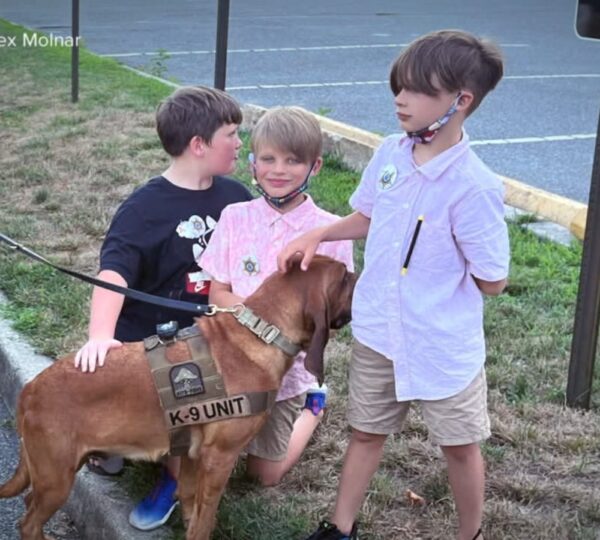
In the days that followed, the story of Sergeant Max and the girl spread throughout the hospital. Staff from every department circulated the tale, drawn not only to the miraculous survival of the child but also to the unwavering courage of her four-legged guardian.
Max became a symbol, a beacon of hope and resilience in a world often overshadowed by cruelty and despair. His story reminded us that heroism takes many forms and that extraordinary acts of loyalty and courage are not always recognized on grand stages—they are sometimes found in the quiet, unassuming eyes of a dog willing to risk everything for someone else.
Meanwhile, the child’s recovery continued. Through therapy, careful monitoring, and the emotional support of hospital staff, she began to reclaim fragments of her innocence.
Her small hands, once bruised and restrained, learned to reach out again, first to the hands that saved her, then to the hands that would comfort her through recovery.
Each day brought incremental progress, a testament to human resilience and the power of compassionate intervention.
Max, too, began to heal. Though his wounds were physical, the psychological impact of his mission was evident. He moved more cautiously at first, ears flicking at sudden sounds, muscles tense from vigilance.
Yet even as he recovered, the bond between him and the girl remained unbroken. She would reach for him, whispering soft reassurances, and he would respond with the same steadfast presence that had guided her to safety.
In time, the child’s laughter returned, mingling with the gentle taps of Max’s paws on tile floors, a harmony of trust, healing, and companionship.
As the weeks turned into months, the story of Sergeant Max became a quiet legend within the hospital. New staff members were told of the night he brought the girl to safety, and patients and visitors alike heard whispers of the dog who embodied courage, loyalty, and hope.
His tale became more than an anecdote; it became a teaching moment, illustrating the profound impact that love, training, and instinct can have when harnessed for the protection of those in need.
Even outside the hospital, Max’s story began to inspire. Local media outlets covered the miraculous events, emphasizing the bond between human and animal and the extraordinary lengths to which some creatures will go to ensure the survival of those they love.
Letters arrived from families who had faced similar situations, expressing gratitude and hope, inspired by the courage of a dog who had done what few humans could.
For years afterward, the memory of that night remained vivid for everyone involved. The sound of claws tapping across tile, the rhythmic beeping of a heart monitor stabilizing, and the intense determination in Max’s eyes stayed etched in my mind.
Those moments reminded me, in ways no lecture or book ever could, that courage is not always loud, heroism is not always recognized, and love—pure, selfless, unyielding love—can take forms beyond our imagination.
Ultimately, the story had a happy ending. The child, after weeks of care, returned home to a supportive environment.
Social workers, law enforcement, and medical professionals worked together to ensure she was safe and nurtured, and she carried forward not just scars, but also resilience and the knowledge that she had survived against unimaginable odds.
Sergeant Max, now fully healed, remained at her side, a constant guardian and companion. The bond forged in that critical moment endured, a living testament to the power of courage, loyalty, and unconditional love.
In reflecting on that night, I came to understand that heroes do not always wear uniforms, carry badges, or appear in headlines.
Sometimes, they are silent, four-legged sentinels who act with instinct, training, and love, changing lives in ways we can scarcely measure.
Sergeant Max did more than protect a child; he restored faith, inspired hope, and reminded all of us that even in the darkest hours, bravery and compassion can prevail.
And so, whenever I doubted the capacity for good in the world, I would think back to that night—the blip of the monitor, the shared exhale of relief, the bloodied but steadfast gaze of a military dog—and remember that courage, love, and loyalty are not just ideals; they are forces that walk among us every day, sometimes on four legs, and sometimes in the smallest, bravest hearts we have the privilege to witness.
That night, Sergeant Max didn’t just change the course of a child’s life—he reaffirmed the belief in the extraordinary power of love, courage, and the unbreakable bond between protector and protected.
And in the end, that bond endured, offering hope, safety, and a reminder that, in even the most desperate moments, heroism and goodness can prevail.
