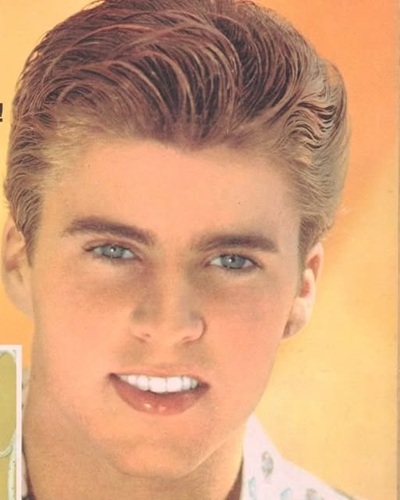
Ricky Nelson’s Heroic Actions Saved His Twin Boys During a Plane Crash
Ricky Nelson was one of the most beloved figures in early American pop culture.
Adored not just for his music but also for his television presence and his unique ability to evolve with multiple generations of fans.
Though many remember him for his string of hit songs and his role on The Adventures of Ozzie & Harriet, fewer know the full story of his final days — or how a spontaneous decision he made may have saved the lives of his twin sons.
This is a full, verified account of Ricky Nelson’s life, his tragic death, and the choice that forever altered the course of his family.
Early Life: A Star Born Into the Spotlight

Ricky Nelson was born Eric Hilliard Nelson on May 8, 1940, in Teaneck, New Jersey.
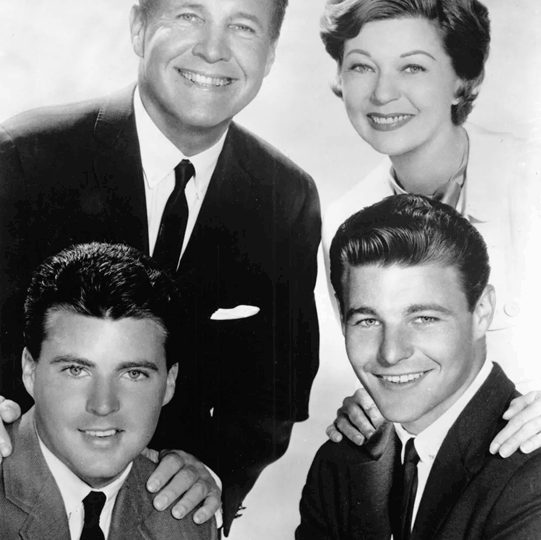
He was the son of Ozzie and Harriet Nelson, famous for their long‑running family sitcom The Adventures of Ozzie & Harriet, which premiered in 1952 and became one of the most enduring series in television history.
Though naturally shy and often challenged by severe asthma as a child, Ricky grew up in front of the camera.
His parents’ show — created by his father, Ozzie — offered him and his older brother David an early introduction into television.
Both boys appeared on the sitcom from a young age, helping make Ozzie & Harriet a genuine family affair.
As Ricky matured, so did his role on the show. While many child stars struggle with the transition from youth to adulthood, Ricky’s life in the spotlight gave him a rare platform to grow up in front of an audience that already knew him.
He attended Hollywood High School, but like many young entertainers, he was far more interested in life beyond the classroom — especially as his musical career began to take shape.
By his late teens, Ricky was already a successful musician, sometimes earning more than $100,000 a year — a remarkable sum in the late 1950s, especially for someone who was still technically a teenager.
A Rising Music Career
Nelson’s first hit single came in 1957, when he was just 17 years old. The song, “I’m Walkin’,” was featured on an episode of The Adventures of Ozzie & Harriet and was released soon after. It quickly soared up the charts and became a defining moment in Ricky’s early career.
Over the next decade, Nelson released a string of songs that would become classics in American pop music, including:
“Poor Little Fool” – his first No. 1 hit on the Billboard charts
“Travelin’ Man” – another chart‑topping favorite
“Fools Rush In” – a pop standard frequently covered by other artists
“Garden Party” – a later hit that reflected his evolving relationship with fame and his audience
These songs helped bridge the gap between the teen idol era of the late 1950s and the more mature rock and roll of the 1960s and ’70s.
Ricky’s music blended rockabilly, pop, and country influences, creating a sound that appealed to a wide range of listeners.
His television fame also gave him an unusual advantage: he frequently debuted new songs on his parents’ show before they were ever released as singles, helping him reach millions of households instantly.
Family Life and Parenthood
In April 1963, Ricky Nelson married Kristin Harmon, a fellow Hollywood native and artist whose family was friendly with the Nelsons.
Their marriage heralded the beginning of a new chapter in Ricky’s life — one defined as much by family as by fame.
Together, Ricky and Kristin had four children:
Sam Hilliard Nelson
Matthew Gray Nelson (twin)
Gunnar Eric Nelson (twin)
Tracy Kristine Nelson, who would grow up to become an actress herself
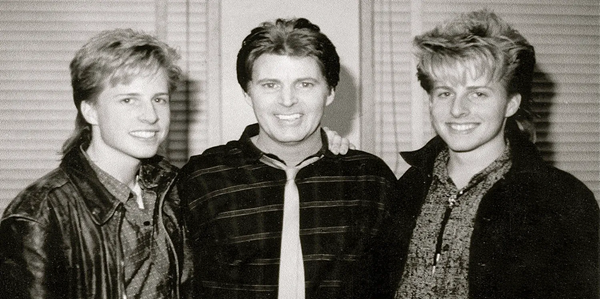
The twin sons, Matthew and Gunnar, would later find their own success in music, forming the rock duo Nelson in the late 1980s and early 1990s — a career they proudly built in their father’s legacy.
The Tour That Never Ended Well
Even as his music career progressed, Ricky Nelson continued touring extensively throughout the 1970s and early 1980s, performing live shows for devoted audiences across the United States.
But by the mid‑1980s, frequent flying — a necessity for touring musicians — became something he dreaded.
Nelson was known to dislike flying, and he reportedly attended psychotherapy sessions in an effort to manage his anxiety about it, determined to continue meeting his fans and honoring his busy schedule.
In late 1985, Ricky and his band embarked on a multi‑city tour of the southeastern United States.
After performances in Orlando, Florida, and Guntersville, Alabama, he was scheduled to fly to Dallas, Texas for a New Year’s Eve show — one of the final stops on the tour.
A Decision That Changed Lives
Matthew and Gunnar Nelson were originally supposed to travel with their father and his band on that flight to Dallas.
According to interviews the brothers gave in later years, they had packed their bags and were preparing to join the trip.
However, just days before the scheduled departure, Ricky called his sons and told them not to fly with him that day. Instead, he suggested they travel commercially and meet him later in Dallas.
The twins both recalled that their father sounded unusually firm — almost as if he had a gut instinct about the change — and they ultimately followed his wishes.
This decision would prove to be life‑altering.
The Flight That Ended It All
On December 31, 1985, Ricky Nelson boarded a privately owned Douglas DC‑3 aircraft along with his fiancée, Helen Blair, and several members of his band.
The plane departed Guntersville and set course for Dallas, where Ricky was booked to perform on New Year’s Eve.
At approximately 5:14 p.m. CST, while flying over Texas, smoke began to fill the cabin and cockpit. The pilots attempted to find a place to land, but visibility and control were compromised.
Despite their efforts to reach a safe landing spot, the aircraft crashed in a wooded pasture near De Kalb, Texas, hitting trees and utility poles before bursting into flames.
Tragically, Ricky Nelson, Helen Blair, and five members of the band were killed in the crash. Both pilots survived, escaping through cockpit windows with serious injuries.
Investigating the Cause
The exact cause of the accident was never conclusively determined.
The National Transportation Safety Board (NTSB) concluded that the fire probably began in the aircraft cabin, possibly near a faulty gasoline‑fueled heater, but no definitive ignition source could be identified.
In the immediate aftermath, there was speculation — including rumors of drug involvement — in some media accounts.
However, investigators found no evidence linking any illicit behavior to the crash itself.
Small amounts of cocaine were detected in some passenger toxicology reports, but this was not determined to be a cause of the accident, and no related drug paraphernalia was found in the wreckage.
Many family members and later biographers pointed to the known mechanical issues with the DC‑3’s cabin heater and the age of the aircraft as more plausible explanations for the tragedy, a theory supported by those familiar with vintage aircraft of that era.
The Sons Remember
For Matthew and Gunnar, Ricky’s last‑minute phone call became a defining moment.
Not only did it keep them off that fatal flight, but it allowed them to grieve their father from afar and build their own lives and careers.

In interviews reflecting on the event, the brothers have described that decision as a gut‑level choice that “saved our lives,” even if they didn’t fully grasp the significance at the time.
Both went on to pursue music under the name Nelson, honoring their father’s legacy while making their own mark on rock music with hits in the early 1990s.
Legacy and Reflection
Ricky Nelson’s impact on American music and television was profound.
As one of the first crossover artists — a performer who succeeded both on screen and on the pop charts — he helped define the teen idol phenomenon of the late 1950s and early 1960s.
His smooth blend of rockabilly, pop, and country influences helped shape the American musical landscape for decades to come.
The news of his death was met with widespread mourning, and in later years his contributions to music were honored by generations of fans who grew up with his songs and performances.
Conclusion
In the end, yes — the events described above are based on documented historical facts:
Ricky Nelson did die in a plane crash on December 31, 1985 while traveling to a concert.
The aircraft was a Douglas DC‑3 that crashed after smoke filled the cabin, and the pilots attempted an emergency landing.
His twin sons, Matthew and Gunnar, were originally supposed to be on that flight, but Ricky changed the plan at the last minute — a decision that likely saved their lives.
Many later retellings add emotional commentary — such as attributing the decision to intuition or “premonition” — but the core sequence of events is well supported by interviews and historical records.
Ricky Nelson’s story remains a powerful reminder of both the fragility and resilience of life — of how a seemingly ordinary decision can have extraordinary consequences.
Ricky Nelson was one of the most beloved figures in early American pop culture.
Adored not just for his music but also for his television presence and his unique ability to evolve with multiple generations of fans.
Though many remember him for his string of hit songs and his role on The Adventures of Ozzie & Harriet, fewer know the full story of his final days — or how a spontaneous decision he made may have saved the lives of his twin sons.
This is a full, verified account of Ricky Nelson’s life, his tragic death, and the choice that forever altered the course of his family.
Early Life: A Star Born Into the Spotlight
Ricky Nelson was born Eric Hilliard Nelson on May 8, 1940, in Teaneck, New Jersey.
He was the son of Ozzie and Harriet Nelson, famous for their long‑running family sitcom The Adventures of Ozzie & Harriet, which premiered in 1952 and became one of the most enduring series in television history.
Though naturally shy and often challenged by severe asthma as a child, Ricky grew up in front of the camera.
His parents’ show — created by his father, Ozzie — offered him and his older brother David an early introduction into television.
Both boys appeared on the sitcom from a young age, helping make Ozzie & Harriet a genuine family affair.
As Ricky matured, so did his role on the show. While many child stars struggle with the transition from youth to adulthood, Ricky’s life in the spotlight gave him a rare platform to grow up in front of an audience that already knew him.
He attended Hollywood High School, but like many young entertainers, he was far more interested in life beyond the classroom — especially as his musical career began to take shape.
By his late teens, Ricky was already a successful musician, sometimes earning more than $100,000 a year — a remarkable sum in the late 1950s, especially for someone who was still technically a teenager.
A Rising Music Career
Nelson’s first hit single came in 1957, when he was just 17 years old. The song, “I’m Walkin’,” was featured on an episode of The Adventures of Ozzie & Harriet and was released soon after. It quickly soared up the charts and became a defining moment in Ricky’s early career.
Over the next decade, Nelson released a string of songs that would become classics in American pop music, including:
“Poor Little Fool” – his first No. 1 hit on the Billboard charts
“Travelin’ Man” – another chart‑topping favorite
“Fools Rush In” – a pop standard frequently covered by other artists
“Garden Party” – a later hit that reflected his evolving relationship with fame and his audience
These songs helped bridge the gap between the teen idol era of the late 1950s and the more mature rock and roll of the 1960s and ’70s.
Ricky’s music blended rockabilly, pop, and country influences, creating a sound that appealed to a wide range of listeners.
His television fame also gave him an unusual advantage: he frequently debuted new songs on his parents’ show before they were ever released as singles, helping him reach millions of households instantly.
Family Life and Parenthood
In April 1963, Ricky Nelson married Kristin Harmon, a fellow Hollywood native and artist whose family was friendly with the Nelsons.
Their marriage heralded the beginning of a new chapter in Ricky’s life — one defined as much by family as by fame.
Together, Ricky and Kristin had four children:
Sam Hilliard Nelson
Matthew Gray Nelson (twin)
Gunnar Eric Nelson (twin)
Tracy Kristine Nelson, who would grow up to become an actress herself
The twin sons, Matthew and Gunnar, would later find their own success in music, forming the rock duo Nelson in the late 1980s and early 1990s — a career they proudly built in their father’s legacy.
The Tour That Never Ended Well
Even as his music career progressed, Ricky Nelson continued touring extensively throughout the 1970s and early 1980s, performing live shows for devoted audiences across the United States.
But by the mid‑1980s, frequent flying — a necessity for touring musicians — became something he dreaded.
Nelson was known to dislike flying, and he reportedly attended psychotherapy sessions in an effort to manage his anxiety about it, determined to continue meeting his fans and honoring his busy schedule.
In late 1985, Ricky and his band embarked on a multi‑city tour of the southeastern United States.
After performances in Orlando, Florida, and Guntersville, Alabama, he was scheduled to fly to Dallas, Texas for a New Year’s Eve show — one of the final stops on the tour.
A Decision That Changed Lives
Matthew and Gunnar Nelson were originally supposed to travel with their father and his band on that flight to Dallas.
According to interviews the brothers gave in later years, they had packed their bags and were preparing to join the trip.
However, just days before the scheduled departure, Ricky called his sons and told them not to fly with him that day. Instead, he suggested they travel commercially and meet him later in Dallas.
The twins both recalled that their father sounded unusually firm — almost as if he had a gut instinct about the change — and they ultimately followed his wishes.
This decision would prove to be life‑altering.
The Flight That Ended It All
On December 31, 1985, Ricky Nelson boarded a privately owned Douglas DC‑3 aircraft along with his fiancée, Helen Blair, and several members of his band.
The plane departed Guntersville and set course for Dallas, where Ricky was booked to perform on New Year’s Eve.
At approximately 5:14 p.m. CST, while flying over Texas, smoke began to fill the cabin and cockpit. The pilots attempted to find a place to land, but visibility and control were compromised.
Despite their efforts to reach a safe landing spot, the aircraft crashed in a wooded pasture near De Kalb, Texas, hitting trees and utility poles before bursting into flames.
Tragically, Ricky Nelson, Helen Blair, and five members of the band were killed in the crash. Both pilots survived, escaping through cockpit windows with serious injuries.
Investigating the Cause
The exact cause of the accident was never conclusively determined.
The National Transportation Safety Board (NTSB) concluded that the fire probably began in the aircraft cabin, possibly near a faulty gasoline‑fueled heater, but no definitive ignition source could be identified.
In the immediate aftermath, there was speculation — including rumors of drug involvement — in some media accounts.
However, investigators found no evidence linking any illicit behavior to the crash itself.
Small amounts of cocaine were detected in some passenger toxicology reports, but this was not determined to be a cause of the accident, and no related drug paraphernalia was found in the wreckage.
Many family members and later biographers pointed to the known mechanical issues with the DC‑3’s cabin heater and the age of the aircraft as more plausible explanations for the tragedy, a theory supported by those familiar with vintage aircraft of that era.
The Sons Remember
For Matthew and Gunnar, Ricky’s last‑minute phone call became a defining moment.
Not only did it keep them off that fatal flight, but it allowed them to grieve their father from afar and build their own lives and careers.
In interviews reflecting on the event, the brothers have described that decision as a gut‑level choice that “saved our lives,” even if they didn’t fully grasp the significance at the time.
Both went on to pursue music under the name Nelson, honoring their father’s legacy while making their own mark on rock music with hits in the early 1990s.
Legacy and Reflection
Ricky Nelson’s impact on American music and television was profound.
As one of the first crossover artists — a performer who succeeded both on screen and on the pop charts — he helped define the teen idol phenomenon of the late 1950s and early 1960s.
His smooth blend of rockabilly, pop, and country influences helped shape the American musical landscape for decades to come.
The news of his death was met with widespread mourning, and in later years his contributions to music were honored by generations of fans who grew up with his songs and performances.
Conclusion
In the end, yes — the events described above are based on documented historical facts:
Ricky Nelson did die in a plane crash on December 31, 1985 while traveling to a concert.
The aircraft was a Douglas DC‑3 that crashed after smoke filled the cabin, and the pilots attempted an emergency landing.
His twin sons, Matthew and Gunnar, were originally supposed to be on that flight, but Ricky changed the plan at the last minute — a decision that likely saved their lives.
Many later retellings add emotional commentary — such as attributing the decision to intuition or “premonition” — but the core sequence of events is well supported by interviews and historical records.
Ricky Nelson’s story remains a powerful reminder of both the fragility and resilience of life — of how a seemingly ordinary decision can have extraordinary consequences.


