
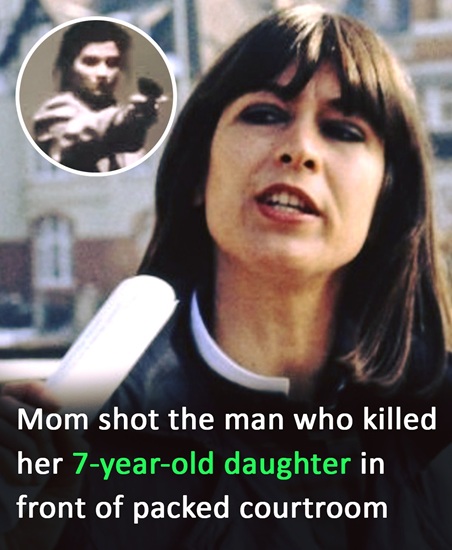
On March 6, 1981, a courtroom in Lübeck became the scene of a shocking act that gripped public attention across Europe and beyond.
A woman named Marianne Bachmeier, appearing calm but determined, stood and reached into her handbag during a trial in progress.
She pulled out a small handgun and took aim at the man on trial for murdering her only daughter, seven‑year‑old Anna Bachmeier.
That man, 35‑year‑old butcher Klaus Grabowski, sat in the defendant’s dock, facing charges of kidnapping, sexually assaulting and killing Anna almost a year earlier.
Seconds later, seven shots rang out in the hushed courtroom. Grabowski fell dead on the floor, hit by the bullets fired at close range.

Marianne’s gun was a small Beretta pistol she had concealed on her person before entering the building.
Immediately after the shooting, she dropped the firearm and was taken into custody by court personnel without resistance.
Witnesses later recalled the chaos that followed — stunned silence, shocked judges, lawyers frozen in place and police quickly securing the scene.
Marianne then made a chilling declaration: “I did it for you, Anna,” words widely reported at the time and later documented in court records.
Her daughter’s murder was a crime that had occurred on May 5, 1980, nearly ten months before the courtroom killing.
Anna had been just seven years old when she disappeared after arguing with her mother and leaving home upset.
The little girl had gone to the home of a neighbour, Grabowski, whom she knew because she played at his apartment before.
Once inside, she was held for hours and sexually assaulted, according to prosecutors, before being strangled and placed in a box.

Grabowski then took her body to a canal bank and buried it, a detail confirmed during initial police investigations.
His own fiancée reported him to police after he confessed the crime to her, leading to his arrest later that evening.
At the time of the murder investigation, Grabowski already had prior convictions for sexually abusing young girls, making him a known offender.
In 1976 he had undergone voluntary castration following earlier convictions, though hormone treatment later restored his libido.
When arrested for Anna’s death, Grabowski confessed but claimed that Anna had threatened to expose him, a defense widely dismissed as absurd.
His bizarre explanation — that Anna tried to extort money by threatening to accuse him of abuse — enraged many, especially her grieving mother.
The trial against Grabowski began in early 1981 at Lübeck District Court, where Marianne sat through testimony day after day.
According to historical accounts, listening to the gruesome details and the defendant’s remarks deepened Marianne’s anguish and sense of injustice.
Court security in 1981 was minimal compared with modern standards; Marianne was able to bring the gun into the building undetected.
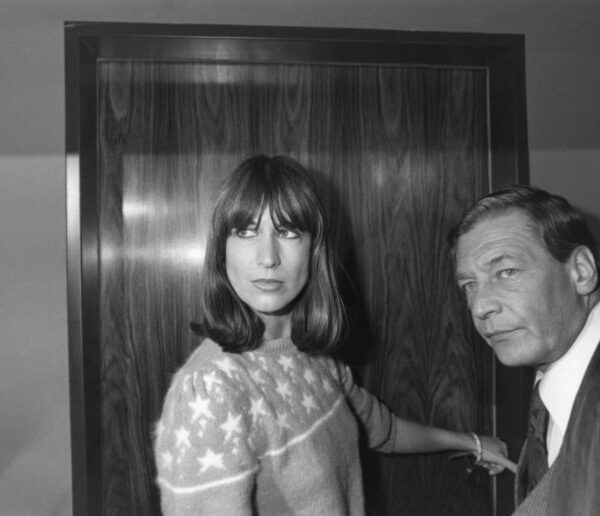
On the third day of the trial, she rose from her seat, walked behind Grabowski and fired the shots that killed him instantly.
Six of the seven bullets hit Grabowski’s body; he died before any medical personnel could reach him.
Bachmeier’s act of “vigilante justice” immediately became an international media sensation, dominating headlines and sparking fierce debate.
Photographers and television crews from Germany and abroad captured the arrest and subsequent legal proceedings for years.
Some members of the public sent Bachmeier letters, gifts and messages of support, expressing sympathy for her grief and outrage at Grabowski’s crime.
Other commentators argued that vigilante killings undermined the rule of law and set a dangerous precedent in a democratic society.
When Bachmeier was tried for her actions, prosecutors initially charged her with murder, the most serious offense under German law.
The trial against her began on November 2, 1982, bringing intense public scrutiny and media attention.
After 28 days of proceedings, the court ultimately convicted her of manslaughter and unlawful possession of a firearm, not premeditated murder.

The defense argued that Bachmeier’s actions were driven by overwhelming emotional trauma, not cold calculation, a position the court largely accepted.
On March 2, 1983, she was sentenced to six years in prison for her crimes, though public opinion remained sharply divided.
Bachmeier did not serve the full term; she was released on probation after serving about three years behind bars.
Following her release, she married a teacher in 1985 and, with him, moved abroad to live in Lagos, Nigeria, among German expatriate communities.
The marriage eventually ended, and by 1990 she had relocated again, this time to Sicily, Italy, where she lived for some years.
In the mid‑1990s, Bachmeier was diagnosed with pancreatic cancer, a serious illness that brought her back to her native Germany.
She died on September 17, 1996, in a hospital in Lübeck at the age of 46, years after the shocking courtroom killing.
Bachmeier’s final wish was to be buried next to her daughter Anna, and she was interred beside her in Burgtor Cemetery.
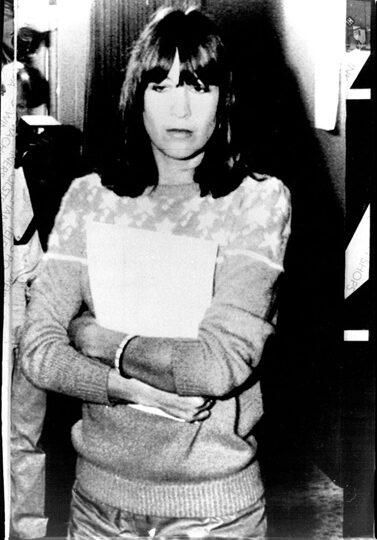
Her story remains one of the most infamous examples of vigilante justice in modern German history, continuing to provoke debate.
Some people see her as a tragic figure driven beyond endurance by grief, while others view her act as an unlawful taking of life.
The case has inspired books, films and theatre pieces that explore themes of justice, grief, legal ethics and the limits of the law.
Marianne Bachmeier’s name, and the image of that courtroom shooting, still resonate in discussions about crime, punishment and moral boundaries.
Her act forced societies to confront difficult questions: Was justice served, or was the line between vengeance and lawful judgment crossed forever?
Today, historians and ethicists continue to examine the case to understand the emotional and legal forces at play during that dramatic day in 1981.
Though decades have passed, her story endures — a stark reminder of how deep parental love and grief can collide with the boundaries of justice.
