
In the quiet, tree-lined suburban town of Willow Creek, life typically moved at a gentle pace. Residents knew one another by name, and neighbors often stopped to chat during evening walks, fostering a tight-knit community.
Among the town’s families, the Daniels household was particularly beloved, known for their warmth, kindness, and love of animals. Their lives took on a unique dimension when Max, a retired K9 officer, joined their home permanently.
Max had served diligently for years alongside Officer Daniels, specializing in narcotics detection, search-and-rescue operations, and protective duties. His unwavering loyalty and keen instincts earned him recognition within the police department as an exceptional working dog.
When Max retired, Officer Daniels could not bear the thought of parting with his steadfast partner. He brought Max home to live with his family, including his 8-year-old son, Alex, who immediately bonded with the dog.
Alex and Max quickly became inseparable. Their days were filled with shared adventures in the backyard, games of fetch, and quiet companionship during homework or storytime. The bond between them grew stronger with each passing day.
Even in retirement, Max retained the vigilance and discipline instilled during his years as a K9 officer. While he no longer patrolled streets or participated in police operations, his instincts remained finely tuned to subtle changes in his environment.
One evening, as the family followed their usual nightly routine, Max’s behavior began to shift in ways that alarmed them. Normally calm at bedtime, he started circling Alex’s bed with increasing agitation.
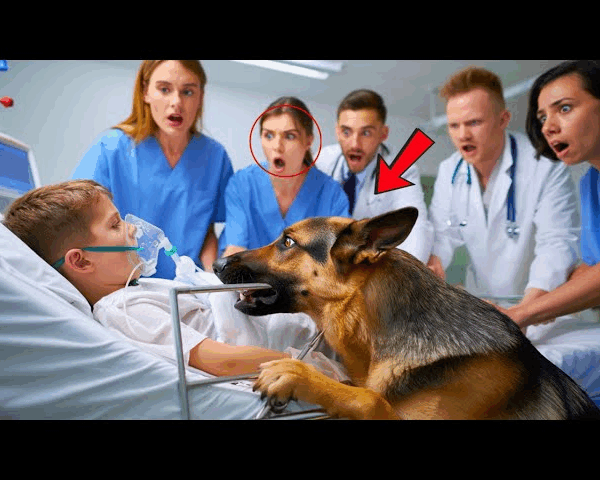
Max whined softly at first, pawing at the sheets, but his behavior escalated quickly. He began biting the bed frame, a completely uncharacteristic action for a dog that had spent years demonstrating disciplined restraint.
Officer Daniels tried to comfort Max and calm him with gentle reassurances. However, the dog’s restlessness intensified. He refused to leave Alex’s side, pacing, whining, and occasionally barking in a low, urgent tone.
Observing these unusual behaviors, Officer Daniels suspected that something was amiss. Years of experience with K9 partners had taught him that dogs often sense subtle changes in their surroundings or the health of humans.
As Max continued his relentless pacing and agitation, Daniels noticed a faint, almost imperceptible scent that seemed unusual in Alex’s room. It was a strange, subtle odor that had never been present before.
The following morning, the family decided to take Max to the veterinarian, fearing that his erratic behavior might be related to a health issue, such as pain or discomfort. They hoped professional assessment would clarify the situation.
Simultaneously, they contacted a pest control expert to inspect the house, concerned that termites or another hidden problem might be causing Max’s unusual agitation. Both vet and pest control inspections, however, revealed nothing abnormal.
Despite these inconclusive findings, Max’s behavior persisted. He continued to exhibit restlessness and protectiveness over Alex, refusing to leave his side during meals, homework, or bedtime routines, which alarmed the family further.
The Daniels family debated possible explanations, from emotional distress to subtle household hazards, but nothing seemed to account for the intensity of Max’s reaction. They grew increasingly concerned and vigilant, unsure what might be triggering the unusual behavior.
That night, Max once again refused to settle down, circling Alex’s bed and pawing at him repeatedly. Officer Daniels and his wife, Laura, realized that something serious might be occurring and considered seeking medical evaluation for Alex.
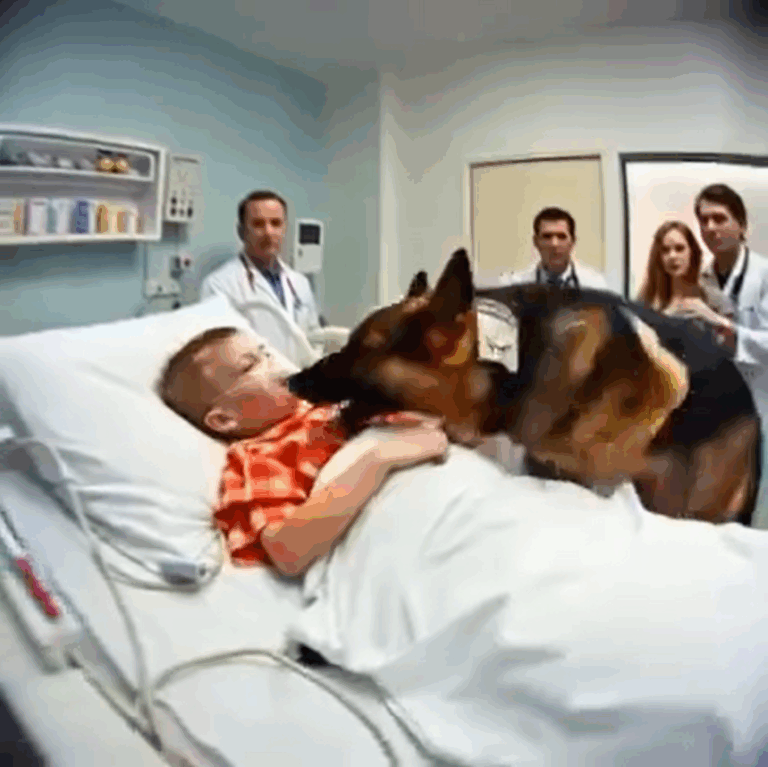
Taking no chances, they brought Alex to the hospital the following morning. While initially puzzled by the child’s lack of symptoms, the medical team performed a series of tests to investigate any potential hidden condition.
Doctors soon discovered a small, previously undetected tumor pressing against Alex’s spinal cord. The news shocked the family, as Alex had shown no outward signs of discomfort or mobility issues up to that point.
The physicians explained that such tumors, if left untreated, could lead to severe complications, including permanent paralysis, nerve damage, or other long-term physical impairments. The urgency of intervention was clear to the family.
Overwhelmed with emotion, Officer Daniels reflected on Max’s behavior. Every instance of agitation, pawing, and protective vigilance suddenly made sense, as if Max had sensed Alex’s internal medical crisis before any human could detect it.
The doctors acted swiftly, scheduling surgery to remove the tumor. Alex was placed under anesthesia, and the surgical team prepared carefully to minimize risk while ensuring complete excision of the growth.
During surgery, the team noted that the tumor’s location along the spinal cord had indeed posed a potential threat to nerve function. Timely intervention proved critical to prevent lasting damage, validating Max’s unusual alertness.
The operation was successful. Alex recovered under careful observation, and the medical team expressed optimism about his long-term prognosis. They emphasized that early detection had been crucial in preventing potentially life-altering complications.
The Daniels family, relieved and grateful, realized that Max’s intuition had likely saved Alex’s life. What had initially seemed like unusual behavior was, in fact, a heroic act of perception and care.
News of Max’s extraordinary instincts spread quickly through Willow Creek. Neighbors, local media, and online communities praised the retired K9 for his ability to detect subtle changes in Alex’s health, highlighting the dog’s remarkable perceptiveness.
Residents marveled at the story, noting how Max’s actions exemplified the deep bond between humans and their canine companions. The tale underscored the remarkable ways dogs can sense and respond to invisible threats to loved ones.
Max became a local hero, receiving attention from journalists, veterinarians, and animal behaviorists who were intrigued by his capacity to alert the family to an otherwise undetectable medical emergency.
The Daniels family often reflected on the extraordinary loyalty and intuition dogs possess. Max, a retired service animal, had proven that the bond between humans and dogs extends beyond companionship into acts of protection and vigilance.
Even in retirement, Max maintained a disciplined routine, attending to Alex with unwavering focus. He accompanied him to school drop-offs, supervised backyard playtime, and remained nearby during moments of rest and study.
The connection between Alex and Max deepened significantly after the incident. Alex, grateful for Max’s unwavering devotion, often hugged the dog, spoke to him, and ensured he felt safe and appreciated every day.
For Officer Daniels, the experience reaffirmed the invaluable contributions of K9 officers. Max’s intuition had transcended conventional expectations, demonstrating that trained dogs can continue to serve vital protective roles even outside formal law enforcement settings.
Veterinarians who examined Max post-incident noted his physical health remained excellent. They observed that his energy, responsiveness, and alertness were consistent with that of a well-trained working dog, even at an advanced age.
Behavioral experts highlighted that Max’s actions aligned with documented examples of dogs detecting medical conditions, such as seizures, low blood sugar, or tumors, emphasizing the extraordinary sensory capabilities inherent in the species.
Community members in Willow Creek held small gatherings to honor Max, sharing stories of their own pets’ loyalty and protective instincts. These discussions fostered deeper appreciation for the roles animals play in human lives.
Local schools invited Officer Daniels to speak about Max, using the story to teach children about compassion, responsibility, and the remarkable ways animals can positively impact families and communities.
Alex returned to school with renewed confidence and a strengthened sense of gratitude for Max. The experience reinforced lessons about vigilance, care, and the importance of listening to subtle signals, whether from humans or animals.
Max, for his part, resumed his favorite activities with Alex: exploring the backyard, playing fetch, and lounging near his son while he read or completed homework, fully aware of the bond that now carried even more depth.
The Daniels family often recounted the story to friends and relatives, emphasizing that Max’s intuition had gone far beyond ordinary canine behavior, highlighting a rare and extraordinary level of awareness.
Max’s heroism became a recurring theme in local media, with features in newspapers, online outlets, and community newsletters. Each retelling celebrated the bond between the family and their vigilant canine companion.
Psychologists and animal behaviorists cited Max’s actions as an example of how dogs can perceive subtle biological or environmental cues, often beyond the capabilities of human detection, reflecting evolutionary and training influences.
The story also inspired discussions among pet owners about attentiveness, observation, and the importance of understanding nonverbal cues in animals, particularly those with backgrounds in service or protective roles.
Max’s presence provided emotional comfort for Alex during recovery, serving not only as a guardian but also as a source of companionship, reducing anxiety and supporting the child’s overall well-being throughout the post-surgical period.
The Daniels family frequently documented Max’s activities, creating photo albums and videos that captured his loyalty, playfulness, and dedication, serving as a record of the dog’s integral role in their lives.
Beyond their household, Max’s story influenced broader conversations on the capabilities of retired K9 officers, prompting community leaders and animal organizations to explore programs that connect service animals with families in need of protection or emotional support.
Veterinary experts emphasized the importance of mental stimulation and consistent routines for retired service dogs, noting that continued engagement and purposeful activity can sustain their cognitive and emotional well-being.
Max, aware of the attention he was receiving, remained humble and instinctive. He continued to act naturally, focusing on Alex’s safety, responding to subtle cues, and maintaining a balance between playfulness and vigilant observation.
The incident also inspired charitable initiatives in Willow Creek, with donations to local animal shelters and K9 programs increasing as residents sought to honor Max’s contributions by supporting other dogs in need.
Community workshops highlighted the value of canine intuition, particularly in families with children or vulnerable members, emphasizing practical ways to recognize and respond to signs of distress or unusual behavior in pets.
Max’s story became a teaching tool for law enforcement training, demonstrating how retired K9 officers can retain critical skills and instincts that extend into civilian life, serving as both protectors and companions.
Alex often shared his gratitude openly, speaking to peers about how Max had saved his life, reinforcing lessons in responsibility, empathy, and appreciation for the extraordinary abilities of animals in our daily lives.
As Max continued to enjoy retirement, he maintained strong bonds with the entire Daniels family, providing comfort, vigilance, and companionship, proving that service and heroism extend far beyond formal duties into acts of quiet, everyday protection.
The tale of Max underscores the profound relationship between humans and dogs, demonstrating how empathy, loyalty, and intuition can intertwine to create moments of life-saving significance, shaping families and communities in meaningful ways.
In the years following Alex’s recovery, Max remained a fixture of the Daniels household, accompanying family outings, observing school events, and participating in neighborhood activities, embodying the blend of discipline and affection that defined his character.
Through this extraordinary series of events, Willow Creek recognized the unique contributions animals can make to human health and safety, while highlighting the deep emotional bonds that enrich lives and foster interspecies understanding.
Max’s vigilance and intuition had not only protected Alex but had inspired the entire community, reinforcing awareness of the remarkable capabilities of dogs and the life-changing impact they can have when treated with respect and love.
Even in retirement, Max continued to exhibit the qualities that defined his K9 career: alertness, courage, loyalty, and compassion, proving that heroism is not limited to active duty but can manifest in everyday acts within a loving home.
The Daniels family, forever changed by the events, maintained an ongoing commitment to care for Max, ensuring his health, happiness, and mental stimulation, while celebrating the extraordinary bond that had saved a young boy’s life.
Ultimately, Max’s story in Willow Creek became more than a local news item; it evolved into a narrative of heroism, loyalty, and the profound impact that one devoted canine can have on an entire family and a wider community.
