
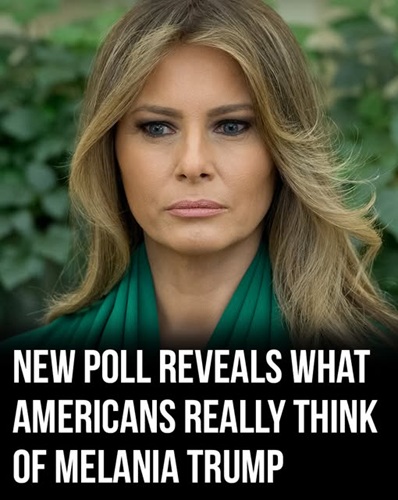
Melania Trump’s tenure as First Lady of the United States has, much like her husband Donald Trump’s time in office, been marked by highs and lows, intense media scrutiny, and a persistent fascination from the public.
Unlike her husband, whose political persona dominated headlines, Melania has often maintained a quieter, more private presence—choosing selective appearances, strategic initiatives, and high-profile projects to communicate her priorities.
Since first stepping into the White House in January 2017, the Slovenian-born former model has navigated the complex and often unforgiving role of First Lady, blending public service with her personal privacy.
When Melania returned to Washington for her second stint in the White House in January 2025, she made it clear that her approach would be nuanced and intentional.
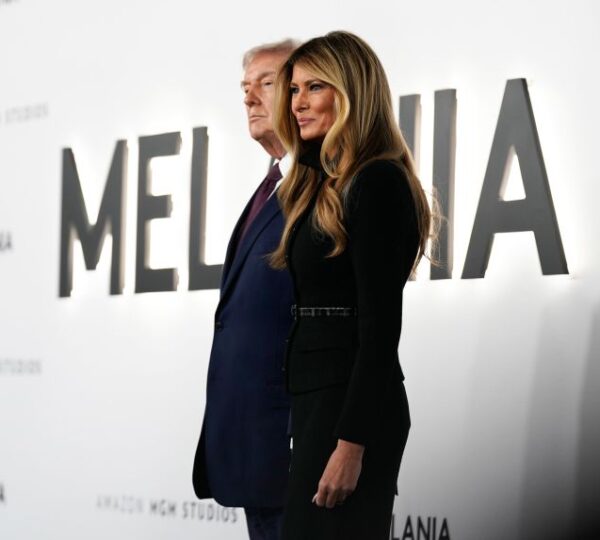
Speaking to the media prior to her return, she stated that this second tenure would be different from the first, emphasizing her plan to divide her time between Washington, D.C., Palm Beach, Florida, and New York City, all while fulfilling her duties as the nation’s First Lady.
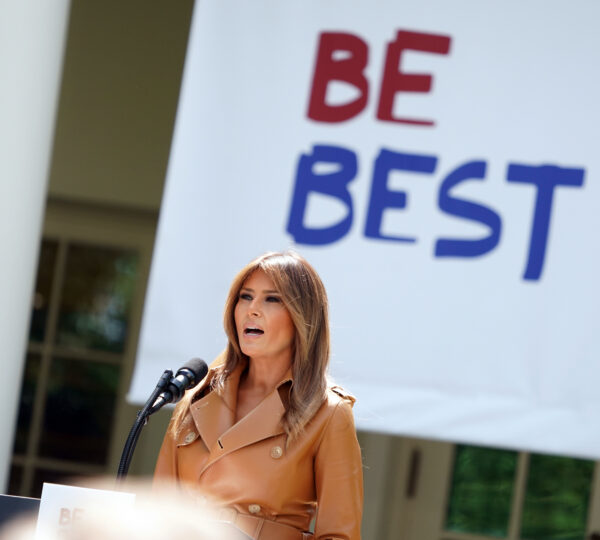
The “Be Best” Initiative and Public Service
Melania Trump has consistently championed the “Be Best” initiative, a campaign she launched in 2018 that focuses on three pillars: well-being, social media positivity, and opioid awareness.
While some critics initially questioned the initiative’s depth and impact, the First Lady maintained that the campaign was designed to encourage positive behavior among children, reduce cyberbullying, and provide support for families affected by substance abuse.
During her second term, she continued to promote these objectives, often speaking at conferences, schools, and community events, highlighting both her personal dedication and her desire to make tangible contributions to public welfare.
Beyond “Be Best,” Melania’s second term prominently featured her work in film and media. In a move that surprised many, she announced the production of a documentary chronicling her life, values, and public service.
The project, reportedly purchased by Amazon for $40 million, was released in January 2026. While the documentary received a mix of critical reviews, Melania herself expressed pride in the project, stating in an interview with CNN, “I’m very proud of the film so people may like it, may don’t like it, and that’s their choice.
The documentary showcased Melania’s journey from Slovenia to New York City, her modeling career, her marriage to Donald Trump, and her time as First Lady.
It also emphasized her advocacy efforts, including “Be Best” and her work with children and families, giving the public a more personal perspective of the woman often portrayed as enigmatic and reserved.
Public Opinion: A Mixed Reception
As the 2026 midterms approached, many Americans questioned how the First Lady’s public image had evolved and how she was perceived compared to previous First Ladies.
A recent YouGov poll provides insight into these perceptions. Conducted online among 2,255 adult citizens in two separate surveys from February 2–5 and February 3–5, 2026, the poll employed a randomized and stratified sample based on gender, age, race, education, geographic region, and voter registration status, weighted further according to 2024 presidential vote, 2020 election turnout, baseline party affiliation, and current voter registration status.
The poll revealed that Melania Trump’s approval rating among Americans stands at -16. This figure is lower than the rating for the current First Lady, Jill Biden, who has a -9 approval rating.
However, Melania’s rating is slightly higher than that of Hillary Clinton, who polled at -17. These numbers reflect a polarized perception of her public persona and effectiveness as First Lady.
By contrast, many First Ladies from previous generations enjoyed significantly higher approval ratings. Nancy Reagan’s approval rating is +25, Lady Bird Johnson +23, Rosalynn Carter +32, Barbara Bush +21, Michelle Obama +21, and Laura Bush +19.
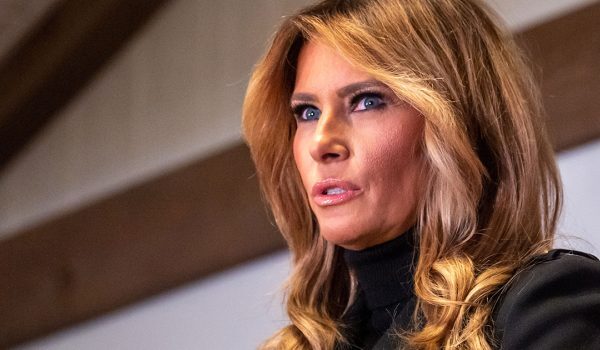
These figures illustrate the considerable variation in public perception of First Ladies, influenced by personality, public engagement, policy impact, and media portrayal.
The most celebrated First Lady, according to the same YouGov survey, remains Jacqueline Kennedy Onassis, who served from 1961 to 1963 alongside President John F. Kennedy.
She achieved an extraordinary +56 approval rating, a reflection of her elegance, poise, cultural influence, and enduring legacy in American history.
Interestingly, Melania’s approval ratings are notably higher among Republican voters than Democrats, reflecting the deeply partisan nature of contemporary American politics.
Many Republicans cite her fashion sense, elegance, and advocacy work as positive attributes, while critics—particularly from the Democratic side—question her visibility, engagement, and approach to the traditional duties of the First Lady.
Historical Comparisons and Media Perception
Melania Trump’s approach to her role contrasts sharply with her predecessors. First Ladies such as Eleanor Roosevelt and Michelle Obama embraced highly visible and politically active roles, advocating for sweeping social programs and policy initiatives.
Others, like Jacqueline Kennedy Onassis and Laura Bush, emphasized cultural diplomacy, education, and the softer arts of public influence.
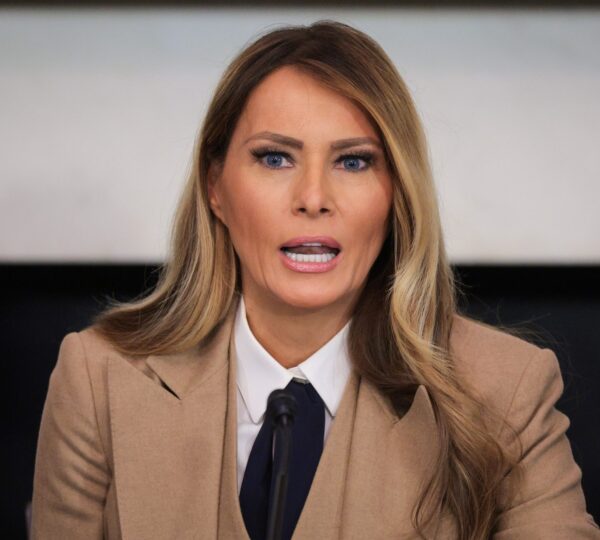
Melania’s strategy has often blended these two approaches: selective public appearances, a focus on media projects like her documentary, and a strong emphasis on personal advocacy, rather than overt political engagement.
Media coverage of Melania has oscillated between fascination and criticism. Headlines often focused on her fashion choices, public appearances, and perceived distance from the political spotlight, sometimes overshadowing her policy initiatives or charitable work.
Despite this, she maintained a disciplined public persona, balancing the pressures of scrutiny with a clear personal brand centered on elegance, privacy, and selective engagement.
The Documentary as a Legacy Statement
The release of Melania’s documentary marked a significant moment in her second tenure as First Lady. Beyond being a media event, the film can be seen as a statement of personal and public identity.
By narrating her own story, Melania sought to provide context for her choices, highlight her advocacy, and reshape public perception.
The mixed critical reception underscores the challenge of stepping into the public eye in the modern era: every action, every word, and every image is dissected instantly across global media platforms.
Yet the documentary also highlights her accomplishments. It showcases her efforts in combating cyberbullying, supporting children’s well-being, and addressing public health issues like opioid addiction—issues that may not have received consistent attention in mainstream media coverage.
By documenting these initiatives, Melania ensured that her work as First Lady will be recorded and accessible to future generations, adding nuance to her legacy.
Public Dialogue and Cultural Impact
Melania Trump’s tenure has sparked widespread discussion about the role and expectations of First Ladies in the 21st century.
Unlike traditional political figures, First Ladies are judged not only for policy impact but also for cultural influence, personal branding, and symbolic leadership. Melania’s approach raises important questions: Should the First Lady be a public advocate or a private influencer?
How much visibility is required to leave a lasting legacy? And how does media portrayal shape public opinion, particularly in a polarized political environment?
The YouGov poll suggests that Americans remain divided on these questions. While some appreciate her selective engagement, personal discretion, and focus on initiatives like “Be Best,” others critique the relative lack of high-profile advocacy or direct involvement in national issues.
Nevertheless, her presence has undeniably shaped public discourse, influencing how Americans perceive the balance between privacy, public service, and celebrity in modern politics.
Concluding Thoughts: A Complex Legacy
Melania Trump’s second term as First Lady reflects the complexities of a role that blends tradition, public expectation, and personal ambition.
While her approval ratings may not rival the highest-ranking First Ladies in history, her influence remains significant, particularly in shaping discussions about modern public service, advocacy, and the intersection of media, politics, and culture.
Her documentary, advocacy work, and careful public appearances create a nuanced portrait of a First Lady navigating a turbulent political landscape while striving to leave a personal and public legacy.
For Republican supporters, she represents elegance, discretion, and dedication to children’s welfare. For critics, her low visibility and selective engagement remain points of contention.
In historical perspective, Melania Trump occupies a unique position: a First Lady who leveraged media and personal narrative to communicate her values, while maintaining a distinct boundary between public duty and private life.
Her tenure offers lessons for future First Ladies on the power of narrative, the challenges of modern media scrutiny, and the enduring influence of personal branding in shaping a national role.
As Americans continue to debate her impact, one thing remains clear: Melania Trump’s time as First Lady will be remembered not only for her initiatives and appearances but also for the subtle, yet profound, ways in which she defined the modern expectations of a First Lady—balancing privacy, advocacy, and public perception in a role that has always been uniquely complex.
What do you think of Melania Trump as First Lady of the United States? Her tenure continues to inspire discussion, debate, and analysis, reflecting the evolving nature of public service in America.
Share your thoughts and perspectives below, and be part of the conversation on how history will ultimately judge this unique First Lady.
