
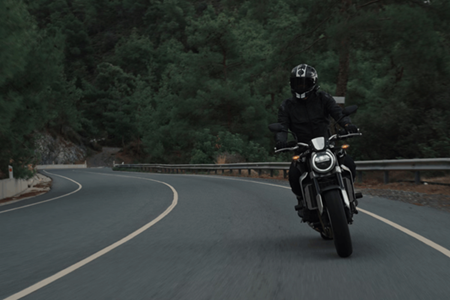
The late autumn sun was slowly descending over Route 27, casting long golden rays across the quiet highway. The air carried that cool, earthy scent of fallen leaves, and traffic moved in a steady, predictable rhythm.
Inside a silver sedan heading north, Helen Maren felt a rare moment of calm after a long workday.
In the backseat, her five-year-old daughter Sophie sat buckled into her car seat, still wearing the sparkling princess dress she had insisted on keeping on after kindergarten.
The tiny lights in her sneakers blinked softly each time she moved her feet. Everything seemed completely ordinary.

Without warning, a piercing scream shattered the calm. “Stop the car! Mommy, stop the car!” Sophie cried, her small body straining against the straps of her seatbelt.
Helen’s heart leapt into her throat as she glanced at her daughter through the rearview mirror. Sophie’s bright blue eyes were wide with panic, tears already forming.
“The motorcycle man! He’s hurt! He’s down there!” she sobbed, pointing frantically toward the right side of the road. Helen felt confusion wash over her.
She had seen no flashing lights, no stopped vehicles, no obvious sign of an accident. Yet something in Sophie’s voice was different this time. It wasn’t imagination or exhaustion. It was urgency.
Helen slowed the car and carefully steered toward the shoulder, switching on her hazard lights. Beyond the guardrail, partially hidden by tall grass and brush, she noticed something unusual—dark metal reflecting the fading sunlight at an odd angle.
Her pulse quickened. She told Sophie to stay in her seat, but the moment the car stopped, Sophie unbuckled and pushed the door open. Helen rushed after her, fear and adrenaline surging through her body.
The embankment beyond the guardrail was steeper than it appeared from the road. Loose gravel slid under their shoes as they carefully made their way down.
Then Helen saw him clearly. A man lay several yards away from a damaged black motorcycle that had clearly veered off the road.
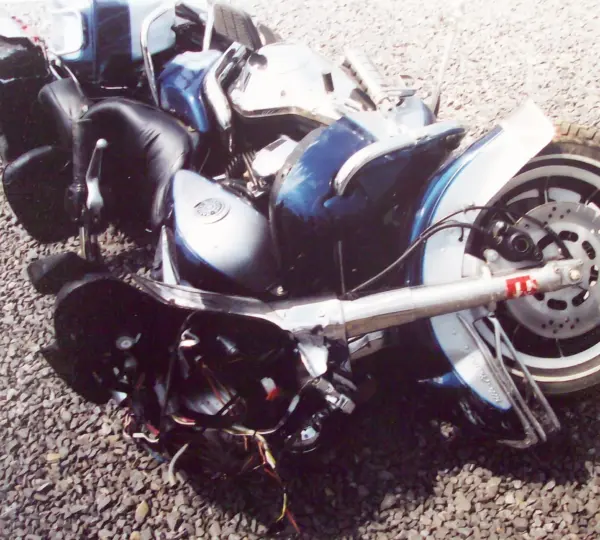
The handlebars were twisted, the windshield cracked, and the grass around him was flattened. He was alive, but badly injured. Blood stained the front of his shirt, and his breathing was shallow. One of his legs appeared broken.
Helen immediately pulled out her phone and dialed emergency services, forcing herself to stay calm as she provided their exact location on Route 27.
The dispatcher guided her through basic first-aid instructions. She knelt beside the injured man and applied firm, steady pressure to the bleeding wound using her scarf, being careful not to move his neck or spine.
Sophie knelt quietly beside the man and gently held his hand. “You’re going to be okay,” she whispered with surprising steadiness for a five-year-old child.
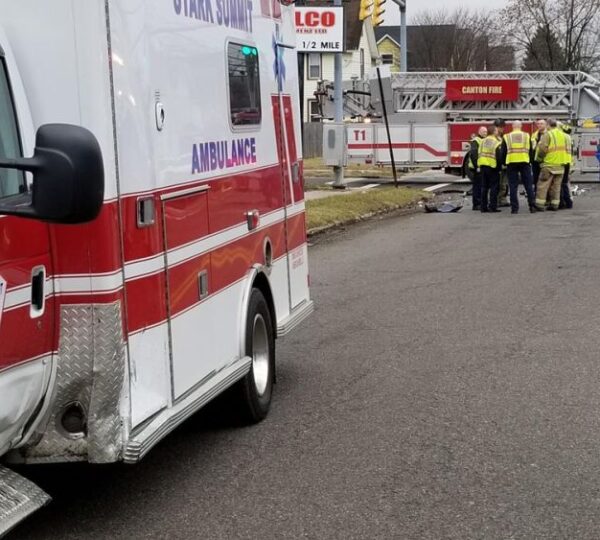
The minutes felt endless, but sirens soon echoed in the distance. Emergency responders arrived quickly and began assessing the man’s injuries.
They stabilized his neck, provided oxygen, and reinforced the pressure on his wounds. One paramedic looked at Helen and said quietly, “You did exactly the right thing.
Acting quickly made a real difference.” As they lifted the man onto the stretcher, his eyes opened briefly. He looked toward Sophie and, in a faint voice, whispered, “Thank you,” before the ambulance doors closed.
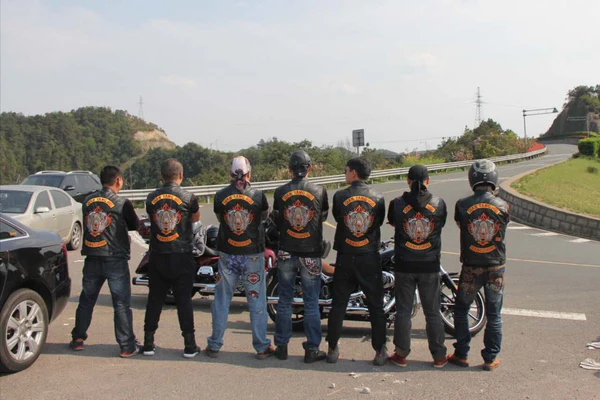
Not long after the ambulance departed, several motorcycles pulled over on the roadside. The riders had been traveling with the injured man earlier that day and had realized he was missing.
One of them, a tall man named Jack, approached Helen with visible concern. He confirmed that the injured rider was Jonas Keller, a longtime member of their motorcycle club.
When Helen explained how they had found him, Jack looked at Sophie with deep gratitude. “You were very brave,” he told her. Sophie simply nodded and said, “He needed help.”
Jonas survived the crash but required surgery and weeks of recovery. Doctors later explained that the immediate pressure applied to his wound before paramedics arrived likely prevented more severe blood loss.
Two weeks later, Helen and Sophie visited him at the rehabilitation center. Jonas was pale but recovering, his leg in a cast. When Sophie entered the room, his face softened into a smile. “That’s my hero,” he said gently. Sophie blushed shyly and replied, “I just helped.”
During that visit, Helen learned that Jonas had once lost his young daughter, Isla, to leukemia several years earlier.
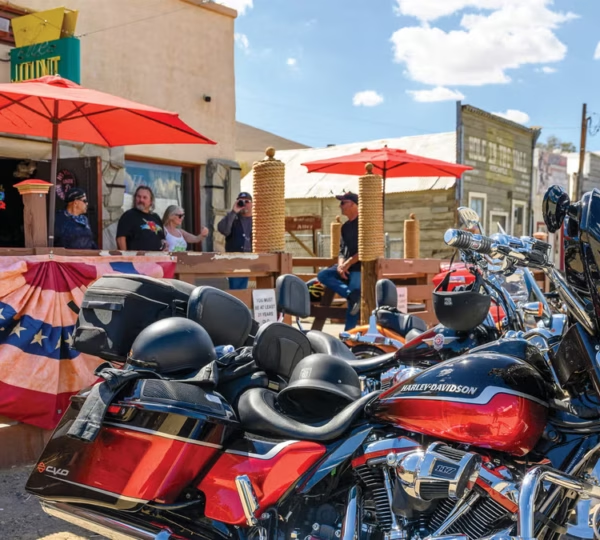
The motorcycle club, known as the Black Hounds, continued to raise money each year for pediatric cancer research in her memory. Deeply moved by what had happened on Route 27, the club organized a small community fundraiser honoring both Isla’s memory and Sophie’s courage.
They created a modest scholarship fund called the “Route 27 Scholarship,” supporting children who demonstrate compassion and bravery in difficult moments.
Over time, the bond between the families grew naturally. The bikers attended Sophie’s school recital one winter evening, filling the back row of folding chairs with leather jackets and quiet respect.
Sophie waved at them from the stage before beginning her performance. Jonas, now walking with a cane but steadily regaining strength, applauded louder than anyone.
Months later, during a spring visit to Jonas’s home, Sophie played in the backyard near an old chestnut tree. Jonas shared that his daughter Isla used to bury small handwritten notes around the yard as little treasures for him to find later.
Curious, Sophie asked if they could look for one. Together they gently dug near the tree’s roots and uncovered a small tin box containing a faded note written in a child’s handwriting.
It read, “Daddy, don’t be sad when I’m not here. I’ll always love riding with you.” Jonas sat down quietly, overcome with emotion.
Sophie wrapped her small arms around him and said softly, “She still loves you.” Jonas nodded through tears. “I know,” he replied.
As years passed, the story of that autumn day on Route 27 became well known in their community—not as a tale of mystery, but as a reminder of attentiveness, compassion, and quick thinking.
Sophie eventually took certified first-aid classes when she was older, inspired by the experience. Jonas returned to riding after fully healing, though he never forgot the afternoon that changed his life.
When asked what saved him, Jonas always answered the same way: “A little girl who cared enough to stop.” And every time he rode past mile marker 14 at sunset, with the sky glowing in shades of gold and red, he felt gratitude more than anything else.
It wasn’t fate or magic that saved him that day. It was courage, presence of mind, and a child’s instinct to help.
Sometimes, hope does not arrive with grand signs or dramatic gestures. Sometimes it comes quietly, wearing a sparkling princess dress and blinking sneakers, choosing to act when others might have driven past.
And sometimes, that simple decision is enough to change a life forever.
