
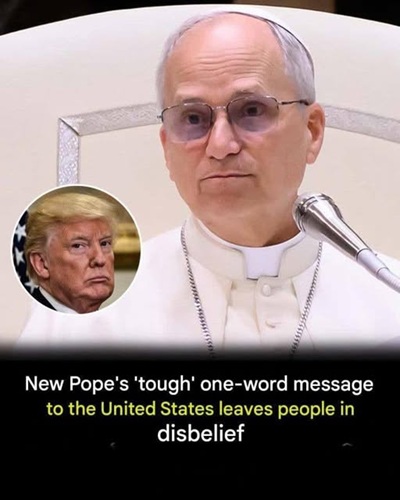
On May 12, 2025, the sun rose over Vatican City with a sense of anticipation and quiet gravity. The halls of the Apostolic Palace, where centuries of pontifical history had unfolded.
Were filled with journalists from around the globe, all awaiting the first international press conference of Pope Leo XIV, the newly elected pontiff.
Cameras flashed, microphones were adjusted, and the weight of expectation was almost palpable. Amid this anticipation, Pope Leo XIV — born Robert Francis Prevost in Chicago — entered the room with measured steps.
At 63 years old, he carried the calm dignity of a man who had spent decades navigating the intricate responsibilities of the Church while maintaining a reputation for moral clarity and thoughtfulness.
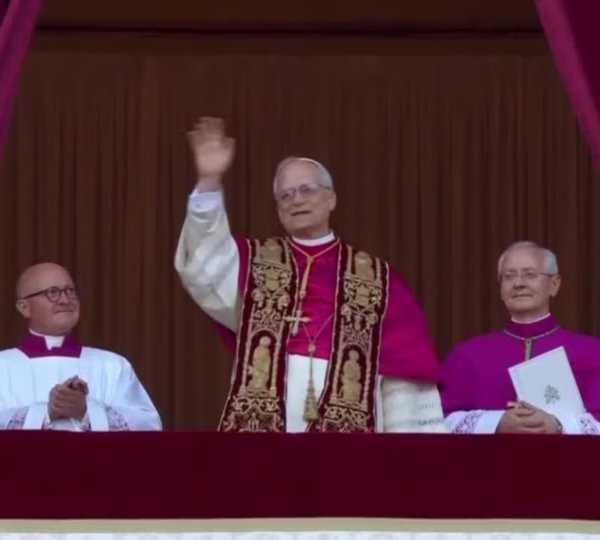
When a journalist asked him, directly and succinctly, if he had a message for the United States, he paused only briefly. Then, in a quiet voice that cut through the hum of cameras and murmured conversation, he said just one word:
“Many.”
And that was it.
No elaboration. No political framing. No immediate explanation. Just a single word. Yet in that instant, the room, and soon the world, understood that “Many” carried more weight than a long speech ever could.
The Power of Brevity
The impact of Pope Leo XIV’s response did not come from shock value or theatricality. It was not sharp, accusatory, or designed to provoke headlines. Rather, it was spacious — a word carefully chosen to allow reflection and interpretation.
In an age dominated by soundbites and viral commentary, a single, simple word that invites thought can feel revolutionary. Journalists, analysts, and theologians debated the meaning of “Many” for hours, trying to parse the pontiff’s intention.
Yet those who had followed his career recognized that this brevity was intentional, deliberate, and entirely in character.
“Many” was not a criticism in the traditional sense, nor was it a warning. Instead, it functioned as a mirror: it asked listeners to examine themselves, their society, and the many layers of responsibility each person and nation carries.
A Word That Invites Reflection
To understand the resonance of this moment, it helps to know Pope Leo XIV’s history. Before his election, he was Cardinal Robert Francis Prevost, a widely respected figure in Chicago and within the Vatican.
He had consistently spoken about human dignity, justice, and the ethical responsibilities of society, particularly regarding the vulnerable — immigrants, the poor, and those marginalized in political and social debates.
Throughout his career, Prevost had been praised for his ability to combine moral authority with empathy. He avoided grandstanding and tended to speak not with the intention of shaming, but to awaken thought and reflection.
To those who followed his work, “Many” did not merely denote quantity; it signaled complexity, nuance, and moral accountability.
In one of his previous writings, Prevost had noted that the Church’s role was to “stand as a witness to the dignity of every person, not to condense morality into slogans or political arguments.” It was in this spirit that the word “Many” should be understood: an invitation to consider the multiplicity of human experience and responsibility.
Some listeners heard concern, a quiet alert about societal divisions and injustices. Others heard invitation, a gentle call to embrace reflection rather than reaction.
Still others perceived reminder, a prompt to remember that no nation, no institution, and no community is defined by a single metric or policy.
Not Condemnation, But Conscience
Throughout his life, Pope Leo XIV has been recognized for a distinctive approach to moral leadership. Unlike some religious figures who speak in absolutes or wield fear as a tool for compliance, he has prioritized conscience and introspection.
He has often addressed global audiences with the aim of inspiring thoughtfulness rather than judgment. In conversations on immigration, for instance, he has focused on the human stories behind policies.
On economic inequality, he has highlighted the real lives affected, rather than simply debating abstract figures.
When he said “Many”, he invoked this tradition. It was a word meant not to accuse, but to reflect the moral weight of countless human lives, choices, and struggles.
In this way, it transcended politics and became a moral statement: the United States — like any country — is comprised of many people, many challenges, and many opportunities for compassion.
The Weight of Simplicity
Simplicity can be deceptive. A single word, carefully chosen, can carry more influence than paragraphs of rhetoric. In the moments following the press conference, media outlets across the world replayed the moment repeatedly.
Social media users debated the meaning, producing threads that ranged from theological interpretations to sociopolitical commentary.
Yet the genius of Pope Leo XIV’s delivery lay not in forcing a conclusion, but in allowing space for each person to find their own understanding.
“Many” could mean:
-
Many struggles faced by ordinary citizens.
-
Many responsibilities resting on leaders.
-
Many stories of suffering and triumph woven into the national fabric.
-
Many opportunities for kindness, empathy, and moral courage.
Instead of instructing the audience what to think, the pope gave them permission to reflect — a subtle form of moral guidance that encourages active participation in ethical consideration, rather than passive consumption of a speech.
A Papacy Anchored in Bridge-Building
Pope Leo XIV’s leadership style is emerging as one defined by connection rather than division. In his inaugural address, he spoke of peace, unity, and shared responsibility for the world’s suffering.
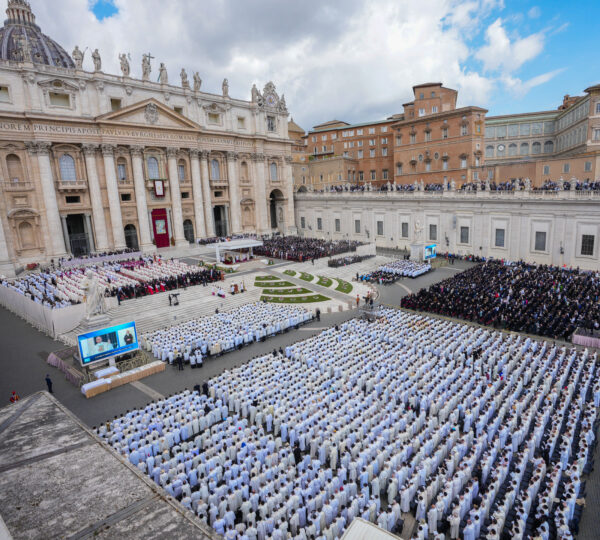
He has emphasized that the Church must serve as a bridge — not a barrier — in both local and global contexts.
The choice of his papal name reinforces this theme. By choosing “Leo,” he recalled Pope Leo XIII, whose historic encyclicals emphasized workers’ dignity, social justice, and ethical responsibility in economic and political life.
Leo XIV’s leadership signals continuity with that vision, emphasizing that faith should be practical, compassionate, and engaged with the realities of human life.
In this light, the word “Many” fits seamlessly into his leadership philosophy: it is measured, profound, and inclusive, embodying complexity rather than oversimplification.
It acknowledges that real-world issues are multifaceted, and meaningful guidance requires reflection, not just commands.
The Resonance Beyond Words
The broader significance of “Many” comes not from what was said, but from the trust it places in the listener. It invites individuals, communities, and nations to examine their actions, priorities, and moral frameworks.
In practical terms, “Many” becomes a meditation on:
-
Many forms of injustice that require vigilance.
-
Many moral choices that individuals must confront daily.
-
Many opportunities to act with compassion toward the poor, the displaced, and the marginalized.
-
Many dimensions of faith that call for practical engagement, not mere ritual.
For Catholics, scholars, and the wider public alike, this single word encapsulates a call to ethical reflection — an enduring reminder that the weight of moral responsibility is collective, not isolated.
The Calm Authority of Moral Leadership
One of the most striking aspects of this moment was the calm, unhurried authority with which Pope Leo XIV spoke. Unlike many public figures in the contemporary media landscape, whose voices are amplified by outrage and performative sharpness, Leo XIV relies on presence, dignity, and deliberate restraint.
His message to the United States, encapsulated in “Many,” was not a command or threat. It was a pause, a reflective space within which listeners could confront realities they might otherwise ignore.
In a world saturated with noise and polarization, this approach stands out: sometimes the most impactful messages are those that invite contemplation rather than demand action.
Implications for the Future
As Pope Leo XIV’s papacy progresses, early signs suggest that his leadership will prioritize moral clarity, global awareness, and personal responsibility. International observers have noted that his speeches and writings consistently favor bridge-building, dialogue, and empathy, rather than confrontation or political partisanship.
“Many” is emblematic of this approach: it does not single out a failing or prescribe a solution, but encourages holistic thinking about complex issues, ranging from climate change and migration to social inequality and healthcare.
In essence, the word functions as a moral lens through which citizens and leaders alike can evaluate their own role in the broader ethical landscape. It is a gentle, quiet directive: consider the entirety of human experience, recognize your obligations, and act with conscience.
Conclusion: The Enduring Echo of a Single Word
What makes Pope Leo XIV’s first public statement to the United States so compelling is its enduring subtlety. In one word, he managed to convey concern, empathy, reflection, and moral accountability — all without preaching or lecturing.
It reminds the world that true leadership does not always roar. Sometimes, it pauses. Sometimes, it trusts others to do the work of interpretation. And sometimes, one word, spoken with intention, can resonate far longer than a thousand sentences.
“Many” is more than a word. It is a meditation. A mirror. An invitation to consider the fullness of life, responsibility, and the collective journey of humanity.
In a world where attention is fleeting and voices are loud, this single word — carefully chosen, profoundly simple — carries a weight that is likely to be remembered for decades to come.
Through this brief exchange at the Vatican, Pope Leo XIV signaled that his papacy would be defined not by spectacle, but by thoughtfulness, conscience, and moral presence. A calm beginning, perhaps, but one that already speaks volumes.
Some truths, after all, arrive gently — and stay with us longer because of it.
