Photo of a Stray Dog Draws Attention to a Larger Animal Welfare Crisis in Houston
Across the globe, the issue of homeless dogs has reached an enormous scale.
Animal welfare organizations estimate that roughly 200 million dogs worldwide are living without permanent homes.
These animals face daily struggles that include hunger, injury, illness, extreme weather, and human neglect.
For many people, the size of the problem can feel overwhelming, creating a sense that individual actions are too small to matter.
Yet, scattered across cities and neighborhoods, there are stories that show how compassion, persistence, and community involvement can still create meaningful change.
One such story unfolds in Houston, Texas, a city that has long faced challenges related to animal overpopulation and stray dogs.
Houston’s warm climate, sprawling urban layout, and limited access to affordable spay and neuter services have contributed to a growing population of homeless animals.
Estimates suggest that more than one million dogs in the Houston area are living without stable homes, many of them surviving on the streets or relying on informal caregivers.
Within this difficult environment, grassroots organizations and volunteers play a crucial role in filling the gaps left by overburdened shelters.
Among these efforts is the Forgotten Dogs of the 5th Ward Project, a small but determined organization dedicated to helping dogs that often go unseen.
Operating primarily in Houston’s Fifth Ward, an area with limited resources and high stray populations, the group focuses on rescuing vulnerable street dogs, providing emergency care, and working toward long-term solutions.
Their mission is rooted in a simple belief: every dog deserves safety, medical attention, and the chance to experience a loving home.
The organization’s work typically involves long days spent driving through neighborhoods, responding to reports from residents, and searching for dogs in distress.
Volunteers encounter animals suffering from injuries, malnutrition, parasites, and untreated medical conditions. Many of these dogs have learned to avoid people out of fear, while others remain gentle and hopeful despite their circumstances. E
ach rescue requires patience, trust, and careful coordination to ensure the safety of both the animals and the volunteers.
Public awareness of the organization increased significantly after a single photograph began circulating widely online.
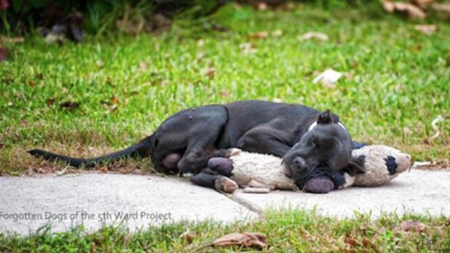
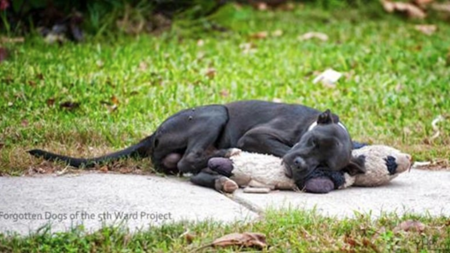
The image showed a stray dog lying on sun-heated asphalt, visibly exhausted, holding a worn stuffed toy between its paws.
The photograph was taken by a volunteer during a routine rescue outing, yet it captured something deeper than the physical condition of the animal.
Viewers around the world interpreted the image as a powerful symbol of loneliness, vulnerability, and the emotional toll of life on the streets.
For the volunteers, the moment was both heartbreaking and familiar. They had seen countless dogs in distress, many of them in worse physical condition.
Yet there was something about this particular dog that left a lasting impression. The stuffed toy suggested a connection to a past life, perhaps a time when the dog had known comfort or human care.
It served as a quiet reminder that many stray dogs were once pets, abandoned or lost through circumstances beyond their control.
At the time the photograph was taken, the rescue team faced a difficult decision. Their vehicle was already full with other dogs that urgently needed medical attention. With limited space and resources, they were unable to bring the dog immediately.
After providing what assistance they could on the spot, they made the decision to return later, hoping to bring the dog to safety once space became available.
When the volunteers returned, however, the dog was no longer there. Initial concern quickly set in, as street dogs face constant danger from traffic, extreme heat, and human hostility.
Instead of finding the dog, the team encountered an elderly man named Calvin, who explained that he had taken the animal in.
At 89 years old, Calvin had quietly been caring for numerous homeless dogs in his neighborhood, offering food, water, and basic shelter using his own limited means.
Calvin’s efforts were not part of any formal organization. He did not receive funding, public recognition, or consistent outside support.
Instead, he relied on personal compassion and a sense of responsibility toward the animals around him. Over the years, he had taken in many dogs that others overlooked, doing his best to keep them safe from harm.
His story reflects a reality seen in many communities, where individuals step in to help when systems fall short.
The meeting between the volunteers and Calvin marked the beginning of a cooperative effort. Recognizing his dedication and the limits of what he could manage alone, the rescue organization offered assistance.
This support included veterinary care for the dogs, food supplies, and guidance on how to access additional resources.
Calvin accepted the help, relieved to know that the animals he cared for would receive medical attention he could not afford on his own.
This collaboration highlights an important aspect of animal welfare work: progress often depends on partnerships between formal organizations and informal caregivers.
Many homeless dogs survive because of people like Calvin, who provide stability and kindness in difficult circumstances.
When these efforts are supported by rescue groups, veterinarians, and donors, the impact can be significantly expanded.
The viral photograph that first drew attention to the story continues to resonate with audiences, but its meaning extends beyond sadness.
While the image is undeniably emotional, it also represents compassion in action. It reminds viewers that behind every statistic is an individual animal with its own story, needs, and capacity for resilience.
The widespread response to the photo helped generate awareness, donations, and renewed interest in supporting local rescue efforts.
Houston’s broader challenge with homeless dogs underscores the importance of long-term solutions. Rescue alone cannot solve the problem.
Sustainable progress requires increased access to spay and neuter programs, public education about responsible pet ownership, and community-based support systems.
Organizations like the Forgotten Dogs of the 5th Ward Project often advocate for these measures while continuing their immediate rescue work.
The emotional toll on volunteers is significant. Witnessing suffering on a daily basis can lead to burnout and compassion fatigue.
Despite this, many continue their work driven by the belief that saving even one life matters. Each dog rescued, treated, and placed into a loving home represents a tangible success amid a much larger crisis.
For the dogs themselves, rescue can be a turning point. Animals that once lived in fear and discomfort often show remarkable transformations once they receive care and stability.
With proper medical treatment, nutrition, and patience, many regain trust in humans and adapt to life as companions.
These transformations reinforce the motivation of those who dedicate their time and resources to rescue work.
Stories like this one also highlight the role of everyday people in addressing large-scale problems.
While global numbers may seem daunting, individual actions—fostering a dog, donating supplies, volunteering time, or supporting local rescues—collectively create meaningful change.
Compassion does not require perfection or unlimited resources; it requires willingness and consistency.
In the end, the story of the dog on the asphalt, the volunteer who captured the moment, and the elderly man who stepped in to help reflects a broader truth about animal welfare.
Progress often begins quietly, through small acts of kindness that may never make headlines. Yet when these acts are shared, they have the power to inspire others and build momentum for change.
The global crisis of homeless dogs remains vast, and no single organization or individual can solve it alone. Still, the work being done in Houston offers a reminder that hope exists, even in the most challenging circumstances.
Through collaboration, compassion, and continued awareness, lives can be saved, and communities can move closer to humane and lasting solutions.
Ultimately, this story is not just about one dog or one photograph.
It is about the enduring capacity of people to care, to step forward when help is needed, and to recognize the dignity of animals who cannot speak for themselves.
In a world where suffering can feel constant, these moments of empathy remind us that change is possible—one rescued life at a time.
Across the globe, the issue of homeless dogs has reached an enormous scale.
Animal welfare organizations estimate that roughly 200 million dogs worldwide are living without permanent homes.
These animals face daily struggles that include hunger, injury, illness, extreme weather, and human neglect.
For many people, the size of the problem can feel overwhelming, creating a sense that individual actions are too small to matter.
Yet, scattered across cities and neighborhoods, there are stories that show how compassion, persistence, and community involvement can still create meaningful change.
One such story unfolds in Houston, Texas, a city that has long faced challenges related to animal overpopulation and stray dogs.
Houston’s warm climate, sprawling urban layout, and limited access to affordable spay and neuter services have contributed to a growing population of homeless animals.
Estimates suggest that more than one million dogs in the Houston area are living without stable homes, many of them surviving on the streets or relying on informal caregivers.
Within this difficult environment, grassroots organizations and volunteers play a crucial role in filling the gaps left by overburdened shelters.
Among these efforts is the Forgotten Dogs of the 5th Ward Project, a small but determined organization dedicated to helping dogs that often go unseen.
Operating primarily in Houston’s Fifth Ward, an area with limited resources and high stray populations, the group focuses on rescuing vulnerable street dogs, providing emergency care, and working toward long-term solutions.
Their mission is rooted in a simple belief: every dog deserves safety, medical attention, and the chance to experience a loving home.
The organization’s work typically involves long days spent driving through neighborhoods, responding to reports from residents, and searching for dogs in distress.
Volunteers encounter animals suffering from injuries, malnutrition, parasites, and untreated medical conditions. Many of these dogs have learned to avoid people out of fear, while others remain gentle and hopeful despite their circumstances. E
ach rescue requires patience, trust, and careful coordination to ensure the safety of both the animals and the volunteers.
Public awareness of the organization increased significantly after a single photograph began circulating widely online.
The image showed a stray dog lying on sun-heated asphalt, visibly exhausted, holding a worn stuffed toy between its paws.
The photograph was taken by a volunteer during a routine rescue outing, yet it captured something deeper than the physical condition of the animal.
Viewers around the world interpreted the image as a powerful symbol of loneliness, vulnerability, and the emotional toll of life on the streets.
For the volunteers, the moment was both heartbreaking and familiar. They had seen countless dogs in distress, many of them in worse physical condition.
Yet there was something about this particular dog that left a lasting impression. The stuffed toy suggested a connection to a past life, perhaps a time when the dog had known comfort or human care.
It served as a quiet reminder that many stray dogs were once pets, abandoned or lost through circumstances beyond their control.
At the time the photograph was taken, the rescue team faced a difficult decision. Their vehicle was already full with other dogs that urgently needed medical attention. With limited space and resources, they were unable to bring the dog immediately.
After providing what assistance they could on the spot, they made the decision to return later, hoping to bring the dog to safety once space became available.
When the volunteers returned, however, the dog was no longer there. Initial concern quickly set in, as street dogs face constant danger from traffic, extreme heat, and human hostility.
Instead of finding the dog, the team encountered an elderly man named Calvin, who explained that he had taken the animal in.
At 89 years old, Calvin had quietly been caring for numerous homeless dogs in his neighborhood, offering food, water, and basic shelter using his own limited means.
Calvin’s efforts were not part of any formal organization. He did not receive funding, public recognition, or consistent outside support.
Instead, he relied on personal compassion and a sense of responsibility toward the animals around him. Over the years, he had taken in many dogs that others overlooked, doing his best to keep them safe from harm.
His story reflects a reality seen in many communities, where individuals step in to help when systems fall short.
The meeting between the volunteers and Calvin marked the beginning of a cooperative effort. Recognizing his dedication and the limits of what he could manage alone, the rescue organization offered assistance.
This support included veterinary care for the dogs, food supplies, and guidance on how to access additional resources.
Calvin accepted the help, relieved to know that the animals he cared for would receive medical attention he could not afford on his own.
This collaboration highlights an important aspect of animal welfare work: progress often depends on partnerships between formal organizations and informal caregivers.
Many homeless dogs survive because of people like Calvin, who provide stability and kindness in difficult circumstances.
When these efforts are supported by rescue groups, veterinarians, and donors, the impact can be significantly expanded.
The viral photograph that first drew attention to the story continues to resonate with audiences, but its meaning extends beyond sadness.
While the image is undeniably emotional, it also represents compassion in action. It reminds viewers that behind every statistic is an individual animal with its own story, needs, and capacity for resilience.
The widespread response to the photo helped generate awareness, donations, and renewed interest in supporting local rescue efforts.
Houston’s broader challenge with homeless dogs underscores the importance of long-term solutions. Rescue alone cannot solve the problem.
Sustainable progress requires increased access to spay and neuter programs, public education about responsible pet ownership, and community-based support systems.
Organizations like the Forgotten Dogs of the 5th Ward Project often advocate for these measures while continuing their immediate rescue work.
The emotional toll on volunteers is significant. Witnessing suffering on a daily basis can lead to burnout and compassion fatigue.
Despite this, many continue their work driven by the belief that saving even one life matters. Each dog rescued, treated, and placed into a loving home represents a tangible success amid a much larger crisis.
For the dogs themselves, rescue can be a turning point. Animals that once lived in fear and discomfort often show remarkable transformations once they receive care and stability.
With proper medical treatment, nutrition, and patience, many regain trust in humans and adapt to life as companions.
These transformations reinforce the motivation of those who dedicate their time and resources to rescue work.
Stories like this one also highlight the role of everyday people in addressing large-scale problems.
While global numbers may seem daunting, individual actions—fostering a dog, donating supplies, volunteering time, or supporting local rescues—collectively create meaningful change.
Compassion does not require perfection or unlimited resources; it requires willingness and consistency.
In the end, the story of the dog on the asphalt, the volunteer who captured the moment, and the elderly man who stepped in to help reflects a broader truth about animal welfare.
Progress often begins quietly, through small acts of kindness that may never make headlines. Yet when these acts are shared, they have the power to inspire others and build momentum for change.
The global crisis of homeless dogs remains vast, and no single organization or individual can solve it alone. Still, the work being done in Houston offers a reminder that hope exists, even in the most challenging circumstances.
Through collaboration, compassion, and continued awareness, lives can be saved, and communities can move closer to humane and lasting solutions.
Ultimately, this story is not just about one dog or one photograph.
It is about the enduring capacity of people to care, to step forward when help is needed, and to recognize the dignity of animals who cannot speak for themselves.
In a world where suffering can feel constant, these moments of empathy remind us that change is possible—one rescued life at a time.


