
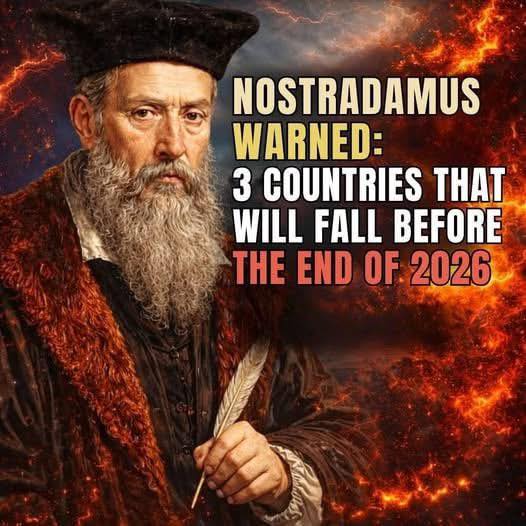
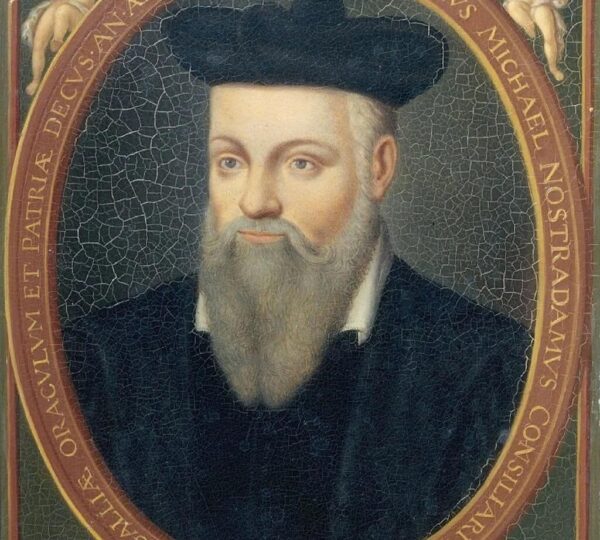
Nostradamus, born Michel de Nostredame in 1503, was a French astrologer, physician, and reputed seer whose work has fascinated generations.
His centuries-old quatrains continue to inspire debate, analysis, and interpretation across multiple cultures and languages. The enduring fascination with Nostradamus is not due to literal accuracy.
Instead, it lies in his poetic and symbolic approach, where metaphors, coded references, and allegorical imagery encourage readers to explore possibilities rather than definitive predictions.
One of the most compelling aspects of his work is how it resonates with contemporary anxieties. Symbols like the weakened eagle, cornered bear, or fading lion correspond to modern global tensions, reflecting collective fears that persist across nations.
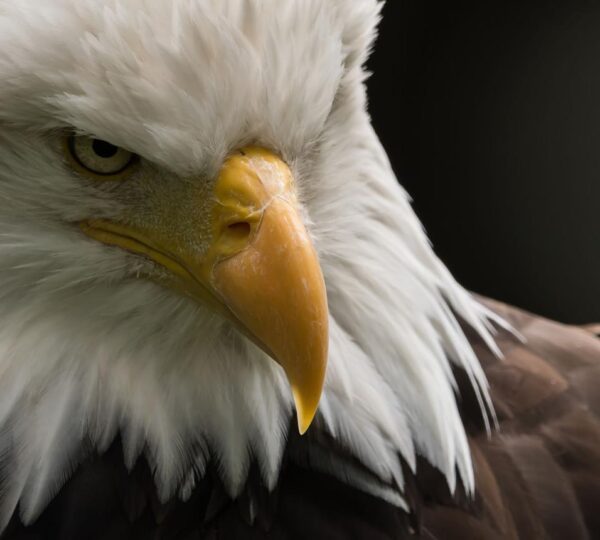
The eagle, often interpreted as a symbol for the United States, evokes ideas of leadership challenges, internal political debate, or uncertainty in international influence. Readers project current events onto these metaphors, seeking connections to contemporary geopolitics.
Similarly, the bear has historically represented Russia in cultural and political allegory. Nostradamus’ imagery of a cornered or struggling bear resonates in times of conflict, sanctions, or diplomatic isolation, offering a symbolic lens for interpreting ongoing international developments.
The fading lion, traditionally linked to Great Britain, echoes questions of identity, national direction, and political uncertainty.
Throughout history, the nation has experienced shifts in global power, governance challenges, and cultural transformation. Nostradamus’ words reflect such ongoing evolution.
It is important to recognize that the quatrains themselves are deliberately opaque. Their phrasing often uses archaic language, ambiguous references, and symbolic metaphors.
This intentional vagueness allows for broad interpretation, encouraging readers to reflect on history and human behavior.
Interpreters have long noted that Nostradamus’ quatrains mirror historical cycles rather than provide fixed prophecies.
Empires rise, experience turmoil, or decline, only to adapt or reinvent themselves, demonstrating recurring patterns of governance, diplomacy, and societal resilience.
The value of Nostradamus’ work, therefore, lies not in predicting specific events with certainty, but in encouraging awareness of trends, risks, and human responses to uncertainty. He acts as a mirror reflecting society’s anxieties and aspirations.
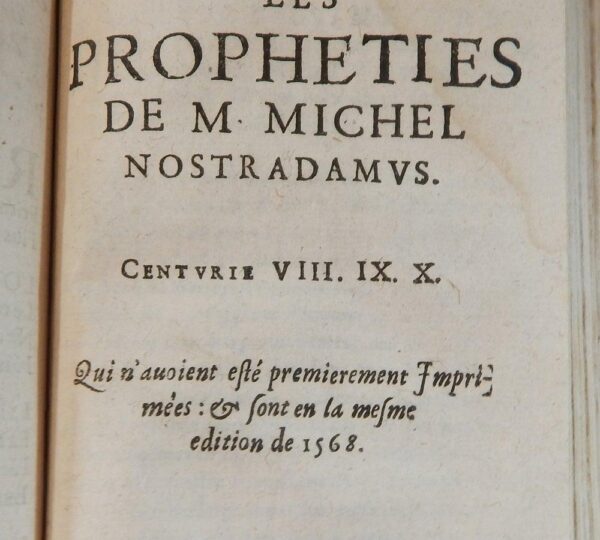
Many modern readers approach his quatrains with curiosity about politics, global conflict, or environmental change. Symbols, rather than rigid forecasts, serve as prompts for critical thought, discussion, and reflection on contemporary challenges.
Nostradamus’ verses invite a psychological exploration of human fear, ambition, and hope. When a society confronts perceived decline or uncertainty, these quatrains serve as a canvas on which fears and expectations are projected, revealing underlying concerns.
Patterns in history often validate such reflections. Wars, alliances, revolutions, and economic upheavals recur across centuries, demonstrating that the symbolic connections in Nostradamus’ work resonate because human behavior tends to repeat under stress and uncertainty.
It is equally important to note that Nostradamus did not intend to dictate destiny. His writing emphasizes potential outcomes and possibilities rather than deterministic events, providing space for human agency and societal choice.
In this sense, the quatrains are less about fixed predictions and more about preparedness. They invite societies and individuals to observe signs, anticipate change, and respond thoughtfully, rather than resign to fear or fatalism.
Nostradamus’ work highlights how perception shapes interpretation. Different readers, depending on culture, context, or current events, may emphasize distinct elements, finding meaning that aligns with their worldview or contemporary concerns.
Historical reinterpretation plays a central role in Nostradamus’ legacy. Scholars and enthusiasts often revisit his quatrains during times of global upheaval, linking imagery to events retrospectively, which underscores their enduring relevance and interpretive flexibility.
The eagle, bear, and lion serve not only as national symbols but as archetypal representations of power, struggle, and resilience. Each image captures qualities of leadership, societal strength, or vulnerability, reflecting patterns recognizable across centuries.
For instance, the imagery of a weakened eagle may prompt reflection on political division, economic challenges, or shifts in influence. Readers are encouraged to consider both internal dynamics and external pressures shaping nations’ trajectories.
Likewise, the cornered bear evokes consideration of isolation, strategic challenges, and resilience in adversity. Observers may see parallels in economic sanctions, military tensions, or diplomatic negotiations affecting countries globally.
The fading lion symbolizes evolution, adaptation, and uncertainty within national identity. It reflects societal questions about relevance, power, and direction, resonating with historical patterns of empire, colonial influence, and post-industrial transformation.
Nostradamus’ power is therefore symbolic and interpretive rather than factual. His work functions as a cultural and historical lens, prompting reflection on how societies respond to crisis, opportunity, and the interplay of internal and external pressures.

Across the centuries, historians, poets, and commentators have drawn lessons from his quatrains. They emphasize understanding patterns, evaluating risk, and recognizing that human behavior—both collective and individual—remains central to outcomes.
Interpreting Nostradamus requires balancing imagination with historical knowledge. Scholars caution against taking quatrains literally; the true insight lies in exploring possibilities, societal dynamics, and recurring patterns rather than expecting exact dates or events.
His imagery resonates because human societies inherently face cycles of conflict, cooperation, and transformation. Observing these cycles allows leaders, citizens, and analysts to learn from the past, apply context, and anticipate challenges without being bound by prophecy.
The quatrains’ ambiguity is a feature, not a flaw. By resisting rigid definitions, Nostradamus encourages critical thinking and reflection, reminding readers that foresight is not certainty, but preparation, observation, and adaptability in uncertain conditions.
Furthermore, the quatrains offer insight into collective psychology. Societies project anxieties onto symbols, finding resonance with present challenges, whether political, economic, or environmental, highlighting shared human concerns and cultural memory.
Patterns revealed in history—conflict, decline, innovation, and renewal—underscore why these symbolic images continue to captivate readers centuries later. Nostradamus’ work encourages awareness rather than fear, understanding rather than resignation.
Modern interpretations often frame his quatrains as mirrors for contemporary anxieties rather than literal forecasts. For example, when political tensions rise or crises emerge, readers may draw parallels, finding meaning in historical symbolism.
The eagle, bear, and lion serve as versatile motifs that accommodate multiple interpretations across time and space, allowing each generation to reflect on power, influence, vulnerability, and opportunity in ways that remain relevant today.
Ultimately, Nostradamus’ quatrains illustrate the interplay between uncertainty and human agency. While events may be unpredictable, societies and individuals retain the ability to shape outcomes, respond to challenges, and adapt to shifting circumstances.
The most profound lesson lies in perspective. These quatrains do not command surrender to fate; instead, they prompt reflection on resilience, foresight, and the cyclical nature of history, encouraging thoughtful engagement with the world.
By examining historical and modern events through the lens of Nostradamus’ symbolic imagery, readers can cultivate awareness, recognizing both the fragility and adaptability inherent in human societies across centuries.
The relevance of his work persists because human fears, ambitions, and responses to crisis remain consistent. Empires, governments, and communities all confront dilemmas of power, stability, and renewal in ways that echo through history.
Nostradamus’ quatrains therefore act as guides to observation rather than predictors of destiny. They underscore the importance of vigilance, adaptability, and understanding patterns in political, social, and cultural life.
While popular culture often sensationalizes his work, the deeper significance is philosophical: it reminds us that history is cyclical, power is temporary, and human agency shapes the unfolding of events more than prophecy ever could.
In times of uncertainty, revisiting these quatrains encourages reflection rather than panic. By interpreting symbols thoughtfully, societies can learn from historical parallels, anticipate challenges, and consider responses to both opportunity and crisis.
This approach fosters a mindset oriented toward awareness and strategic thinking rather than fatalism, reinforcing the notion that awareness of potential outcomes enhances decision-making and societal resilience.
Historical evidence shows that crises, challenges, and periods of instability are often followed by adaptation and renewal. Nostradamus’ imagery subtly highlights this balance between decline and recovery, emphasizing that history is rarely linear.
The quatrains’ continued popularity demonstrates their cultural resonance, reflecting society’s ongoing interest in patterns of power, human behavior, and collective anxieties. They serve as a lens for exploring uncertainty, interpretation, and foresight.
In conclusion, Nostradamus’ legacy is not in predicting exact events but in providing a symbolic framework for contemplating human society. His imagery—weak eagles, cornered bears, fading lions—serves as timeless prompts for reflection and insight.
Through careful interpretation, his work encourages readers to consider historical cycles, recognize patterns, and understand that human choice, resilience, and adaptability remain central to outcomes.
The ultimate lesson from these quatrains is enduring: while crises may appear daunting, awareness, reflection, and preparation empower societies to navigate uncertainty and shape the course of their own history.
