...

My Son, Just 15, Pulled a 4-Year-Old from the Water—The Following Day Brought a Life-Changing Note

When fifteen-year-old Ethan dove into the pool to save a little girl from drowning, no one could have predicted the ripple effect it would create.

Not me, certainly—not on that bright, unremarkable Saturday morning when life seemed perfectly ordinary.

I had thought I knew my son, I had thought I knew our quiet Midwestern town, and I had thought I understood the invisible line between everyday life and the secrets that quietly dwell within it.

But in a single breathless moment, all of that changed.

My name is Eve, and I’m thirty-five. I raise two kids in a town where the grocery store cashier knows your coffee order, where the high school gym smells of decades of sweat, varnish, and memories, and where neighbors wave from porches like clockwork every evening.

Our little neighborhood is predictable, quiet, and comforting in a way that sometimes feels suffocating—but mostly, I love it.

Ethan, my oldest, is fifteen, lanky, and always hungry. He’s a high school sophomore, plays basketball with an intensity that borders on obsession, and works part-time at our local grocery store, where he often convinces customers to donate to the weekly charity posted at the checkout.

He’s funny, occasionally moody, brilliant in ways he doesn’t always realize, and perpetually glued to his phone—except during basketball practice or when he’s half-listening to a podcast he insists is “for school.”

“Are you ever going to look up from that screen?” I asked one evening as we waited at a stoplight, the streetlights casting long shadows over the cracked asphalt.

“I’m reading about carbon emissions, Mom,” he replied without looking up. “The world’s in steady decline.”

“Oh, well,” I murmured, half-teasing, half-defeated. “Carry on, then.”

Then there’s Lily, my seven-year-old whirlwind. She floats through life as if narrating her own fairy tale, dancing more than she walks and somehow convincing every adult she meets that she’s their new best friend.

“Mommy, I wore my shiny sandals so the water can sparkle better,” she said on Saturday morning, swinging her legs at the breakfast table.

“You do know you’re not allowed to wear shoes in the pool, right?” I asked.

“Yes, Mommy,” she said, perfectly serious. “But I think if the water sees my shiny shoes, it will know what to do.”

“That’s some powerful logic, Lil,” I said, tying her hair into crooked pigtails.

The day was already hot, the kind of summer heat that makes you grateful for every patch of shade and any hint of wind.
After errands and the usual morning chaos, we headed to the community pool.

Lily skipped ahead, Ethan trailed behind, and I paused for a moment, taking in the sounds of children’s laughter, the whistle blasts of lifeguards corralling teenagers attempting flips off the diving board, and the smell of chlorine heavy in the air. For a moment, I thought: this is enough. Right here, right now, life is enough.

Then Ethan’s voice split the air.

“Mom! She’s drowning!”

I looked up just in time to see him sprinting toward the deep end. Before I could react, he dove in—fully clothed.

The next few seconds felt suspended in time. A little girl, no more than four, flailed helplessly in the water. Her tiny arms splashed once, then slipped beneath the surface without a sound.

My breath caught in my throat, a cold panic spreading through me.

“Ethan!” I screamed, but he was already cutting through the water, swift and precise, his face set in determination. Within moments, he reached her, cradling her limp body against his chest.

Water streamed from her mouth and nose, and my heart pounded so loudly I could barely hear the lifeguard’s whistle as he ran toward them.

Ethan swam her to the pool’s edge, where the lifeguard helped lift her out. For a terrifying moment, she remained still.

Then she coughed, gasped, and began to wail. Relief and adrenaline hit me all at once.

Her mother came running, hair wild and tears streaming down her face. “Oh my God! That’s my daughter!” she sobbed, scooping Brielle into her arms. “I took my eyes off her for a second… You saved her. You saved my Brielle!”

Ethan climbed out, shivering, and I wrapped him in a towel, holding him tight.

“I just saw her, Mom,” he whispered, chest rising and falling quickly. “No one else did.”

“You’ve raised a hero,” the woman said to me, voice trembling, as if trying to process what had just occurred.

By Sunday, the story of Ethan’s courage had become a small-town legend.

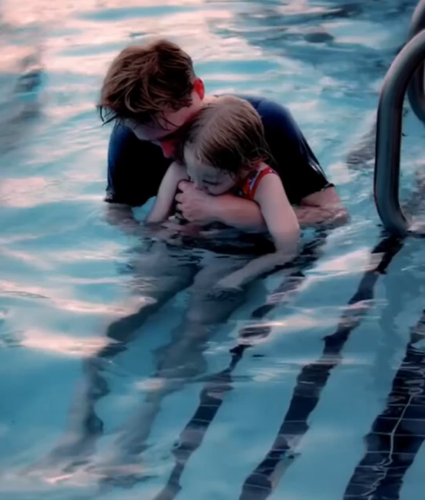
A photo of him cradling Brielle went viral on the local Facebook page, hearts, prayers, and comments flooding in from people we hadn’t heard from in years.

“Your son is a hero, Eve!”

“This brought tears to my eyes. We need more young men like him.”

“He saved a life—what a brave kid!”

Ethan shrugged off the praise. “I just saw her. That’s all,” he kept saying.

But I noticed the way he carried himself, quietly, like he was holding something heavy inside—a sense of responsibility that had been awakened, unbidden, by one small but extraordinary act.

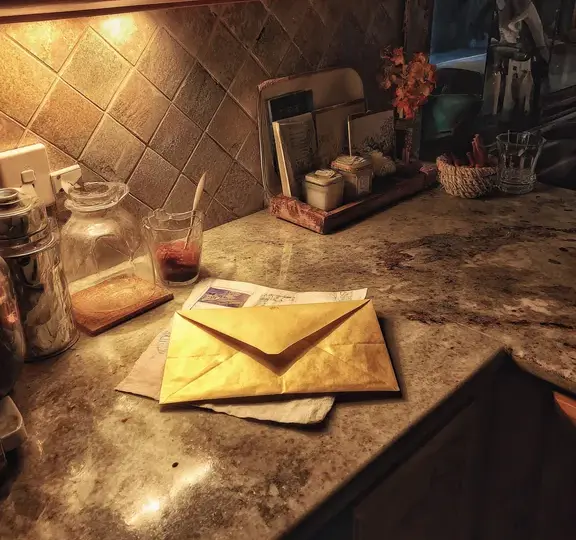
Then, that afternoon, the first note arrived. A simple envelope, resting on our front porch. No one else had been near it. My hands shook slightly as I picked it up.

The handwriting was deliberate and unfamiliar. Inside was a single sheet of paper:

“Come with your son to the only mansion on the outskirts of town, Eve. Today at 5 p.m.”

The mansion was well-known in town, the old stone house on County Road that children dared each other to approach on Halloween.
Its iron gates were perpetually shut, the windows hidden behind slanted shutters and thick ivy. It had a pulse, the neighborhood kids used to say, though no one really knew who lived there.

I showed the note to Ethan, who was elbow-deep in a bag of chips.

“Come with your son to the only mansion,” he read aloud, frowning. “We could go tomorrow?”

“We’ll see,” I said, curiosity already pulling at me.

The next morning, a second note appeared, slipped under the doormat:

“Don’t ignore this. Bring Ethan. 5 p.m. Sharp.”

The urgency was unmistakable. We couldn’t ignore it. That afternoon, after arranging for Lily to stay with Mrs. Connors next door, we drove slowly down County Road.

The mansion rose before us, hidden behind weeping trees and thick vines, looming as though it had been waiting decades for someone to remember it.

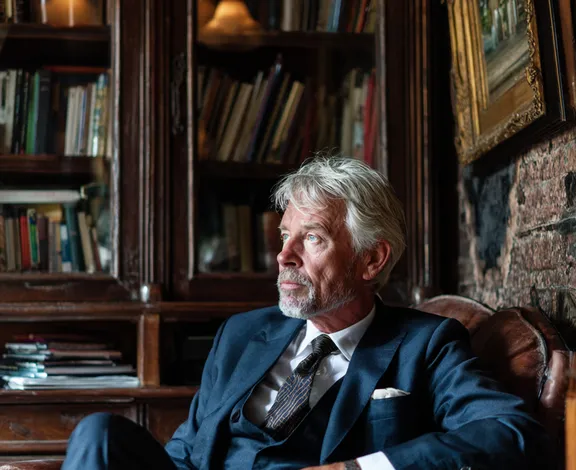
The gates opened as we approached. The gravel crunched under our tires, and I felt a shiver of anticipation—or perhaps fear. A tall, silver-haired man stepped onto the porch, his presence commanding but calm.

“You must be Ethan,” he said, his voice steady, shifting to me, “And you must be his mother.”

Inside, the mansion was pristine, air-conditioned, lined with photographs capturing long-ago smiles frozen in time. It didn’t feel abandoned—it felt paused.

“I’m Jonathan,” he said, eyes steady. “You saved my granddaughter yesterday.”

“Brielle?” I gasped. “Her mother…”

He nodded, expression darkened by grief. “If not for your son, I would have lost her. I’ve already buried too much.”

We followed him into a study lined with books and thick drapes, the scent of cedar and orange peel lingering. The weight of grief and memory pressed gently against the walls.
“My wife died, and I shut the world out. I thought keeping people away would keep the grief in.

But when I saw the photo of your son holding Brielle, I remembered something—family matters. Courage still exists. Kindness hasn’t vanished.”

Ethan stood awkwardly near the bookshelf. “I just saw her, Sir. Anyone would’ve done the same.”

“No,” Jonathan said softly. “Most would have called for help. You acted. That’s why I want to offer your son something—not as payment, but as a gift for what he’s earned.”

Ethan hesitated. “I didn’t do it for anything.”

“Exactly,” Jonathan said. “That’s why you deserve it.”

Before I could respond, a woman entered. Taylor, Brielle’s mother, striking and controlled. Jonathan confronted her: “Your daughter almost drowned because you weren’t paying attention. Neglect isn’t an accident.”

Tears came, apologies were spoken, and a family, fractured by grief, began to heal. Jonathan looked at Ethan. “You’ll always have a friend in me.”

We left as the sun set, gold and tangerine streaking the sky. Ethan was quiet, reflective. “Mom, I didn’t just save Brielle,” he murmured.

“No, honey,” I said, squeezing his hand. “You saved him too.”

At home, the evening returned to ordinary joys: Lily dancing barefoot in pajamas, cookies baking, and the warmth of family filling every corner of our little kitchen.

In that moment, I realized: courage isn’t always public. Sometimes, it’s private, quietly shaping the lives it touches. And sometimes, it comes from the most unexpected places—like a fifteen-year-old boy diving into a pool to save a life.

When fifteen-year-old Ethan dove into the pool to save a little girl from drowning, no one could have predicted the ripple effect it would create.

Not me, certainly—not on that bright, unremarkable Saturday morning when life seemed perfectly ordinary.

I had thought I knew my son, I had thought I knew our quiet Midwestern town, and I had thought I understood the invisible line between everyday life and the secrets that quietly dwell within it.

But in a single breathless moment, all of that changed.

My name is Eve, and I’m thirty-five. I raise two kids in a town where the grocery store cashier knows your coffee order, where the high school gym smells of decades of sweat, varnish, and memories, and where neighbors wave from porches like clockwork every evening.

Our little neighborhood is predictable, quiet, and comforting in a way that sometimes feels suffocating—but mostly, I love it.

Ethan, my oldest, is fifteen, lanky, and always hungry. He’s a high school sophomore, plays basketball with an intensity that borders on obsession, and works part-time at our local grocery store, where he often convinces customers to donate to the weekly charity posted at the checkout.

He’s funny, occasionally moody, brilliant in ways he doesn’t always realize, and perpetually glued to his phone—except during basketball practice or when he’s half-listening to a podcast he insists is “for school.”

“Are you ever going to look up from that screen?” I asked one evening as we waited at a stoplight, the streetlights casting long shadows over the cracked asphalt.

“I’m reading about carbon emissions, Mom,” he replied without looking up. “The world’s in steady decline.”

“Oh, well,” I murmured, half-teasing, half-defeated. “Carry on, then.”

Then there’s Lily, my seven-year-old whirlwind. She floats through life as if narrating her own fairy tale, dancing more than she walks and somehow convincing every adult she meets that she’s their new best friend.

“Mommy, I wore my shiny sandals so the water can sparkle better,” she said on Saturday morning, swinging her legs at the breakfast table.

“You do know you’re not allowed to wear shoes in the pool, right?” I asked.

“Yes, Mommy,” she said, perfectly serious. “But I think if the water sees my shiny shoes, it will know what to do.”

“That’s some powerful logic, Lil,” I said, tying her hair into crooked pigtails.

The day was already hot, the kind of summer heat that makes you grateful for every patch of shade and any hint of wind.

After errands and the usual morning chaos, we headed to the community pool.

Lily skipped ahead, Ethan trailed behind, and I paused for a moment, taking in the sounds of children’s laughter, the whistle blasts of lifeguards corralling teenagers attempting flips off the diving board, and the smell of chlorine heavy in the air. For a moment, I thought: this is enough. Right here, right now, life is enough.

Then Ethan’s voice split the air.

“Mom! She’s drowning!”

I looked up just in time to see him sprinting toward the deep end. Before I could react, he dove in—fully clothed.

The next few seconds felt suspended in time. A little girl, no more than four, flailed helplessly in the water. Her tiny arms splashed once, then slipped beneath the surface without a sound.

My breath caught in my throat, a cold panic spreading through me.

“Ethan!” I screamed, but he was already cutting through the water, swift and precise, his face set in determination. Within moments, he reached her, cradling her limp body against his chest.

Water streamed from her mouth and nose, and my heart pounded so loudly I could barely hear the lifeguard’s whistle as he ran toward them.

Ethan swam her to the pool’s edge, where the lifeguard helped lift her out. For a terrifying moment, she remained still.

Then she coughed, gasped, and began to wail. Relief and adrenaline hit me all at once.

Her mother came running, hair wild and tears streaming down her face. “Oh my God! That’s my daughter!” she sobbed, scooping Brielle into her arms. “I took my eyes off her for a second… You saved her. You saved my Brielle!”

Ethan climbed out, shivering, and I wrapped him in a towel, holding him tight.

“I just saw her, Mom,” he whispered, chest rising and falling quickly. “No one else did.”

“You’ve raised a hero,” the woman said to me, voice trembling, as if trying to process what had just occurred.

By Sunday, the story of Ethan’s courage had become a small-town legend.

A photo of him cradling Brielle went viral on the local Facebook page, hearts, prayers, and comments flooding in from people we hadn’t heard from in years.

“Your son is a hero, Eve!”

“This brought tears to my eyes. We need more young men like him.”

“He saved a life—what a brave kid!”

Ethan shrugged off the praise. “I just saw her. That’s all,” he kept saying.

But I noticed the way he carried himself, quietly, like he was holding something heavy inside—a sense of responsibility that had been awakened, unbidden, by one small but extraordinary act.

Then, that afternoon, the first note arrived. A simple envelope, resting on our front porch. No one else had been near it. My hands shook slightly as I picked it up.

The handwriting was deliberate and unfamiliar. Inside was a single sheet of paper:

“Come with your son to the only mansion on the outskirts of town, Eve. Today at 5 p.m.”

The mansion was well-known in town, the old stone house on County Road that children dared each other to approach on Halloween.

Its iron gates were perpetually shut, the windows hidden behind slanted shutters and thick ivy. It had a pulse, the neighborhood kids used to say, though no one really knew who lived there.

I showed the note to Ethan, who was elbow-deep in a bag of chips.

“Come with your son to the only mansion,” he read aloud, frowning. “We could go tomorrow?”

“We’ll see,” I said, curiosity already pulling at me.

The next morning, a second note appeared, slipped under the doormat:

“Don’t ignore this. Bring Ethan. 5 p.m. Sharp.”

The urgency was unmistakable. We couldn’t ignore it. That afternoon, after arranging for Lily to stay with Mrs. Connors next door, we drove slowly down County Road.

The mansion rose before us, hidden behind weeping trees and thick vines, looming as though it had been waiting decades for someone to remember it.

The gates opened as we approached. The gravel crunched under our tires, and I felt a shiver of anticipation—or perhaps fear. A tall, silver-haired man stepped onto the porch, his presence commanding but calm.

“You must be Ethan,” he said, his voice steady, shifting to me, “And you must be his mother.”

Inside, the mansion was pristine, air-conditioned, lined with photographs capturing long-ago smiles frozen in time. It didn’t feel abandoned—it felt paused.

“I’m Jonathan,” he said, eyes steady. “You saved my granddaughter yesterday.”

“Brielle?” I gasped. “Her mother…”

He nodded, expression darkened by grief. “If not for your son, I would have lost her. I’ve already buried too much.”

We followed him into a study lined with books and thick drapes, the scent of cedar and orange peel lingering. The weight of grief and memory pressed gently against the walls.

“My wife died, and I shut the world out. I thought keeping people away would keep the grief in.

But when I saw the photo of your son holding Brielle, I remembered something—family matters. Courage still exists. Kindness hasn’t vanished.”

Ethan stood awkwardly near the bookshelf. “I just saw her, Sir. Anyone would’ve done the same.”

“No,” Jonathan said softly. “Most would have called for help. You acted. That’s why I want to offer your son something—not as payment, but as a gift for what he’s earned.”

Ethan hesitated. “I didn’t do it for anything.”

“Exactly,” Jonathan said. “That’s why you deserve it.”

Before I could respond, a woman entered. Taylor, Brielle’s mother, striking and controlled. Jonathan confronted her: “Your daughter almost drowned because you weren’t paying attention. Neglect isn’t an accident.”

Tears came, apologies were spoken, and a family, fractured by grief, began to heal. Jonathan looked at Ethan. “You’ll always have a friend in me.”

We left as the sun set, gold and tangerine streaking the sky. Ethan was quiet, reflective. “Mom, I didn’t just save Brielle,” he murmured.

“No, honey,” I said, squeezing his hand. “You saved him too.”

At home, the evening returned to ordinary joys: Lily dancing barefoot in pajamas, cookies baking, and the warmth of family filling every corner of our little kitchen.

In that moment, I realized: courage isn’t always public. Sometimes, it’s private, quietly shaping the lives it touches. And sometimes, it comes from the most unexpected places—like a fifteen-year-old boy diving into a pool to save a life.