“My Husband Prioritized a Vacation for His Mother Over Buying a Washer — What Happened Next Left Him Stunned”
Six months after welcoming our first baby, life had become an intricate, exhausting web of sleepless nights, constant feedings, diaper changes, and mountains of laundry that seemed to grow faster than I could keep up. Every day felt like a tightrope walk between caring for our newborn, maintaining some semblance of order in our home, and preserving my own fragile energy and sanity. What I had imagined as joyful, manageable early months of parenthood turned into a relentless cycle of tasks that left me physically drained and emotionally stretched thin. One morning, the final straw arrived: our washing machine stopped working completely. I felt a pang of frustration that bordered on despair.
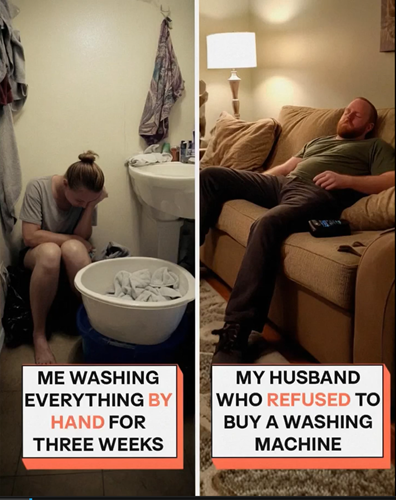
Laundry had always been a constant chore, but now, with a newborn who could go through multiple outfits and blankets in a single day, the idea of washing everything by hand felt overwhelming, almost impossible. I quietly approached my husband, Billy, hoping he would immediately understand how heavy the load had become. Instead, he casually suggested that I wash everything by hand, reminding me that “people used to do it for centuries.” His words, though likely intended as a simple observation, hit me harder than I expected. It wasn’t just about the effort; it was about feeling unseen and undervalued in a period of life where exhaustion was my constant companion.
Then came the blow that truly stunned me: Billy explained he couldn’t buy a new washing machine yet because he had promised to fund a vacation for his mother. At that moment, a mixture of disappointment, frustration, and hurt overwhelmed me. I understood the importance of family obligations, but after months of near-constant childcare and household labor, the thought that my daily struggle came second to a vacation plan made me feel invisible. I tried to maintain composure, reminding myself that this wasn’t a fight I needed to escalate, and reluctantly began hand-washing the laundry.
Days passed, and the toll on my body and mind quickly became apparent. My hands became raw, my back ached with each bend and lift, and my energy levels plummeted. Meanwhile, Billy seemed completely oblivious to the physical and emotional strain I was enduring. He continued his daily routines, watching TV, reading, or working without offering assistance or even asking how I was coping. That lack of awareness only heightened my sense of isolation. I realized that perhaps words alone wouldn’t communicate the weight of my exhaustion; I needed a more tangible way to help him understand.
One morning, after another grueling night of minimal sleep and relentless chores, I decided to take a gentle, symbolic approach. I packed a lunch for Billy, but instead of food, I filled it with small stones and attached a lighthearted note: “If I can wash clothes the old-fashioned way, you can gather your food the old-fashioned way too.” It wasn’t meant to punish him or provoke anger—it was a playful, tangible way to help him feel, even just a little, the physical labor and frustration I had been navigating daily.
When he arrived home and discovered the unusual contents of his lunch, he looked bewildered and slightly frustrated. That evening, we finally sat down for a long, honest conversation. I shared, with calm sincerity, the depth of my exhaustion, the cumulative strain of childcare, household tasks, and the broken washing machine. I explained how unseen and unacknowledged I had felt and how this lack of support impacted not just my physical health but my emotional well-being. To my relief, Billy listened. He admitted that he hadn’t fully understood the extent of my burden, acknowledging that while he had not intended to dismiss my efforts, his focus on fulfilling a promise to his mother had inadvertently overshadowed the reality of our daily life.
The next morning, Billy left the house early and returned with a brand-new washing machine. He installed it himself, carefully setting it up and ensuring everything worked perfectly. He looked at me quietly and said, “I understand now.” That simple statement carried immense weight. It wasn’t just about laundry—it symbolized empathy, recognition, and partnership. It reflected the understanding that marriage, especially in the exhausting early stages of parenthood, requires active listening, shared responsibility, and mutual respect.
In the days that followed, we both reflected on what had transpired. I realized that frustration and exhaustion can often create communication gaps, and sometimes, creative approaches are necessary to help partners truly understand one another. Billy, in turn, learned that support isn’t just about intentions or promises—it’s about noticing the realities your partner faces and acting to share the load. That washing machine, mundane as it might seem, became a symbol of growth in our relationship, a reminder that empathy and practical action often speak louder than words alone.
Looking back, I can see that this experience shaped both of us. It reminded me that while parenthood can be isolating and exhausting, partnership and communication can transform those challenges into opportunities for growth. It reinforced the importance of asking for help, setting boundaries, and using creativity and humor to navigate tension. For Billy, it was a moment of learning empathy and truly seeing the unseen work his partner was doing every day.
Now, months later, the washing machine hums quietly in the laundry room, a constant reminder not only of its utility but also of the lessons it brought into our lives. Marriage is rarely flawless, but it thrives on shared responsibility, mutual understanding, and active participation in each other’s struggles. That small appliance embodies a much larger truth: love is shown through action, empathy, and support, especially when life feels most overwhelming. It also reminds us that humor, creativity, and patience can bridge gaps where words sometimes fail.
Even today, when I watch Billy help with the baby, fold laundry, or carry out household chores without prompting, I see the difference. That washing machine wasn’t just a solution to a domestic problem—it became a catalyst for deeper understanding, teamwork, and the nurturing of a relationship that continues to grow stronger amidst the chaos of life with a newborn.
It’s a story of exhaustion, miscommunication, gentle teaching, and ultimately, growth—a story that shows that partnership in marriage isn’t just about sharing the good times but about supporting each other through the messy, challenging, and ordinary moments of daily life. And sometimes, the smallest gestures—a lunchbox filled with stones, a new washing machine, a quiet acknowledgment—can become the most powerful lessons in empathy, patience, and love.
Six months after welcoming our first baby, life had become an intricate, exhausting web of sleepless nights, constant feedings, diaper changes, and mountains of laundry that seemed to grow faster than I could keep up. Every day felt like a tightrope walk between caring for our newborn, maintaining some semblance of order in our home, and preserving my own fragile energy and sanity. What I had imagined as joyful, manageable early months of parenthood turned into a relentless cycle of tasks that left me physically drained and emotionally stretched thin. One morning, the final straw arrived: our washing machine stopped working completely. I felt a pang of frustration that bordered on despair.
Laundry had always been a constant chore, but now, with a newborn who could go through multiple outfits and blankets in a single day, the idea of washing everything by hand felt overwhelming, almost impossible. I quietly approached my husband, Billy, hoping he would immediately understand how heavy the load had become. Instead, he casually suggested that I wash everything by hand, reminding me that “people used to do it for centuries.” His words, though likely intended as a simple observation, hit me harder than I expected. It wasn’t just about the effort; it was about feeling unseen and undervalued in a period of life where exhaustion was my constant companion.
Then came the blow that truly stunned me: Billy explained he couldn’t buy a new washing machine yet because he had promised to fund a vacation for his mother. At that moment, a mixture of disappointment, frustration, and hurt overwhelmed me. I understood the importance of family obligations, but after months of near-constant childcare and household labor, the thought that my daily struggle came second to a vacation plan made me feel invisible. I tried to maintain composure, reminding myself that this wasn’t a fight I needed to escalate, and reluctantly began hand-washing the laundry.
Days passed, and the toll on my body and mind quickly became apparent. My hands became raw, my back ached with each bend and lift, and my energy levels plummeted. Meanwhile, Billy seemed completely oblivious to the physical and emotional strain I was enduring. He continued his daily routines, watching TV, reading, or working without offering assistance or even asking how I was coping. That lack of awareness only heightened my sense of isolation. I realized that perhaps words alone wouldn’t communicate the weight of my exhaustion; I needed a more tangible way to help him understand.
One morning, after another grueling night of minimal sleep and relentless chores, I decided to take a gentle, symbolic approach. I packed a lunch for Billy, but instead of food, I filled it with small stones and attached a lighthearted note: “If I can wash clothes the old-fashioned way, you can gather your food the old-fashioned way too.” It wasn’t meant to punish him or provoke anger—it was a playful, tangible way to help him feel, even just a little, the physical labor and frustration I had been navigating daily.
When he arrived home and discovered the unusual contents of his lunch, he looked bewildered and slightly frustrated. That evening, we finally sat down for a long, honest conversation. I shared, with calm sincerity, the depth of my exhaustion, the cumulative strain of childcare, household tasks, and the broken washing machine. I explained how unseen and unacknowledged I had felt and how this lack of support impacted not just my physical health but my emotional well-being. To my relief, Billy listened. He admitted that he hadn’t fully understood the extent of my burden, acknowledging that while he had not intended to dismiss my efforts, his focus on fulfilling a promise to his mother had inadvertently overshadowed the reality of our daily life.
The next morning, Billy left the house early and returned with a brand-new washing machine. He installed it himself, carefully setting it up and ensuring everything worked perfectly. He looked at me quietly and said, “I understand now.” That simple statement carried immense weight. It wasn’t just about laundry—it symbolized empathy, recognition, and partnership. It reflected the understanding that marriage, especially in the exhausting early stages of parenthood, requires active listening, shared responsibility, and mutual respect.
In the days that followed, we both reflected on what had transpired. I realized that frustration and exhaustion can often create communication gaps, and sometimes, creative approaches are necessary to help partners truly understand one another. Billy, in turn, learned that support isn’t just about intentions or promises—it’s about noticing the realities your partner faces and acting to share the load. That washing machine, mundane as it might seem, became a symbol of growth in our relationship, a reminder that empathy and practical action often speak louder than words alone.
Looking back, I can see that this experience shaped both of us. It reminded me that while parenthood can be isolating and exhausting, partnership and communication can transform those challenges into opportunities for growth. It reinforced the importance of asking for help, setting boundaries, and using creativity and humor to navigate tension. For Billy, it was a moment of learning empathy and truly seeing the unseen work his partner was doing every day.
Now, months later, the washing machine hums quietly in the laundry room, a constant reminder not only of its utility but also of the lessons it brought into our lives. Marriage is rarely flawless, but it thrives on shared responsibility, mutual understanding, and active participation in each other’s struggles. That small appliance embodies a much larger truth: love is shown through action, empathy, and support, especially when life feels most overwhelming. It also reminds us that humor, creativity, and patience can bridge gaps where words sometimes fail.
Even today, when I watch Billy help with the baby, fold laundry, or carry out household chores without prompting, I see the difference. That washing machine wasn’t just a solution to a domestic problem—it became a catalyst for deeper understanding, teamwork, and the nurturing of a relationship that continues to grow stronger amidst the chaos of life with a newborn.
It’s a story of exhaustion, miscommunication, gentle teaching, and ultimately, growth—a story that shows that partnership in marriage isn’t just about sharing the good times but about supporting each other through the messy, challenging, and ordinary moments of daily life. And sometimes, the smallest gestures—a lunchbox filled with stones, a new washing machine, a quiet acknowledgment—can become the most powerful lessons in empathy, patience, and love.