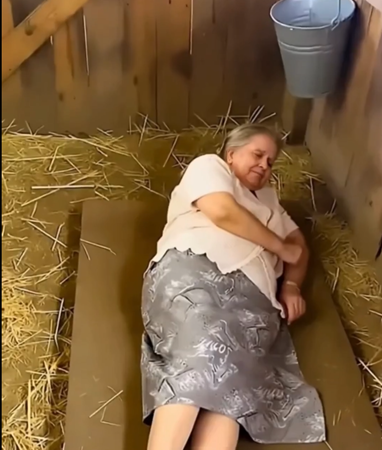
My Daughter-in-Law Forced Me Out of My House and Into an Old Barn—She Had No Idea What I Had Planned
I always believed heartbreak would be the hardest trial life could throw at me — until I found myself sleeping on a damp.
Moldy yoga mat in a freezing barn while my daughter-in-law threw loud, extravagant parties in the home my late husband and I had built from scratch.
At 75 years old, I’ve learned that the most insidious kind of evil doesn’t come with horns or fangs.
It often walks into your life wearing designer heels, with perfectly manicured nails, expensive handbags, and a practiced, charming smile that hides ruthless calculation.
My name is Dahlia Hayworth. I’ve lived in the same farmhouse just outside of Lancaster, Ohio, since I was 24.

My late husband, George, and I poured every ounce of our energy into that house. We built it from the foundation up, room by room, nail by nail.
It wasn’t grand or luxurious, but it was sturdy — built to last, like the love between us.
I still remember those sweltering July afternoons: George shirtless, covered in sweat and determination, mixing cement by hand, while I wore his old flannel shirts, hammering nails until my fingers were raw and bleeding.
The sun beat down on our shoulders, but we didn’t care.
Every corner of that house carries the imprint of our love — the laughter, the arguments, the tears, and the dreams we nurtured together.
Our world revolved around our son, Adam. He inherited George’s quiet patience and my fiery determination.
He was a good man, the kind who would stop everything to help a neighbor with a flat tire or shovel a path through winter snow.
When Adam introduced us to Tara, I wanted to like her. I truly did. I wanted her to be a part of our family, to care for Adam as deeply as we did.
But from the very beginning, something about her felt… off.
She was polished and confident, in her early 30s, the kind of woman whose beauty seemed deliberate and calculated.

Hair that fell perfectly, makeup that never smudged, nails so flawless they probably cost more than my weekly groceries.
She hugged me too tightly the first night we met, called me “Mom” almost immediately, and smiled with teeth that never reached her eyes. It was all too precise, too rehearsed, and I felt it in my bones.
The first dinner together confirmed my unease. She barked orders at the waitress over trivial things, brushed aside my homemade cherry pie with a flippant, “I don’t eat dessert.
Some of us have to watch our figures.” George gave me a look I’d come to know well over decades — a mixture of warning and helplessness.
That night, as we did the dishes together, he whispered, “That girl likes herself more than she’ll ever love our boy.” I nodded, though I wanted to believe otherwise.
We kept smiling, kept the peace. Adam’s happiness mattered more than our intuition. He married her two years later.
They purchased a modest three-bedroom house near Columbus — Adam paid most of it, though Tara never failed to remind anyone of how “perfect” she had made it.
At first, we tolerated her behavior, thinking she’d mellow over time. But her entitlement only grew.
Then tragedy struck. Three years ago, my life shattered in a single phone call. Adam had collapsed at work from a massive heart attack. He was only 41.
The world spun around me as I heard the news. I remember nothing of the drive to the hospital, only George’s hand in mine, cold and trembling, and the sterile, suffocating smell of the emergency waiting room.
Tara arrived shortly after, in oversized designer sunglasses and carrying a handbag that seemed to scream wealth over compassion.
She cried loudly for ten minutes and then, almost immediately, returned to scrolling her phone.
At Adam’s funeral, I stood frozen, my hands gripping the casket’s edge, while Tara whispered questions to the funeral director: “Are these premium flowers or just the basic package?”
Each word felt like a knife to my chest. George and I flinched silently, understanding the true nature of her callousness.
Two months later, George passed away. They said it was heart failure, but I knew better. He died of a broken heart.
The light left his eyes the day we buried Adam. After that, I withdrew from the world entirely — no calls, no visitors, barely leaving the porch.
I spoke only to the shadows of the apple trees George and I had planted together, mourning in silence.
Then, one cold November evening, Tara appeared at the door, as if she owned the place — which, in her mind, she already did.

She carried a suitcase in one hand, a half-empty bottle of wine in the other, and smiled with casual, practiced charm.
“Hey, Mom,” she said. “Rough year, huh? I sold the house. Too many memories.”
I froze. “You sold Adam’s house?”
“Well, technically, it was mine after he died,” she said, stepping in uninvited, immediately making herself at home.
She poured wine, turned on the TV, rearranged furniture, and hosted “girls’ nights” that shook the walls late into the night.
Beer cans littered my rose garden, music blared through the halls, and I was forced to live in silence, my spirit bruised.
Weeks turned into months of torment. Tara escalated her control: she tried to access George’s old desk, forced mail and documents, and even forged checks.
She justified her actions with a syrupy explanation of “helping the family,” but I knew the truth — she wanted power, control, and possession.
I was trapped in the drafty, unheated barn behind our property, enduring cold, mildew, aching joints, and the constant weight of humiliation.
I watched helplessly as the home George and I had built, every wall infused with love, was desecrated.
Laughter and music invaded rooms that once held our family’s warmth.
Neighbors were deceived into believing she was the helpful daughter-in-law, while I became the “crazy old lady in the barn.”
Then, one evening, the chaos reached a dangerous peak. Tara’s so-called “comeback party” spiraled out of control — fireworks, alcohol, and eventually smoke.
Flames licked the curtains, threatening the house itself. Barefoot in the cold, I screamed for her.
She emerged, mascara running, vodka bottle in hand, screaming, “My house!” as the structure burned.

Firefighters arrived too late to prevent damage. Yet she had the audacity to claim ownership.
But she was wrong. The house was still in my name. She could forge documents and redirect mail, but she could not change the deed.
When she tried to file an insurance claim, it was denied. The legal owner, me, was covered.
I felt the weight lift from my chest. Justice, however small, had returned.
Finally, the sheriff delivered her eviction notice. I watched from the barn as she packed her belongings, muttering curses, leaving silently without acknowledgment.
The neighbors observed quietly, understanding without speaking. Silence returned — not emptiness, but relief.
In the following months, the insurance company rebuilt the house. Fresh paint, new windows, a new roof, and George’s beloved porch swing returned.
Stepping inside, I felt life returning — love, memories, and warmth restored.
A letter arrived soon after — unsigned, shaky handwriting, a brief apology.
I knew without doubt it was from her. Forgiveness, I learned, is not about the offender. It is about freeing your own soul.
Now, each morning, I sit on the porch with a warm cup of coffee, watching the apple trees bloom.
The barn stands behind me, a silent monument to hardship survived. Each evening, I walk through the house, check the windows, lock the doors, and whisper softly, “You’re safe now.
She’s gone.” And for the first time in decades, I feel peace.
I always believed heartbreak would be the hardest trial life could throw at me — until I found myself sleeping on a damp.
Moldy yoga mat in a freezing barn while my daughter-in-law threw loud, extravagant parties in the home my late husband and I had built from scratch.
At 75 years old, I’ve learned that the most insidious kind of evil doesn’t come with horns or fangs.
It often walks into your life wearing designer heels, with perfectly manicured nails, expensive handbags, and a practiced, charming smile that hides ruthless calculation.
My name is Dahlia Hayworth. I’ve lived in the same farmhouse just outside of Lancaster, Ohio, since I was 24.
My late husband, George, and I poured every ounce of our energy into that house. We built it from the foundation up, room by room, nail by nail.
It wasn’t grand or luxurious, but it was sturdy — built to last, like the love between us.
I still remember those sweltering July afternoons: George shirtless, covered in sweat and determination, mixing cement by hand, while I wore his old flannel shirts, hammering nails until my fingers were raw and bleeding.
The sun beat down on our shoulders, but we didn’t care.
Every corner of that house carries the imprint of our love — the laughter, the arguments, the tears, and the dreams we nurtured together.
Our world revolved around our son, Adam. He inherited George’s quiet patience and my fiery determination.
He was a good man, the kind who would stop everything to help a neighbor with a flat tire or shovel a path through winter snow.
When Adam introduced us to Tara, I wanted to like her. I truly did. I wanted her to be a part of our family, to care for Adam as deeply as we did.
But from the very beginning, something about her felt… off.
She was polished and confident, in her early 30s, the kind of woman whose beauty seemed deliberate and calculated.
Hair that fell perfectly, makeup that never smudged, nails so flawless they probably cost more than my weekly groceries.
She hugged me too tightly the first night we met, called me “Mom” almost immediately, and smiled with teeth that never reached her eyes. It was all too precise, too rehearsed, and I felt it in my bones.
The first dinner together confirmed my unease. She barked orders at the waitress over trivial things, brushed aside my homemade cherry pie with a flippant, “I don’t eat dessert.
Some of us have to watch our figures.” George gave me a look I’d come to know well over decades — a mixture of warning and helplessness.
That night, as we did the dishes together, he whispered, “That girl likes herself more than she’ll ever love our boy.” I nodded, though I wanted to believe otherwise.
We kept smiling, kept the peace. Adam’s happiness mattered more than our intuition. He married her two years later.
They purchased a modest three-bedroom house near Columbus — Adam paid most of it, though Tara never failed to remind anyone of how “perfect” she had made it.
At first, we tolerated her behavior, thinking she’d mellow over time. But her entitlement only grew.
Then tragedy struck. Three years ago, my life shattered in a single phone call. Adam had collapsed at work from a massive heart attack. He was only 41.
The world spun around me as I heard the news. I remember nothing of the drive to the hospital, only George’s hand in mine, cold and trembling, and the sterile, suffocating smell of the emergency waiting room.
Tara arrived shortly after, in oversized designer sunglasses and carrying a handbag that seemed to scream wealth over compassion.
She cried loudly for ten minutes and then, almost immediately, returned to scrolling her phone.
At Adam’s funeral, I stood frozen, my hands gripping the casket’s edge, while Tara whispered questions to the funeral director: “Are these premium flowers or just the basic package?”
Each word felt like a knife to my chest. George and I flinched silently, understanding the true nature of her callousness.
Two months later, George passed away. They said it was heart failure, but I knew better. He died of a broken heart.
The light left his eyes the day we buried Adam. After that, I withdrew from the world entirely — no calls, no visitors, barely leaving the porch.
I spoke only to the shadows of the apple trees George and I had planted together, mourning in silence.
Then, one cold November evening, Tara appeared at the door, as if she owned the place — which, in her mind, she already did.
She carried a suitcase in one hand, a half-empty bottle of wine in the other, and smiled with casual, practiced charm.
“Hey, Mom,” she said. “Rough year, huh? I sold the house. Too many memories.”
I froze. “You sold Adam’s house?”
“Well, technically, it was mine after he died,” she said, stepping in uninvited, immediately making herself at home.
She poured wine, turned on the TV, rearranged furniture, and hosted “girls’ nights” that shook the walls late into the night.
Beer cans littered my rose garden, music blared through the halls, and I was forced to live in silence, my spirit bruised.
Weeks turned into months of torment. Tara escalated her control: she tried to access George’s old desk, forced mail and documents, and even forged checks.
She justified her actions with a syrupy explanation of “helping the family,” but I knew the truth — she wanted power, control, and possession.
I was trapped in the drafty, unheated barn behind our property, enduring cold, mildew, aching joints, and the constant weight of humiliation.
I watched helplessly as the home George and I had built, every wall infused with love, was desecrated.
Laughter and music invaded rooms that once held our family’s warmth.
Neighbors were deceived into believing she was the helpful daughter-in-law, while I became the “crazy old lady in the barn.”
Then, one evening, the chaos reached a dangerous peak. Tara’s so-called “comeback party” spiraled out of control — fireworks, alcohol, and eventually smoke.
Flames licked the curtains, threatening the house itself. Barefoot in the cold, I screamed for her.
She emerged, mascara running, vodka bottle in hand, screaming, “My house!” as the structure burned.
Firefighters arrived too late to prevent damage. Yet she had the audacity to claim ownership.
But she was wrong. The house was still in my name. She could forge documents and redirect mail, but she could not change the deed.
When she tried to file an insurance claim, it was denied. The legal owner, me, was covered.
I felt the weight lift from my chest. Justice, however small, had returned.
Finally, the sheriff delivered her eviction notice. I watched from the barn as she packed her belongings, muttering curses, leaving silently without acknowledgment.
The neighbors observed quietly, understanding without speaking. Silence returned — not emptiness, but relief.
In the following months, the insurance company rebuilt the house. Fresh paint, new windows, a new roof, and George’s beloved porch swing returned.
Stepping inside, I felt life returning — love, memories, and warmth restored.
A letter arrived soon after — unsigned, shaky handwriting, a brief apology.
I knew without doubt it was from her. Forgiveness, I learned, is not about the offender. It is about freeing your own soul.
Now, each morning, I sit on the porch with a warm cup of coffee, watching the apple trees bloom.
The barn stands behind me, a silent monument to hardship survived. Each evening, I walk through the house, check the windows, lock the doors, and whisper softly, “You’re safe now.
She’s gone.” And for the first time in decades, I feel peace.


