

For most of her life, Paris Jackson has navigated the complex legacy of being the daughter of one of the world’s most famous performers. Her experiences are inseparable from the public scrutiny that has followed her family for decades, shaping her childhood and early adulthood.
Before she could define herself, the world had already formed opinions about her father, Michael Jackson, and the family he left behind.
Millions saw him as a global phenomenon, but Paris experienced him in deeply personal ways no audience ever could.
To the public, her father was larger than life: a musical innovator, chart-topping artist, and cultural icon who dominated stages and inspired millions worldwide.
Yet behind the headlines, cameras, and endless scrutiny, there was a private man—a father and human being who carried burdens few could imagine.

Paris has chosen to speak about that private version, highlighting moments of humanity that rarely appeared in public. Her perspective does not aim to erase controversy or rewrite history, but rather to provide context and insight into the man she knew intimately.
She recalls her father not through statistics or awards but through small, human moments: quiet mornings making breakfast, sharing advice privately, or attempting to provide normalcy in a life dominated by spectacle. These memories define her connection with him more than fame ever could.
Michael Jackson’s childhood was marked by immense pressure and early responsibility. From a young age, he was pushed toward perfection and extraordinary achievement, expectations that expanded and intensified as his fame grew. Paris describes this without judgment, emphasizing the cost of such relentless scrutiny.
Fame brought her father opportunities but also isolation and constant public evaluation. Paris highlights how the demands of success prevented him from experiencing ordinary childhood pleasures or adult freedoms that most take for granted. She frames this reality with clarity, not anger.
She acknowledges the controversies surrounding him—the allegations, media narratives, and documentaries—recognizing them as part of the public story. Her approach does not seek to deny these events, but to distinguish between public perception and personal experience.
“Everyone has their truth,” she has said, reflecting the multiplicity of perspectives surrounding her father. This acknowledgment is not agreement or disagreement but an assertion that lived experience often diverges from public narrative.
Paris remembers her father’s quiet acts of care—those fleeting, intimate moments invisible to cameras. They include teaching her lessons about kindness, creativity, and resilience, moments she describes as fundamental to her understanding of him.
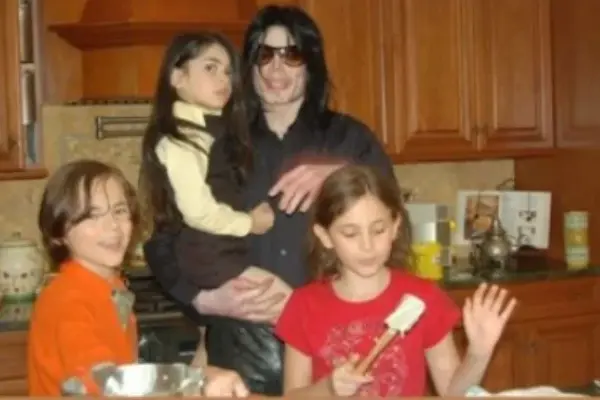
Her childhood was far from ordinary. Growing up behind security gates and layers of protection was often misunderstood by the public, interpreted as eccentricity or over-caution. Yet from her perspective, it was an act of parental care, shielding children from the invasive scrutiny her father had endured.
This protective environment, however, could not last forever. Losing her father at the age of eleven changed everything, combining profound grief with the inescapable glare of public attention, a mixture that complicated mourning and personal healing.
Paris has shared how overwhelming this period was, explaining that grief was intensified by media coverage, speculation, and relentless scrutiny that turned private sorrow into public spectacle. Navigating this pressure demanded resilience beyond her years.
She struggled not only with loss but also with the weight of expectations attached to her family name. To survive emotionally, she realized she needed to reclaim her identity independently, shaping a sense of self that was distinct from the shadows of fame.
Over time, Paris cultivated her own voice and direction through creative expression, music, and personal growth. She consciously avoided replicating her father’s career, choosing a path that allowed authentic self-expression while maintaining connection to her heritage.
This journey required setbacks, reflection, and confronting both public perception and private reality. Gradually, she established balance—honoring her father’s influence while asserting her individuality, cultivating a life guided by her own choices rather than external pressure.
Central to her reflections are the lessons she associates with her father: kindness, creativity, empathy, and the importance of maintaining grace despite chaos. She credits him with instilling values that transcend fame, focusing on human decency rather than public acclaim.

“He wasn’t perfect,” Paris has openly acknowledged. By stating this, she situates him in a human context, neither idolizing nor condemning him, but portraying a figure capable of both immense strength and vulnerability.
This nuanced view challenges the polarized narratives often portrayed in media, highlighting that behind every public icon exists a personal reality that cannot be reduced to headlines or controversies.
Paris emphasizes that her message is not a defense of Michael Jackson’s public image but a reclamation of her personal memories and understanding of him. It is a way to preserve the private, human dimensions of his life amidst global scrutiny.
She underscores the distinction between legend and father, explaining that the man who guided, taught, and cared for her existed outside the spotlight, in ways that most of the world could never witness or fully comprehend.
Her experience demonstrates the complexity of growing up in fame’s shadow. The world’s fascination with celebrity can distort reality, and Paris’s reflections serve to humanize a figure often portrayed solely through spectacle, criticism, or myth.
She shares that private moments—like early morning conversations, laughter over small jokes, or quiet lessons—remain vivid to her, shaping her understanding of family, love, and personal integrity.
Her father’s efforts to protect his children reflected his awareness of fame’s potential harms. Paris credits him with attempting to provide stability, safety, and normalcy in a life that otherwise offered constant attention and intrusion.

Despite these protections, the loss she experienced at eleven was compounded by public exposure. Paris recalls the difficulty of grieving in front of cameras, with constant commentary and speculation invading deeply personal emotions.
Navigating this environment required emotional depth, reflection, and ultimately a conscious effort to define her own identity apart from her father’s legacy. She pursued creative avenues to express herself authentically, exploring music, acting, and personal projects.
Paris’s narrative emphasizes resilience, illustrating how she transformed grief and scrutiny into opportunities for self-discovery and independent growth. This process highlights her maturity and strength despite challenging circumstances.
She communicates a desire to honor her father not by replicating fame but by carrying forward principles he valued: empathy, intentionality, and creative engagement with the world. These values provide a framework for her personal and professional life.
Throughout her reflections, Paris underscores that public controversy and media narratives only tell part of the story. Private experience, intimate memories, and personal relationships reveal dimensions invisible to global audiences.
She conveys that these private experiences shaped not only her view of her father but also her own development, guiding her approach to life, relationships, and creative expression.
Paris stresses that understanding her father requires balancing admiration for achievements with recognition of the human cost of fame, pressure, and public scrutiny. It is this balance that informs her perspective and storytelling.
Her willingness to share these insights brings nuance to discussions that often focus solely on extremes: idolization, condemnation, or speculation. Paris presents an honest, grounded, and deeply personal perspective.
She highlights moments of ordinary life that were extraordinary to her—a father who offered guidance, comfort, and care in ways invisible to fans, critics, and media observers.
By reflecting on these moments, Paris seeks to contextualize her father’s life, emphasizing that human complexity cannot be fully understood through headlines, statistics, or popular perception.
Her narrative also serves as a broader meditation on fame, privacy, and family, illustrating how public lives intersect with intimate experiences in ways that profoundly shape identity.
Paris’s reflections reveal how resilience, creativity, and personal growth emerge even amidst loss, scrutiny, and inherited expectation, offering insights into the challenges faced by children of extraordinary public figures.
She articulates that honoring her father’s memory does not mean avoiding controversy but rather integrating personal understanding with public reality, navigating both with awareness and intentionality.
Her insights offer guidance for others navigating similar circumstances, demonstrating the importance of self-expression, personal boundaries, and the cultivation of inner life alongside external expectation.
Paris reminds us that fame affects families profoundly, often in ways invisible to the general public, highlighting the intersection between private grief and public fascination.
Through her voice, she emphasizes the necessity of distinguishing personal truth from media-driven narratives, allowing her to honor her father while asserting her own life, identity, and agency.
She illustrates that love, care, and attention within a family context can coexist with public acclaim, controversy, and global attention, forming a multi-dimensional portrait of human experience.
Her story conveys that legacy is not only what the world sees, but also what is remembered, cherished, and understood by those who lived it intimately.
By speaking openly, Paris contributes to a fuller understanding of Michael Jackson, balancing admiration for his achievements with acknowledgment of the human costs and complexities of his life.
Ultimately, her narrative centers on perspective: honoring human relationships, memory, and private truth amidst the pressures of public legacy and fame.
It is through this lens that Paris Jackson asserts both her father’s humanity and her own, showing how personal experience can coexist with cultural legend without being overshadowed by it.
