
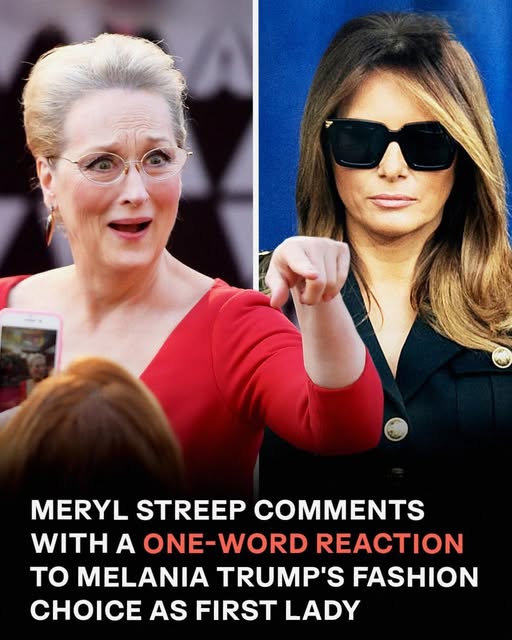
Political imagery has become an increasingly important part of modern public communication, especially when high-profile figures appear in globally visible settings where clothing choices can carry symbolic interpretations across international audiences.
In contemporary media environments, fashion is no longer understood only as personal style or aesthetic preference, but also as a form of visual communication that may influence public interpretation and cultural discussion.
When public figures are photographed in official or semi-official contexts, their clothing is often analyzed by journalists, commentators, and audiences who seek meaning beyond the surface appearance of garments.
This interpretive process is particularly common in political environments, where symbolism, messaging, and perception can shape how events are understood by the public.
Media outlets such as Vogue have frequently explored the relationship between fashion, identity, and public image, particularly in relation to influential cultural and political personalities.
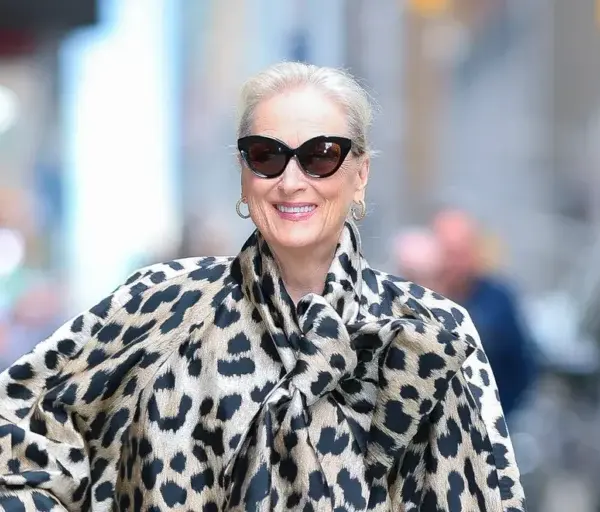
Editors like Anna Wintour have contributed to broader discussions in the fashion industry about how clothing choices can reflect authority, personality, and context in highly visible public appearances.
In many cases, these discussions emphasize that clothing can function as a form of nonverbal communication, especially when worn by individuals in leadership or symbolic roles.
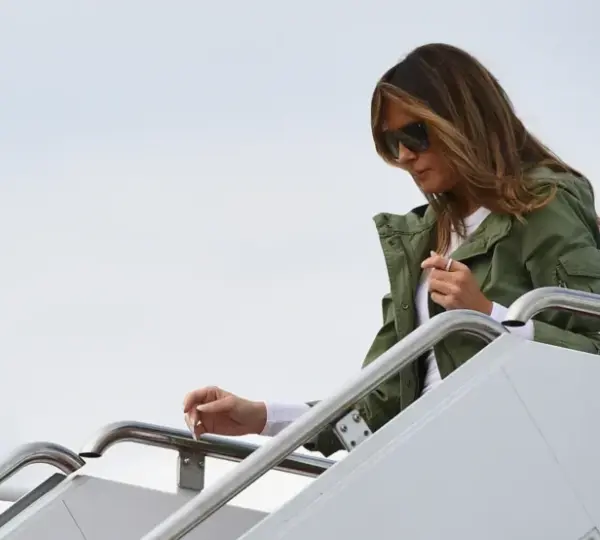
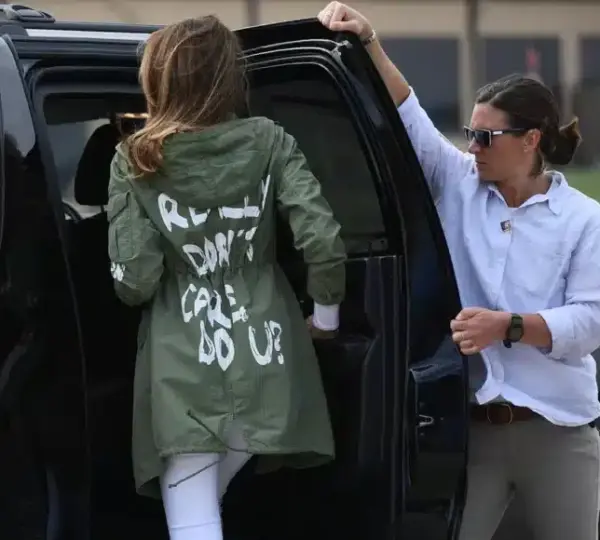
One of the most widely discussed political fashion moments in recent years involved Melania Trump during a 2018 public visit to a U.S. immigration-related facility in Texas.
During that visit, she wore a jacket featuring the phrase “I Really Don’t Care, Do U?”, which immediately drew widespread media attention and public debate.
The visit was connected to facilities housing migrant children near the U.S.-Mexico border, a topic that was already the subject of intense political and humanitarian discussion at the time.
Photographs of the jacket quickly circulated across global media platforms, where audiences interpreted the message in different and often conflicting ways.

Some commentators viewed the jacket as inappropriate given the sensitive context of the visit, while others argued that clothing interpretation depends heavily on intent and situational understanding.
Following the widespread reaction, representatives associated with Melania Trump stated that the jacket message was intended as a response to media criticism rather than a statement directed at the individuals at the facility.
Despite this clarification, the image continued to be widely shared and discussed, becoming a long-lasting example of how visual symbolism can persist in public discourse.
Communication scholars often describe this phenomenon as symbolic amplification, where a single visual detail becomes magnified through repetition in media and online platforms.
In political communication, especially in the United States, public figures are frequently evaluated not only on their actions but also on their visual presentation during official engagements.
This creates a dynamic in which clothing choices can take on perceived political meaning even when no explicit message was intended by the wearer.
The broader debate around symbolism in public life extends beyond individual incidents and reflects how modern media systems interpret and circulate visual content.
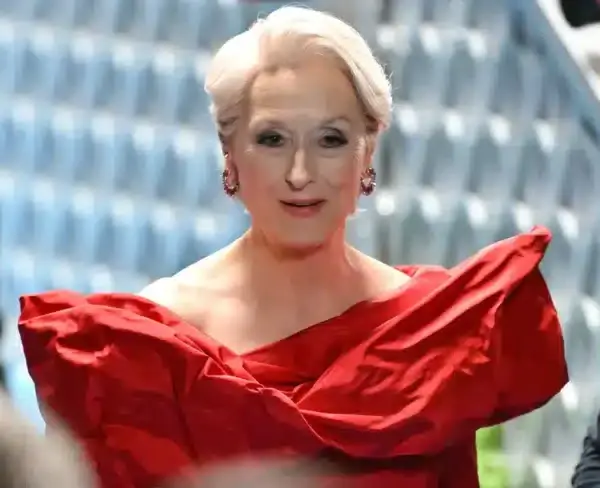
In many cases, the rapid spread of images online contributes to interpretations that may differ from original intent or context, increasing the importance of careful media literacy.
Another public figure often associated with political commentary in cultural spaces is actress Meryl Streep, who has made widely reported statements on political and social issues during major public events.
One of her most discussed moments occurred at the 2017 Golden Globe Awards, where she delivered an acceptance speech that included criticism of then-President Donald Trump’s behavior toward a journalist.
That speech received extensive global media coverage and contributed to ongoing debates about the role of entertainers in political and cultural commentary.
The incident referenced in her speech involved a widely reported moment during the 2015 presidential campaign, which was interpreted differently by various observers and media outlets.
As with many politically sensitive events, interpretations of that moment have varied, and discussions about it continue to reflect broader political divisions in public discourse.
It is important to distinguish between verified statements made in public speeches and unverified claims that may circulate later in online environments without reliable sourcing.
In the digital era, misinformation can spread quickly, particularly when it involves well-known public figures, emotionally charged topics, and previously controversial events.
For this reason, fact-checking organizations emphasize the importance of relying on confirmed reporting from reputable news outlets when analyzing political or cultural claims.
Public interest in political imagery often resurfaces during major national events, including ceremonial occasions at the White House where members of the presidential family appear in public settings.
Events such as these are frequently photographed and shared widely, leading to ongoing analysis of appearance, symbolism, and perceived messaging.
Social media platforms have further intensified this cycle by enabling rapid interpretation and redistribution of images, often without full contextual information.
Researchers in media studies note that this environment can lead to repeated amplification of specific visual moments, regardless of their original significance.
The 2018 jacket worn by Melania Trump remains one of the most frequently cited examples in discussions about fashion and political communication.
It is often used in academic and journalistic analysis to illustrate how visual elements can become central to public narratives.
However, scholars also emphasize the importance of separating interpretation from confirmed fact when evaluating such events.
In many cases, symbolic readings of clothing are subjective and can vary depending on cultural, political, and personal perspectives.
This subjectivity makes it essential to approach such topics with careful attention to context and verified information.
The role of media institutions in shaping interpretation is also significant, as headlines and framing can influence how audiences perceive visual events.
At the same time, audiences play an active role in interpreting and reshaping narratives through sharing, commentary, and discussion online.
This interaction between media producers and audiences contributes to the evolving meaning of political imagery over time.
In democratic societies, public scrutiny of political figures is a common feature of open communication systems, including analysis of both policy and presentation.
Nevertheless, responsible reporting requires clear distinction between factual reporting, opinion, and speculation.
Academic discussions of media ethics often highlight the importance of accuracy, especially when discussing widely circulated images that may be taken out of context.
The continued reference to the 2018 jacket incident demonstrates how certain images can remain culturally significant long after the original event.
It also reflects how visual communication in politics has become increasingly powerful in shaping long-term public memory.
Overall, the intersection of fashion, politics, and media highlights the complexity of interpreting symbolic communication in a highly connected global information environment.
It underscores the need for careful analysis, reliable sourcing, and awareness of context when discussing politically sensitive visual moments.
Ultimately, public understanding of such events depends on balancing interpretation with verified facts to avoid the spread of misinformation.
This approach helps ensure that discussions about public figures remain grounded in accuracy while still acknowledging the role of symbolism in modern political communication.
