
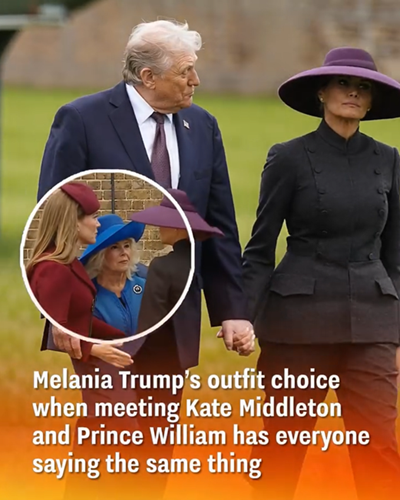
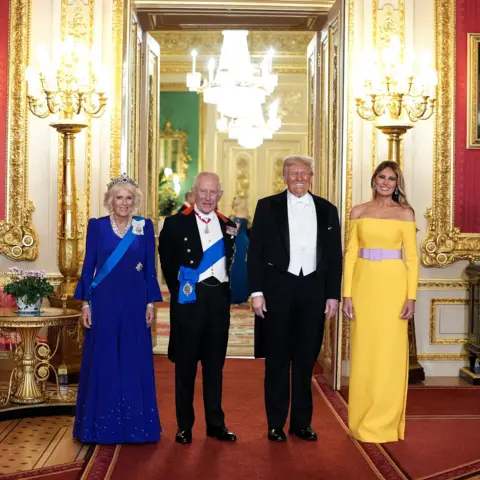
Donald Trump made a highly ceremonial arrival at Windsor Castle, one of the most historically significant royal residences in the United Kingdom.
The visit drew widespread international attention, not only because of the enduring importance of U.S.–U.K. relations, but also because it followed his earlier state visit to the United Kingdom during his presidency.
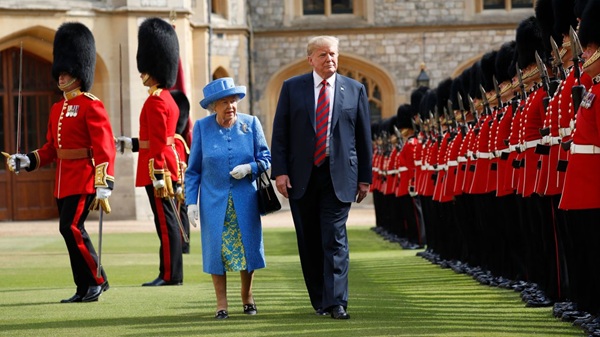
In 2019, Trump was hosted by Queen Elizabeth II for a full state visit—an honor reserved for heads of state and one that underscored the strength of diplomatic ties between the two nations.
While it is historically accurate that Donald Trump was granted a state visit during his presidency, it is important to clarify that invitations for state visits are extended by the reigning British monarch on the advice of the U.K. government.
Such visits reflect diplomatic protocol rather than personal relationships. Throughout modern history, several U.S. presidents have been received for state visits, reflecting the longstanding alliance between the two countries.
Upon arriving in the United Kingdom, Trump and his wife, Melania Trump, were met with formal diplomatic courtesies consistent with official visits of this stature.
The couple traveled to Windsor, where ceremonial elements—such as an honor guard, formal greetings, and traditional pageantry—typically accompany state-level engagements.
Windsor Castle, a residence that has been home to British monarchs for nearly 1,000 years, serves as a powerful symbol of continuity, constitutional monarchy, and national heritage.
During his presidency, Trump’s 2019 state visit included a ceremonial welcome, a state banquet, and meetings with senior members of the royal family.
At that time, he was greeted by Queen Elizabeth II, and other members of the royal household were present during various engagements.
Today, the British monarch is King Charles III, who ascended to the throne in 2022 following the passing of Queen Elizabeth II.
Senior working members of the royal family include Prince William and Catherine, Princess of Wales, as well as Queen Camilla.
Melania Trump’s fashion choices during official visits have often drawn attention from international media and fashion commentators.
Known for her tailored silhouettes and classic European aesthetic, she has frequently opted for structured suits, elegant dresses, and statement hats during high-profile events abroad.
During the 2019 visit, for example, she wore several British-inspired ensembles that were widely discussed in fashion circles.
Her wardrobe selections are typically interpreted as a gesture of respect for host nations while maintaining her own personal style.
State visits between the United States and the United Kingdom traditionally include a series of carefully planned events.
These engagements are designed to celebrate diplomatic ties, cultural exchange, and shared historical connections.
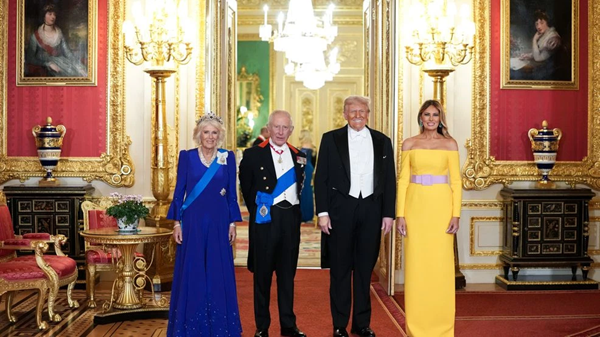
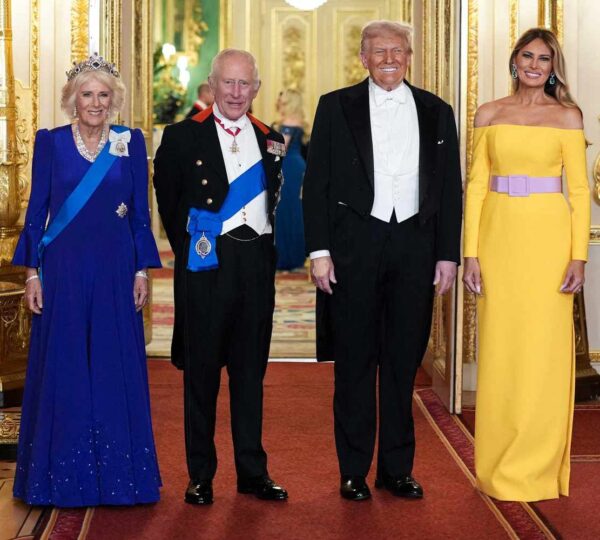
A formal state banquet is often among the highlights. Such banquets are hosted in grand halls adorned with historic artwork and royal regalia, bringing together members of the royal family, government officials, diplomats, business leaders, and cultural figures.
Speeches delivered at these events typically emphasize cooperation, mutual respect, and the shared democratic values that underpin the transatlantic alliance.
In addition to ceremonial events, official discussions usually take place between visiting leaders and senior government officials.
During Trump’s presidency, he met with British prime ministers to discuss a wide range of policy matters, including trade relations, defense cooperation through NATO, counterterrorism efforts, and economic collaboration.
The United States and the United Kingdom maintain one of the closest intelligence-sharing relationships in the world, often referred to as the “Special Relationship.” This partnership encompasses defense, security, technology, and global diplomacy.
At the time of Trump’s 2019 state visit, the U.K. prime minister was Theresa May, though the visit also overlapped with political transitions related to Brexit. Currently, the U.K. prime minister is Keir Starmer, who assumed office in 2024.
Meetings between U.S. and U.K. leaders generally focus on strengthening economic partnerships, addressing international conflicts, supporting global stability, and advancing climate and energy initiatives.
A solemn aspect of more recent diplomatic gatherings in Britain often includes tributes to Queen Elizabeth II, whose reign spanned seven decades and whose global influence was profound.
During Trump’s presidency, he publicly expressed admiration for Queen Elizabeth II following their meetings.
After her passing in 2022, leaders from around the world attended memorial events in recognition of her legacy and her role in maintaining continuity during periods of global change.
Windsor Castle itself provides a fitting backdrop for such moments. Originally built by William the Conqueror in the 11th century, the castle has witnessed centuries of British and international history.
It has served as the setting for state occasions, royal weddings, and diplomatic gatherings. The architecture, ceremonial guards, and longstanding traditions reinforce the symbolism of constitutional monarchy working alongside democratic government.
Beyond ceremony, visits of this magnitude are closely watched by political analysts, historians, and the media.
Observers assess the tone of speeches, body language during meetings, and the substance of policy discussions.
For both the United States and the United Kingdom, these visits serve not only as diplomatic engagements but also as public affirmations of partnership before a global audience.
The U.S.–U.K. alliance has deep roots, shaped by shared language, legal traditions, military cooperation, and economic interdependence.
The two nations fought alongside each other in both World Wars and continue to collaborate through NATO and other international institutions.
Trade between the two countries remains significant, with billions of dollars in goods and services exchanged annually. Financial markets in New York and London are among the most interconnected in the world.
Public reaction to high-profile visits can vary. While many view them as important symbols of unity and stability, others may express political opinions reflecting domestic debates in either country.
Peaceful demonstrations are not uncommon during state visits, as democratic societies allow citizens to voice their perspectives.
Security arrangements during such occasions are typically extensive, involving coordination between local authorities, national security services, and diplomatic protection teams.
Media coverage often balances political analysis with cultural observations. Fashion, ceremony, and tradition can capture as much attention as policy discussions.
In Melania Trump’s case, fashion commentators frequently analyze her attire for symbolic meaning, craftsmanship, and diplomatic nuance.
British designers have sometimes been highlighted during such visits, reinforcing cultural ties through fashion diplomacy.
Evening performances and cultural programs may also form part of an official itinerary. These events showcase national heritage—whether through music, theater, or fine arts—and provide a less formal environment for leaders to interact.
Cultural diplomacy plays a subtle but meaningful role in international relations, offering opportunities to build personal rapport beyond formal negotiations.
Ultimately, visits involving prominent leaders and the British monarchy reflect a blend of history and contemporary politics.
The monarchy represents continuity and tradition, while elected officials represent democratic governance and evolving policy priorities.
When these elements converge during a state visit, the result is both symbolic and substantive.
The enduring partnership between the United States and the United Kingdom remains grounded in shared democratic values, economic cooperation, and collective security commitments.
Diplomatic engagements at places like Windsor Castle serve to reaffirm those principles. They remind global audiences that even amid shifting political landscapes, long-standing alliances continue to shape international affairs.
As observers reflect on such visits, the emphasis remains on cooperation, dialogue, and the maintenance of stable international relationships.
The ceremonies, speeches, and discussions are all components of a broader diplomatic framework designed to strengthen collaboration and address global challenges responsibly and constructively.
In that sense, events at Windsor Castle represent more than pageantry. They embody the ongoing narrative of partnership between two nations whose histories have often intersected.
Through formal welcomes, policy conversations, and cultural exchange, leaders seek to reinforce ties that have influenced global politics for generations.
Whether viewed through the lens of history, diplomacy, or public interest, such occasions underscore the importance of respectful dialogue and international cooperation.
The setting of Windsor Castle—rich in symbolism and heritage—continues to provide a dignified stage for moments that resonate far beyond its ancient stone walls.
