...

Melania Trump faces criticism over a brief and awkward greeting to Navy sailors in an uncommon public address.

Melania Trump and her husband, former President Donald Trump, made a public appearance on Sunday to commemorate the 250th anniversary of the United States Navy. The event was held at Naval Station Norfolk in Norfolk, Virginia, one of the Navy’s most prominent bases. While the celebration was meant to honor centuries of naval service and sacrifice, the occasion was somewhat overshadowed by the president’s late arrival. Donald Trump was over an hour late, which frustrated many attendees and observers alike.

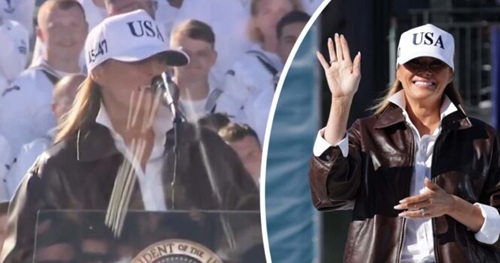
However, once the First Lady took the stage, attention quickly shifted to her speech and, more specifically, to her greeting to the assembled sailors. Both Donald and Melania Trump showed up dressed in a style that has become something of a signature for them in recent years. Donald wore his unmistakable red “Make America Great Again” (MAGA) hat, a political symbol that has been central to his public image. Melania, on the other hand, donned a white baseball cap featuring the same “USA” logo as her husband’s hat, a less common choice for her but clearly coordinated.

Her outfit also included a brown bomber jacket, which many people noted resembled the military-style jackets popularized by the movie Top Gun, a film that has a special place in American naval culture. As Melania began addressing the crowd of Navy personnel, she opened her speech with the phrase, “Hooyah, Navy.” “Hooyah” is a traditional Navy battle cry, used to express enthusiasm and morale among sailors. However, despite the phrase’s cultural significance within the Navy, the reception from the audience and the broader public was not as positive as one might expect.

While some members of the crowd applauded, the moment was marked by an awkward pause, which was quickly noticed and commented on by those watching on social media. Online reactions to Melania Trump’s greeting were swift and varied. Some people praised her for making an effort to connect with the sailors and recognize their service in a way that felt authentic to the Navy community. However, many others reacted with skepticism or outright mockery.
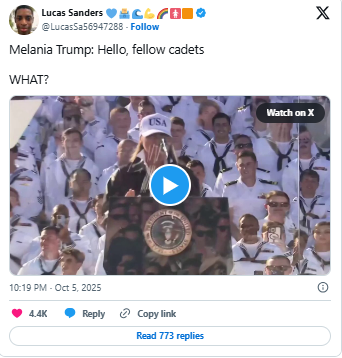
On X (formerly known as Twitter), users expressed a range of sentiments. One user wrote, “Please make it stop,” reflecting a sense of secondhand embarrassment or discomfort. Another simply labeled the moment “cringe,” while a third questioned the authenticity of the greeting by asking, “Good lord. Did her communications team tell her to say this to be relatable?”

Several commenters took a more sarcastic tone, poking fun at the First Lady’s attempt to speak Navy “lingo.” One user quipped, “Now she speaks Navy. She can add it to her list of languages,” alluding to the claims that Melania is fluent in six languages, including French and Italian, although she rarely showcases these skills publicly. This comment also hinted at the broader skepticism some have about her public persona and communication style.

The social media commentary ranged from humorous to harsh. One frustrated observer wrote, “We are a goddamned sitcom,” suggesting that the entire situation felt surreal or farcical. Another comment read, “Our country is being invaded by foreigners! ICE, we got one, quick!” — a reference likely aimed at Melania’s status as an immigrant and former model originally from Slovenia, highlighting the divisive political environment surrounding immigration in the U.S.

Despite the mixed reactions to her opening line, Melania Trump continued with the rest of her speech, which focused on honoring the service and sacrifice of Navy personnel. She expressed genuine respect and admiration for the men and women who serve at sea, stating, “Generations of sailors have kept America free because of your presence on the high seas.” She went on to praise their “strength, bravery, and sacrifice,” emphasizing how their commitment to the nation inspires all Americans. The remainder of her remarks were more traditional and solemn, paying tribute to the Navy’s long history and its critical role in protecting the country’s freedoms.

In summary, while the event was intended as a celebration of 250 years of the U.S. Navy’s history and contributions, Melania Trump’s brief and awkward greeting became the focal point of public discussion. The mixed responses highlight the challenges public figures often face when attempting to engage with specialized communities and the intense scrutiny that comes with high-profile appearances, especially in politically charged environments.

Melania Trump and her husband, former President Donald Trump, made a public appearance on Sunday to commemorate the 250th anniversary of the United States Navy. The event was held at Naval Station Norfolk in Norfolk, Virginia, one of the Navy’s most prominent bases. While the celebration was meant to honor centuries of naval service and sacrifice, the occasion was somewhat overshadowed by the president’s late arrival. Donald Trump was over an hour late, which frustrated many attendees and observers alike.

However, once the First Lady took the stage, attention quickly shifted to her speech and, more specifically, to her greeting to the assembled sailors. Both Donald and Melania Trump showed up dressed in a style that has become something of a signature for them in recent years. Donald wore his unmistakable red “Make America Great Again” (MAGA) hat, a political symbol that has been central to his public image. Melania, on the other hand, donned a white baseball cap featuring the same “USA” logo as her husband’s hat, a less common choice for her but clearly coordinated.

Her outfit also included a brown bomber jacket, which many people noted resembled the military-style jackets popularized by the movie Top Gun, a film that has a special place in American naval culture. As Melania began addressing the crowd of Navy personnel, she opened her speech with the phrase, “Hooyah, Navy.” “Hooyah” is a traditional Navy battle cry, used to express enthusiasm and morale among sailors. However, despite the phrase’s cultural significance within the Navy, the reception from the audience and the broader public was not as positive as one might expect.

While some members of the crowd applauded, the moment was marked by an awkward pause, which was quickly noticed and commented on by those watching on social media. Online reactions to Melania Trump’s greeting were swift and varied. Some people praised her for making an effort to connect with the sailors and recognize their service in a way that felt authentic to the Navy community. However, many others reacted with skepticism or outright mockery.

On X (formerly known as Twitter), users expressed a range of sentiments. One user wrote, “Please make it stop,” reflecting a sense of secondhand embarrassment or discomfort. Another simply labeled the moment “cringe,” while a third questioned the authenticity of the greeting by asking, “Good lord. Did her communications team tell her to say this to be relatable?”

Several commenters took a more sarcastic tone, poking fun at the First Lady’s attempt to speak Navy “lingo.” One user quipped, “Now she speaks Navy. She can add it to her list of languages,” alluding to the claims that Melania is fluent in six languages, including French and Italian, although she rarely showcases these skills publicly. This comment also hinted at the broader skepticism some have about her public persona and communication style.

The social media commentary ranged from humorous to harsh. One frustrated observer wrote, “We are a goddamned sitcom,” suggesting that the entire situation felt surreal or farcical. Another comment read, “Our country is being invaded by foreigners! ICE, we got one, quick!” — a reference likely aimed at Melania’s status as an immigrant and former model originally from Slovenia, highlighting the divisive political environment surrounding immigration in the U.S.

Despite the mixed reactions to her opening line, Melania Trump continued with the rest of her speech, which focused on honoring the service and sacrifice of Navy personnel. She expressed genuine respect and admiration for the men and women who serve at sea, stating, “Generations of sailors have kept America free because of your presence on the high seas.” She went on to praise their “strength, bravery, and sacrifice,” emphasizing how their commitment to the nation inspires all Americans. The remainder of her remarks were more traditional and solemn, paying tribute to the Navy’s long history and its critical role in protecting the country’s freedoms.

In summary, while the event was intended as a celebration of 250 years of the U.S. Navy’s history and contributions, Melania Trump’s brief and awkward greeting became the focal point of public discussion. The mixed responses highlight the challenges public figures often face when attempting to engage with specialized communities and the intense scrutiny that comes with high-profile appearances, especially in politically charged environments.