...

Mary Ann Bevan: A Story That Will Stay With You

Mary Ann Bevan was born on December 20, 1874, in Plaistow, East London, into a modest working-class family.

From an early age, Mary Ann was known for her striking beauty, warm personality, and caring nature.

Growing up in Victorian England, she learned the value of hard work, perseverance, and community support.

Her early life was shaped by the social expectations of women at the time, but Mary Ann distinguished herself by pursuing training as a nurse, a role that reflected her innate compassion and commitment to helping others.
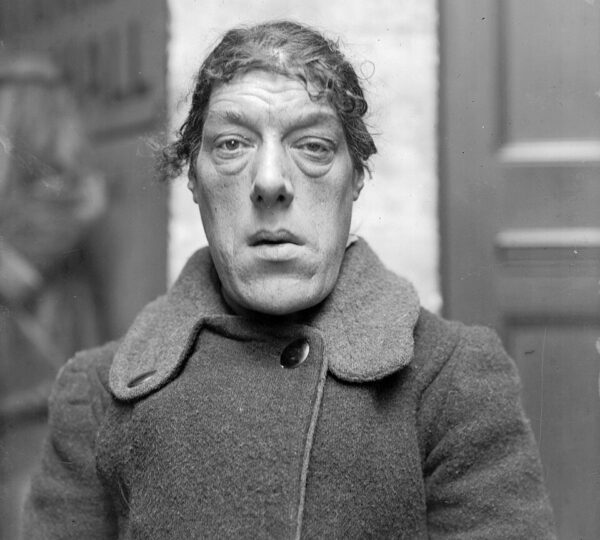
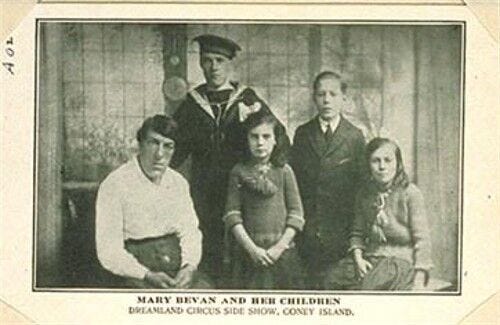
In 1902, Mary Ann married Thomas Bevan, and the couple built a family together, raising four children in a modest home.

Her life seemed full of promise—she had love, family, and a stable profession. However, tragedy struck when Thomas passed away in 1916, leaving Mary Ann a widow at the age of 42.

Suddenly, she faced the immense challenge of raising four children on her own, navigating grief while also trying to provide financial stability in post-World War I England, a period marked by economic hardship and limited social support for widows.

As Mary Ann entered her early thirties, she began noticing gradual changes in her appearance.

Her facial features and bone structure became increasingly pronounced: her jaw and forehead enlarged, her nose grew more prominent, and her hands and feet thickened.

At the time, doctors had very little understanding of such conditions, and she faced social judgment and misunderstanding.
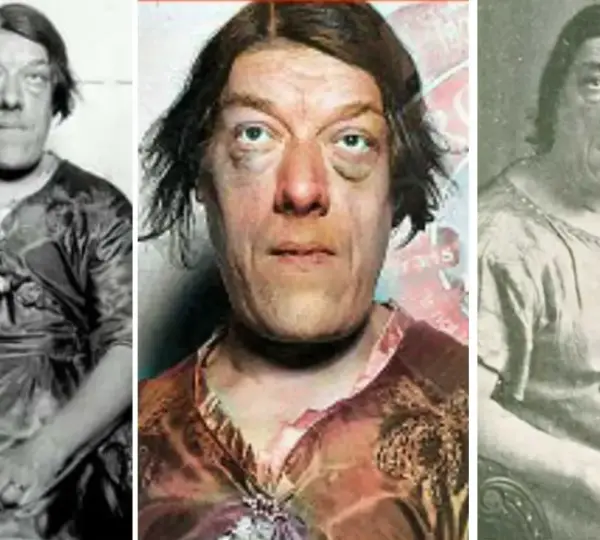
What Mary Ann was experiencing was later identified by modern medicine as acromegaly, a rare hormonal disorder caused by excessive growth hormone production, usually due to a pituitary gland tumor.

Left untreated, acromegaly alters bone structure and appearance, often leading to fatigue, joint pain, and other health complications.

The changes in Mary Ann’s appearance had profound personal and professional consequences.

She lost her position as a nurse, her main source of income, which left her struggling to provide for her family.

Desperate to support her children and maintain their standard of living, Mary Ann made a decision few could imagine:

she responded to an advertisement seeking individuals with unusual physical characteristics to work in a traveling sideshow, a popular form of entertainment in early 20th-century England and the United States.

Initially, Mary Ann was hesitant to take this step.
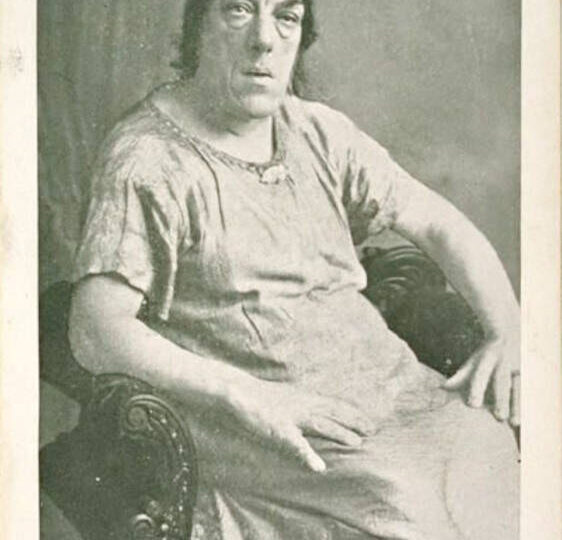
The sideshow industry often exploited people with medical conditions or unique physical features, and performers were frequently presented as curiosities rather than respected individuals.

Yet, Mary Ann agreed to participate, motivated by her commitment to her children’s welfare.

She was soon billed as the “Ugliest Woman in the World” in the press—a title that was cruel and degrading.

However, those who worked with her described Mary Ann as dignified, professional, and kind, demonstrating strength and resilience in an environment that could be dehumanizing.

Through her work in sideshows, she earned enough to provide education, security, and opportunities for her children, ensuring that they had a future despite the social stigma she faced.

Mary Ann’s story eventually attracted the attention of Dr. Harvey Cushing, a pioneering American neurosurgeon who specialized in disorders of the pituitary gland.

Dr. Cushing documented her condition as part of his groundbreaking research on acromegaly, recognizing that her case was a medical phenomenon rather than a mere curiosity.

His writings preserved Mary Ann’s story in medical history, emphasizing her humanity, resilience, and courage in the face of extraordinary challenges.

Despite public scrutiny, ridicule, and the emotional toll of her condition, Mary Ann remained devoted to her family throughout her life.

She continued to work in the sideshow circuit until she had saved enough money to provide long-term stability for her children.
She passed away on November 26, 1933, at the age of 59, fulfilling her wish to be buried in England near her family roots.

Mary Ann Bevan’s life is remembered not for the labels society imposed on her, but for her extraordinary resilience, dedication, and love.

She is a profound example of how strength and perseverance can prevail in the face of adversity.

Her story reminds us that legacy is not defined by appearance or public perception, but by the courage, love, and humanity we bring to our lives and to those we care for.

Her legacy has continued to inspire historians, medical professionals, disability advocates, and the general public.

Mary Ann Bevan’s story highlights the social and medical challenges faced by those with rare conditions in a time of limited understanding and compassion.

It serves as a lesson in empathy, resilience, and maternal sacrifice, and stands as a symbol of how dignity and love can shine brightest under adversity.
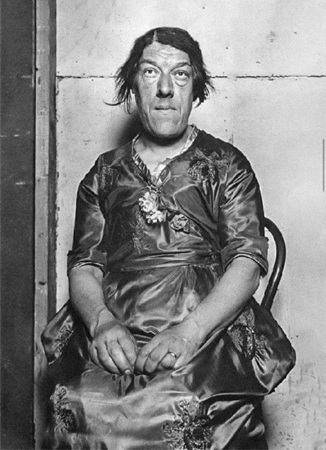
Today, Mary Ann Bevan is honored as a woman who overcame immense personal, social, and medical challenges, demonstrating that the human spirit is capable of remarkable courage.

Her life is a testament to the power of determination, the enduring strength of maternal love, and the resilience of individuals who confront societal judgment while prioritizing the welfare of those they love most.

Mary Ann’s story continues to resonate, showing that even in the face of hardship and public scrutiny, it is possible to lead a life of purpose, integrity, and unwavering strength.

Mary Ann Bevan was born on December 20, 1874, in Plaistow, East London, into a modest working-class family.

From an early age, Mary Ann was known for her striking beauty, warm personality, and caring nature.

Growing up in Victorian England, she learned the value of hard work, perseverance, and community support.

Her early life was shaped by the social expectations of women at the time, but Mary Ann distinguished herself by pursuing training as a nurse, a role that reflected her innate compassion and commitment to helping others.

In 1902, Mary Ann married Thomas Bevan, and the couple built a family together, raising four children in a modest home.

Her life seemed full of promise—she had love, family, and a stable profession. However, tragedy struck when Thomas passed away in 1916, leaving Mary Ann a widow at the age of 42.

Suddenly, she faced the immense challenge of raising four children on her own, navigating grief while also trying to provide financial stability in post-World War I England, a period marked by economic hardship and limited social support for widows.

As Mary Ann entered her early thirties, she began noticing gradual changes in her appearance.

Her facial features and bone structure became increasingly pronounced: her jaw and forehead enlarged, her nose grew more prominent, and her hands and feet thickened.

At the time, doctors had very little understanding of such conditions, and she faced social judgment and misunderstanding.

What Mary Ann was experiencing was later identified by modern medicine as acromegaly, a rare hormonal disorder caused by excessive growth hormone production, usually due to a pituitary gland tumor.

Left untreated, acromegaly alters bone structure and appearance, often leading to fatigue, joint pain, and other health complications.

The changes in Mary Ann’s appearance had profound personal and professional consequences.

She lost her position as a nurse, her main source of income, which left her struggling to provide for her family.

Desperate to support her children and maintain their standard of living, Mary Ann made a decision few could imagine:

she responded to an advertisement seeking individuals with unusual physical characteristics to work in a traveling sideshow, a popular form of entertainment in early 20th-century England and the United States.

Initially, Mary Ann was hesitant to take this step.

The sideshow industry often exploited people with medical conditions or unique physical features, and performers were frequently presented as curiosities rather than respected individuals.

Yet, Mary Ann agreed to participate, motivated by her commitment to her children’s welfare.

She was soon billed as the “Ugliest Woman in the World” in the press—a title that was cruel and degrading.

However, those who worked with her described Mary Ann as dignified, professional, and kind, demonstrating strength and resilience in an environment that could be dehumanizing.

Through her work in sideshows, she earned enough to provide education, security, and opportunities for her children, ensuring that they had a future despite the social stigma she faced.

Mary Ann’s story eventually attracted the attention of Dr. Harvey Cushing, a pioneering American neurosurgeon who specialized in disorders of the pituitary gland.

Dr. Cushing documented her condition as part of his groundbreaking research on acromegaly, recognizing that her case was a medical phenomenon rather than a mere curiosity.

His writings preserved Mary Ann’s story in medical history, emphasizing her humanity, resilience, and courage in the face of extraordinary challenges.

Despite public scrutiny, ridicule, and the emotional toll of her condition, Mary Ann remained devoted to her family throughout her life.

She continued to work in the sideshow circuit until she had saved enough money to provide long-term stability for her children.

She passed away on November 26, 1933, at the age of 59, fulfilling her wish to be buried in England near her family roots.

Mary Ann Bevan’s life is remembered not for the labels society imposed on her, but for her extraordinary resilience, dedication, and love.

She is a profound example of how strength and perseverance can prevail in the face of adversity.

Her story reminds us that legacy is not defined by appearance or public perception, but by the courage, love, and humanity we bring to our lives and to those we care for.

Her legacy has continued to inspire historians, medical professionals, disability advocates, and the general public.

Mary Ann Bevan’s story highlights the social and medical challenges faced by those with rare conditions in a time of limited understanding and compassion.

It serves as a lesson in empathy, resilience, and maternal sacrifice, and stands as a symbol of how dignity and love can shine brightest under adversity.

Today, Mary Ann Bevan is honored as a woman who overcame immense personal, social, and medical challenges, demonstrating that the human spirit is capable of remarkable courage.

Her life is a testament to the power of determination, the enduring strength of maternal love, and the resilience of individuals who confront societal judgment while prioritizing the welfare of those they love most.

Mary Ann’s story continues to resonate, showing that even in the face of hardship and public scrutiny, it is possible to lead a life of purpose, integrity, and unwavering strength.