
Amid the dust and a scattering of forgotten belongings, there lay a small wooden box I had never seen before. The attic had always been a place of quiet storage.
Old holiday decorations, stacked photo albums, suitcases that carried memories of trips long past. I had gone up there that afternoon searching for nothing in particular, simply trying to distract myself from the heaviness that had settled into our home since our daughter’s passing.
The air was dry and faintly scented with aged wood and cardboard. Light filtered in through the small window, catching tiny particles of dust that floated like suspended time. That was when I noticed it.
Tucked behind a stack of neatly folded blankets and partially hidden beneath an old quilt was the box. It wasn’t large—small enough to fit comfortably in my hands—but it immediately drew my attention.
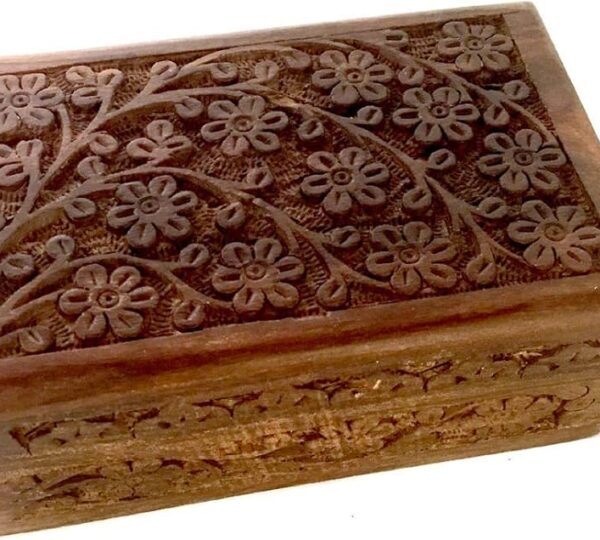
Its surface was intricately carved with delicate floral patterns, vines looping gracefully around the edges. The craftsmanship was exquisite, the kind that suggests patience, care, and intention.
It did not look mass-produced or forgotten. It looked treasured. My heart began to pound as I reached for it.
There was something sacred about the moment, something that felt almost guided. I brushed away the dust with trembling fingers and lifted it gently.
The wood was smooth, worn slightly at the corners as though it had been opened many times. I sat cross-legged on the attic floor, the box resting in my lap, and hesitated before opening it.
A thousand possibilities rushed through my mind. I had spent months moving through waves of grief—sometimes sharp and suffocating, sometimes dull and distant—but nothing had prepared me for what I was about to find.
I slowly lifted the lid.
Inside was a collection of letters, a small stack of photographs, and a velvet pouch no larger than my palm. The letters were folded with care and tied together with a lavender ribbon.
The scent of the ribbon was faint but still present, a soft floral note that reminded me instantly of her bedroom. Even before I untied it, I knew.
I recognized the handwriting immediately.
It was my daughter’s.
Her script had always been distinctive—slightly slanted, elegant but youthful, with careful loops on her lowercase letters. Seeing it again was like hearing her laugh echo down the hallway.
My breath caught in my throat, and for a moment I could not move. The weight of the realization pressed against my chest.
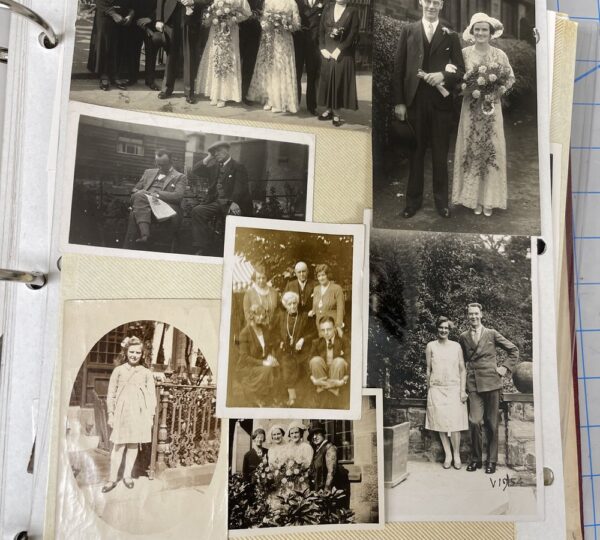
Beneath the letters were photographs. I picked one up first, my hands trembling. It was her first day of school, standing proudly in front of our front door with a backpack that looked almost too large for her small frame.
Her smile was wide and fearless. Another photo showed a family trip to the beach, her hair tangled by the wind, sand clinging to her legs as she ran toward the water.
There were birthday candles, holiday mornings, quiet candid moments at the kitchen table—scenes that had once felt ordinary but now shimmered with meaning.
Each photograph captured her spirit: her warmth, her laughter, the way her eyes sparkled when she was excited about something new.
I realized with a painful clarity how many of those everyday moments I had taken for granted. Life had felt endless then. There had always seemed to be more time.
I took a deep breath and unfolded the first letter.
“Dear Mom and Dad,” it began. “If you’re reading this, I’m not there with you anymore, but please know that I love you more than anything in the world. I want you to remember the happy times we shared and not just the sadness of my absence.”
The tears came instantly, blurring the ink as I tried to continue reading. I pressed the page gently against my chest, as if holding it close could somehow shorten the distance between us.
Each letter was dated. She had written them over the course of several months. In them, she spoke with remarkable clarity about her condition.
We had known she was ill. We had sat in sterile hospital rooms and listened carefully as doctors explained treatment plans and probabilities.
We had clung to hope, sometimes fiercely, sometimes desperately. But reading her words now, I realized she had understood more than we had allowed ourselves to see.
She wrote about her dreams—places she had hoped to travel, books she wanted to write, causes she believed in. She wrote about her fears, too, not in a way that was bitter or angry, but honest.
She admitted she was afraid sometimes, especially at night when the hospital corridors grew quiet. Yet even in those moments, she said she found comfort in knowing we were close by.

“I don’t want you to stop living,” one letter said. “Please promise me you’ll keep celebrating birthdays and anniversaries. Promise me you’ll laugh again, even if it feels strange at first. I don’t want my memory to make you smaller. I want it to make you stronger.”
Her words carried wisdom far beyond her years. They were not dramatic or grand; they were sincere. She spoke about love as if it were something tangible, something that could stretch across any boundary.
She reminded us that grief and gratitude can exist side by side. She wrote about forgiveness—for herself, for us, for the unpredictability of life.
In another letter, she described memories she cherished: baking cookies with me late at night, sitting quietly with her father while he read the newspaper, family movie nights that ended in playful debates about which character was the best.
Reading those recollections made me smile through tears. They were simple memories, but to her, they had been everything.
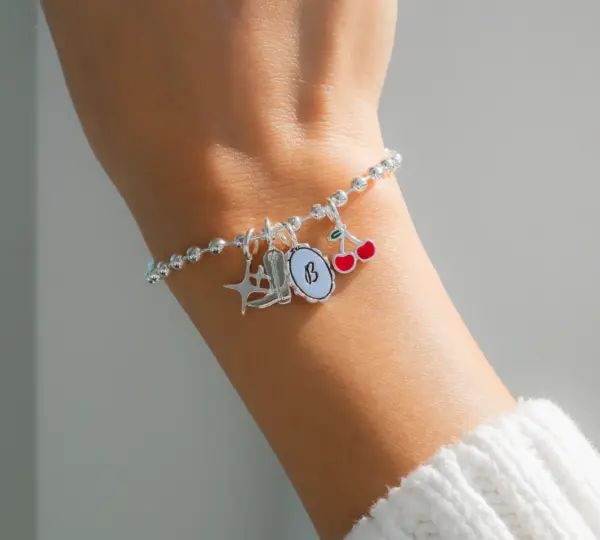
Tucked inside the velvet pouch was a delicate silver bracelet. My fingers shook as I opened it. The chain was fine and luminous, and hanging from it was a small charm engraved with a single word: “Forever.”
She had written about it in one of the letters.
“I bought something for you, Mom,” she said. “I was saving it for your birthday, but I decided to leave it here instead. It’s not expensive, but I hope you wear it and think of me. Not in a sad way—just as a reminder that love doesn’t disappear.”
I held the bracelet in my hand and felt a wave of emotion unlike anything I had experienced before. It was grief, yes—but it was also gratitude. She had thought of us, even while facing something so overwhelming. She had chosen love over fear.
As I sat there on the attic floor, surrounded by letters and photographs, time seemed to slow. The silence no longer felt empty. It felt full—full of memory, full of connection.
For months, I had felt as though an unbridgeable chasm had opened between our past and our present. But in that moment, her words built a bridge.
When my husband called out for me from downstairs, concern edging his voice, I realized how long I had been gone. He found me sitting on the floor, the box open before me, tears streaking my face. Without a word, he knelt beside me.
I handed him the first letter.
We read them together, sometimes aloud, sometimes silently. At certain passages, his voice faltered. At others, he smiled softly, recognizing her humor woven into the lines. The attic, once just a storage space, became a place of shared remembrance.
For a long time, her belongings had felt too painful to touch. Her room downstairs remained almost exactly as she had left it, preserved in a quiet stillness.
But something shifted that day. The letters transformed her belongings from reminders of absence into affirmations of presence. They were not evidence of what we had lost; they were proof of what we had shared.
Over the following weeks, we began incorporating her memory into our daily lives in gentle, intentional ways. I wore the bracelet often, its light weight resting against my wrist like a quiet reassurance.
My husband framed one of her photographs for his desk. We revisited places she had loved—her favorite park, the small café where she always ordered the same pastry.
Grief did not vanish. It still arrived unexpectedly, triggered by a song or a familiar scent. But it no longer felt as isolating. Her words had given us permission to live fully again. They reminded us that honoring her did not mean remaining frozen in sorrow.
In time, we shared her letters with close family members. Each person who read them commented on her maturity, her compassion, her clarity. It was as if she had left behind not only memories, but guidance.
One evening, months later, I returned to the attic and placed the box back where I had found it—but not hidden.
This time, it sat openly on a shelf, a symbol of continuity rather than secrecy. It was no longer a forgotten object in the dust. It was a testament.
Our daughter had given us an invaluable gift. Through her words and thoughtful preparation, she taught us that love does not end when life does.
It evolves. It remains present in stories told around dinner tables, in traditions carried forward, in small acts of kindness inspired by someone we miss.
We still speak her name often. We celebrate her birthday each year with quiet reflection and gratitude.
The bracelet on my wrist catches the light, and when it does, I think of the courage it must have taken for her to write those letters. I think of her strength, her tenderness, and the deep bond that continues to connect us.
Love, we have learned, is not confined to time or space. It lives in memory, in action, and in the choices we make every day to carry forward the values of those who shaped us.
Sitting there in the attic that first afternoon, surrounded by dust and forgotten items, I believed I had stumbled upon something unexpected.
But now I understand it differently. It was not an accident. It was a final message, carefully prepared and patiently waiting.
And through it, she reminded us of a simple, enduring truth: love is forever.
