
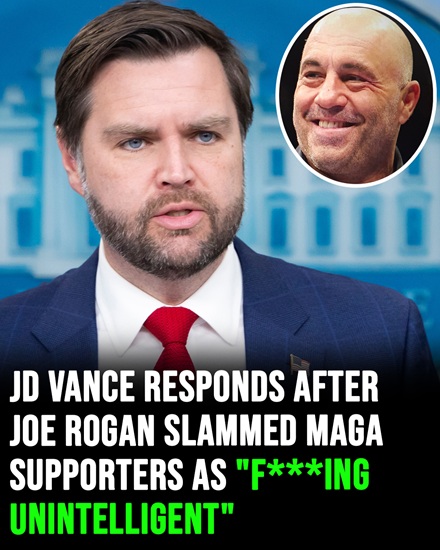
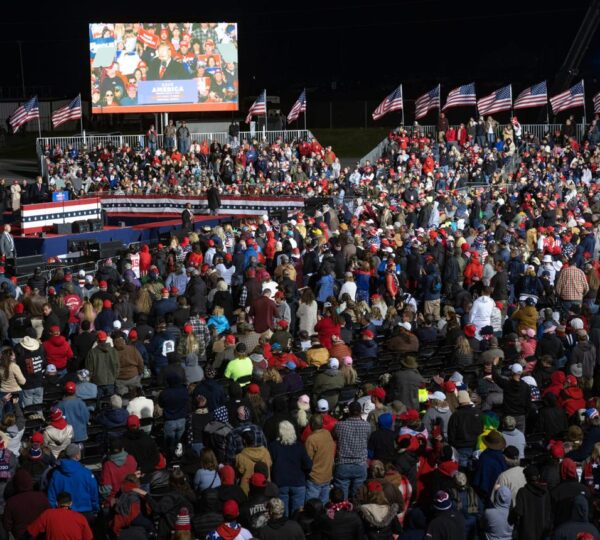
Joe Rogan, the renowned podcaster and UFC commentator, has sparked intense reactions after calling MAGA supporters “uninteresting and unintelligent.”
Igniting widespread debate across social media and political circles regarding the perception of Trump’s most devoted followers.
Rogan, 58, was once an outspoken supporter of Donald Trump, openly backing him before the 2024 election, but in recent months, he has become increasingly critical of Trump’s administration, especially on sensitive matters like Jeffrey Epstein and foreign conflicts.
The podcaster has particularly criticized the Trump administration’s handling of the Epstein files and openly condemned decisions regarding the U.S. involvement in the war in Iran, describing the situation as “exactly the opposite of what we were told leading into this administration.”
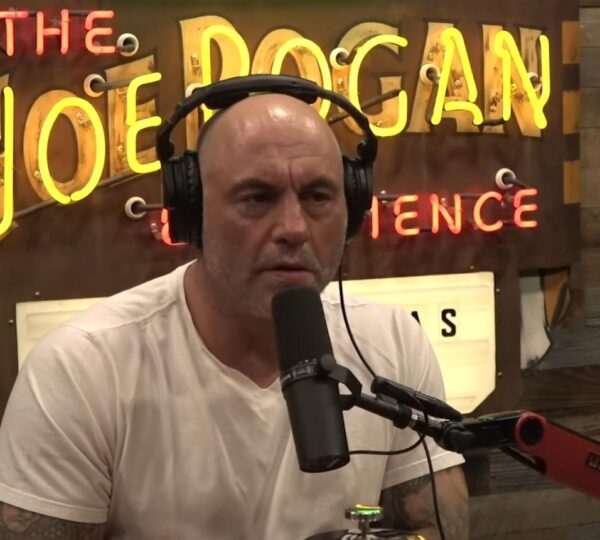
In the March 26 episode of The Joe Rogan Experience, Rogan did not hold back, characterizing the MAGA movement as “a bunch of f*ing dorks,” asserting that the slogan “Make America Great Again” attracted supporters he perceives as unremarkable or uninformed.
“That phrase sucks… ‘Make America Great Again,’ and then it becomes a movement of a bunch of f**king dorks, because a lot of them are dorks,” Rogan said, emphasizing his frustration with the followers’ behavior and public persona.
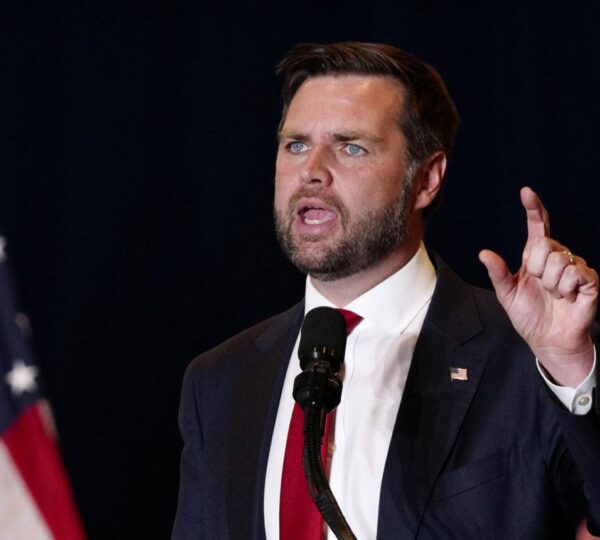
Rogan’s critique immediately drew attention and prompted a response from Vice President JD Vance, who sought to defend the MAGA movement, stressing that it comprises serious and committed Americans who care deeply about saving the country.
“We have far fewer dorks than the radical left, but everyone has some. We love our dorks, our cool kids, and anyone who wants to save the country,” Vance said, highlighting unity within the movement despite external criticism.
During an interview with host Benny Johnson, Vance was asked about Rogan’s claims criticizing the Trump administration, including the incorrect statement that “Hillary Clinton and Barack Obama are better at deporting people than you,” which Vance firmly denied.
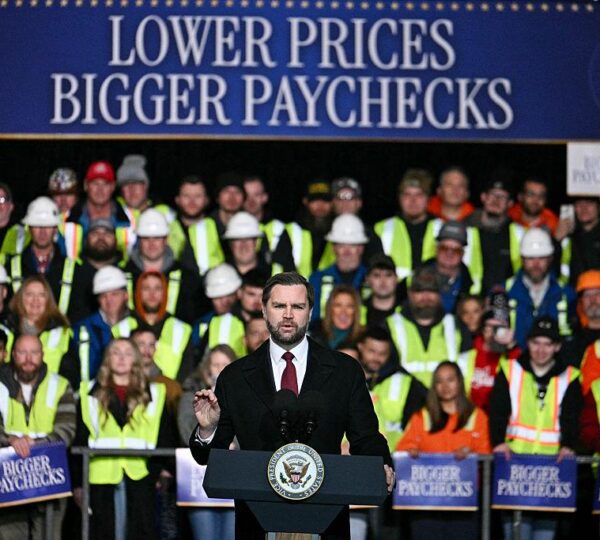
“I didn’t see Joe say that, and I will text him because that is definitely wrong,” Vance said, emphasizing that data and facts regarding deportation numbers do not support Rogan’s assertions about Trump’s policies.
Vance elaborated that the Trump administration has been actively addressing the influx of immigrants that entered under President Biden, implementing stricter border control and deportation measures to restore order and enforce immigration laws effectively.
“The numbers from the Obama administration or any other previous administration weren’t doing even a tenth of what we’re accomplishing now,” Vance said, highlighting the efficiency and scale of current immigration enforcement efforts.
He further explained that while the administration has succeeded in deporting many undocumented immigrants, the challenge remains substantial due to the policies of prior administrations, which allowed significant unauthorized immigration to occur.
Vance stressed that the Trump administration is the most effective in U.S. history at deporting illegal aliens, but also acknowledged that lingering challenges persist because of previous administrations’ failures in managing the border.
He added that deportation statistics and border enforcement numbers demonstrate real progress, contradicting Rogan’s criticisms, and that effective immigration policy requires continuous effort, coordination, and monitoring by multiple federal agencies.
The public reaction to Rogan’s comments and Vance’s rebuttal has sparked extensive debate online, with followers analyzing the influence of media personalities on political perceptions and questioning the fairness of such public criticisms.
Analysts argue that this exchange reflects broader tensions within American conservatism, as high-profile figures like Rogan critique aspects of the movement while leaders like Vance work to maintain cohesion among supporters.
Rogan’s platform reaches millions of listeners, and his outspoken commentary continues to shape public discourse on politics, often combining provocative opinions with serious analysis of current events, amplifying his impact beyond the podcasting community.
Meanwhile, JD Vance focuses on clarifying facts, providing evidence-based responses to criticism, and highlighting the tangible achievements of the Trump administration, particularly in the areas of deportation, border control, and overall immigration enforcement.
This dialogue underscores the sometimes tense relationship between media figures and political leaders, demonstrating how personal opinions can significantly influence public perception and spark both criticism and support among followers.
Social media discussions have emphasized the importance of responsible communication, showing how comments from prominent voices can quickly generate debate and contribute to public misunderstandings or misrepresentations of complex policy issues.
The debate between Rogan and Vance illustrates the role of podcasting and other media platforms as influential spaces where political narratives are challenged, clarified, and debated, often shaping national conversation in real time.
Vance’s rebuttal serves as a strategic effort to protect the image of MAGA supporters, emphasizing that stereotypes and generalized criticisms do not reflect the diversity, commitment, and seriousness of the movement.
Public engagement in this debate highlights how Americans are interpreting political commentary, reflecting on the responsibilities of media figures, and considering how leadership and public dialogue intersect in shaping political culture.
Ultimately, the exchange between Joe Rogan and JD Vance demonstrates that political discussions in America are increasingly mediated through influential personalities, with real consequences for public perception, policy interpretation, and community engagement.
It also emphasizes the need for accurate information, fact-checking, and responsible discourse, as public commentary can affect both supporters and critics, shaping opinions about policies and the officials responsible for them.
As the discussion continues, citizens are encouraged to critically evaluate statements made by media figures and political leaders, and to engage thoughtfully, considering data and verified reports rather than relying solely on sensationalized commentary.
This situation is a clear example of how political narratives and media commentary intersect, demonstrating the importance of accountability, transparency, and evidence-based discussion in shaping public understanding of critical national issues.
Readers are invited to share their opinions, participate in conversations, and reflect on the impact that high-profile figures like Rogan and Vance have on American political discourse, dialogue, and civic engagement.
The ongoing debate reminds everyone that media influence, personal opinion, and public perception are intertwined in shaping narratives about political movements, policy effectiveness, and the character of their supporters.
In conclusion, the Rogan-Vance exchange reflects the dynamics of modern political commentary, where podcasters, influencers, and elected officials engage in real-time discussion, sometimes contentious, always impactful, and critical to public understanding.
