
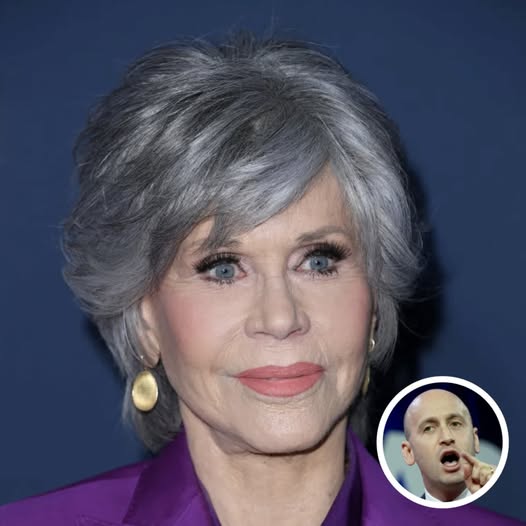
The public conversation about the legacy of Jane Fonda has resurfaced once again, decades after the most controversial moment of her political activism during the Vietnam War.
Her actions during that era continue to spark discussion about protest, patriotism, and the long-term impact of political activism by public figures.
Recently, debate intensified after comments made by Stephen Miller, a former adviser in the administration of Donald Trump. During a television interview, Miller criticized Fonda’s activism in the early 1970s and argued that it should still influence how people view her today.
The remarks were made during a segment on Fox News, where Miller discussed historical controversies involving prominent public figures. His comments quickly drew attention across media outlets and social platforms, prompting renewed discussion about Fonda’s past.
For many observers, the debate highlighted how events that occurred more than fifty years ago can continue to influence modern political conversations. Fonda’s name has long been associated with one of the most divisive periods in modern American history.
The controversy largely centers on her visit to North Vietnam in 1972 during the later years of the Vietnam War. At that time, the conflict had already become one of the most debated and emotionally charged issues in the United States.
Public opinion in America during the early 1970s was deeply divided regarding the war. Many citizens supported the government’s military efforts, while others strongly opposed continued involvement in the conflict.
Fonda was among the celebrities who publicly criticized the war and supported the anti-war movement. Her activism included speeches, interviews, and participation in demonstrations that called for an end to the conflict.
Her trip to North Vietnam in July 1972 became the most controversial moment of her political involvement. During the visit, she met with local officials and participated in radio broadcasts directed at American service members.
In those broadcasts, she criticized U.S. military strategy and expressed support for efforts to end the war. Supporters of the anti-war movement saw these actions as part of a broader attempt to encourage peace negotiations.
However, critics argued that traveling to a country engaged in active conflict with the United States was inappropriate and harmful to American interests. The disagreement quickly turned into one of the most heated cultural debates of the era.
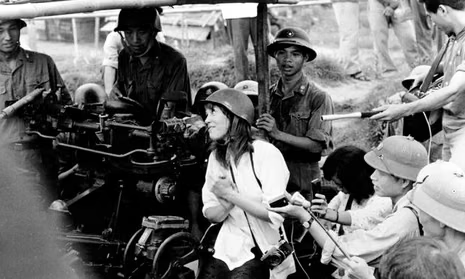
One photograph from the trip became particularly controversial. In the image, Fonda is seen sitting near a North Vietnamese anti-aircraft gun that had been used as part of the country’s air defense system.
The photograph circulated widely in American newspapers and magazines shortly after it was taken. For many critics, the image appeared to symbolize support for an enemy government during wartime.
Some U.S. veterans and military families felt deeply offended by the image and the broader actions associated with the visit. The controversy quickly grew into a defining moment in discussions about celebrity activism.
As the image spread through media coverage, Fonda became associated with the nickname “Hanoi Jane.” The phrase was used by critics to describe what they viewed as an act of betrayal toward American soldiers.
Over the decades, the nickname remained part of the public conversation surrounding her legacy. It has frequently resurfaced during discussions about the Vietnam War and the cultural conflicts of the 1970s.
Fonda herself later addressed the photograph and its impact. She acknowledged that posing for the picture was a mistake and said she regretted the decision deeply.
In interviews and public statements over the years, she apologized to veterans and their families for the pain the image caused. She explained that she had not fully understood how the photograph would be interpreted.
Fonda said the moment represented a serious lapse in judgment rather than an attempt to show support for military action against American forces. Her apology has been repeated multiple times during public discussions of the incident.
Despite those apologies, the event remains controversial for many people. Some critics believe the image continues to represent an unacceptable level of support for a foreign government during wartime.
Others argue that Fonda’s later explanations and decades of subsequent work should also be considered when evaluating her legacy. The disagreement reflects broader questions about forgiveness and historical context.
The Vietnam War itself was one of the most politically divisive conflicts in American history. Millions of Americans participated in protests that called for the withdrawal of U.S. forces from Southeast Asia.
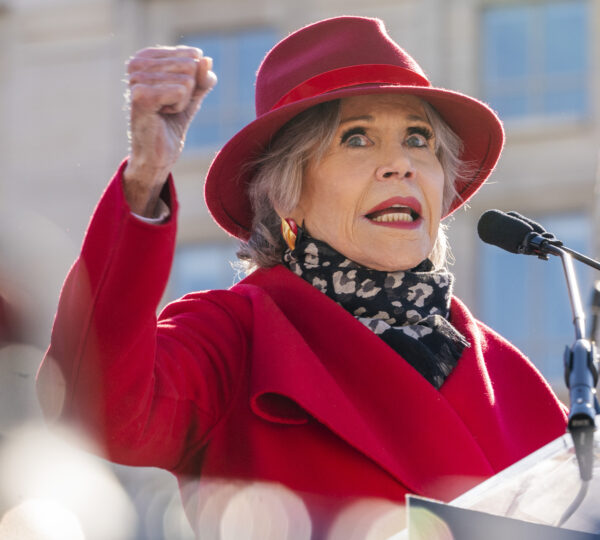
University campuses, city streets, and public institutions became centers of activism. Many young Americans, including artists and entertainers, used their public platforms to express opposition to the war.
During that period, celebrity activism became increasingly visible. Actors, musicians, and writers frequently spoke out about political issues, influencing public opinion and encouraging debate.
Fonda was already a well-known film star at the time of her activism. Her career had included major roles in Hollywood films, and she had received significant recognition for her acting work.
Over the decades, she would become one of the most respected actresses of her generation. Her career spans more than half a century and includes numerous award-winning performances.
Among her most notable films are Klute, Coming Home, and Nine to Five. These performances helped establish her reputation as both a talented performer and a culturally influential figure.
In addition to acting, Fonda has long been involved in social activism. Her advocacy has addressed issues such as women’s rights, environmental protection, and political reform.
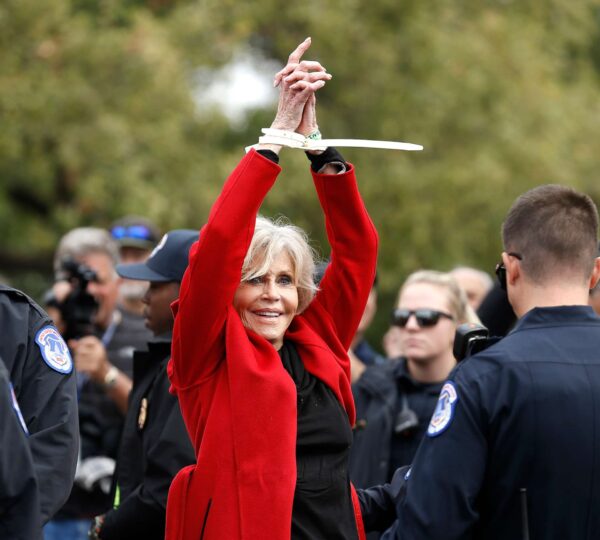
In recent years, she has become especially active in campaigns focused on climate change and environmental policy. She has participated in demonstrations and public events calling for stronger environmental protections.
One of the causes she has supported involves opposition to the Keystone Pipeline project. Environmental activists argue that the pipeline could contribute to increased greenhouse gas emissions and environmental risks.
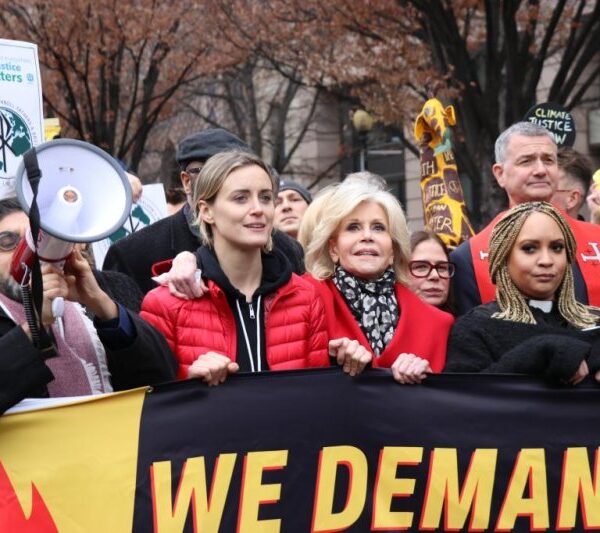
Fonda’s participation in climate activism has included organized protests and public speaking events. In 2019, she launched a series of demonstrations known as “Fire Drill Fridays” focused on climate awareness.
These protests took place in Washington, D.C., and involved weekly gatherings intended to draw attention to the urgency of climate action. Many environmental advocates praised the initiative for increasing visibility around the issue.
Critics, however, sometimes question the political influence of celebrity activists. Some argue that entertainers may not always have the expertise necessary to shape public policy debates.
The comments from Stephen Miller connected Fonda’s past activism to her current advocacy efforts. He argued that historical controversies should influence how her modern political positions are evaluated.
Supporters of Fonda disagree with that perspective. They point out that her activism has evolved over time and reflects changing political priorities and social issues.
They also emphasize that many public figures have complex histories that include both controversial actions and positive contributions. Evaluating those legacies often requires careful consideration of multiple factors.
The debate surrounding Fonda reflects a larger conversation about how society interprets historical actions. Many people believe past behavior should remain part of the discussion when assessing public figures.
Others believe individuals should be able to evolve over time and that later contributions should also influence how they are remembered. The balance between accountability and personal growth remains a subject of ongoing discussion.
For historians and cultural observers, Fonda’s story illustrates how celebrity activism intersects with major historical events. The Vietnam War era produced some of the most visible examples of this phenomenon.
During that time, public demonstrations and political debate were common across the United States. Artists and entertainers often used their platforms to challenge government policies.
Some historians argue that celebrity involvement helped amplify public awareness about the war. Others believe it sometimes intensified political polarization.
Regardless of perspective, Fonda’s activism became one of the most widely discussed examples of celebrity engagement in political issues.
Today, she continues to work in both film and television while also participating in advocacy campaigns. Her ability to remain active in multiple fields reflects a career that has spanned several generations.
Fonda has also written books and spoken publicly about aging, fitness, and social responsibility. These projects have introduced her to audiences who may not be familiar with the controversies of the 1970s.
At the same time, discussions about her Vietnam War activism continue to reappear in political debates. Media coverage and commentary frequently revisit the events of 1972 when evaluating her legacy.
This recurring debate demonstrates how historical events can remain part of cultural memory long after they occur. Public figures who become associated with major controversies often carry those associations for decades.
For some people, the photograph taken during her visit to North Vietnam represents a permanent symbol of that era’s political divisions. For others, it is only one moment within a much longer life and career.
The discussion also reflects broader questions about how societies remember history. Public memory is often shaped by media coverage, political narratives, and personal experiences.
Different groups may interpret the same historical event in very different ways. This dynamic can lead to ongoing debates about meaning and responsibility.
In the case of Jane Fonda, her life includes achievements in acting, activism, and public advocacy. These different aspects contribute to a complex public image.
Supporters emphasize her contributions to film, her commitment to social issues, and her willingness to speak openly about controversial topics.
Critics continue to point to the events of 1972 as evidence that her actions during the Vietnam War should remain a central part of her legacy.
The renewed discussion sparked by recent comments illustrates how debates about history can remain active across generations.
It also highlights the role of media interviews and political commentary in reviving historical controversies.
Ultimately, the conversation surrounding Jane Fonda reflects broader societal questions about accountability, activism, and change.
For many observers, the issue is not simply about one photograph or one trip during a distant conflict.
Instead, it represents a wider debate about how individuals evolve over time and how societies evaluate complex public figures.
As discussions about her legacy continue, Jane Fonda remains a prominent example of how activism, celebrity, and history can intersect in powerful and sometimes controversial ways.
Her story demonstrates that the impact of political actions can extend far beyond the moment in which they occur, shaping public conversations for decades afterward.
