

Donald Trump issued a stern warning to Iran after the nation halted all traffic through the Strait of Hormuz, an action that caused global oil prices to surge dramatically and raised concerns about worldwide economic stability.
The Strait of Hormuz is a strategic chokepoint through which nearly 20% of the world’s oil flows, making any disruption a serious threat to global markets, energy security, and international trade, particularly for nations heavily reliant on oil imports.
Tensions escalated when the United States and Israel launched military strikes in Iran, following the assassination of the country’s Supreme Leader, Ali Khamenei, last week, intensifying hostilities in an already volatile region of the Middle East.
The conflict has now been ongoing for ten days, with exchanges of airstrikes, drone attacks, and missile fire creating a tense standoff that threatens to escalate into a broader confrontation involving multiple nations and alliances.
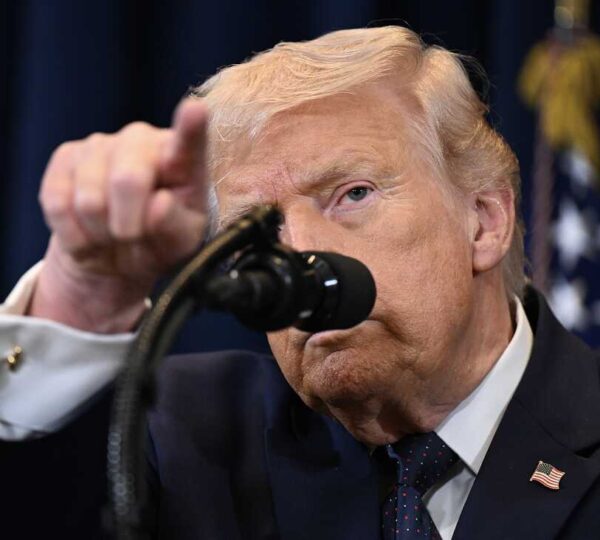
President Trump has made clear that the United States is prepared to take decisive action against Iran if it continues to block shipping in the Strait of Hormuz or engage in hostile acts against American interests.
In a post on Truth Social dated March 10, President Trump warned Iran that any attempt to impede oil flow through the Strait would provoke a response “twenty times harder” than previous strikes, emphasizing the severity of potential consequences.
Trump’s post stated that the United States would target facilities that are “easily destroyable,” ensuring that Iran’s ability to function as a nation could be severely compromised, a statement intended to demonstrate U.S. military resolve.
The president added that while the U.S. hopes the escalation does not occur, the strong response would serve as a strategic signal to China and other nations reliant on the Strait of Hormuz for oil transportation.
Iran, in turn, responded aggressively, issuing a formal threat against Donald Trump. Ali Ardashir Larijani, secretary of Iran’s Supreme National Security Council, asserted that the Iranian nation would not be intimidated by external threats.
Larijani’s statement emphasized that Iran has historically withstood foreign intervention, warning that even powers greater than the United States have failed to undermine the country’s sovereignty and national resilience.
The threat was signed formally by the Supreme National Security Council of Iran, referencing the martyrdom of Grand Ayatollah Seyyed Ali Khamenei, signaling a connection between the escalation and Iran’s leadership and ideological structure.
In addition to the ongoing military standoff, the threat underscores Tehran’s willingness to retaliate, raising fears of potential assassination attempts against President Trump and illustrating the intensity of hostilities between the two nations.
Reports indicate that this is not the first time Iranian operatives have targeted Donald Trump directly. Earlier in March, Secretary of War Pete Hegseth revealed that an Iranian unit had attempted to plan an assassination against the U.S. president.
U.S. military forces tracked the group responsible for the assassination plot and neutralized its leader before any attack could occur, demonstrating the intelligence and operational capabilities of American forces in preventing direct threats.
The closure of the Strait of Hormuz by Iran has disrupted maritime traffic and created immediate economic ramifications, with global oil prices reaching unprecedented levels, impacting energy markets and increasing uncertainty for businesses and consumers worldwide.
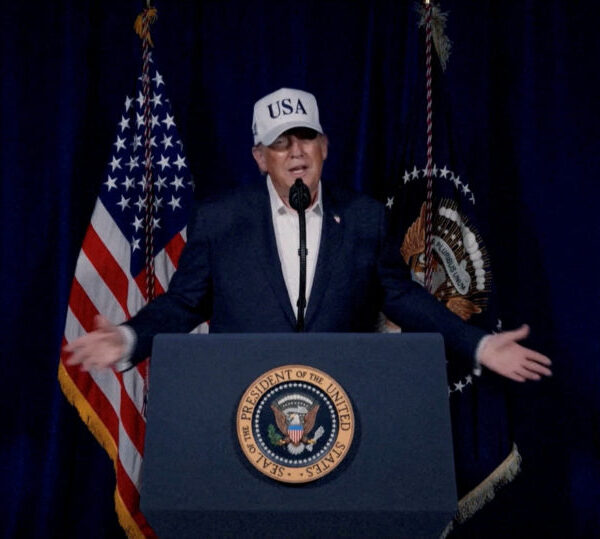
Analysts warn that if the closure persists, the economic consequences could extend beyond oil prices, affecting shipping insurance rates, international trade flows, and the global energy supply chain for weeks or even months.
The Trump administration has emphasized diplomacy while maintaining the threat of military escalation, signaling to Iran and the international community that the U.S. is prepared to defend its strategic interests and global oil stability.
President Trump has publicly stated that the deployment of U.S. ground troops remains under consideration, highlighting the gravity of the situation and the potential for direct engagement on Iranian soil to secure critical infrastructure.
Meanwhile, international leaders are closely monitoring the conflict, with European nations, China, and Middle Eastern allies expressing concern about the impact on global markets and the risk of the conflict spreading beyond the region.
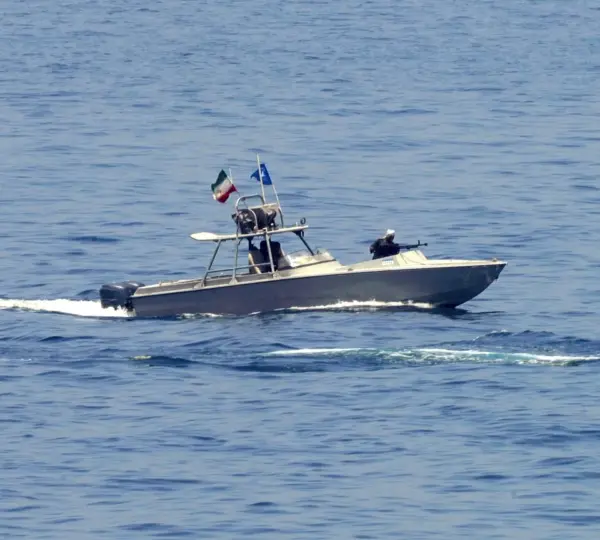
Iran’s previous statements included threats to “set fire” to any ships attempting passage through the Strait of Hormuz, a move that would directly threaten international shipping and provoke a serious response from global naval powers.
The United States, in response, has reinforced its naval presence in the Persian Gulf and the Strait of Hormuz, deploying aircraft carriers, destroyers, and other assets to deter Iranian aggression and ensure the security of maritime trade routes.
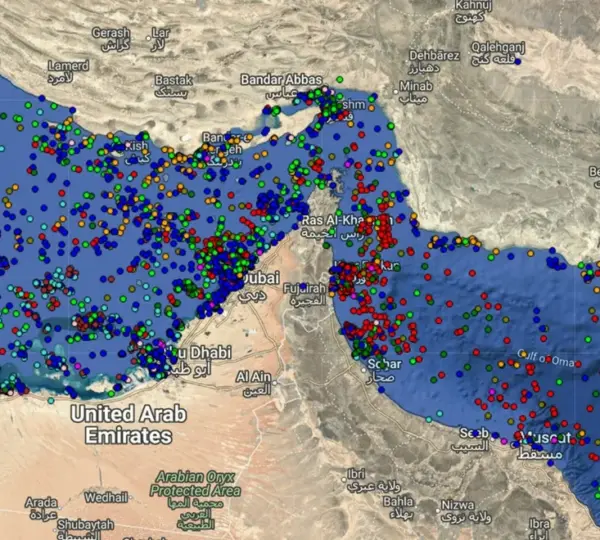
Military analysts warn that any further escalation could rapidly spiral into a broader regional war, potentially involving Saudi Arabia, Israel, and other Gulf nations, all of whom have strategic interests in the stability of the Middle East.
The assassination threats and military posturing have further polarized U.S. public opinion, with supporters of Trump praising his strong stance while critics warn of unnecessary escalation and the risk of drawing the country into an extended conflict.
Economic ramifications are immediate and tangible. Energy-dependent nations are scrambling to secure alternative oil supplies, while investors and markets react nervously to the uncertainty surrounding the Strait of Hormuz and potential disruptions in energy distribution.
U.S. intelligence reports suggest that Iran has multiple asymmetric warfare capabilities, including missile arsenals, drone programs, and cyber operations, which could target both military and civilian infrastructure in the event of further escalation.
President Trump’s administration has sought to combine military readiness with strategic messaging, emphasizing deterrence while signaling openness to negotiation to prevent a catastrophic regional or global conflict.
The assassination threat represents a symbolic and operational challenge, demonstrating Iran’s capacity and willingness to use indirect or direct threats against U.S. leadership to influence political and military decision-making.
Global leaders, including the United Nations Security Council, are calling for restraint, urging both the United States and Iran to engage in dialogue to prevent further loss of life, regional instability, and economic disruption.
Military analysts note that the conflict demonstrates the importance of the Strait of Hormuz in global geopolitics, where even minor disruptions can have cascading effects on international trade, energy markets, and global economic stability.
The threat also underscores the complex dynamics between military power, economic leverage, and political signaling, as both the United States and Iran navigate a highly volatile situation with global consequences.
The United States’ response is being closely watched by allies and adversaries alike, as actions taken in the coming days could redefine regional security architecture and influence future international responses to similar crises.
President Trump has used social media strategically to communicate with the public and signal intentions to both allies and adversaries, demonstrating the integration of modern communication platforms in geopolitical conflict management.
Iran’s public threats, coupled with military maneuvers, illustrate a deliberate strategy to test U.S. resolve while consolidating internal political support by projecting strength against perceived external threats.
Analysts caution that the combination of military posturing, assassination threats, and economic disruption could have long-term consequences, potentially destabilizing not only the Middle East but also global energy markets for months to come.
As of now, the conflict remains tense but contained, with both sides closely monitoring each other’s actions. The possibility of negotiation, de-escalation, or sudden escalation remains a critical factor influencing global markets and diplomatic efforts.
International observers note that any miscalculation could lead to a broader war, affecting not just the United States and Iran but also neighboring countries, energy-dependent economies, and international shipping and logistics networks.
The assassination threats against Trump highlight the personal risks faced by political leaders during international crises, emphasizing the intersection of personal security, national security, and foreign policy in high-stakes conflict zones.
The Trump administration continues to maintain a balance between public deterrence and private diplomatic channels, aiming to prevent escalation while demonstrating readiness to respond to threats against American lives, interests, and allies.
Iran’s military capabilities, combined with strategic positioning near vital energy infrastructure, make the region highly sensitive. Any misstep could result in direct confrontation, disruption of global trade, or unintended casualties affecting civilians and military personnel alike.
The Strait of Hormuz has historically been a flashpoint in U.S.-Iran relations, with previous conflicts highlighting the region’s strategic importance, its role in global energy markets, and the potential for rapid escalation into broader conflicts.
President Trump’s statements and military posture aim to protect vital U.S. interests while signaling to the global community that the United States remains committed to ensuring the free flow of commerce, energy, and security in critical regions.
The global oil market has reacted sharply to the crisis, with prices spiking due to fears of prolonged disruption. Governments and businesses worldwide are implementing contingency measures to mitigate supply shocks and stabilize markets.
In addition to immediate energy concerns, political ramifications within the United States are significant, with public opinion divided on the appropriateness of military action, the potential for escalation, and the administration’s handling of foreign affairs.
Experts warn that the combination of economic pressure, military posturing, and personal threats against the U.S. president could have enduring consequences for diplomatic relations, regional security, and long-term U.S. engagement in the Middle East.
As the world watches, the stakes remain high. Both Iran and the United States face pressure to respond decisively yet judiciously, balancing military, economic, and diplomatic considerations while avoiding catastrophic outcomes.
