
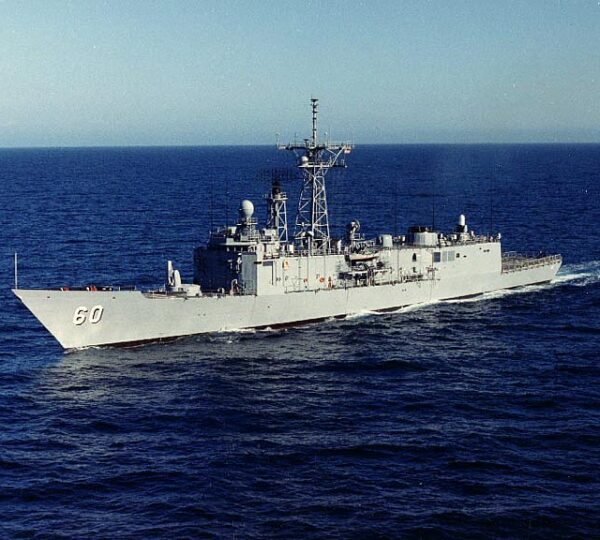
She was born amid tension and secrecy, commissioned in 1982 during the peak of the Cold War, to patrol global waters.
Her primary mission was to stalk enemy submarines and escort convoys, ensuring maritime security under constant threat of nuclear escalation.
Named for Rodney Maxwell Davis, a U.S. Marine posthumously honored for bravery in combat, the frigate inherited a legacy of courage and sacrifice. Her name reminded every sailor aboard that duty could demand both courage and personal risk.
The vessel’s construction reflected the era’s strategic priorities. Every steel plate, bulkhead, and propulsion system was engineered for endurance and resilience, designed to withstand the harsh conditions of the open ocean and the sudden pressures of conflict.
For decades, she sailed tirelessly across oceans. Her decks bore the footprints of thousands of sailors, her engines roared with mechanical rhythm, and her hull cut through waves as she carried out surveillance, patrol, and deterrence missions.
Life aboard the frigate was a mixture of discipline, monotony, and camaraderie. Sailors endured long deployments, sleeping in cramped quarters, maintaining equipment under relentless schedules, and trusting one another to act decisively in high-stakes situations.
Her operations extended from the frigid North Atlantic to the tropical waters of the Pacific, visiting allied ports, participating in joint drills, and quietly projecting power in contested regions without fanfare or recognition from the wider world.
In training exercises, she demonstrated precision and endurance. Crew members practiced anti-submarine warfare, radar tracking, and coordinated maneuvers, refining skills that could become critical in wartime scenarios, all while maintaining operational secrecy for national security.
Her role was not glamorous, yet indispensable. By enforcing maritime order, she acted as both a deterrent and a safeguard, preventing escalation and ensuring that shipping lanes remained open for commerce, diplomacy, and strategic movement.
Every sailor aboard experienced a unique bond with the ship. She was more than steel; she was a floating home, a workplace, a refuge, and a symbol of shared purpose. Crew members developed traditions, rituals, and memories that would endure long after her service.
Maintenance was a constant challenge. From engine rooms to radar arrays, every system demanded attention. Sailors painted, welded, and repaired tirelessly, keeping the frigate operational despite salt corrosion, storm damage, and the wear of continuous deployment.
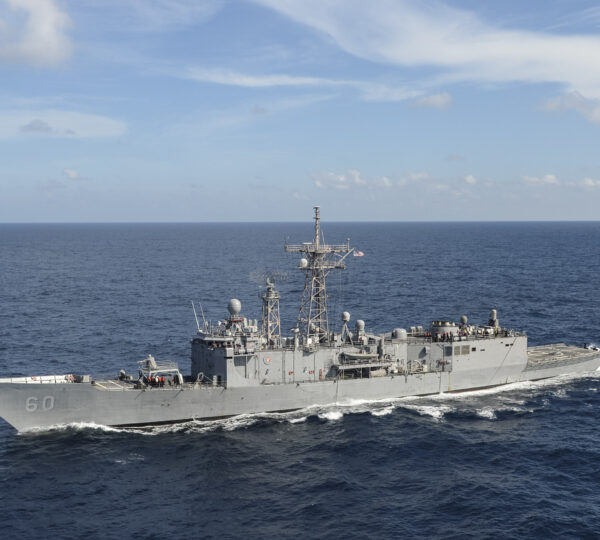
She carried sensitive equipment, from sonar arrays to communications systems, allowing her to detect threats long before they materialized.
Intelligence gathered by the frigate informed strategic decisions, often in silence, away from the public eye and media attention.
Every deployment was a test of endurance and skill. Sailors faced storms, mechanical failures, and extended separations from family, yet they relied on training, teamwork, and the reliability of their ship to navigate these challenges safely.
Her hull bore the marks of years of service: scrapes from docking, dings from cargo handling, and the faint patina of countless voyages. Each scar told a story of resilience, commitment, and the unrelenting demands of life at sea.
The frigate’s participation in joint exercises strengthened alliances. From NATO drills in Europe to combined operations with Pacific partners, she served as a visible manifestation of international cooperation and mutual defense commitments.
She was a floating classroom, teaching new sailors the rigors of naval life. Mentors onboard passed down skills, from navigation to engineering, instilling discipline, respect for protocol, and the ability to perform under pressure, ensuring operational continuity.
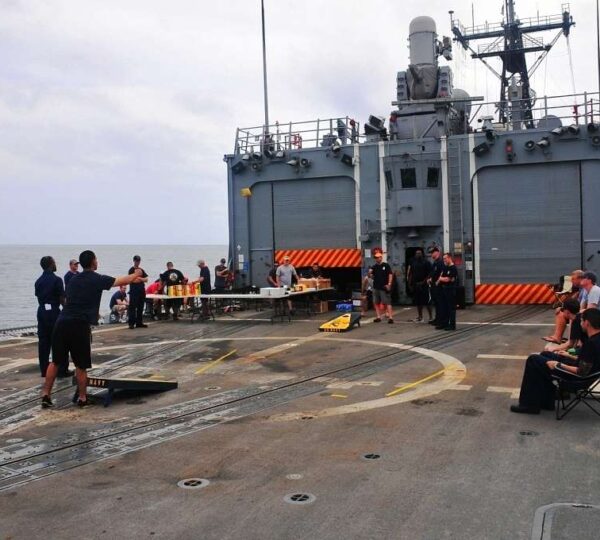
Despite the tension of military operations, moments of levity persisted. Sailors shared meals, celebrated birthdays, and created traditions to sustain morale, bonding over shared challenges and cultivating camaraderie essential to enduring long deployments.
The ship’s strategic relevance evolved over time. While initially designed for Cold War conflicts, she adapted to new threats, including piracy, regional conflicts, and humanitarian missions, demonstrating versatility beyond her original design.
She represented technological and tactical innovation. Her sonar arrays, missile systems, and communication networks embodied decades of research, experimentation, and refinement, reflecting a continuous effort to maintain maritime superiority in a rapidly changing strategic environment.
Operational secrecy often meant that accomplishments went unnoticed. Missions critical to national security rarely received public acknowledgment, and many sailors’ contributions remained classified, yet the impact of their work was profound and enduring.
Over the years, the ship became a repository of collective memory. Each sailor’s experience added layers to her identity: late-night watches, storm navigation, engine repairs, and quiet reflections amid the vastness of the ocean became part of her narrative.
As time passed, maintenance demands increased, and her age began to show. Despite rigorous upkeep, technological advancements in newer vessels made some systems obsolete, prompting strategic decisions about her continued deployment and eventual decommissioning.
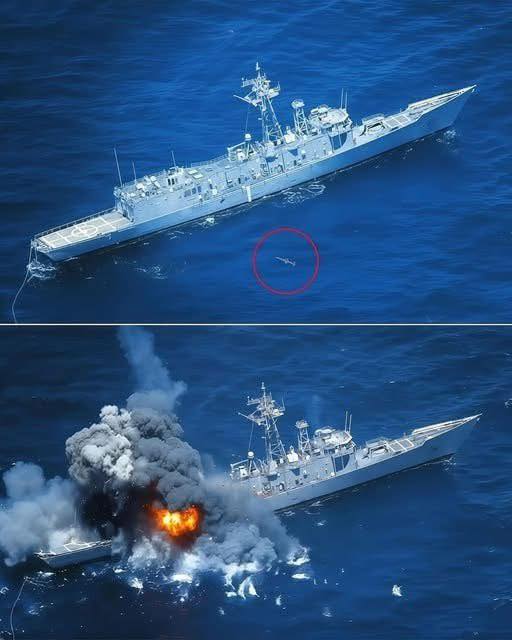
When decommissioning began, the process was meticulous. Hazardous materials were removed, sensitive systems dismantled, and valuable equipment preserved for reuse or study. The vessel was stripped to a skeleton, leaving a clean hull as a test target.
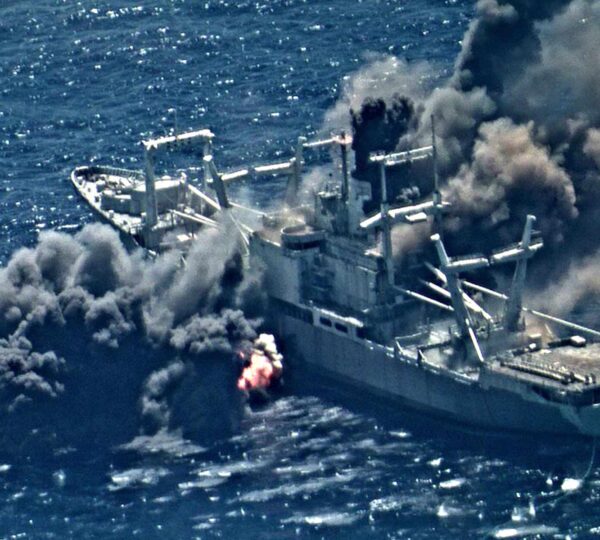
The final exercise transformed the vessel into a controlled target. A Harpoon missile struck with precision, piercing the once formidable hull. Observers witnessed the vessel’s final moments, blending technical analysis with a profound sense of history and loss.
Those who had served aboard experienced complex emotions. Pride in their shared service mingled with sadness as they watched the ship that had been home and workplace descend beneath the waves, its legacy transformed from active duty to a cautionary study.
The sinking marked the end of an era, but also the continuation of purpose. By serving as a test target, the vessel contributed to advancements in naval strategy, ensuring that lessons learned could enhance the survivability of future ships and crews.
Veterans reflected on the sacrifices made during her service. Long deployments, mechanical failures, and operational stress were remembered not as inconveniences but as defining experiences that forged resilience, leadership, and camaraderie among sailors.
The frigate’s story exemplifies the lifecycle of military vessels: from cutting-edge technological marvels to enduring symbols of service, and finally, to tools for research and strategic evaluation, illustrating the cyclical nature of defense innovation.
She embodied national defense priorities, representing the projection of maritime power, deterrence capabilities, and commitment to international obligations. Her presence in contested waters reassured allies and signaled resolve to potential adversaries.
The legacy of her namesake, Rodney Maxwell Davis, was honored through every mission. Courage, selflessness, and commitment to the collective good became guiding principles for those who served aboard, shaping operational culture and reinforcing ethical standards.
Even as the hull sank, the intangible contributions endured. Lessons in navigation, anti-submarine tactics, crisis management, and teamwork persisted, influencing doctrine, training programs, and future deployments, ensuring that knowledge was preserved for subsequent generations.
The ship’s sinking was carefully documented. Sensors recorded impact dynamics, hull penetration, and water ingress, generating data critical for refining missile guidance, naval construction, and defensive countermeasures for newer ships entering service.
Her story also highlighted the emotional toll of naval service. For many, leaving the vessel symbolized the end of formative experiences, friendships, and daily rhythms that shaped personal identity and professional development throughout careers.
While the physical structure ceased to exist, her cultural imprint endured. Stories, photographs, and firsthand accounts preserved the memory of deployments, exercises, and life aboard, passing traditions from veterans to new recruits and preserving institutional heritage.
Sailors recalled moments of crisis with reverence: emergency drills, storm survival, and onboard mechanical failures demonstrated the interplay of training, discipline, and quick decision-making essential to maintaining operational integrity.
The ship also contributed to diplomacy. Port visits, joint exercises, and humanitarian missions projected soft power, fostering goodwill, demonstrating capability, and reinforcing alliances without direct confrontation, embodying a strategic approach to modern naval operations.
As a target, the vessel offered insight into vulnerabilities. Engineers studied hull response, structural resilience, and system failure modes, transforming her final moments into a comprehensive lesson for designers, tacticians, and naval planners.
Observing the sinking, former crew members reflected on identity and belonging. The vessel had been a unifying element, shaping personal growth, teamwork, and shared memory, and its loss was deeply felt despite understanding its strategic purpose.
In many ways, the frigate was a bridge between generations. Veterans’ experiences informed training programs, guiding younger sailors through complex operational scenarios while instilling pride, discipline, and respect for the challenges of life at sea.
Her missions often remained classified. Surveillance, intelligence gathering, and strategic positioning frequently went unnoticed by the public, yet these actions were critical for maintaining national security and deterring potential threats in volatile geopolitical contexts.
The frigate’s technological systems evolved over time. Sensors, propulsion systems, and communication networks were upgraded, reflecting decades of engineering innovation and adaptation to emerging threats, ensuring operational relevance in a rapidly advancing naval environment.
Her final role as a test target underscored the cycle of innovation. Insights gained from her sinking informed ship design, survivability measures, and weapons development, ensuring that future crews could operate more safely and effectively under combat conditions.
The vessel’s story serves as a testament to human ingenuity, resilience, and the commitment of those who serve at sea. Beyond metal and machinery, she represents the intertwined narratives of people, technology, and strategy in defense operations.
The sinking also marked a symbolic passing of responsibility. While the vessel could no longer protect, patrol, or serve as a home, her legacy ensured that successors were better prepared to face challenges she once mitigated through silent vigilance.
In the end, the frigate’s journey—from commissioning, through decades of service, to her final sinking—illustrates the life cycle of naval vessels and the enduring human connection to machines built for defense, trust, and shared experience at sea.
