
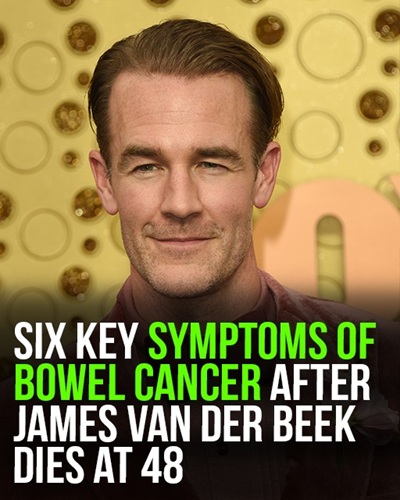
The entertainment world was stunned when news broke that James Van Der Beek, the beloved actor known for his iconic role as Dawson Leery on Dawson’s Creek, had passed away at just 48 years old on February 11, 2026.
Fans across the globe mourned the loss of a star who had grown up before their eyes, transitioning from teen heartthrob to devoted father, actor, and advocate.
While the circumstances of his death are tragic, the message Van Der Beek left behind is profound: colorectal cancer can affect anyone, at any age, and early detection is vital.
Less than two months before his passing, Van Der Beek spoke candidly about his own journey with the disease in interviews, offering a warning that resonates far beyond Hollywood: “You can have no symptoms and still have cancer.”
These words highlight the silent danger of colorectal cancer, one of the world’s deadliest cancers, which claims hundreds of thousands of lives every year.
The Global Impact of Colorectal Cancer
Colorectal cancer, which affects the colon or rectum, is one of the leading causes of cancer-related death worldwide. In 2020 alone, an estimated 930,000 people died from the disease globally, according to the World Health Organization (WHO).
This staggering number underscores the importance of awareness, education, and early detection. Experts expect these figures to rise as lifestyle factors, dietary habits, and delayed screenings continue to influence the prevalence of colorectal cancer worldwide.
In the United States, colorectal cancer remains the second-leading cause of cancer-related deaths among men and women combined.
The American Cancer Society (ACS) projects that approximately 55,230 people will die from the disease in 2026. These numbers are not just statistics — they represent real lives and families affected, including high-profile cases like Chadwick Boseman, who died at 43 in 2020, and now James Van Der Beek.
Van Der Beek’s death has brought renewed attention to a critical reality: colorectal cancer is no longer a disease primarily associated with older adults.
The incidence among people under 50 has been rising steadily, a trend that medical professionals find deeply concerning. This shift emphasizes the need for vigilance and proactive healthcare measures even in seemingly healthy, active individuals.
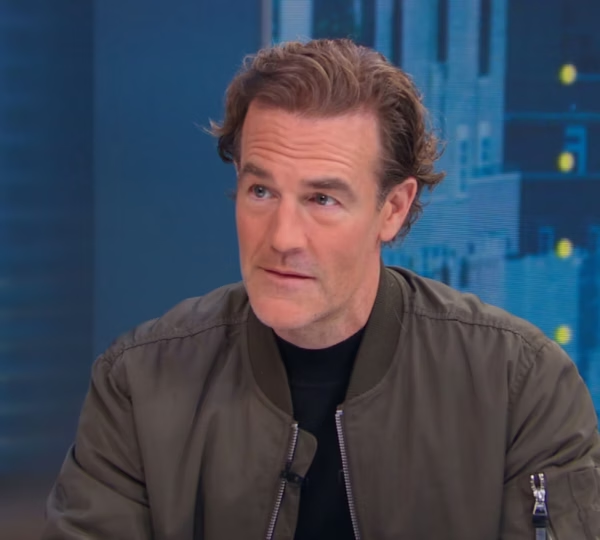
Van Der Beek’s Health Journey: Coffee, Colonoscopies, and Shock
In a November 2024 interview with People magazine, Van Der Beek opened up about his personal experience with colorectal cancer.
He explained that in the summer of 2023, he began noticing subtle changes in his bowel habits. At first, he ignored them, attributing them to minor lifestyle factors.
“I thought maybe I needed to stop coffee,” he told People. “Or maybe not put cream in the coffee. But when I cut that out and it didn’t improve, I thought, ‘All right, I better get this checked out.’”
This initial hesitation is common. Many people assume that digestive changes, occasional discomfort, or minor bleeding are temporary and not cause for concern.
Van Der Beek, who exercised regularly and maintained what he believed was a healthy diet, exemplified this assumption. Like many others, he had associated cancer primarily with older age and sedentary lifestyles.
Following his decision to see a doctor, Van Der Beek underwent a colonoscopy — a procedure that examines the interior of the colon and rectum for abnormalities.
He recalled feeling relieved afterward, believing he was fine. However, the news that followed was devastating: he was diagnosed with stage 3 colorectal cancer.
“I think I went into shock,” he admitted. “I felt really good coming out of anesthesia, that I’d finally done it. Then the gastroenterologist said – in his most pleasant bedside manner – that it was cancer.”
Stage 3 colorectal cancer indicates that the disease had spread to nearby lymph nodes but had not yet metastasized to distant organs.

While this is a serious diagnosis, it also provides a window for aggressive treatment and potential long-term survival — if detected and addressed promptly.
Understanding the Subtle Symptoms of Colorectal Cancer
Colorectal cancer is notorious for its silent progression in the early stages. Symptoms are often subtle and can be easily dismissed. The ACS outlines several warning signs that should never be ignored:
-
Persistent changes in bowel habits, including diarrhea, constipation, or a change in stool consistency.
-
Rectal bleeding or blood in stool, which may appear bright red or dark.
-
Ongoing abdominal discomfort, such as cramps, gas, or pain.
-
A sensation of incomplete bowel emptying, even after using the bathroom.
-
Unexplained weight loss, which can occur as the body struggles with cancer-related metabolic changes.
-
Fatigue or shortness of breath, often caused by anemia resulting from chronic blood loss.
Van Der Beek’s own experience underscores the importance of paying attention to even minor shifts in normal bodily function.
He stressed that waiting until clear symptoms appear can be dangerous: “The biggest misconception is the same one I had, which is that you need to have something seriously wrong with you to get screened for colorectal cancer. You don’t. You can have no symptoms and still have cancer.”
Treatment Approaches and the Importance of Early Detection
Treatment for colorectal cancer is tailored to the individual and depends on the stage and location of the disease. Standard approaches include:
-
Surgery: The primary treatment for localized tumors, often involving the removal of the affected portion of the colon or rectum.
-
Chemotherapy: Used to target cancer cells that may remain after surgery, especially in stage 3 disease, and to reduce the risk of recurrence.
-
Radiation Therapy: Sometimes recommended for rectal cancers to shrink tumors and prevent local recurrence.
The Mayo Clinic emphasizes that treatment decisions are highly individualized, taking into account overall health, the stage of cancer, and patient preferences.
Early detection is the single most powerful tool to improve survival rates. For stage 1 and 2 colorectal cancers, surgical removal alone can be curative in many cases, with survival rates exceeding 90 percent. However, as the disease progresses, treatment becomes more complex and survival rates decline.
Van Der Beek’s advocacy was aimed squarely at this issue: encouraging people to get screened before symptoms appear.
Colonoscopy, fecal immunochemical tests (FIT), and other screening methods can detect precancerous polyps or early-stage tumors, dramatically improving outcomes.
A Personal Call to Action: Screening at Any Age
Van Der Beek’s experience provides a stark reminder that colorectal cancer does not only affect older adults. Screening recommendations have evolved in response to rising incidence among younger adults.
In many regions, routine screening now begins at age 45, though earlier screening may be warranted for those with a family history of colorectal cancer or other risk factors.
He explained in a December 20, 2025 interview with NBC 6 that his own decision to get screened came from a recognition that something was different — even if minor.
“You know, I got a colonoscopy because there are a couple of things that are happening, but nothing that made me rush to the doctor,” he said.
“I’ve seen firsthand how it can save lives. I’ve had people I know get screened, get it taken care of, and move on with their life, and not have to go through the journey that I’ve been on.”
His words reflect a broader public health concern: millions of people postpone colonoscopies, often because they assume they would feel if something were wrong. This false sense of security can have tragic consequences.
High-Profile Cases Illuminate the Reality
Van Der Beek’s death joins a series of high-profile cases that have drawn public attention to colorectal cancer. Chadwick Boseman, who also succumbed to the disease at a young age, was diagnosed secretly while filming major motion pictures.
Their stories illustrate that colorectal cancer can strike seemingly healthy, young, and physically active individuals.
These cases challenge common misconceptions about cancer risk and highlight the urgent need for widespread awareness campaigns.
By speaking openly about his diagnosis, Van Der Beek hoped to destigmatize conversations about colorectal health and encourage proactive screening, particularly for adults under 50. His message is clear: do not wait for symptoms. Early detection saves lives.
The Final Chapter
James Van Der Beek’s journey came to a heartbreaking end on February 11, 2026. His family shared a statement on Facebook: “Our beloved James David Van Der Beek passed peacefully this morning. He met his final days with courage, faith, and grace.
There is much to share regarding his wishes, love for humanity, and the sacredness of time. Those days will come. For now, we ask for peaceful privacy as we grieve our loving husband, father, son, brother, and friend.”
Throughout his illness, Van Der Beek demonstrated remarkable bravery and openness. By publicly sharing his experience, he turned personal tragedy into a public service — reminding everyone of the silent nature of colorectal cancer and the critical importance of early screening.
The Legacy of Advocacy
Van Der Beek leaves behind six children and a legacy of advocacy that transcends his acting career. He emphasized the sacredness of time, the importance of family, and the urgency of preventive healthcare.
His final warning — “you can have no symptoms and still have cancer” — is not only a cautionary tale but a call to action.
For families, friends, and fans, his life serves as a reminder that health vigilance is vital, no matter one’s age, lifestyle, or perceived fitness.
Colonoscopies, stool tests, and early consultations with healthcare providers are simple, effective measures that can prevent the devastating progression of colorectal cancer.
Practical Steps for Everyone
To honor Van Der Beek’s message, experts recommend:
-
Routine Screening: Begin at age 45, or earlier if risk factors exist.
-
Recognize Subtle Symptoms: Persistent digestive changes, rectal bleeding, and unexplained fatigue should never be ignored.
-
Maintain a Healthy Lifestyle: Regular exercise, a balanced diet rich in fruits and vegetables, and limiting red or processed meats can reduce risk.
-
Family History Awareness: Those with relatives affected by colorectal cancer should consult a doctor about earlier or more frequent screening.
-
Immediate Medical Consultation: If any unusual symptoms persist for more than a few weeks, seek medical attention promptly.
Conclusion: A Lasting Reminder
James Van Der Beek’s life and final words remind us that cancer does not discriminate, and early detection is our most effective weapon.
His advocacy, courage, and willingness to share his journey provide a roadmap for others: pay attention to your body, listen to subtle signs, and take proactive steps to protect your health.
Colorectal cancer remains a formidable disease, but with vigilance, education, and timely screening, many lives can be saved. James Van Der Beek’s legacy extends beyond his iconic roles — it is a life-saving message for all of us. “You can have no symptoms and still have cancer.” — James Van Der Beek
May his warning inspire action, save lives, and remind us that the greatest tribute to his memory is proactive healthcare, awareness, and early detection.
